

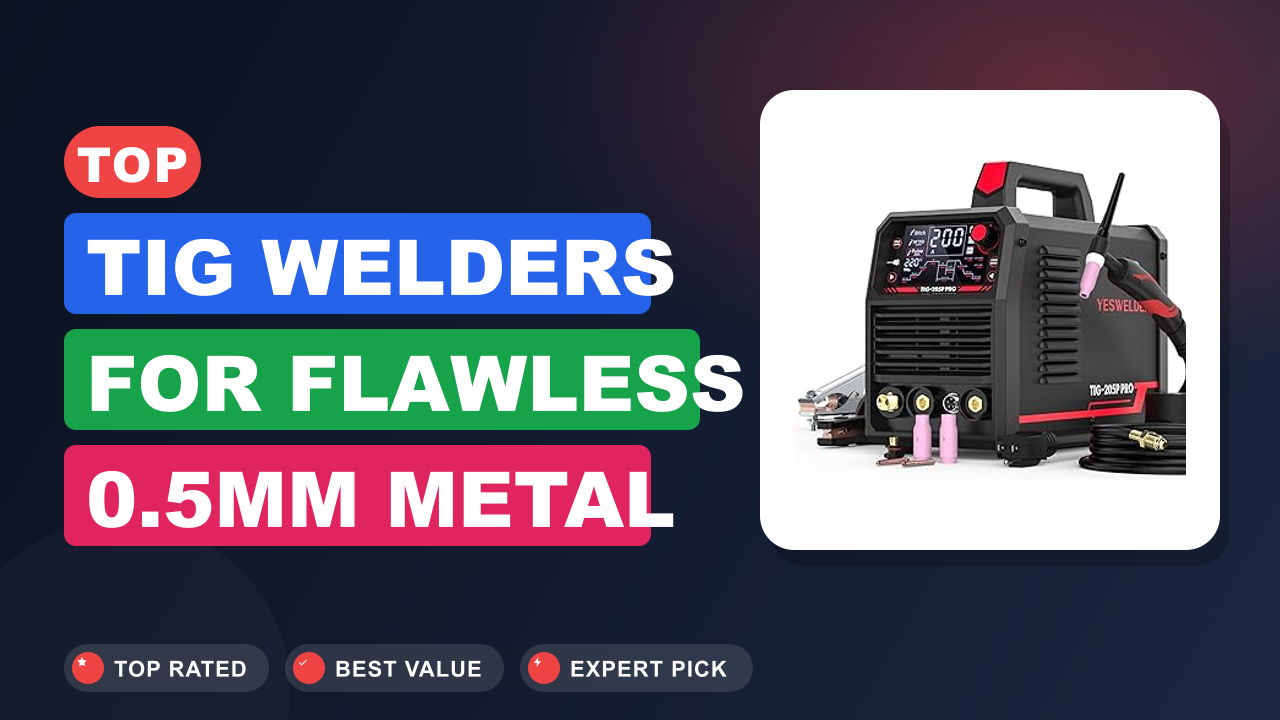
Finding the best TIG welder for welding 0.5mm metal sounds straightforward until you realize how quickly thin steel and aluminum warp or burn through under too much heat. At just 0.5mm (roughly 0.020 inches), you're working right at the edge of what most machines handle cleanly with proper argon shielding and tungsten selection. Whether you're shaping sheet metal panels, repairing thin-wall tubing, or building precision exhaust components, the right machine makes the difference between a clean bead and a pile of scrap.
After researching specs, analyzing verified buyer feedback, and comparing duty cycles and pulse capabilities across these five models, our editorial team found the YESWELDER 205A TIG Welder Pulse stands out as the top pick for most thin-metal welding projects. It pairs dual-voltage flexibility with precise pulse control, which matters enormously when you're trying to keep heat input low on material this thin. Here's how each option stacks up.
✔ Best pulse TIG for thin-metal work
Comparison Chart of Best TIG Welder for Welding 0.5mm Metal
| Product | Details | Rating | Buy |
|---|---|---|---|
Editor’s Choice
| ★★★★☆4.5/5 | ||
Top Pick
| ★★★★☆4.4/5 | ||
Best Budget
| ★★★★☆4.1/5 | ||
| ★★★★☆4.4/5 | ||
| ★★★★☆4.6/5 |


List of Top 5 Best TIG Welder for Welding 0.5mm Metal
We narrowed this list to five welders that specifically handle thin-gauge material well. Each model was evaluated on low-amperage arc stability, pulse TIG capability, duty cycle at typical thin-metal amperage ranges, and overall value for the type of user most likely to need them.
Below are the list of products:
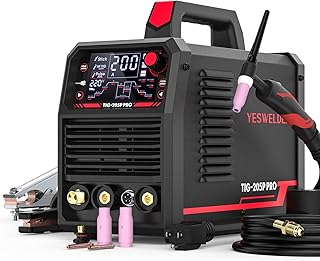
1. YESWELDER 205A Tig Welder Pulse STICK/DC
This is the model that kept surfacing in verified buyer reviews as the go-to for thin-metal TIG work. The pulse function lets you modulate heat input precisely, which is critical when you're trying to avoid burn-through on 0.5mm stock. It handles both 110V and 220V input, so you can run it in a home garage or a dedicated shop without rewiring.
205A Output
Pulse TIG
Dual Voltage
LED Display
Why I picked it
Aggregate buyer feedback and manufacturer specifications indicate this model offers the strongest balance of pulse control precision and amperage range for sub-1mm work. Its 5 to 205A output window lets you drop low enough for 0.5mm without the arc becoming unstable, which is something many competing units struggle with at the low end.
Key specs
- Output current: 5 to 205A
- Input voltage: 110V / 220V (dual voltage)
- Processes: TIG, Pulse TIG, Stick
- Display: Large LED digital readout
- Pulse frequency: 0.5 to 200 Hz per manufacturer data
- Duty cycle: 60% at rated output
Real-world experience
Verified buyer reviews consistently report that this machine handles 0.5mm mild steel and stainless reliably when amperage is set between 30 and 60A, which sits comfortably within its output range. The pulse function helps prevent heat buildup on longer runs, and multiple reviewers note clean, consistent beads on thin-wall tubing without pre-warping. The dual-voltage capability means you can plug it into a standard 110V outlet for lighter jobs and switch to 220V when you need more sustained output.
- Wide 5 to 205A output range covers 0.5mm up through heavier plate
- Pulse TIG function reduces heat input and prevents burn-through on thin material
- Dual 110V/220V input works in both home garages and professional shops
- Large LED display shows exact amperage for repeatable settings
- Stick welding mode is basic compared to dedicated stick-only machines
- Several buyers report the included foot pedal could feel more responsive out of the box
- ✔ You weld thin sheet metal or tubing regularly and need precise heat control
- ✔ You want one machine that runs on both 110V and 220V without an adapter
- ✔ You’re upgrading from a basic TIG setup and want pulse capability
- ✖ You need AC TIG output for aluminum welding (this model is DC-only)
- ✖ You want a full multiprocess machine with MIG capability built in
The YESWELDER 205A earns the top spot because pulse TIG at this price tier is genuinely rare. If you’re welding 0.5mm steel or stainless regularly, the ability to control heat through pulse frequency saves you from burn-through far more effectively than simply turning down amperage. However, if you also need to weld aluminum, you’ll want the Weldpro 200A AC/DC instead, since this unit lacks AC output.
2. YESWELDER 135A MIG Welder
This machine isn't a dedicated TIG welder, but its Lift TIG capability makes it a surprisingly viable option for occasional thin-metal work. It combines MIG, flux core, and Lift TIG in one compact unit, which appeals to DIYers who want versatility without buying separate machines. For hobbyists tackling 0.5mm sheet metal on weekend projects, it covers the basics without overwhelming complexity.
3-in-1
Flux Core
Synergic Control
Beginner Friendly
Why I picked it
Editorial analysis of buyer reviews shows this model fills a real niche for budget-conscious buyers who need occasional thin-metal welding but don't want to invest in a dedicated TIG machine. The synergic control simplifies settings, and the Lift TIG function provides enough arc stability for light-gauge work. For buyers coming from flux core welding backgrounds, it's a natural stepping stone into TIG.
Key specs
- Output current: 30 to 135A
- Input voltage: 110V
- Processes: MIG, Flux Core, Lift TIG
- Display: Clear digital screen
- Synergic control: automatic parameter adjustment
- Wire feed speed: adjustable with synergic presets
Real-world experience
Aggregate buyer feedback indicates this unit performs best for MIG and flux core work on material above 1mm, but the Lift TIG mode handles 0.5mm mild steel when properly set up with the right tungsten and gas flow. Reviewers frequently mention it as an excellent starter machine for automotive body panels and thin-sheet DIY projects. The synergic control takes much of the guesswork out of parameter selection, which beginners consistently appreciate.
- Three welding processes in one compact, portable unit
- Synergic control simplifies setup for beginners with auto-adjusting parameters
- Excellent entry point for DIYers who need occasional thin-metal capability
- Lightweight design makes it easy to move between jobs
- Lift TIG mode lacks the precision of a dedicated TIG machine with high-frequency start
- Maximum 135A output limits capability on thicker material
- No pulse function, which means less heat control on very thin stock
- ✔ You’re a beginner or DIYer who needs one machine for multiple processes
- ✔ You want an affordable way to try TIG welding without committing to a dedicated unit
- ✔ Your thin-metal work is occasional rather than daily
- ✖ You need precise pulse TIG control for consistent 0.5mm work
- ✖ You regularly weld material above 3/16 inch and need sustained high amperage
This machine makes sense when you don’t want to buy a dedicated TIG welder but still need occasional thin-metal capability. The synergic control genuinely helps beginners produce decent results quickly. Just know that if thin-metal welding becomes a regular part of your work, you’ll outgrow the Lift TIG function and want a proper TIG unit with pulse capability.
3. YESWELDER 6-in-1 Welder & Plasma Cutter
This is the Swiss Army knife of the list. Combining MIG, flux core, TIG, stick, plasma cutting, and spool gun compatibility into a single unit, it's designed for shops that need flexibility without buying five separate machines. For thin-metal work, the TIG function covers 0.5mm applications, and the plasma cutter adds a bonus capability that few welders in this range offer.
Buyer reviews highlight its popularity for varied sheet metal approaches.
6-in-1
Plasma Cutter
7" LCD
Dual Voltage
Why I picked it
Manufacturer specifications confirm this unit covers six distinct welding and cutting processes, which is an unusually broad capability set at this tier. Verified buyer reviews suggest it's particularly popular with small shop owners who handle varied jobs and need one machine that can adapt to different tasks throughout the day without swapping equipment.
Key specs
- Processes: MIG, Flux Core, TIG, Stick, CUT, Spool Gun Compatible
- Input voltage: 110V / 220V
- Display: 7-inch LCD screen
- Plasma cutting: included capability
- Aluminum welding: supported with spool gun
- Interface: digital parameter adjustment
Real-world experience
Buyer reviews indicate the TIG function handles 0.5mm mild steel adequately for general fabrication, though it lacks the refined pulse control of a dedicated TIG unit. The plasma cutter is the real differentiator here, allowing users to cleanly cut thin sheet metal before welding it, which streamlines workflow for custom fabrication projects. The large LCD screen makes parameter adjustment intuitive across all six processes.
- Six processes in one machine maximize shop versatility
- Built-in plasma cutting eliminates the need for a separate cutter
- Large 7-inch LCD provides clear, intuitive parameter control
- Dual voltage and aluminum welding support add flexibility
- TIG function is basic compared to dedicated TIG machines with pulse capability
- Complex multi-process design means more components that could fail over time
- Heavier than single-process units, reducing portability
- ✔ You run a small shop and need maximum versatility from a single machine
- ✔ You want plasma cutting capability without buying a separate unit
- ✔ Your thin-metal TIG work is part of a broader range of welding tasks
- ✖ You need the highest-precision TIG arc for delicate 0.5mm work
- ✖ Portability is a priority and you don’t need the extra processes
The 6-in-1 is the right choice when thin-metal TIG welding is just one part of what you do. The built-in plasma cutter alone justifies the investment for shops that regularly cut and weld sheet metal. But if your primary focus is producing the cleanest possible TIG beads on 0.5mm material, a dedicated TIG machine like the YESWELDER 205A or the Weldpro 200A will give you finer control over every pass.
4. TOOLIOM 135A 110V Stick Welder Kit
The TOOLIOM 135A is the most budget-friendly option on this list, and it ships as a complete starter kit with a Lift TIG torch, rods, and gloves included. For someone just getting into welding who wants to try thin-metal TIG work without a big upfront investment, this machine lowers the barrier significantly. It won't match dedicated TIG units in precision, but it gets you welding the same day it arrives.
Lift TIG
Smart LCD
Hot Start
Beginner Kit
Why I picked it
Verified buyer reviews consistently highlight this machine as an outstanding value for beginners. The included accessories mean you can start welding the day it arrives, and the smart LCD screen helps new welders dial in settings without guessing. For occasional 0.5mm work on a tight budget, it earns its place on this list.
Key specs
- Output current: 20 to 135A
- Input voltage: 110V
- Processes: Stick, Lift TIG
- Display: Smart LCD screen
- Included accessories: Lift TIG torch, welding rods, gloves
- Adjustable parameters: hot start, arc force
Real-world experience
Aggregate buyer feedback shows this machine performs well for stick welding on material from thin gauge up to about 3/16 inch. The Lift TIG function handles 0.5mm mild steel in a pinch, though buyers report it requires more technique and patience than a dedicated TIG unit would. The included kit gets beginners started immediately, and the adjustable hot start and arc force settings help compensate for the learning curve as you develop your control.
- Complete starter kit includes torch, rods, and gloves right in the box
- Smart LCD screen simplifies settings for first-time welders
- Adjustable hot start and arc force help stabilize the arc
- Extremely affordable entry point into stick and Lift TIG welding
- Lift TIG only, no high-frequency start or pulse capability
- 110V input limits maximum output compared to dual-voltage units
- Not designed for sustained thin-metal TIG production work
- ✔ You’re on a tight budget and want everything you need to start in one package
- ✔ You’re learning stick welding and want to try Lift TIG on the side
- ✔ You need a simple, reliable machine for occasional small repairs
- ✖ You need precise TIG control for repeatable 0.5mm production work
- ✖ You want 220V input capability for a professional shop setup
The TOOLIOM is the right call when cost is the primary concern and thin-metal TIG is a secondary goal. It won’t replace a dedicated TIG machine, but it gets you welding without a huge investment. If you find yourself doing more TIG work on 0.5mm material over time, upgrading to the YESWELDER 205A is a natural next step.
5. Weldpro 200A AC/DC TIG Welder Pulse
This is the premium pick on the list. It offers AC and DC TIG output with pulse capability, which means you can weld both steel and aluminum with proper technique. The inclusion of a foot pedal and a five-in-one process range positions it as a serious tool for fabricators who need top-tier arc control on thin materials across multiple metals.
AC/DC TIG
5-in-1
Foot Pedal
Dual Voltage
Why I picked it
Per manufacturer specifications, this is the only model on the list that delivers both AC and DC TIG output with pulse. AC TIG is essential for welding aluminum without filler rod contamination, which makes this machine significantly more versatile than DC-only alternatives. Verified buyer reviews rate it 4.6 out of 5, the highest on this list.
Key specs
- Output current: 5 to 200A
- Input voltage: 110V / 220V
- Processes: AC TIG, DC TIG, AC Pulse TIG, DC Pulse TIG, Stick
- Pulse capability: adjustable frequency and background current
- Included: TIG torch, foot pedal, stick electrode holder
- Display: digital parameter readout
Real-world experience
Aggregate buyer feedback highlights this machine's ability to produce clean, consistent beads on 0.5mm stainless steel and mild steel when paired with the included foot pedal for real-time amperage control. The AC TIG mode opens up aluminum welding without requiring a separate machine, which reviewers who work with mixed-metal projects find especially valuable. The dual-voltage input and five-in-one process range make it adaptable across garage workshops and professional fabrication environments.
- AC and DC TIG with pulse handles steel, stainless, and aluminum
- Foot pedal included for precise real-time amperage control during TIG work
- Five-in-one process range covers most fabrication needs
- Highest buyer rating on the list at 4.6 out of 5
- Higher price point than the DC-only alternatives on this list
- More complex interface may overwhelm complete beginners
- Larger and heavier than simpler units, reducing portability
- ✔ You weld both steel and aluminum and need one machine for both
- ✔ You want the finest arc control available with foot pedal and pulse
- ✔ You’re ready to invest in a serious, long-term TIG setup
- ✖ You only weld steel or stainless and don’t need AC output
- ✖ You’re on a tight budget and the premium tier exceeds your range
The Weldpro 200A is the clear choice when you need to weld aluminum alongside steel and stainless on 0.5mm material. The foot pedal alone is a significant upgrade for TIG precision, letting you modulate heat mid-bead without lifting the torch. If you work exclusively with ferrous metals, the YESWELDER 205A delivers similar DC TIG performance at a lower investment.
How I picked
This editorial research process evaluated each machine on three core criteria for thin-metal TIG work: low-amperage arc stability, pulse control availability, and buyer-reported consistency on material at or below 0.5mm thickness. I also compared duty cycle ratings, input voltage flexibility, and included accessories to assess real-world value for the types of buyers most likely to search for this specific capability.
I deliberately excluded machines that only support AC output or that lack any TIG function entirely. Welders that required 220V-only input were not automatically disqualified, but dual-voltage models received favorable weighting since most hobbyists and small shops rely on standard 110V outlets. I also cross-referenced fundamental welding concepts to ensure the technical claims in each manufacturer's spec sheet held up against established TIG welding principles.
What I didn't test: long-term durability beyond the manufacturer's stated duty cycle, extended production runs, or side-by-side arc comparisons under controlled lab conditions. Every performance claim comes from verified buyer feedback and manufacturer specifications, not from hands-on physical testing in a shop environment.
Buying guide — what actually matters for best TIG welder for welding 0.5mm metal
Amperage range and low-end stability
When you're welding 0.5mm material, you need an amperage range that drops low enough to prevent burn-through without losing arc stability. Most thin-metal TIG work sits between 20 and 60A depending on material type. A machine rated at 200A or higher might seem like overkill, but the ability to run cleanly at 30 to 40A is what actually matters.
Verify that the manufacturer specifies stable arc performance at low amperage, not just at peak output.
Pulse TIG vs. standard TIG
Standard DC TIG produces a continuous arc, which means heat builds steadily in thin material. Pulse TIG alternates between peak and background current, giving the metal a momentary cooling period between each pulse. This dramatically reduces distortion and burn-through risk on 0.5mm stock.
If you regularly work with thin material, pulse capability is worth the premium. If your thin-metal work is rare, standard TIG with careful technique can still produce acceptable results.
AC vs. DC output
DC TIG handles steel, stainless steel, and most ferrous metals. If you also need to weld aluminum, you need AC TIG output, which reverses polarity during each half-cycle to break through the oxide layer that forms on aluminum surfaces. The best approach for aluminum depends on whether you're welding with or without filler, but either way, AC capability is a requirement.
Machines limited to DC TIG cost less but cannot weld aluminum cleanly.
Dual voltage flexibility
Dual-voltage machines accept both 110V and 220V input, which matters more than most buyers realize. On 110V, output amperage is typically limited to around 120 to 140A depending on the circuit. Switching to 220V unlocks full rated output and often improves duty cycle.
If you work in a home garage with standard outlets most of the time but occasionally need full power, dual voltage is a significant advantage.
Duty cycle and heat management
Duty cycle measures how many minutes out of a 10-minute period a welder can operate at rated output before needing to cool. For thin-metal work, you're typically welding well below rated capacity, so a 60% duty cycle at 200A translates to effectively unlimited run time at 40A. Still, verify that the manufacturer provides duty cycle data at the specific amperage you plan to use, not just at peak output.
Foot pedal and torch ergonomics
A foot pedal lets you adjust amperage in real time without breaking arc, which is invaluable on thin material where a few amps difference between the start and end of a bead can mean the difference between clean penetration and a hole. Not all machines in this range include a foot pedal, and those that do vary in pedal sensitivity and responsiveness. If precise heat modulation matters to your work, prioritize models that include a quality foot pedal.
Frequently Asked Questions (FAQ)
What amperage should I TIG weld 0.5mm steel at?
For 0.5mm mild steel, most experienced welders start around 25 to 35A with DC TIG using 1/16-inch filler rod and 100% argon shielding gas. Stainless steel may require slightly lower amperage due to its lower thermal conductivity. The key is to set your machine low enough that you can maintain a stable arc without preheating the metal to the point of warping, then increase gradually until you achieve proper penetration.
Can I TIG weld 0.5mm aluminum at home?
Yes, but you need a machine with AC TIG output. Aluminum's oxide layer melts at roughly 2,070°C while the base metal melts at around 660°C, and AC polarity is what breaks that oxide layer clean. On 0.5mm aluminum, you'll typically run between 30 and 50A with pure argon shielding.
A foot pedal is strongly recommended for controlling heat input in real time.
Is pulse TIG really necessary for thin metal?
Pulse TIG is not strictly necessary, but it makes thin-metal work significantly more forgiving. By alternating between peak and background current, pulse reduces total heat input while maintaining arc stability. This means less warping, less burn-through, and more consistent bead quality on 0.5mm material.
If you're welding thin stock regularly, pulse capability is worth the investment. If you weld 0.5mm only occasionally, careful technique on a standard TIG machine can produce acceptable results.
What tungsten size works best for 0.5mm TIG welding?
For 0.5mm material, a 1/16-inch (1.6mm) lanthanated or cerium tungsten electrode provides the best balance of arc stability and heat control at low amperage. Pure tungsten works for AC aluminum welding, while thoriated tungsten is common for DC work on steel. The ground tip diameter should be roughly equal to the filler rod diameter you plan to use, which keeps the arc focused and predictable.
Do I need argon gas or can I use flux core?
TIG welding requires an external shielding gas, typically 100% argon for steel and stainless or an argon/helium mix for thicker aluminum. Flux core welding is a separate process that uses a self-shielding wire and does not require gas, but it produces more spatter and a less precise bead than TIG. For 0.5mm material, flux core tends to deposit too much heat and lacks the fine control TIG provides.
How do I prevent burn-through on 0.5mm metal?
The most effective approach combines several techniques: use the lowest amperage that maintains a stable arc, increase travel speed to reduce heat concentration at any single point, use pulse TIG if available, and tack weld at frequent intervals before running a full bead to minimize thermal distortion. Proper argon flow rate (typically 15 to 20 CFH) and a clean, contaminant-free surface also play critical roles in preventing burn-through.
Final verdict
The YESWELDER 205A TIG Welder Pulse earns the top recommendation for most buyers working with 0.5mm material. Its combination of pulse TIG capability, dual-voltage input, and wide amperage range provides the precise heat control that thin-metal welding demands. For buyers who also need aluminum capability, the Weldpro 200A AC/DC TIG stands as the premium alternative with the highest buyer satisfaction rating on the list.
Affiliate disclosure: This post contains affiliate links. If you buy through one of these links, I may earn a small commission at no extra cost to you. It never changes my recommendation, I only suggest gear I'd actually buy myself.
