

Unlock the secrets to perfect TIG welds with this comprehensive guide to TIG welding consumables. You’ll learn about the critical roles of tungsten electrodes, filler metals, shielding gases, and torches, understanding how each component impacts your weld quality. Master your TIG welding by choosing and using the right consumables for every job.
Tig Welding Consumables
Welcome to our in-depth guide on TIG welding consumables! If you’re looking to elevate your TIG welding skills and achieve those stunning, precise welds, understanding your consumables is absolutely essential. TIG (Gas Tungsten Arc Welding) welding is known for its high quality and versatility, but it relies heavily on the right combination of parts working together. This guide will break down everything you need to know about the key components that make TIG welding possible.
You’ll learn what each consumable does, why it’s important, and how to choose the right ones for your specific projects. We’ll cover everything from the humble tungsten electrode to the crucial shielding gas, and the tools that hold it all together. Get ready to gain the knowledge you need for cleaner, stronger, and more beautiful TIG welds!
Key Takeaways
- Tungsten Electrode Selection: Different tungsten types (pure, thoriated, ceriated, lanthanated) offer varying arc stability and longevity, crucial for AC and DC welding of different metals.
- Filler Metal Matching: Selecting the correct filler metal composition that matches or is compatible with the base metal is paramount for achieving strong, crack-free TIG welds.
- Shielding Gas Importance: Inert gases like Argon are essential for TIG welding to prevent atmospheric contamination and ensure a clean, strong weld.
- Torch Components: The TIG torch, including the collet, gas nozzle, and back cap, needs proper assembly and maintenance for optimal gas flow and arc control.
- Consumable Maintenance: Keeping consumables clean, undamaged, and correctly fitted directly impacts weld quality and electrode life.
- Troubleshooting Common Issues: Understanding how consumable problems lead to issues like arc instability or weld porosity is key to effective problem-solving.
Understanding the Core TIG Welding Consumables
TIG welding is a process that uses a non-consumable tungsten electrode to produce the arc. This arc then melts the base metal and, if needed, a filler metal. A shielding gas, usually argon, flows through the torch to protect the molten weld pool from atmospheric contamination. Without the right consumables, achieving a quality weld is nearly impossible. Let’s dive into each one.
1. The Tungsten Electrode: The Heart of the Arc
Visual guide about Tig Welding Consumables
Image source: images.nexusapp.co
The tungsten electrode is perhaps the most critical consumable in TIG welding. It doesn’t melt or become part of the weld; instead, it conducts the electrical current to create the arc. The quality and type of tungsten significantly influence arc stability, starting, and overall weld appearance.
Types of Tungsten Electrodes
Tungsten electrodes come in various alloys, each suited for different applications and welding currents (AC or DC).
- Pure Tungsten (Green Band): This is the oldest type of tungsten. It’s best for AC welding of aluminum and magnesium. However, it has a relatively low melting point and tends to ball up, leading to arc instability. It’s generally less preferred now.
- 2% Thoriated Tungsten (Red Band): A very popular choice for DC welding, especially for mild steel, stainless steel, and titanium. It offers excellent arc stability and a long life. However, thorium is radioactive, so proper handling and ventilation are important.
- 2% Ceriated Tungsten (Grey Band): A great all-around tungsten for both AC and DC welding, particularly on thinner materials. It offers good arc stability and is non-radioactive, making it a safer alternative to thoriated tungsten.
- 1.5% Lanthanated Tungsten (Gold Band): Another excellent all-around choice, often considered superior to ceriated. It provides excellent arc starting, stability, and longevity for both AC and DC welding on a wide range of materials, including aluminum and steel.
- 2% Lanthanated Tungsten (Blue Band): Offers similar benefits to 1.5% lanthanated, with even better arc performance and longevity. It’s a top-tier choice for demanding applications.
Shaping the Tungsten Electrode
The tip of the tungsten electrode needs to be properly ground to ensure a stable arc.
- For DC Welding: Grind the tungsten to a sharp point. This concentrates the arc and allows for precise control, ideal for welding steels and other alloys where a narrow bead is desired.
- For AC Welding (Aluminum): Grind the tungsten to a blunt tip or a rounded ball shape. This prevents the arc from “wandering” and promotes a stable arc for aluminum. Too sharp a point will cause the arc to concentrate too much and can lead to tungsten contamination.
Practical Tip: Always grind your tungsten in the same direction to avoid creating a rough surface that can cause arc wander. Use a dedicated grinder for tungsten to prevent contamination from other metals.
2. Filler Metals: Building the Weld
Visual guide about Tig Welding Consumables
Image source: m.media-amazon.com
While TIG welding can be done autogenously (without filler metal), most applications require a filler metal to add material and build the weld joint. The filler metal must be carefully chosen to match the base metal.
Matching Filler Metal to Base Metal
This is the golden rule of filler metal selection. Using the wrong filler can lead to cracking, reduced strength, or poor corrosion resistance.
- Mild Steel: Use ER70S-2 or ER70S-6. ER70S-6 contains more deoxidizers and is generally more forgiving with minor surface contamination.
- Stainless Steel: For 304 stainless, use 308L. For 316 stainless, use 316L. The “L” signifies low carbon content, which helps prevent carbide precipitation and maintains corrosion resistance.
- Aluminum: For 6061 aluminum, 4043 is common. For 5052 aluminum, 5356 is usually recommended. 4043 is less prone to cracking but has lower strength and conductivity than 5356. 5356 offers better ductility and strength but can be more prone to cracking on some aluminum alloys.
- Other Metals: Always consult welding charts or your material supplier for specific recommendations for exotic alloys or dissimilar metals.
Filler Metal Diameter
The diameter of the filler rod should be appropriate for the thickness of the material being welded and the amperage setting.
- Thinner materials: Use smaller diameter filler rods (e.g., 0.030″ or 0.035″).
- Thicker materials: Use larger diameter filler rods (e.g., 1/16″ or 3/32″).
Practical Tip: Keep your filler metal clean and free from oil or grease. This contamination can be introduced into the weld pool, leading to porosity.
3. Shielding Gas: The Invisible Protector
Visual guide about Tig Welding Consumables
Image source: 5.imimg.com
The shielding gas is crucial for TIG welding. It creates an inert atmosphere around the weld pool, preventing oxygen and nitrogen from the air from reacting with the molten metal. This reaction would cause porosity, embrittlement, and a weak weld.
Common Shielding Gases
- Pure Argon: This is the most common shielding gas for TIG welding, especially for aluminum, magnesium, titanium, and stainless steel. Argon is heavier than air and effectively displaces it, providing excellent shielding. It’s also excellent for starting and maintaining a stable arc.
- Argon/Helium Mixtures: Adding helium to argon increases the arc voltage and heat input. This is beneficial for welding thicker materials, especially aluminum and stainless steel, as it allows for faster travel speeds and deeper penetration. 75% Argon / 25% Helium is a common mix.
- Other Gases (Less Common for TIG): While CO2 and other gases are used in other welding processes, they are generally not suitable for TIG welding as they are reactive and will contaminate the weld.
Gas Flow Rate
The correct gas flow rate is essential. Too little flow and you won’t get adequate shielding. Too much flow can cause turbulence, drawing in atmospheric contaminants.
- General Rule: For most applications, a flow rate of 15-25 cubic feet per hour (CFH) is typical.
- Factors Influencing Flow Rate: Consider nozzle size, welding amperage, and environmental conditions (e.g., wind). A larger nozzle requires a higher flow rate. Welding outdoors or in drafty areas will require a higher flow rate or a wind screen.
Practical Tip: Always check your gas cylinder pressure and flow meter before welding. Ensure your regulator is functioning correctly.
4. TIG Torch and Components: The Handheld Tool
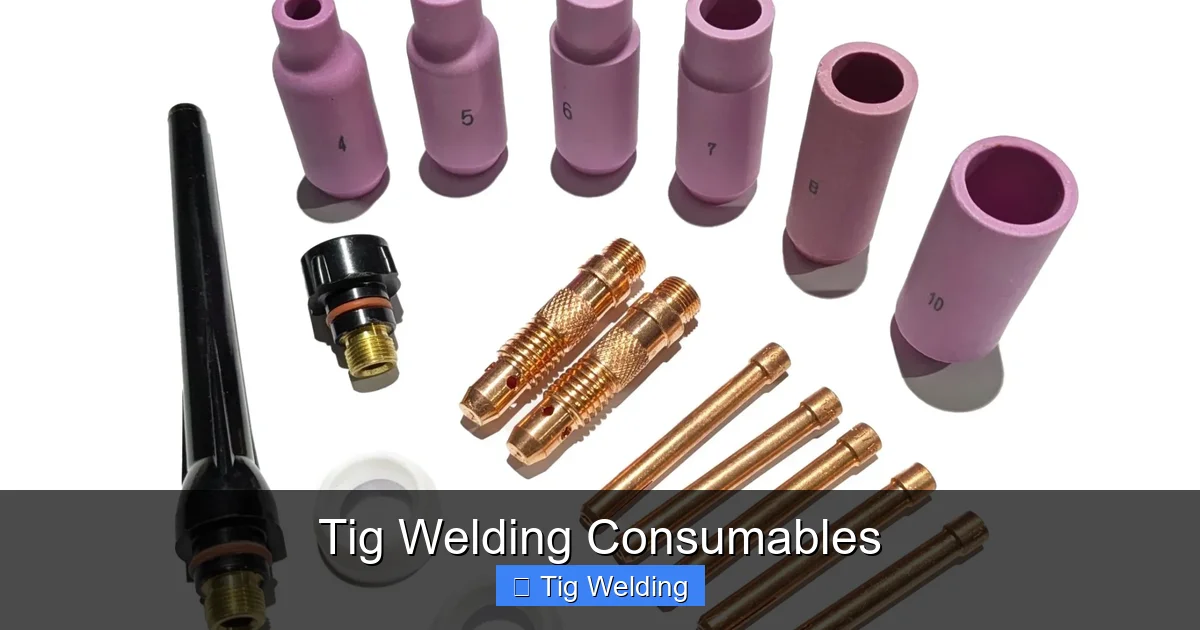
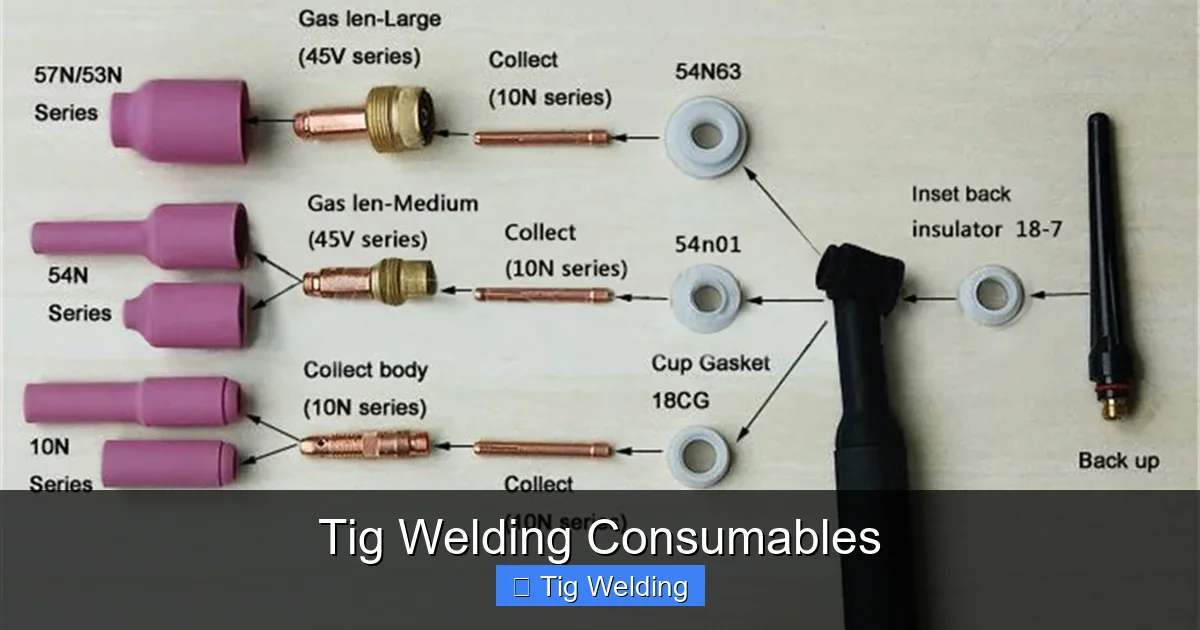
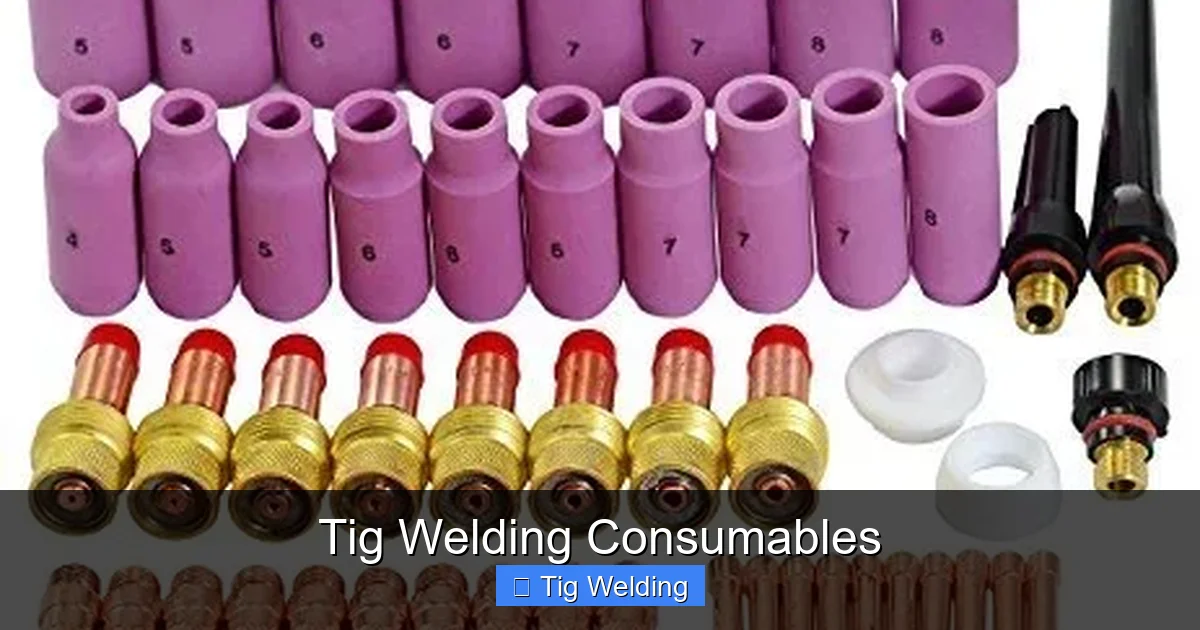
The TIG torch is what you hold to direct the tungsten, gas, and welding current. It has several consumable parts that need attention.
Torch Body and Handle
These are ergonomic and house the internal components. They come in various types, including air-cooled and water-cooled. Water-cooled torches are used for higher amperage applications to prevent overheating.
Collet and Collet Body
The collet holds the tungsten electrode securely in place. The collet body fits into the torch head and aligns the collet and gas flow.
- Matching Size: The collet and collet body must match the diameter of your tungsten electrode. For example, if you’re using 1/16″ tungsten, you need a 1/16″ collet and collet body.
- Maintenance: Ensure the collet is clean and not damaged. A worn or dirty collet can lead to poor tungsten contact and arc instability.
Gas Nozzle (Cup)
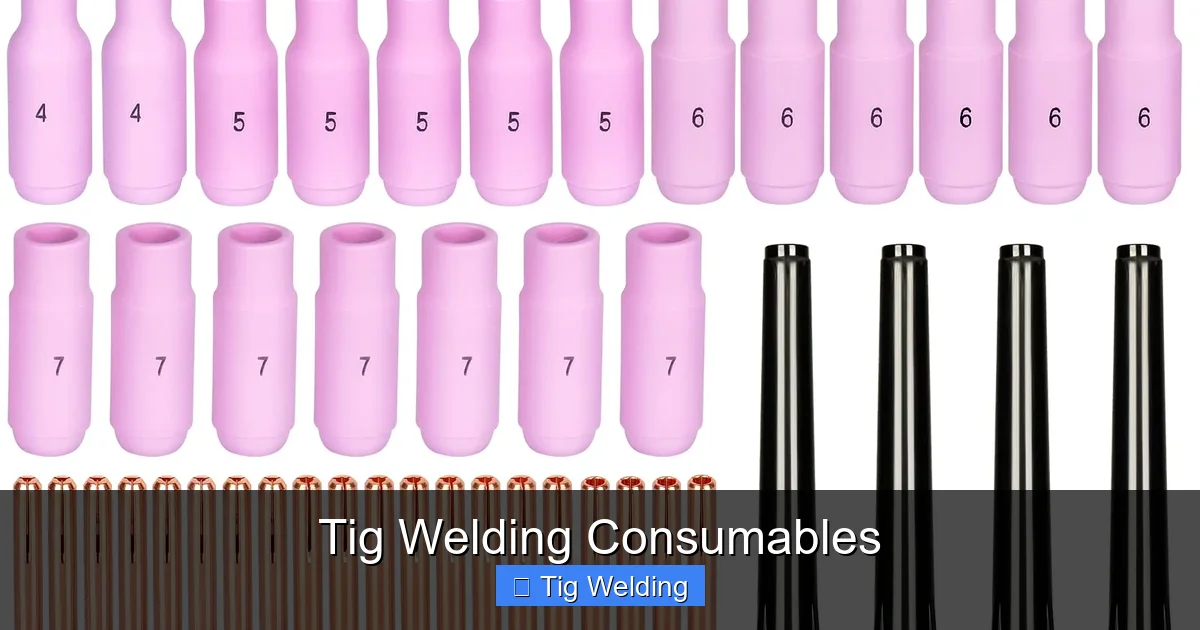
The gas nozzle, often called a cup, directs the shielding gas around the tungsten and onto the weld pool. Nozzles come in various sizes and materials (ceramic is common).
- Size Matters: A larger nozzle provides a wider shield of gas, which is beneficial for welding thicker materials or when you need a broader coverage. Smaller nozzles are good for tight spaces or intricate welds.
- Material: Ceramic nozzles are common and effective. Some specialized applications might use glass or quartz cups for better visibility.
Practical Tip: Keep your gas nozzle clean. Spatter can build up on the inside of the nozzle, restricting gas flow.
Back Cap
The back cap secures the tungsten electrode assembly to the torch body. It can be short, medium, or long, affecting how much tungsten you can extend from the nozzle. A longer back cap is useful for reaching into tighter areas.
5. Other Consumables and Accessories
While the above are the primary consumables, a few other items are important for effective TIG welding.
- Ceramic Cups (for specific torches): While often included with the torch, they are considered consumables as they can break.
- O-rings and Seals: These prevent gas leaks in the torch assembly. They can degrade over time and need replacement.
- Electrode Holders (for sharpening): While not a consumable used in welding, a good holder makes grinding tungsten easier and safer.
- Anti-Spatter Spray: While not a direct consumable for the weld itself, it can be used on the torch nozzle and surrounding areas to make cleaning spatter easier, indirectly prolonging the life of the nozzle.
Troubleshooting Common Issues Related to Consumables
Many common TIG welding problems can be traced back to issues with consumables.
Problem: Arc Wandering or Instability
- Cause: Tungsten electrode is contaminated, not properly ground (too blunt for DC, too sharp for AC), or the collet/collet body is dirty or damaged. Shielding gas may be too low or turbulent.
- Solution: Grind a fresh tungsten tip. Clean the collet and collet body. Check gas flow and nozzle integrity.
Problem: Porosity (Small holes in the weld)
- Cause: Insufficient shielding gas flow, drafts disturbing the gas shield, contamination on the base metal or filler metal (oil, grease, paint), or arc too far from the workpiece.
- Solution: Increase gas flow. Use wind screens. Clean base metal and filler metal thoroughly. Ensure correct arc length.
Problem: Tungsten Contamination (Tungsten gets into the weld)
- Cause: Arc length is too long, tungsten touches the weld pool, or shielding gas flow is inadequate. For AC welding, the tungsten tip is too pointed.
- Solution: Shorten the arc length. Ensure sufficient gas flow. For AC, round the tungsten tip.
Problem: Weld Cracking
- Cause: Incorrect filler metal selection (not matching the base metal properly), welding too hot or too fast without adequate filler addition, or excessive restraint on the joint.
- Solution: Double-check filler metal compatibility. Adjust amperage and travel speed. Ensure proper joint preparation and fit-up.
Conclusion
Mastering TIG welding consumables is a journey, but a rewarding one. By understanding the role of each component—from the precision of the tungsten electrode and the compatibility of the filler metal to the protective blanket of shielding gas and the functionality of your torch—you gain significant control over your welding outcomes. Always remember to select the right consumables for your specific application, maintain them meticulously, and troubleshoot issues by looking at these fundamental elements first. With practice and a solid grasp of your TIG welding consumables, you’ll be well on your way to achieving the professional, high-quality welds TIG welding is renowned for. Happy welding!
