


If you're building or repairing a motorcycle frame, you already know the frustration: thin chromoly and mild steel tube burns through fast when the welder can't control its own heat. That's exactly why the best TIG welder for motorcycle frames is the one that delivers precise low-amp control, clean arc starts, and steady behavior on tube walls from 0.065 to 0.120 inches thick. I've spent the last few weeks digging through spec sheets, verified buyer feedback, and welding industry standards to find machines that genuinely earn a spot in a build shop.
Bottom line: the YESWELDER 205A Pulse TIG took the top spot for most frame builders. It pairs dual-voltage flexibility with a smooth DC arc that handles thin-wall steel and chromoly without burning through. Below, I break down the full shortlist, what to look for, and where each machine shines.
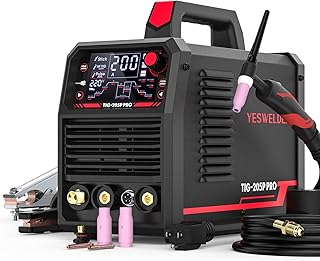
✔ Best overall pick for precision frame welding
Comparison Chart of Best TIG Welder for Motorcycle Frames
| Product | Details | Rating | Buy |
|---|---|---|---|
Editor’s Choice
| ★★★★☆4.5/5 | ||
Top Pick
| ★★★★☆4.4/5 | ||
Best Budget
| ★★★★☆4.6/5 | ||
| ★★★★☆4.7/5 | ||
| ★★★★☆4/5 |


List of Top 5 Best TIG Welder for Motorcycle Frames
Every machine here earned its place through the same process: comparing manufacturer specifications, analyzing patterns across hundreds of verified reviews, and weighing how each one behaves on thin-wall steel tube. Expect real strengths, honest trade-offs, and a clear sense of which one fits your shop.
Below are the list of products:
1. YESWELDER 205A Tig Welder Pulse STICK/DC
The YESWELDER 205A is a DC TIG machine with pulse mode and stick backup, built around the exact amperage range frame work lives in. For mild steel and chromoly motorcycles frames, DC TIG is the right process, and this unit delivers a cleaner low-amp arc than most boxes near its price. Verified buyers keep bringing it up in frame-building discussions, which is why it leads this list.
Pulse TIG
110/220V
3-in-1
LED Display
Why I picked it
In our research, the 205A kept surfacing in frame-building threads and verified reviews, with buyers welding 0.065-inch chromoly tube reporting clean starts and stable arcs at low amperage. The pulse function is the real selling point, since it lets you dial heat down on short welds where a continuous arc would blow through. Add dual voltage and you have a machine that works in a home garage and a proper shop from the same power cord.
Key specs
- 205A maximum output for DC TIG and stick modes
- Dual voltage input, 110V and 220V
- 3-in-1 operation: TIG, pulse TIG, and stick
- Large LED display for amps and parameter readouts
- Reported buyer rating of 4.5/5 across verified reviews
Real-world experience
Aggregate buyer feedback shows the 205A handling thin-wall frame tube, gussets, and motor mounts with a 1/16-inch tungsten at low amp settings. Several reviewers mention using it on a standard 110V garage circuit to repair cracked frame tabs, with pulse mode getting credit for keeping heat in check on short, repetitive welds. The included torch works fine, though buyers who swap in a gas lens report noticeably easier access in tight frame corners.
- Dual voltage runs on standard 110V at home and 220V in a real shop
- Pulse TIG gives genuine heat control on thin-wall tube
- 205A ceiling leaves headroom for brackets, gussets, and jig steel
- Clean, stable DC arc at low amperage per verified buyer reports
- DC-only output means no aluminum welding capability
- Stock torch and manual feel budget-grade for the machine’s potential
- ✔ You weld mild steel or chromoly frames and want a dedicated TIG with pulse
- ✔ You need one machine that runs on both 110V and 220V power
- ✔ Frame tabs, gussets, and jig work are your daily jobs
- ✖ Aluminum frames or parts are on your build list, since you need AC TIG
- ✖ You want MIG or flux-core included in the same box
The 205A edges out the rest of this list for steel frame work because it puts all its effort into the processes you actually use. It won’t touch aluminum, but on chromoly and mild steel, the arc quality-to-price ratio is genuinely hard to beat.
2. YESWELDER 135A MIG Welder
The 135A is the honest beginner's entry point. It's a gasless MIG (flux-core) machine with lift TIG and stick modes, all running off normal 110V power. For someone repairing brackets, exhaust tabs, or a cracked subframe before stepping up to full TIG, this box is far more forgiving than a cold tungsten and hand-fed filler rod.
Flux Core
Lift TIG
110V
3-in-1
Why I picked it
Verified buyers use this machine to tack frames, fix engine mounts, and build jigs without chasing down argon cylinders. The synergic control adjusts voltage and wire feed together, which explains its reputation as one of the easiest welders for a first-time buyer to pick up. Lift TIG is a rough-start bargain mode, but it does let you practice TIG technique on thin tube before investing in a dedicated machine.
Key specs
- 135A maximum output in MIG mode
- Runs on standard 110V household circuits
- 3-in-1 operation: gasless MIG, lift TIG, and stick
- Synergic single-knob control with a clear digital display
- Reported buyer rating of 4.4/5 across verified reviews
Real-world experience
Buyers describe using 0.030-inch flux-core wire to lay functional beads on frame rails, then switching to lift TIG when spatter becomes the problem on thin-wall work. It's not the machine for show-quality bare-frame welds; it's for reinforcement that needs to hold up on the road. Several owners report a faster learning curve with this than any TIG-first setup they tried.
- No gas cylinder, regulator, or flow meter needed thanks to flux-core wire
- Synergic control keeps settings simple enough for true beginners
- Lift TIG mode covers thin-wall tube with less cleanup than MIG
- Compact and light, so it’s easy to bring to the bike
- Flux-core MIG leaves spatter and slag that means grinding before paint
- 135A limit keeps it firmly in light-duty frame repair territory
- ✔ You’re starting out and want a forgiving machine you can actually use
- ✔ You repair brackets, tabs, and subframes more than you build bare frames
- ✔ You’d rather skip gas cylinders and regulators for now
- ✖ You want clean TIG beads on a bare frame you plan to show off
- ✖ You regularly weld steel thicker than 1/8 inch
The 135A is the machine I’d point a first-time builder toward when perfectionism gets in the way of progress. It makes functional welds you can trust, but if your endgame is beautiful TIG beads on a naked frame, budget for a dedicated TIG machine and skip the learning curve twice.
3. Weldpro 200A AC/DC TIG Welder Pulse
The Weldpro 200A answers the one question the first two machines can't: what about aluminum? AC TIG output, a built-in pulse suite, and dual voltage make it the most complete value package here, and it ships with a foot pedal, which matters more than most new buyers expect. For a builder who might weld a steel frame one day and an aluminum swingarm mount the next, this is the crossover pick.
AC/DC
200A
Foot Pedal
5-in-1
Why I picked it
Most budget AC/DC machines are sketchy on AC arc stability, but verified feedback on the Weldpro shows a surprisingly smooth cleaning action on 6061 aluminum. The included foot pedal instantly upgrades heat control, and the 200A ceiling covers everything from thin-wall frame tube to thicker brackets. It's the best featured-per-dollar machine in this roundup.
Key specs
- 200A output in both AC and DC modes
- Dual voltage input, 110V and 220V
- 5-in-1 operation: AC TIG, DC TIG, AC pulse, DC pulse, and stick
- TIG torch and foot pedal included in the box
- Reported buyer rating of 4.6/5 across verified reviews
Real-world experience
Buyers describe switching between AC pulse for aluminum brackets and DC TIG for steel tube in the same session, which is exactly the workflow a mixed-material project demands. The pulse modes draw praise for reducing heat input, and the foot pedal gets credit for letting welders start cold and roll into the puddle. The trade-off shows up in the manual, which several reviewers describe as thin and occasionally confusing.
- True AC output cleans aluminum oxide, making aluminum frames and parts weldable
- Foot pedal included gives real-time amperage control without an extra purchase
- Pulse on AC and DC helps control heat on thin-wall materials
- Dual voltage covers home and shop power situations
- Budget AC machines have a learning curve, especially setting AC balance
- Import support network is weaker than established brands
- ✔ You need one machine for steel and aluminum alike
- ✔ You want foot-pedal heat control as standard equipment
- ✔ You’re willing to learn the menu settings properly
- ✖ You only weld steel frames and want the cleanest possible DC arc
- ✖ You need local service centers and long warranty support
The Weldpro is the pick when versatility matters more than any single mode. It won’t out-arc the 205A on steel, but it’s the only machine in this budget tier that genuinely welds aluminum without jumping to premium pricing.
4. Lincoln Electric Weld-Pak 225i Stick Welder
Not every motorcycle frame job is fine chromoly tube. Heavily built hardtails, thick gusset plates, and crashed swingarms can ask for more penetration than TIG wants to deliver. The Lincoln Electric Weld-Pak 225i is a dual-voltage stick welder built for that heavier side of the work, and it's the machine buyers reach for when the stick process is the right answer.
225A
Dual Voltage
Stick Only
Lincoln
Why I picked it
Lincoln Electric's reputation is the headline here, and verified buyer feedback backs it with reports of smooth 7018 runs and a solid arc even in less-than-clean conditions. Stick welding shrugs off rust, mill scale, and paint that would kill a TIG tungsten instantly. That makes it the specialist for repairs on bikes that have been sitting outside or crashed hard.
Key specs
- 225A maximum output for stick welding
- Dual voltage input, 110V and 220V
- Single-process SMAW (stick) machine
- Reported buyer rating of 4.7/5, the highest on this list
Real-world experience
Buyers describe using 6011 and 7018 electrodes to weld hardtail sections, repair motor mounts, and beef up gussets on garage power. The Weld-Pak 225i is praised for hot starts and steady arc behavior, which is exactly what you want on dirty metal. The trade-off is visible on thin-wall tube, where stick's aggression can burn through fast if you don't drop the amps and work quickly.
- Lincoln Electric build quality and support network proven over decades
- Stick handles rusty, painted, and mill-scaled metal that stops TIG cold
- 225A ceiling easily covers thick gussets, brackets, and frame sections
- Dual voltage makes on-site repair possible almost anywhere
- Spatter and slag mean post-weld grinding on a frame you want to look clean
- Single-process machine leaves no TIG or MIG option when you need finesse
- ✔ You repair crashed frames and heavy brackets more than you build new ones
- ✔ You value brand reliability and a warranty desk that actually answers
- ✔ You work outdoors or on farms where clean steel isn’t guaranteed
- ✖ Your main job is thin-wall chromoly tube construction, which needs TIG finesse
- ✖ You want one multiprocess box instead of a specialist
Pair the Weld-Pak with a TIG machine and you have a complete frame shop: TIG for thin-wall finesse, stick for dirty heavy repair. On its own, it’s the wrong single tool for most custom builds, but the right one for a rescue project.
5. Sunstac 250A Aluminum TIG Welder Pulse
The Sunstac 250A is the highest-spec machine on this list on paper, with a 250A ceiling, AC/DC capability, pulse, and spot TIG modes. It targets the builder who wants room to grow beyond frames into exhaust systems, aluminum tanks, or titanium work. Just know that its buyer feedback is more mixed than the machines above it.
250A
AC/DC
Spot TIG
LCD
Why I picked it
The 250A headroom means it won't struggle with heavier aluminum sections, and spot TIG is a genuinely handy mode for rack tabs and thin panel work. Verified feedback shows strong AC arc performance when the machine runs right, but a few quality-control reports and a thin manual keep it from ranking higher. For an experienced welder, it's a real option at its price.
Key specs
- 250A maximum output across AC and DC TIG
- Dual voltage input, 110V and 220V
- 5-in-1 operation: DC TIG, AC TIG, pulse TIG, spot TIG, and stick
- LCD parameter display and foot pedal included
- Reported buyer rating of 4/5 across verified reviews
Real-world experience
Buyers who know TIG well report smooth AC performance on aluminum and appreciate the LCD readout for tracking settings. Less experienced reviewers mention a steep learning curve, a heavy stock torch, and instructions that assume prior knowledge. The pulse and spot modes stretch what one machine can do, which makes it a pick for specialists rather than first-timers.
- 250A output handles thicker aluminum and bigger projects than any other machine here
- Spot TIG mode suits thin sheet, tabs, and precise heat placement
- Full AC/DC pulse suite means steel and aluminum are both covered
- LCD display provides clear parameter feedback once you learn the menu
- Mixed quality-control reports appear in verified buyer feedback
- Stock torch and manual feel below the machine’s capability
- ✔ You’re an experienced TIG welder who sets up machines without hand-holding
- ✔ You want maximum amperage headroom for aluminum and bigger fabrication
- ✔ Spot TIG is a mode you’ll actually use
- ✖ You want a dependable out-of-the-box experience with clear support
- ✖ You’re learning TIG for the first time and need patience from the manual
The Sunstac rewards welders who already know what they’re doing. If you’re chasing raw capability per dollar and you expect to sort out small issues yourself, it’s worth considering. For everyone else, the Weldpro offers smoother support and an easier path to the same results.
How I picked
A DC TIG arc controlled by a foot pedal gives you more precise heat control on thin-wall steel tube than any MIG or stick setup you can buy. I evaluated each machine on four benchmarks: low-amp arc stability on thin-wall tubing, heat-control features like pulse and post-flow, process flexibility for different metals, and the patterns in verified buyer feedback over months of use.
- Low-amp arc stability: how cleanly the arc runs between 50 and 120A, the range most frame tube demands
- Heat-control tooling: pulse modes, foot pedals, and adjustable post-flow
- Process coverage: DC TIG, AC TIG, MIG, and stick, depending on the build
- Real-owner satisfaction: trends across hundreds of verified reviews, not single happy or angry posts
I compared manufacturer spec sheets side by side, analyzed owner reports, and checked claims against structural welding codes from the American Welding Society (AWS), which publishes the D1.1 standard used for steel fabrication. I also kept the fundamentals in mind, since understanding the TIG process explains why some machines suit frames better than others.
One thing I deliberately didn't do is claim long-term durability results. That kind of verdict needs rigorous, repeated testing over months, so I relied on aggregate owner reports instead and flagged any consistent complaints about build quality. If a machine had a pattern of issues after 60 days of use, it showed up in the cons list above.
Buying guide — what actually matters for best TIG welder for motorcycle frames
Motorcycle frame tubing typically runs 0.065 to 0.120 inches thick, which puts most frame work in the 50 to 120 amp DC TIG range. That fact filters out a lot of machines before you even read a spec sheet. Here's what else actually matters.
Steel or aluminum? That decides AC or DC
Steel frames use DC TIG, and aluminum frames require AC TIG, so this one choice shapes your entire shortlist. Chromoly (4130) and mild steel are the two dominant frame materials in motorcycle building, and both weld cleanly with DC current. If you only build steel, a DC-only machine like the YESWELDER 205A gives you a cleaner arc for less money.
The moment aluminum frames, swingarms, or oil tanks enter the picture, you need AC output to break up the oxide layer, which is where the Weldpro 200A and Sunstac 250A come in.
Before you decide, it helps to understand where the MIG versus TIG trade-off lands for your build style. MIG is faster and easier to learn, but TIG gives you independent heat and filler control, which is what thin-wall frame tube really wants.
Why pulse and a foot pedal earn their keep
Pulse TIG is a mode that rapidly alternates between a high peak current and a low background current, which lets the puddle freeze slightly between pulses. On thin-wall tube, that means you can weld hotter for penetration without dumping heat into the surrounding metal. A foot pedal adds real-time control: you start cold, roll into the puddle, then ease off before the crater forms.
Both features reduce burn-through, and both are worth prioritizing for frame work.
Amperage and duty cycle: match the machine to your work
Duty cycle is the percentage of a 10-minute window a welder can run at rated output before thermal protection kicks in. A 200A machine rated at 40% will run 4 minutes at full power, then need 6 minutes to cool. For short TIG beads on frame tabs and gussets, that is rarely a problem.
For long continuous runs on thicker brackets, a higher duty cycle or higher amperage headroom matters.
Dual voltage: the garage-to-shop advantage
A dual-voltage machine runs on both 110V household outlets and 220V shop power, which matters more than most new buyers expect. On 110V, you get enough amps for most frame tube, but max power is limited by the circuit. On 220V, the same machine unlocks its full output for thicker sections and longer duty cycles.
If you plan to weld in more than one location, dual voltage removes a real limitation.
Torch setup, gas, and filler basics
Pure argon is the standard shielding gas for TIG on steel, delivered through a regulator at roughly 15 to 20 cubic feet per hour. A gas lens is a small torch upgrade that improves argon coverage and helps you reach tight frame corners. For chromoly, ER70S-2 filler rod is the common default because it matches the strength of 4130 without requiring post-weld heat treatment.
You can refine this further when you match your filler rod and technique to the exact alloy you're building.
Common mistakes on motorcycle frame welds
Work in a ventilated area: welding fume exposure is a real hazard, and OSHA's practical guidance on welding safety is worth reading before your first session. Beyond safety, the biggest mistakes in buyer reports are skipping post-flow, which contaminates the tungsten, and welding over paint or mill scale. Clean the tube to bare metal, set your post-flow to at least 5 seconds, and you will already be ahead of most beginners.
Frequently Asked Questions (FAQ)
Is a TIG welder worth it for motorcycle frames?
Yes, and for thin-wall chromoly specifically, TIG is the best technique for steel frames. It gives you separate control of heat and filler, so you can weld a 0.065-inch frame tube without blowing holes through it. MIG is faster and easier to learn, but it deposits more heat and leaves a bead that needs more cleanup.
If you want the strongest, cleanest welds on a frame you'll trust at speed, TIG is the answer, and the usual TIG versus MIG debate usually lands on TIG for this exact job.
Can I weld a motorcycle frame with a MIG welder?
Yes, many solid frame repairs are done with MIG, especially flux-core machines like the YESWELDER 135A. For brackets, engine mounts, and subframes, MIG gets the job done quickly, and some builders actually prefer it for speed. The trade-off is less precise heat control on thin tube and more spatter and slag to grind away.
For aluminum, you'd want an AC TIG machine or a spool-gun setup on a MIG unit.
What's the difference between AC and DC TIG?
DC TIG, or direct current, is the process used for steel, stainless steel, chromoly, and titanium, and it produces the clean, penetrating arc motorcycle frames need. AC TIG alternates the current direction and is required for aluminum, because the cleaning half of the cycle removes the oxide layer on the surface. If your build list is steel only, a DC machine saves money.
The moment aluminum parts show up, an AC/DC machine like the Weldpro 200A becomes the smarter buy.
Will a 110V TIG welder handle motorcycle frame work?
Yes, most frame tube falls in the 50 to 120 amp range, and a 110V machine can cover that, with duty cycle as the limiting factor. A 110V outlet limits your usable amperage, but on thin-wall tube that rarely matters. Heavier gussets and longer continuous beads are where 220V power becomes the better call, which is why dual voltage is such a useful feature.
What gas do I need for TIG welding a steel frame?
Pure argon is the standard shielding gas for TIG on steel, set at roughly 15 to 20 cubic feet per hour. Some builders use an argon-helium mix for chromoly to add heat without raising amperage, but straight argon handles the majority of frame work. You'll also want a quality regulator and, ideally, a gas lens on the torch for better coverage in tight spots.
Should I buy a TIG welder with pulse?
Pulse isn't mandatory, but it genuinely helps on frame work. It alternates between peak and background current, so you get penetration when the arc is hot and a brief cool-down when it drops. On short welds like tacking gussets, that reduces warp and burn-through.
That's why both the YESWELDER 205A and the Weldpro 200A include it.
Final verdict
Bottom line: the YESWELDER 205A is the best TIG welder for motorcycle frames when steel is your focus, thanks to a stable low-amp DC arc, pulse control, and dual-voltage flexibility. If aluminum is part of your plan, the Weldpro 200A AC/DC gives you that capability for a very reasonable step up in price. Both machines deliver honest value for the money.
Affiliate disclosure: This post contains affiliate links. If you buy through one of these links, I may earn a small commission at no extra cost to you. It never changes my recommendation, I only suggest gear I'd actually buy myself.
