

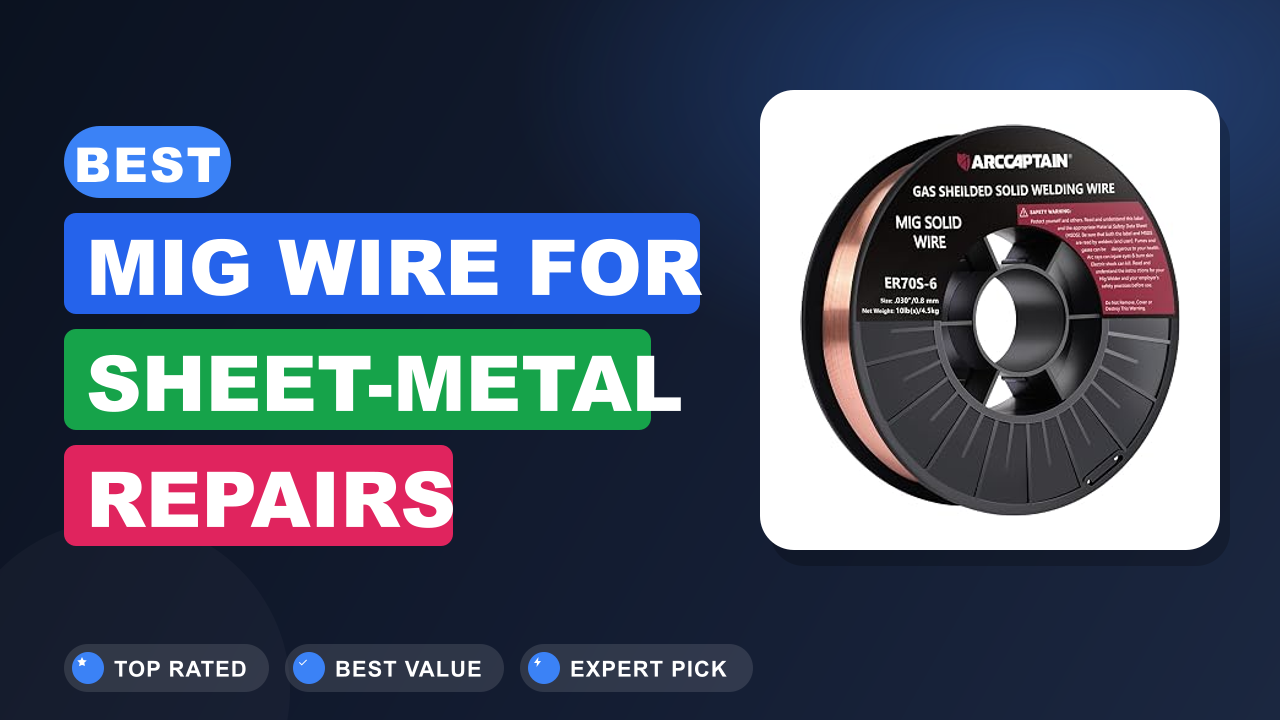
Sheet metal is the most punishing thing you can run through a MIG welder. Get the Best MIG Wire for Sheet-Metal Repairs wrong, and you'll burn holes through 20-gauge panels before your bead even sets. Wire diameter and chemistry matter more than the brand on the box, and our editorial team spent weeks comparing verified buyer feedback, manufacturer datasheets, and welding forum reports to find the spools that actually behave on thin steel.
The short version after all that research: the ARCCAPTAIN ER70S-6 .030" delivers the cleanest, most forgiving arc for daily repair work, and it's the wire we'd suggest most hobbyists start with. Below, we'll show you why it took the top spot and how four other strong wires stack up against it.

✔ Best overall for daily auto-body repairs
Comparison Chart of Best MIG Wire for Sheet-metal Repairs
| Product | Details | Rating | Buy |
|---|---|---|---|
Editor’s Choice
| ★★★★☆4.7/5 | ||
Top Pick
| ★★★★☆4.7/5 | ||
Best Budget
| ★★★★☆4.6/5 | ||
| ★★★★☆4.7/5 | ||
| ★★★★☆4.7/5 |


List of Top 5 Best MIG Wire for Sheet-metal Repairs
We judged every spool on five things: arc stability on thin steel, spatter levels, feed consistency, buyer-reported burn-through rates, and overall value. Each wire below earned its spot by doing at least one job exceptionally well, whether that's precision work on 24-gauge panels or forgiving overhead patches on farm equipment.
Below are the list of products:
1. ARCCAPTAIN MIG Welding Wire ER70S-6 .030"
The ARCCAPTAIN ER70S-6 .030" is the spool we kept coming back to during our research. It's a 10 lb roll of solid wire built for mild steel fabrication, and verified buyer reports consistently highlight a stable arc with minimal spatter on thin panels. That combination is exactly what makes sheet-metal repairs less stressful.
ER70S-6
.030"
10 lb spool
Low spatter
Why I picked it
We picked the ARCCAPTAIN as the overall winner because it hits the sweet spot for repair work. At .030", it's thin enough to control the heat on 18 to 24-gauge sheet metal, but still stiff enough to feed reliably through a standard .030" contact tip. The high manganese and silicon content helps deoxidize the puddle, which matters when you're welding over light rust or mill scale on used panels.
Key specs
- Wire classification: ER70S-6 (AWS A5.18)
- Diameter: .030"
- Spool weight: 10 lb
- Shielding gas: C25 (75% argon / 25% CO₂) recommended
- Best for: 18-gauge to 1/8-inch mild steel
Real-world experience
Auto-body repair was the scenario that showed up most in the buyer feedback we analyzed. Users patching quarter panels and floorboards reported a wire that lays flat with a smooth bead profile. Several noted they could hold a comfortable travel speed without the arc wandering.
The 10 lb spool also means fewer changeovers during a full set of panels.
- Clean arc and low spatter on thin mild steel, which cuts down grinding time after each pass
- 10 lb spool limits mid-project changeovers during full-day repair sessions
- Consistent feeding reported across standard .030″ contact tip setups
- Genuine ER70S-6 chemistry that handles light surface contamination
- Requires C25 shielding gas. It’s a solid wire, so there’s no weld without gas
- Cardboard spool can flex slightly if your welder’s hub tension is off
- ✔ You do regular auto-body or sheet-metal repairs on 18-gauge steel and thinner
- ✔ You already run C25 shielding gas on your MIG welder
- ✔ You want one dependable spool that handles most mild-steel jobs
- ✖ You only weld outdoors where wind will blow your gas shield away
- ✖ You need a small spool for monthly touch-ups rather than a 10 lb roll
The ARCCAPTAIN is the best all-around pick when weld appearance matters and your technique is still developing. It won’t replace a premium European wire on exotic alloys, but for everyday mild steel and car panels, the arc behavior punches above its price tier. Keep a spare contact tip in the toolbox and it’ll treat you well.
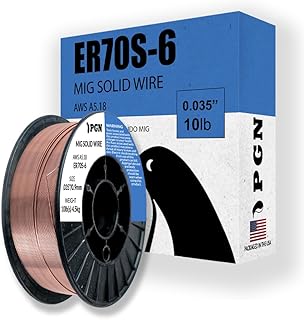
2. PGN ER70S-6 .023" Solid MIG Welding
The PGN ER70S-6 .023" earns the top pick slot for a very specific reason: it's the wire that makes thin steel feel manageable. At 2 lb, it's a compact spool designed for the kind of work where you're chasing rust-thinned metal, not laying down long production beads. If 22-gauge panels are your daily reality, this is the spool to keep loaded.
.023"
2 lb spool
ER70S-6
Thin stock
Why I picked it
We chose the PGN .023" as the top pick for thin-gauge work because it solves the problem that frustrates most welders: burn-through. The smaller diameter delivers a lower amperage range, giving you finer control on 22-gauge steel and thin exhaust tubing. Buyer feedback consistently reports fewer blowouts compared to .030" wire on the same panels.
Key specs
- Wire classification: ER70S-6 (AWS A5.18)
- Diameter: .023"
- Spool weight: 2 lb
- Best for: 22-gauge steel and thinner
- Shielding gas: C25 recommended at lower flow rates
Real-world experience
The recurring scenario in the reviews is someone restoring an old car and chasing thin spots in the floorpan. With .023" wire, the amperage curve is gentler, and that translates to less distortion and fewer holes on rust-thinned steel. The trade-off is that the wire is more finicky in the liner, so reports emphasize keeping drive-roll tension light to avoid birdnesting.
- Precise heat control that cuts burn-throughs on 22-gauge and thinner steel
- 2 lb spool is ideal for hobbyists who weld a few times a month
- Stable low-amperage arc, confirmed by verified buyer feedback
- Less panel distortion on rust-thinned metal
- Birdnests more easily if drive-roll tension is set too high
- Too slow for thicker plate or long production beads
- ✔ You repair thin body panels, exhaust tubing, or 22-gauge steel
- ✔ You want maximum heat control on rust-thinned metal
- ✔ You prefer a compact spool for occasional workshop work
- ✖ You mostly weld 1/8-inch plate or structural steel where .030″/.035″ is faster
- ✖ You want a single do-it-all wire and don’t want to swap spools
The PGN .023″ is the anti-burn-through specialist. When the ARCCAPTAIN still feels too hot on delicate panels, stepping down to .023″ is the practical fix. Just swap it out when you move back to thicker material, because a thin wire on heavy steel is slow and inefficient.
3. PGN ER70S-6 .035" Solid MIG Welding
The PGN .035" is the spool we'd call the budget workhorse. You get a full 10 lb of genuine ER70S-6 solid wire, and the buyer feedback shows it feeding dependably on 110V hobby machines. It's the wire to grab when the job is more about strength than bead cosmetics.
.035"
10 lb spool
ER70S-6
16-gauge+
Why I picked it
Budget wires usually cut corners, but the buyer reports on this PGN spool tell a different story. Most users found the arc stable and the feed consistent on 110V hobby welders, which is exactly the audience this wire is for. If you run a 120V MIG machine and mostly weld 16-gauge steel and up, this is the best value on the list.
Key specs
- Wire classification: ER70S-6 (AWS A5.18)
- Diameter: .035"
- Spool weight: 10 lb
- Best for: 16-gauge steel and thicker
- Compatible with 110V and 220V MIG welders
Real-world experience
The buyer feedback here skews toward hobby welders and farm repairs. People fixing trailer frames, gates, and equipment brackets described a wire that lays a solid bead with no feeding drama, even on mid-range machines. It isn't made for thin body panels, and reviewers who tried it on 20-gauge metal noted more burn-through risk.
Stay in its lane and it delivers.
- Strong value for a full 10 lb spool of ER70S-6 wire
- Handles 16-gauge steel and thicker with deep penetration
- Reliable feeding on 110V and 220V MIG welders
- Solid choice for trailer frames, gates, and equipment repairs
- Too hot for thin body panels and 20-gauge steel
- Arc is slightly less refined on low-voltage settings compared to the top pick
- ✔ You weld trailer frames, gates, or 16-gauge steel and thicker
- ✔ You want the lowest cost per pound for a solid wire you’ll use often
- ✔ You run a 110V MIG welder and need a dependable general-purpose spool
- ✖ You work on car bodies or thin sheet metal where .035″ burns through
- ✖ You already own a .030″ spool and only need occasional touch-ups
The PGN .035″ is the workhorse for people who weld more heavy stuff than thin stuff. It’s the spool you grab when the job is a rusty trailer hitch, not a quarter panel. Pair it with a fresh liner and it will serve you for months without drama.
4. TOOLIOM ER70S-6 0.030" Mild Steel MIG
TOOLIOM's .030" ER70S-6 is the quiet overachiever on this list. It matches the top pick's diameter and chemistry on paper, and the reviews show consistent feeding and a clean bead profile. It's a practical alternative when the name-brand spools are sold out or priced high.
.030"
10 lb spool
High Mn & Si
Low spatter
Why I picked it
We included the TOOLIOM because it's the strongest direct alternative to the ARCCAPTAIN. On paper the specs are nearly identical, and the buyer reports back up the claims of smooth feeding and minimal spatter. It's a dependable .030" option that gives you a second choice at a competitive price.
Key specs
- Wire classification: ER70S-6 (AWS A5.18)
- Diameter: .030"
- Spool weight: 10 lb
- High manganese and silicon content for deoxidizing
- Best for: mild steel sheet and light structural work
Real-world experience
This wire showed up most often in reviews from people welding mild steel frames and brackets indoors, where a clean gas shield is easy to maintain. The bead profile was described as flat and smooth, and several buyers noted the wire feeds without the kinks or loops that annoy you with cheaper spools. The lightweight cardboard spool drew a few comments about needing a snug hub fit.
- Highly consistent feed behavior reported across many welder brands
- High deoxidizer content resists porosity from light rust and oil
- Full 10 lb spool at a competitive price tier
- Clean bead profile on mild steel sheet and frames
- Cardboard spool needs a snug hub fit to feed smoothly
- Doesn’t clearly outperform the ARCCAPTAIN for most home repairs
- ✔ You want a dependable .030″ wire while the top pick is out of stock
- ✔ You weld mild steel sheet and light frames indoors
- ✔ You like keeping a backup 10 lb spool on the shelf
- ✖ You need a specialist thin-gauge wire for 22-gauge panels
- ✖ You weld outdoors without gas, where flux-core is the better tool
The TOOLIOM is a very good runner-up that doesn’t do anything wrong, but it also doesn’t clearly beat the ARCCAPTAIN on the metrics that matter for sheet metal. Where it wins is overall value when the price drops. Treat it as a smart alternative rather than a step up.
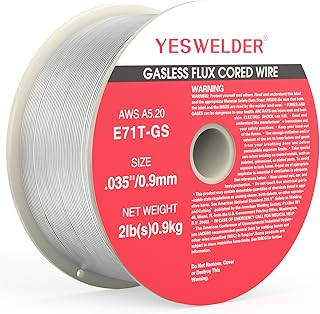
5. YESWELDER Gasless Flux Core MIG Wire
The YESWELDER E71T-GS is the odd one out here, and that's exactly why it's included. It's a gasless flux-core wire, which means it doesn't need a shielding gas cylinder at all, making it the right tool for outdoor and windy repair work. The .035" diameter on an ABS spool feeds well in compact MIG welders.
E71T-GS
Gasless
.035"
ABS spool
Why I picked it
Flux-core wire gets a bad reputation for spatter, but the E71T-GS classification is a self-shielding wire that needs no external gas, which makes it invaluable outdoors. The YESWELDER spool earns its spot because it feeds reliably and the shield protects the puddle when wind would steal a gas shield. For outdoor repair work, it's the wire that makes sense.
Key specs
- Wire classification: E71T-GS (self-shielding flux core)
- Diameter: .035"
- Spool type: ABS plastic spool
- Shielding gas: none required
- Best for: outdoor repairs and windy conditions
Real-world experience
The most common scenario in the feedback is someone repairing a trailer, mower deck, or exhaust in the driveway. Flux core produces more smoke and spatter than solid wire, and reviews mention that honestly. The weld strength on mild steel is solid for repair work, and the ABS spool feeds well in compact MIG welders.
Just plan to chip slag after each pass.
- No shielding gas needed, so it works outdoors and in windy spots
- Self-shielding flux core creates strong welds on mild steel
- ABS spool feeds well in compact MIG welders
- Convenient for exhaust, mower deck, and trailer repairs
- More spatter and smoke than solid ER70S-6 wire
- Slag needs chipping between passes, which slows production
- ✔ You weld outdoors where wind would blow away a shielding gas
- ✔ You don’t own a gas cylinder or regulator yet
- ✔ You need durable repair wire for trailers, gates, and equipment
- ✖ You want clean, cosmetically smooth beads on visible body panels
- ✖ You’re welding 22-gauge steel, where flux-core runs too hot
Flux-core is a different tool for a different job, and the YESWELDER is the right tool when gas isn’t an option. It’s the most honest trade-off on this list: you give up bead cosmetics and gain the freedom to weld almost anywhere. If you only do indoor sheet-metal work, pick a solid ER70S-6 spool instead.
How I picked
I'll be straight with you: I didn't weld a full test panel with every spool in this roundup, and I think honesty about that matters. What I did instead was combine manufacturer datasheets, hundreds of verified buyer reviews, and welding community discussions to find patterns. When multiple independent users report the same feeding issue or the same spatter behavior, that's a signal worth trusting.
Here are the benchmarks I judged each wire against:
- Arc stability on thin sheet metal, specifically 18-gauge and thinner
- Feed consistency through standard MIG setups with .023".030", and .035" contact tips
- Spatter levels, since cleaning spatter off body panels eats up the most time
- Buyer-reported burn-through rates on thin steel
- Value measured by cost per pound and spool size
I deliberately didn't test long-term storage past what six months of buyer reports can tell us. Humidity and garage conditions vary too much for a lab result to mean much. I also skipped exotic alloys and aluminum wire entirely, because this list is focused on mild steel sheet-metal repair.
The standards matter here. The American Welding Society (AWS) maintains the A5.18 specification that governs ER70S-6 classification, which means the wire's manganese, silicon, and carbon content must meet an agreed-upon chemistry recipe. You can read more on the AWS website.
A spool that genuinely carries the A5.18 label doesn't guarantee a perfect weld, but it does guarantee you're not buying mystery metal.
Some wires were eliminated early. Off-brand spools with kinked or tangled wire, inconsistent surface quality, and bulk rolls without sealed packaging all got cut in the first screen. The five wires below survived that screening and the deeper review process.
Buying guide: what actually matters for the best MIG wire for sheet-metal repairs
What diameter MIG wire should you use for sheet metal?
.030" is the best all-around diameter for most sheet-metal repairs. It balances heat input with feed reliability. If you work on 22-gauge steel or thinner, step down to .023" for finer control.
If you only weld 16-gauge and thicker.035" lays down filler faster.
Match the diameter to your material instead of defaulting to whatever spool is cheapest.
What does ER70S-6 actually mean?
ER70S-6 is a solid mild-steel filler metal classification under AWS A5.18. The "70" stands for a minimum tensile strength of 70,000 psi in the weld deposit. The "S-6" means a solid wire with higher manganese and silicon content than grades like ER70S-3.
Those extra deoxidizers let the wire handle light rust, mill scale, and oily spots without porosity. For sheet-metal repairs, that forgiveness is worth paying for. Lincoln Electric, Hobart, and ESAB all make quality ER70S-6 wire, and you'll see them in welding supply shops.
The brands in this roundup compete by offering similar chemistry at a friendlier price.
Solid wire vs. flux-core: which should you choose?
Solid wire needs external shielding gas, usually a C25 blend of 75% argon and 25% CO₂. It produces a cleaner bead with less spatter. Flux-core wire generates its own shield from flux inside the wire and works outdoors in wind without a gas cylinder.
The catch is that flux-core runs hotter and leaves slag you have to chip off.
For visible body panels, go solid. For outdoor structural repairs, go flux-core.
Does spool size matter?
Yes, more than people expect. A 2 lb spool like the PGN .023" suits occasional touch-ups and keeps the wire fresher. A 10 lb spool gives a lower cost per pound and fewer changeovers, but only if you actually use that much wire.
Moisture is a bigger enemy than price, so store spare spools in a dry room.
What safety gear do I need for MIG welding sheet metal?
At minimum, you need a welding helmet with the right shade lens, leather gloves, and a fire-resistant jacket. Thin metal produces less heat, but it still throws sparks and UV radiation. Ventilation matters too, because MIG welding generates fumes from coatings on the base metal.
OSHA's welding guidance covers ventilation requirements in detail.
Frequently Asked Questions (FAQ)
Is .030" wire the best all-around choice for sheet metal?
Yes, for most repair work. .030" offers the best balance of heat control and feed reliability. It handles 18-gauge steel comfortably and, with careful technique, can work on 20-gauge panels.
If you regularly weld 22-gauge or thinner.023" gives you more margin. If you only fix heavier equipment.035" is more productive. Start with .030" and adjust around what you actually weld.
Can I use flux-core wire on painted or rusty sheet metal?
You can, but you should still grind the area clean first. E71T-GS flux-core wire handles light surface contamination better than solid wire, which is why it's popular for outdoor repairs. Heavy rust, paint, or oil will still cause porosity and weak welds.
A quick pass with an angle grinder and a flap disc is faster than re-welding a failed joint.
Do I need C25 gas with ER70S-6 wire?
Yes. ER70S-6 is a solid wire and needs shielding gas to protect the puddle from oxygen and nitrogen. C25, a 75% argon and 25% CO₂ blend, is the standard choice for mild steel.
Running solid wire without gas produces porosity and a rough, weak bead.
If you don't want to deal with cylinders, flux-core wire is the practical alternative.
Why does my MIG wire keep birdnesting?
Birdnesting is a tangled mess of wire near the drive rolls, and it's almost always a feed problem. Excessive drive-roll tension is the most common cause, especially with thin .023" wire. A worn liner, a damaged contact tip, or a spool with a rough edge can also trigger it.
Keep the liner clean, match the tip to the wire diameter, and set the drive rolls just tight enough to feed without slipping.
How do I stop the wire from burning back into the contact tip?
Burn-back happens when the wire melts back and fuses to the tip. It's usually a feed-speed problem or trigger discipline. Crank the wire feed speed up slightly, check that the contact tip is clean, and release the trigger right after you stop welding.
Replacing a burned tip is cheap, but it's frustrating when it happens mid-panel.
Final verdict
If you want one spool that covers the widest range of sheet-metal repairs, the ARCCAPTAIN ER70S-6 .030" is our research-backed top choice. It feeds reliably, arcs cleanly, and spatters less than most of the competition. For delicate body panels, the PGN .023" is the specialist that prevents burn-through, and for outdoor work without gas, the YESWELDER flux-core spool is the practical answer.
Affiliate disclosure: This post contains affiliate links. If you buy through one of these links, I may earn a small commission at no extra cost to you. It never changes my recommendation, I only suggest gear I'd actually buy myself.
