

MIG welding, also known as Gas Metal Arc Welding (GMAW), is a popular welding method that uses a continuous wire feed and shielding gas. In this guide, you’ll learn how MIG welding works, the necessary equipment, step-by-step instructions, and tips for achieving perfect welds.
How MIG Welding Works
If you’re interested in metal fabrication, DIY projects, or industrial manufacturing, understanding how MIG welding works is essential. MIG welding is one of the easiest welding methods for beginners and offers fast, clean, and strong welds. In this comprehensive guide, you’ll learn the basics of MIG welding, the equipment involved, the step-by-step process, and helpful tips to improve your skills. Let’s dive in!
Key Takeaways
- Understanding MIG welding: MIG welding uses a wire electrode fed through a welding gun to create a weld pool.
- Equipment needed: Includes a MIG welder, shielding gas, welding wire, and safety gear.
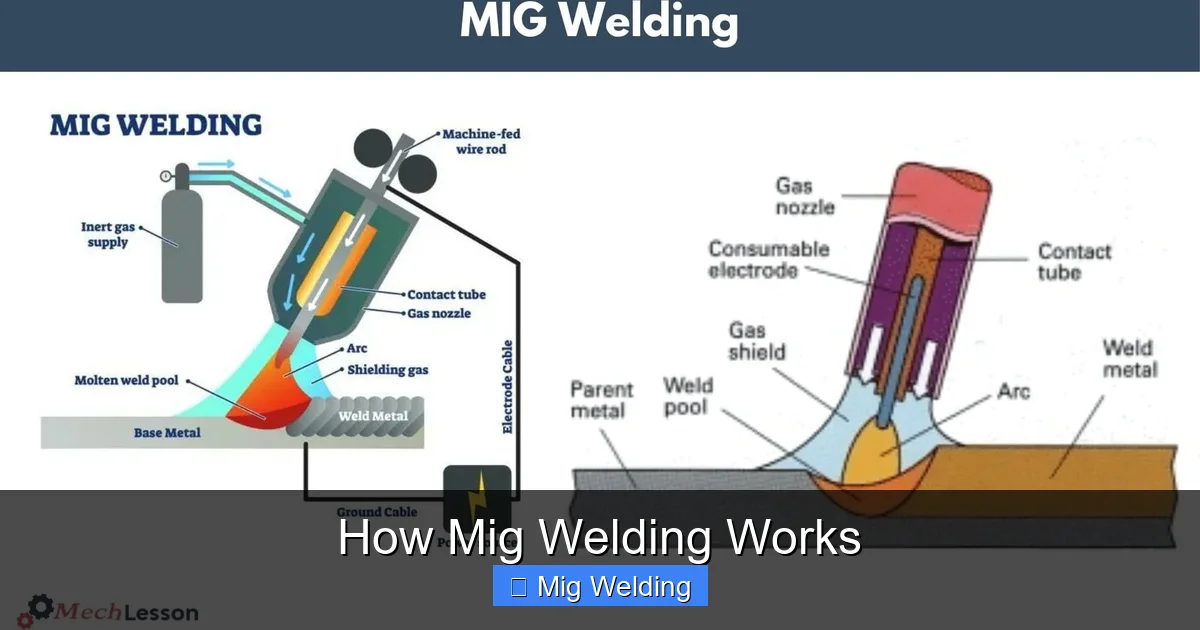
- How it works: An electric arc melts the wire and base metal, with shielding gas protecting the weld from contamination.
- Preparation is key: Clean the metal surface and set the correct parameters for a strong weld.
- Proper technique: Maintain steady hand movement, correct angle, and consistent speed for quality welds.
- Common issues and solutions: Troubleshoot problems like porosity, weak welds, or spatter by adjusting settings or technique.
What is MIG Welding?
MIG welding, short for Metal Inert Gas welding, also known as Gas Metal Arc Welding (GMAW), is a process that uses a continuously fed wire electrode and a shielding gas to join metals. It’s widely used in automotive repairs, construction, and manufacturing because of its speed, versatility, and ease of use.
The key to MIG welding is that the wire acts as both the electrode and the filler material. When the wire touches the workpiece and an electric current passes through, it forms an arc that melts both the wire and the base metal, creating a strong, durable weld. The shielding gas protects the molten weld pool from contamination, ensuring a clean, high-quality weld.
Essential Equipment for MIG Welding
Before starting, you need the right tools and safety gear:
Visual guide about How Mig Welding Works
Image source: weldguru.com
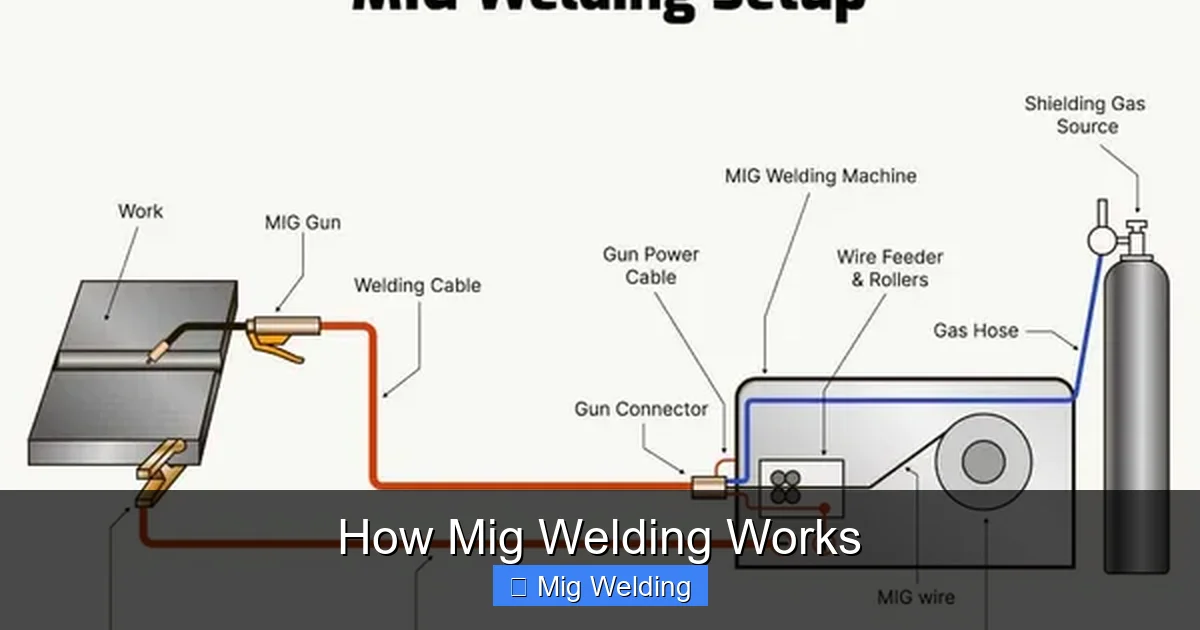
- MIG Welder: The main machine that supplies power and controls the welding process.
- Welding Wire: Filler metal in spool form, available in different materials like steel, stainless steel, or aluminum.
- Shielding Gas: Usually a mix of argon, carbon dioxide, or a blend, supplied through a gas cylinder.
- Welding Gun: Handheld device that feeds wire and directs the arc.
- Ground Clamp: Connects the workpiece to the welder to complete the circuit.
- Protective Gear: Helmet with a proper lens, gloves, apron, and safety glasses.
How Does MIG Welding Work? Step-by-Step
Step 1: Preparing Your Workspace and Materials
Start with a clean, well-ventilated area. Remove rust, paint, or debris from the metal surface. Use a wire brush or grinder for prep. Check your equipment for damage and ensure the gas cylinder is secure.
Visual guide about How Mig Welding Works
Image source: mechlesson.com
Tip: Always wear safety gear before starting to protect yourself from sparks and fumes.
Step 2: Setting Up the Equipment
- Install the wire spool: Load the correct wire size and type into the welder.
- Attach the welding gun: Connect it to the machine, ensuring all connections are tight.
- Connect the gas supply: Attach the shielding gas regulator and hose, then open the cylinder valve slowly.
- Set the parameters: Adjust voltage, wire feed speed, and amperage based on material thickness and type.
Tip: Consult your welder’s manual for recommended settings for different materials.
Step 3: Adjusting Settings and Testing
Before welding your actual project, do a test weld on scrap metal. Check for proper penetration, bead appearance, and spatter. Adjust settings as needed.
Tip: Use a steady hand and maintain a consistent speed for uniform welds.
Step 4: Welding Process
Maintaining the Correct Technique
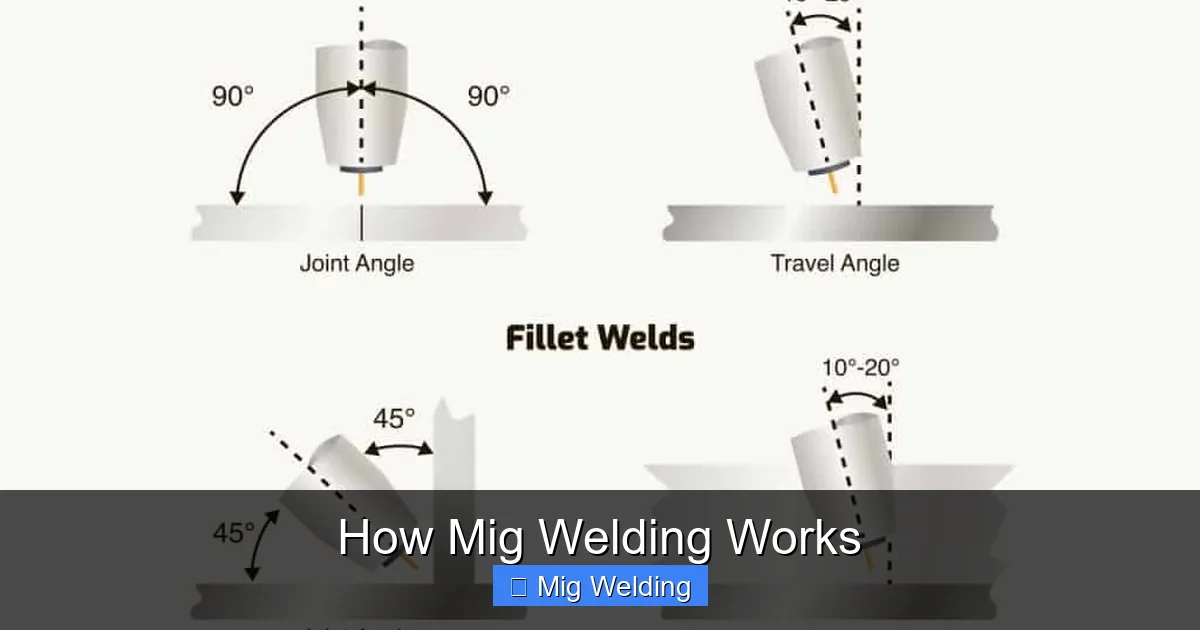
- Positioning: Hold the gun at about 10-15 degrees angle relative to the workpiece.
- Travel Speed: Move steadily to ensure even coverage and penetration.
- Arc Length: Keep the tip close to the work surface, about the size of a matchstick, to maintain a stable arc.
Welding Procedure
- Hold the gun with a comfortable grip and position it at the correct angle.
- Press the trigger to start the wire feed and arc.
- Move the gun smoothly along your weld line, maintaining consistent speed and arc length.
- Release the trigger at the end of the weld or when changing positions.
Tip: Practice on scrap pieces until you master steady movement and proper technique.
Additional Tips for Perfect MIG Welds
- Maintain proper distance: Keep the gun tip about 1/4 inch from the workpiece.
- Control your speed: Moving too fast can lead to weak welds; too slow causes excessive heat buildup.
- Keep the surface clean: Dirt or rust can cause porosity and weak welds.
- Practice different angles: Experiment with flat, horizontal, and overhead welding for versatility.
Troubleshooting Common MIG Welding Problems
Porosity or Holes in the Weld
Cause: Contaminated surface or insufficient shielding gas.
Visual guide about How Mig Welding Works
Image source: cdn.shopify.com
Solution: Clean the metal thoroughly and check for gas leaks or flow issues.
Weak or Cracked Welds
Cause: Incorrect settings or poor technique.
Solution: Ensure proper voltage and wire feed, and maintain steady movement.
Spatter
Cause: Too high wire feed speed or voltage.
Solution: Reduce settings and check for proper gun-to-work distance.
Conclusion
MIG welding is a versatile and accessible method for joining metal. By understanding how it works, setting up your equipment correctly, and practicing good technique, you can produce strong, clean welds on a variety of projects. Remember to prioritize safety and keep learning through practice and troubleshooting. Happy welding!
Final Tips
- Start with small projects to build confidence.
- Always wear protective gear and work in a well-ventilated area.
- Regularly inspect and maintain your equipment for optimal performance.
