

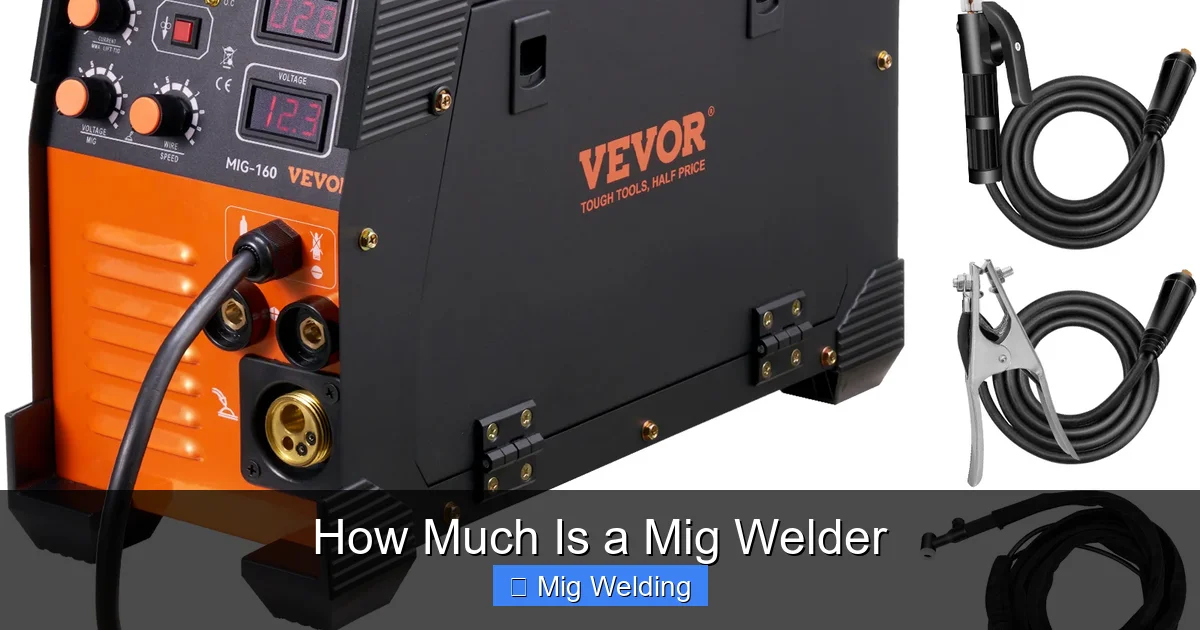
A MIG welder’s price varies widely based on features, power, and brand. Whether you’re a DIYer or professional, understanding the cost helps you choose the right machine. In this guide, you’ll learn about different price ranges, key factors affecting price, and tips for buying the best MIG welder for your project.
How Much Is a MIG Welder?
If you’re thinking about starting welding projects or upgrading your equipment, one of the first questions you’ll ask is, “How much does a MIG welder cost?” The answer depends on several factors, including your skill level, project scope, and budget. In this guide, we’ll explore different price ranges, what features influence the cost, and tips to help you find the best MIG welder for your needs.
Key Takeaways
- Price Range: MIG welders typically cost from $200 to over $2,000 depending on features and quality.
- Entry-Level Models: Suitable for hobbyists and light projects, usually priced between $200 and $500.
- Mid-Range Welders: Ideal for small businesses and serious DIYers, costing $500 to $1,000.
- Professional-Grade Machines: Designed for heavy-duty use, costing $1,000 and up.
- Factors Influencing Cost: Power output, brand reputation, features, and included accessories affect the price.
- Additional Costs: Consider expenses for safety gear, consumables, and maintenance when budgeting.
- Buying Tips: Assess your project needs, compare features, and read reviews to find the best value for your money.
Understanding MIG Welders
MIG (Metal Inert Gas) welding is a popular method for both hobbyists and professionals. It uses a wire feed system and shielding gas to create strong, clean welds. MIG welders are versatile and relatively easy to learn, making them a favorite choice for many projects—from car repairs to construction.
Before diving into prices, it’s helpful to understand what features and specifications impact the cost of a MIG welder.
Factors Affecting the Cost of a MIG Welder
- Power and Amperage: Higher power machines can weld thicker materials but tend to be more expensive.
- Brand and Quality: Well-known brands may cost more but often offer better durability and support.
- Features: Advanced features like adjustable amperage, wire speed control, and compatibility with different gases add cost.
- Portability: Compact, lightweight welders are often pricier but easier to transport.
- Included Accessories: Kits with helmets, gloves, and consumables might be more expensive initially but save you money later.
Price Ranges for MIG Welders
Entry-Level MIG Welders ($200 – $500)
These are perfect for beginners, hobbyists, or light-duty tasks. They typically offer lower amperage (around 120V or 140A), limited features, and are lightweight. Examples include small, portable models suitable for household projects.

Visual guide about How Much Is a Mig Welder
Image source: asset.velvetjobs.com
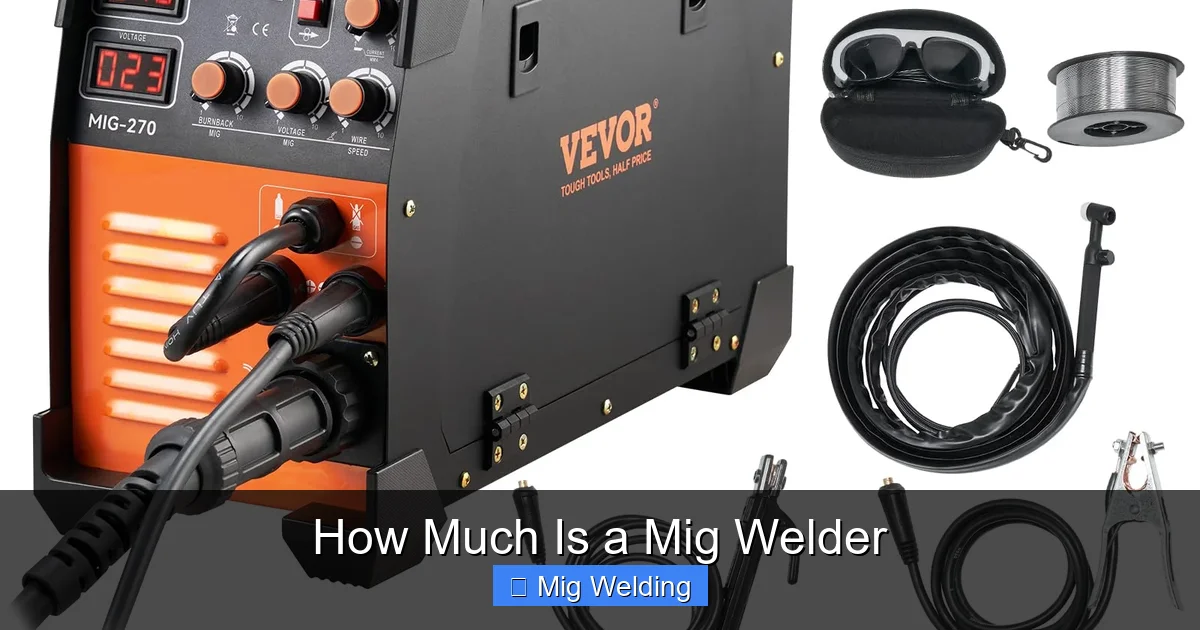
Visual guide about How Much Is a Mig Welder
Image source: m.media-amazon.com
While affordable, they may lack the power to weld thick materials or handle continuous use. Brands like Hobart Handler and Forney are popular in this range.
Mid-Range MIG Welders ($500 – $1,000)
This category strikes a balance between affordability and performance. These welders usually feature higher amperage (up to 200A), better build quality, and more adjustable settings. They are suitable for small businesses, automotive repairs, and serious DIY projects.
Brands like Lincoln Electric and Miller often offer models in this range, providing reliable performance for everyday use.
Professional-Grade MIG Welders ($1,000 and above)
Designed for heavy-duty, continuous use, these welders have high amperage (up to 300A or more), advanced features, and robust construction. They are ideal for industrial applications, fabrication shops, and professional welders.
Expect to pay $1,500 to $3,000 or more for top-tier models from brands like Lincoln, Miller, or ESAB.
Additional Costs to Consider
While the price of the MIG welder is a primary expense, don’t forget additional costs:
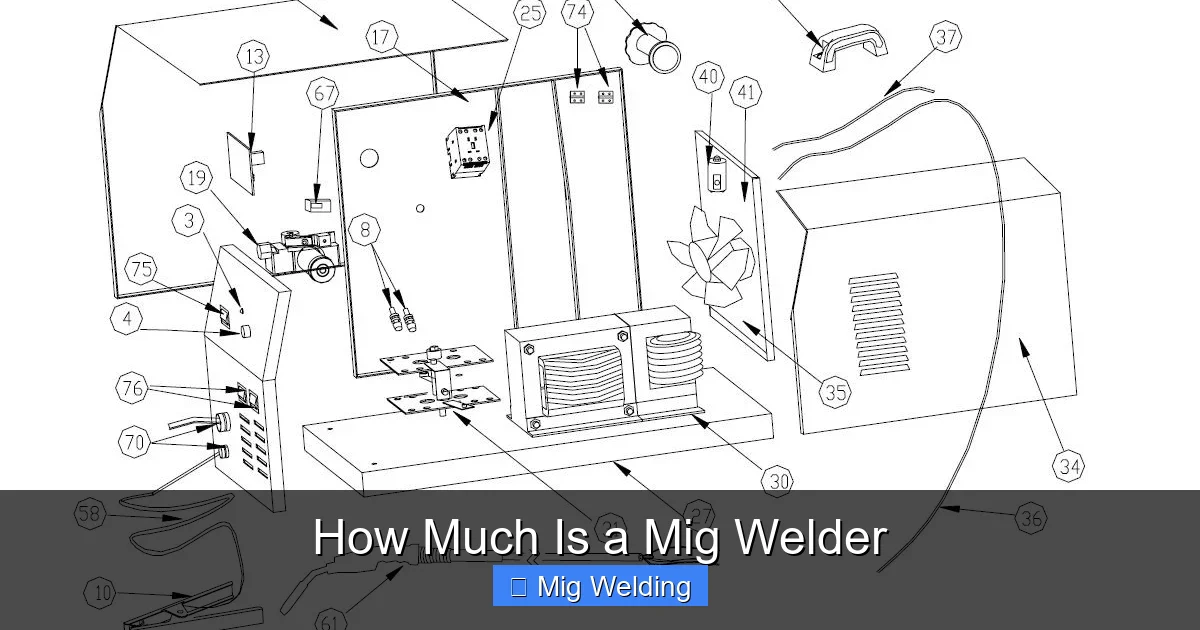
Visual guide about How Much Is a Mig Welder
Image source: s.turbifycdn.com
- Safety Gear: Helmets, gloves, protective clothing (~$50-$200).
- Consumables: Welding wire, tips, nozzles (~$20-$50 per set).
- Gas Supply: Shielding gases like argon or CO2 (~$30-$70 per cylinder).
- Maintenance: Regular servicing and replacement parts.
How to Choose the Right MIG Welder for Your Budget
Here are some practical tips:
- Assess Your Needs: For occasional hobby use, an entry-level model suffices. For professional work, invest in a mid-range or high-end machine.
- Set a Budget: Decide how much you’re willing to spend, including accessories and safety gear.
- Compare Features: Check amperage, duty cycle, voltage, and compatibility with gases.
- Read Reviews: Look for reliable brands with good customer feedback.
- Test Before Buying: If possible, try out the welder or see demonstrations.
Where to Buy a MIG Welder
You can purchase MIG welders from local hardware stores, welding supply shops, or online retailers like Amazon, Home Depot, or specialized welding suppliers. Online shopping often provides better deals and a wider selection.
Always verify warranty and return policies before purchasing.
Conclusion
The question “How much is a MIG welder?” doesn’t have a one-size-fits-all answer. Prices range from as low as $200 for basic hobby models to over $2,000 for professional-grade machines. Your choice depends on your project requirements, budget, and long-term plans. By understanding the factors that influence price and knowing what features you need, you can confidently select a MIG welder that offers the best value for your money. Happy welding!
Additional Tips for Buying a MIG Welder
- Look for machines with adjustable settings for greater control.
- Choose a lightweight model if portability is important.
- Invest in quality safety gear for protection during welding.
- Check for local support and service options for your chosen brand.
Troubleshooting Common MIG Welding Issues
- Porosity in welds: Usually caused by contaminated gas or dirty materials. Ensure proper cleaning and gas purity.
- Inconsistent welds: Check wire feed tension and voltage settings.
- Wire feeding problems: Inspect for tangled wire or worn feed rollers.
- Too much spatter: Adjust amperage and wire speed; check shielding gas flow.
Final Thoughts
Investing in the right MIG welder depends on your specific needs and budget. Whether you’re just starting out or working professionally, understanding the price ranges and features will help you make an informed decision. Remember, a good MIG welder is an investment that can last for years and help you complete a variety of projects with ease.
