

Choosing the right gas for MIG welding is essential for quality results. In this guide, you’ll learn about common shielding gases, their advantages, and how to select the best option for your welding needs.
Key Takeaways
- Shielding gases are vital: They protect the weld pool from contamination and influence weld quality.
- Popular gases include: Argon, CO2, and mixes like Argon/CO2 or Argon/He.
- Pure Argon: Best for aluminum and non-ferrous metals, providing a smooth, clean weld.
- CO2: Offers deep penetration and is cost-effective but can produce more spatter.
- Mixed gases: Combining gases can balance weld quality, spatter, and cost.
- Choosing the right gas: Depends on metal type, weld position, and desired finish.
- Safety first: Always handle gases with proper precautions and use appropriate regulators.
Introduction
If you’re into MIG welding, choosing the right shielding gas is one of the most important decisions you’ll make. The gas you select can impact weld quality, appearance, penetration, and overall efficiency. Whether you’re a beginner or a seasoned welder, understanding the options available will help you achieve better results and save costs. In this guide, we’ll explore what gases are best for MIG welding, how they work, and how to choose the right one for your specific needs.
Understanding MIG Welding and Shielding Gases
MIG (Metal Inert Gas) welding uses a continuous wire electrode fed through a welding gun. To protect the weld pool from contamination, a shielding gas is used. This gas surrounds the arc and prevents atmospheric gases like oxygen and nitrogen from spoiling the weld.
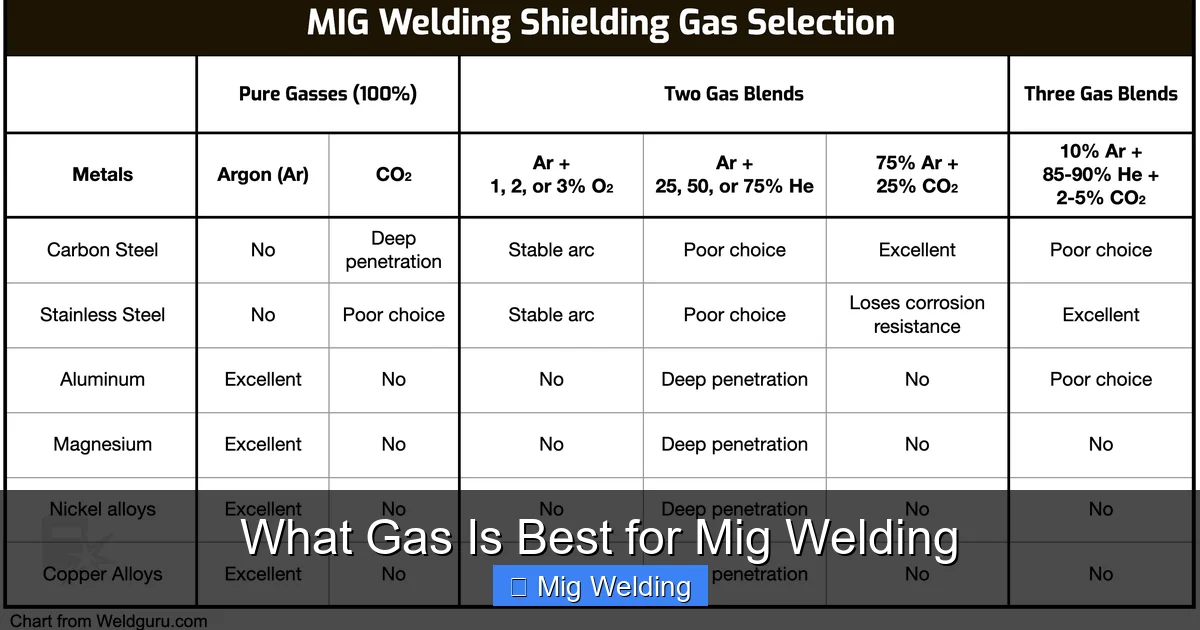
Visual guide about What Gas Is Best for Mig Welding
Image source: weldguru.com
The type of shielding gas directly influences the quality, appearance, and strength of the weld. The main gases used are argon, carbon dioxide (CO2), and various mixes of these gases.
Common Gases Used in MIG Welding
1. Argon (Ar)
Argon is a noble gas, inert, and very stable. It is the most common shielding gas for non-ferrous metals like aluminum, copper, and magnesium. Argon provides a smooth, clean weld with minimal spatter and excellent bead appearance.
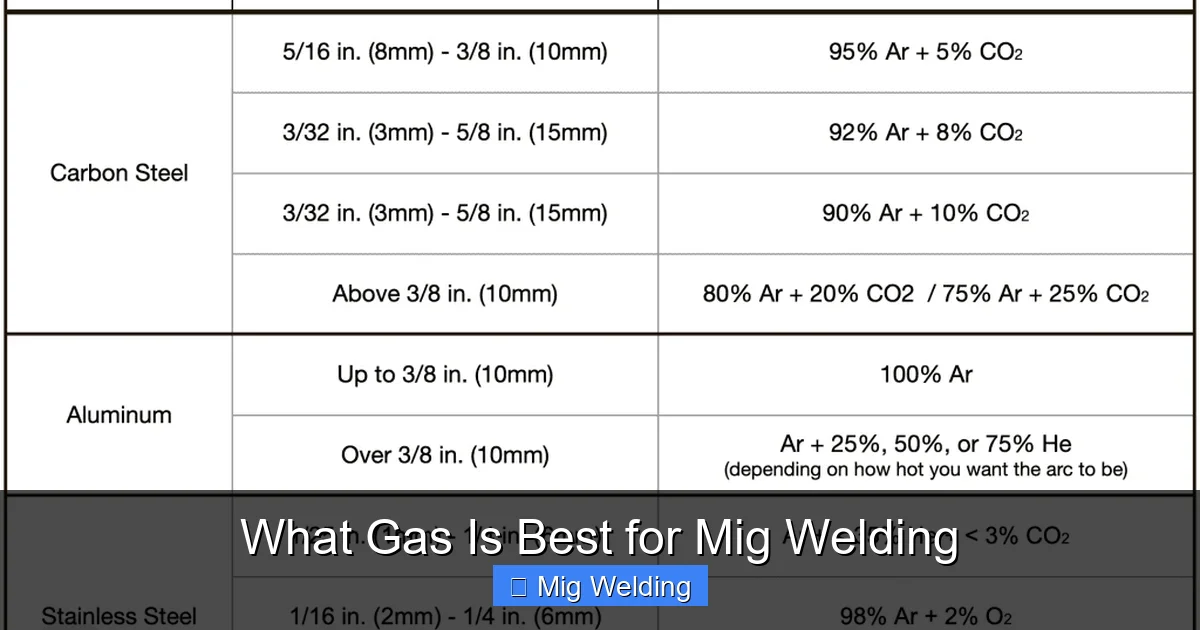
Visual guide about What Gas Is Best for Mig Welding
Image source: weldguru.com
Best for: Aluminum, copper, magnesium, and other non-ferrous metals.
2. Carbon Dioxide (CO2)
CO2 is a reactive gas and is often used as a cheaper alternative to argon. It produces deep penetration and strong welds but can result in more spatter and a rougher bead surface.
Best for: Steel, especially for outdoor or heavy-duty applications where cost is a concern.
3. Helium (He)
Helium is another inert gas that provides a hotter arc and deeper penetration. It’s often mixed with argon to improve weld speed and quality.
Best for: Thick metals and specialized applications requiring deep welds.
4. Gas Mixtures
Most MIG welders use blends like Argon/CO2 or Argon/He. These mixes combine benefits, balancing weld quality, spatter, and cost.
Common mixes include:
- 75% Argon / 25% CO2
- 90% Argon / 10% CO2
- Pure CO2 (100%)
How to Choose the Best Gas for Your MIG Welding Project
Step 1: Identify Your Material
The type of metal you weld is crucial. For non-ferrous metals like aluminum, argon is the best choice. For steel, options include CO2 or argon mixtures.
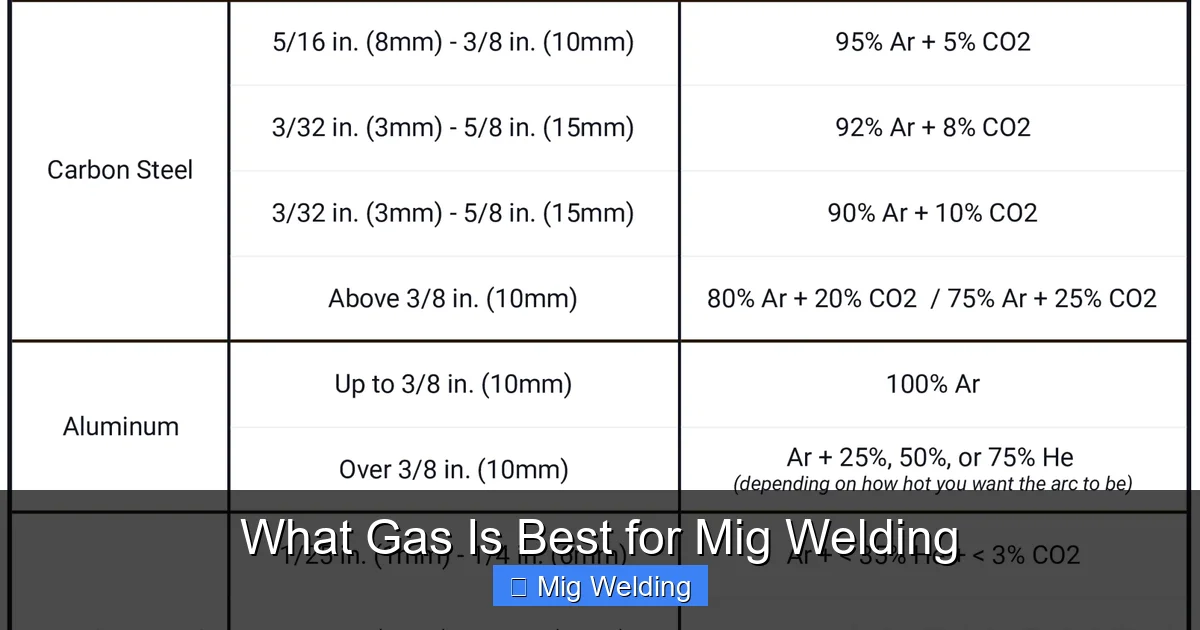
Visual guide about What Gas Is Best for Mig Welding
Image source: makemoneywelding.com
Step 2: Determine the Welding Environment
Outdoor environments with wind or drafts favor more stable gases like argon or argon mixes. Pure CO2 is less stable outdoors and may lead to weld defects.
Step 3: Consider Your Welding Position and Technique
For vertical or overhead welding, smoother, less spattery gases like argon are preferable. For flat welds, CO2 can be effective and economical.
Step 4: Balance Cost and Quality
Pure argon is more expensive but produces high-quality welds. CO2 is cheaper but can produce more spatter. Mixing gases offers a compromise.
Step 5: Check Your Equipment Compatibility
Ensure your MIG welder is compatible with the gases you choose. Some machines are optimized for specific mixes.
Practical Tips for Using Shielding Gases Effectively
- Use proper regulators: Always connect your gas cylinders with the correct regulator to avoid leaks or pressure issues.
- Maintain a clean work environment: Dirt or moisture can contaminate the shielding gas and affect weld quality.
- Set correct flow rates: Typically, 20-30 CFH (cubic feet per hour) for most MIG welding applications.
- Store gases properly: Keep cylinders upright and secure. Protect from extreme temperatures and direct sunlight.
Troubleshooting Common Gas-Related Welding Issues
- Porosity in welds: Often caused by contaminated or inadequate shielding gas flow. Check for leaks and ensure proper gas flow rate.
- Spatter: Excessive spatter may result from using pure CO2 in unstable conditions. Consider switching to a mix or reducing flow rate.
- Poor bead appearance: Make sure the gas is compatible with your material and that the regulator is working correctly.
Conclusion
Choosing the best gas for MIG welding depends on your material, environment, and project goals. Argon is ideal for non-ferrous metals and high-quality finishes, while CO2 offers a cost-effective option for steel. Mixing gases provides a versatile solution, balancing quality and budget.
Always handle gases safely, maintain your equipment, and experiment to find what works best for your specific needs. With the right shielding gas, you can improve your welds and achieve professional results every time.
Final Tips
- Test different gases and mixes on scrap pieces before starting your main project.
- Consult your welding machine’s manual to ensure compatibility with chosen gases.
- Stay updated on new gas blends and advancements in welding technology for better results.
