


Welding stainless steel with a MIG welder requires the right shielding gas to ensure strong, clean welds. This guide explains which gases are best suited for stainless steel, how to set up your welder, and tips for achieving professional results. Whether you’re a beginner or experienced welder, mastering the right gas choice is key to successful stainless steel welding.
Key Takeaways
- Use a mix of argon and CO2: A common and effective shielding gas for stainless steel MIG welding is a blend of argon and CO2, typically 98% argon and 2% CO2, which provides a good combination of arc stability and weld quality.
- Avoid straight CO2: Pure CO2 is not recommended for stainless steel as it can cause excessive spatter and a rougher weld surface.
- Consider using a tri-mix: For higher-quality welds, especially on thin or critical stainless steel, tri-mix gases like 90% helium, 7.5% CO2, and 2.5% argon can improve arc stability and weld appearance.
- Adjust your welder settings: Proper voltage, wire feed speed, and travel speed are essential for clean welds when using the correct shielding gas.
- Maintain your equipment: Regularly check for gas leaks, clean your torch and connections, and ensure the gas flow rate is correct to prevent contamination.
- Practice safety: Always wear proper protective gear and work in a well-ventilated area when welding stainless steel.
Introduction
Welding stainless steel with a MIG (Metal Inert Gas) welder produces strong, durable joints perfect for many applications—from kitchen equipment to industrial fabrications. But what gas should you use to get the best results? Choosing the right shielding gas is crucial. It protects the weld pool from contamination, influences weld appearance, and affects overall weld quality. In this guide, you will learn everything you need to know about selecting the best gas for welding stainless steel with a MIG welder, along with tips and troubleshooting advice for perfect welds.
Understanding the Role of Shielding Gas in MIG Welding
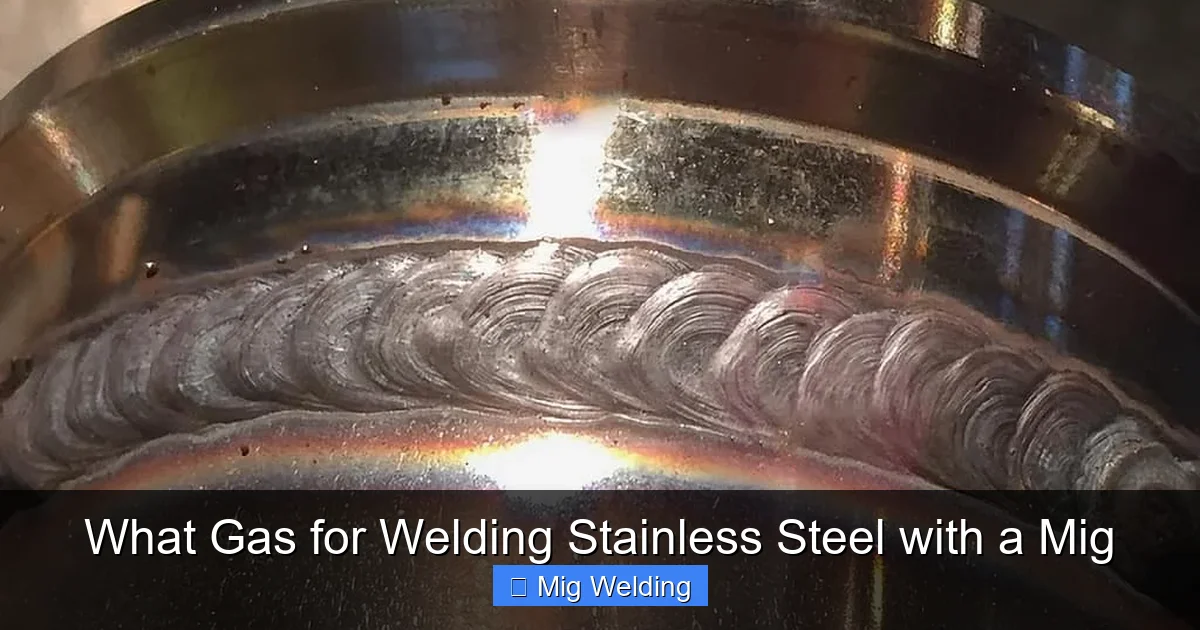
Shielding gas is vital in MIG welding. It creates a protective atmosphere around the weld pool, preventing oxidation and porosity. The choice of gas impacts arc stability, weld appearance, and penetration. Stainless steel welding requires specific gases to ensure a clean, corrosion-resistant weld.
Visual guide about What Gas for Welding Stainless Steel with a Mig
Image source: weldguru.com
Common Gases Used for Welding Stainless Steel
1. Pure Argon
Pure argon is a noble gas that provides a smooth arc and excellent weld quality. However, it is rarely used alone for stainless steel because it can lead to less penetration and a softer weld. It’s more common as a shielding gas for aluminum and other non-ferrous metals.
Visual guide about What Gas for Welding Stainless Steel with a Mig
Image source: i.ytimg.com
2. Argon-CO2 Mixtures (98% Ar / 2% CO2)
This is the most common gas blend for stainless steel MIG welding. The small amount of CO2 enhances arc stability and improves weld bead appearance. It provides a good balance of weld quality, minimal spatter, and ease of use, making it ideal for most stainless steel applications.
3. Tri-Mix Gases (Helium, Argon, and CO2)
Tri-mix gases, such as 90% helium, 7.5% CO2, and 2.5% argon, are used for high-quality, precision welding. They offer better arc stability, deeper penetration, and a smoother weld surface. These are often preferred for critical or thin stainless steel projects.
Why Not Use Straight CO2 for Stainless Steel?
While CO2 is inexpensive and commonly used with mild steel, it’s not ideal for stainless steel. Pure CO2 can cause excessive spatter, rough weld surfaces, and poor bead appearance. It also tends to produce more heat, increasing the risk of warping or burn-through.

Visual guide about What Gas for Welding Stainless Steel with a Mig
Image source: i.ytimg.com
Choosing the Right Gas for Your Stainless Steel MIG Welding Project
Consider the Thickness of Material
For thin stainless steel sheets, a pure argon or a small percentage of CO2 in the mix helps prevent burn-through. For thicker materials, 98% argon / 2% CO2 blend provides sufficient penetration without excessive spatter.
Assess the Quality of Welds Needed
If you require high-quality, clean welds with minimal spatter and good appearance, tri-mix gases are the best choice. For general-purpose welding, the 98% argon / 2% CO2 mix is usually sufficient.
Budget and Availability
Argon and CO2 are widely available and affordable. Tri-mix gases tend to be more expensive but are worth it for critical or high-end work.
How to Set Up Your MIG Welder for Stainless Steel
Step 1: Select the Appropriate Gas
Based on your project’s needs, choose between a simple argon-CO2 blend or a tri-mix. Confirm that your MIG welder’s regulator and gas lines are compatible with the selected gas.
Step 2: Install the Gas Cylinder and Regulator
Mount the cylinder securely and attach the regulator tightly. Open the cylinder valve slowly to check for leaks and ensure proper flow.
Step 3: Set the Correct Gas Flow Rate
Typically, a flow rate of 20-30 cubic feet per hour (CFH) is used. Adjust the regulator to maintain a steady flow, and always check for leaks before starting.
Step 4: Adjust Welder Settings
- Voltage: Set according to the thickness of stainless steel. For thin materials, lower voltage; for thicker, increase.
- Wire Feed Speed: Match it with the wire diameter and voltage for a smooth, steady arc.
- Wire Type: Use ER308L or ER316L stainless steel MIG wire for corrosion resistance.
Practical Tips for Welding Stainless Steel with MIG
- Maintain proper torch angle: Keep about 10-15 degrees to the workpiece for good bead control.
- Use proper shielding gas flow: Too high or low flow can cause contamination or spatter. Stick to recommended flow rates.
- Preheat if needed: For thicker or highly alloyed stainless steel, preheating can improve weld quality.
- Keep your equipment clean: Regularly clean the wire, liner, and contact tip to avoid contamination and ensure consistent performance.
- Practice technique: Steady hand, consistent travel speed, and proper torch angle are key to high-quality welds.
Troubleshooting Common Issues
- Spatter and rough weld surface: Usually caused by incorrect gas mixture, high travel speed, or dirty equipment. Check gas flow, clean the torch, and adjust settings.
- Porosity (holes in weld): Indicates contamination, moisture, or improper shielding gas. Use dry gas, clean materials, and ensure proper shielding.
- Poor penetration: Increase voltage or decrease travel speed. Ensure proper torch angle and contact tip distance.
- Weld cracking or warping: Check for excessive heat input. Use proper preheating and reduce heat when necessary.
Conclusion
Choosing the right gas for welding stainless steel with a MIG welder is essential for achieving professional, clean, and strong welds. The most common and effective choice is a mix of argon and a small percentage of CO2, but for high-end projects, tri-mix gases can provide superior results. Remember to set up your equipment properly, practice good technique, and troubleshoot issues promptly. With these tips, you’ll be well on your way to mastering stainless steel MIG welding.
Final Tips
- Always use the correct shielding gas for your specific application.
- Practice on scrap pieces before starting your main project.
- Wear proper safety gear — gloves, mask, and protective clothing.
- Keep your workspace clean and well-ventilated.
- Regularly inspect and maintain your welding equipment.
