

Key Takeaways
- Argon is the most common shielding gas for MIG welding, providing excellent arc stability and a clean weld. It is suitable for most metals, especially aluminum and steel.
- Carbon Dioxide (CO2) is a popular, cost-effective shielding gas that produces a slightly rougher weld but is great for thicker steels.
- Mixtures of Argon and CO2 are often used to balance weld quality and cost, offering good penetration and smoothness.
- Other gases like Helium and Oxygen are used in specific situations, such as welding non-ferrous metals or improving weld characteristics.
- Choosing the right gas depends on the material, thickness, desired weld quality, and budget.
- Always follow safety guidelines when handling shielding gases, including proper ventilation and protective equipment.
What Gas Do You Need for MIG Welding?
MIG welding, or Metal Inert Gas welding, is a popular welding method that uses a shielding gas to protect the weld pool from contamination. The right shielding gas can make a big difference in weld quality, appearance, and strength. In this guide, you’ll learn about the different gases used in MIG welding, their benefits, and how to choose the best one for your project.
Understanding MIG Welding and Shielding Gases
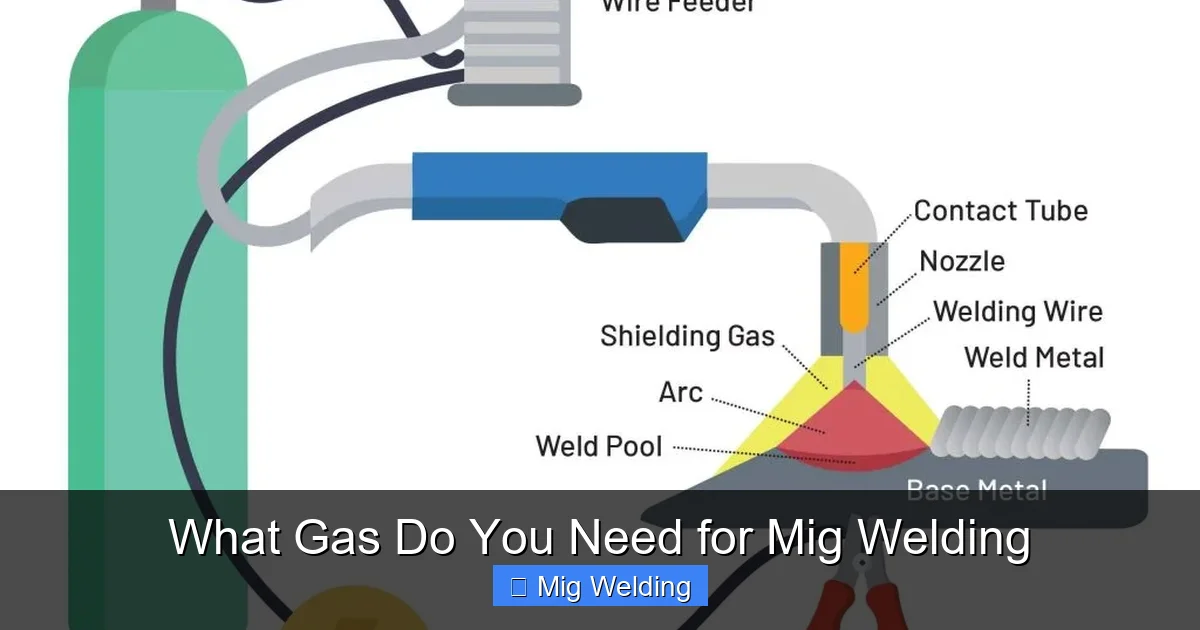
MIG welding involves feeding a wire electrode through a welding gun into the weld area. As the wire melts, shielding gas surrounds the weld to prevent oxidation and impurities from contaminating the weld pool. The choice of gas influences the arc stability, weld appearance, penetration, and even the type of metals you can weld.
Visual guide about What Gas Do You Need for Mig Welding
Image source: weldguru.com
Common Gases Used in MIG Welding
1. Argon (Ar)
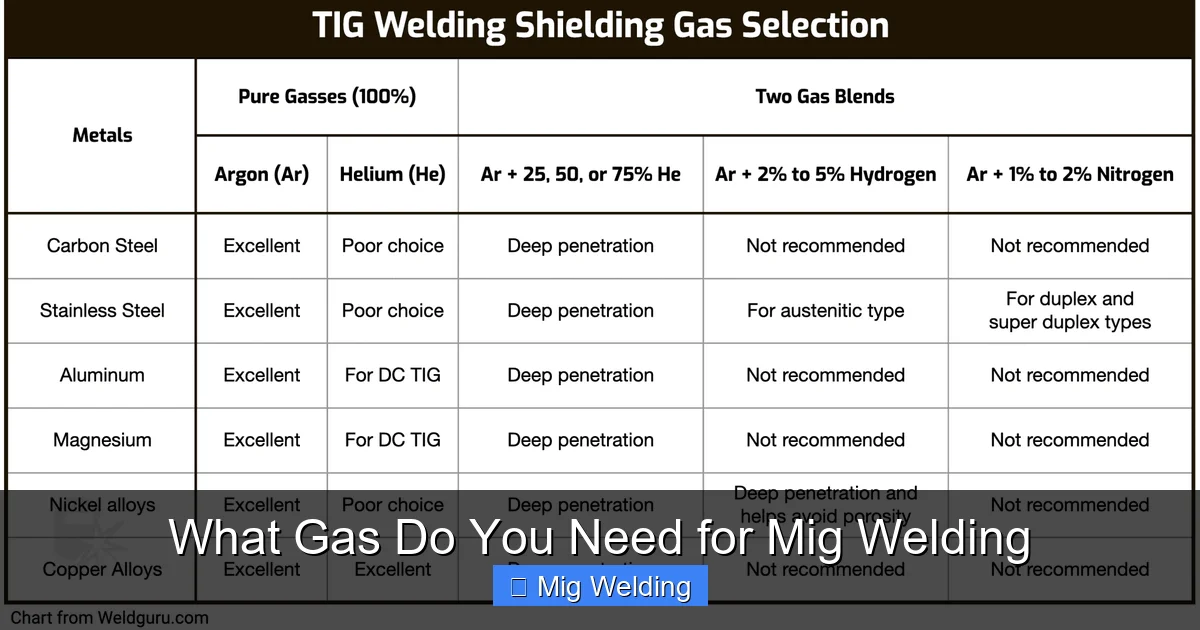
Argon is an inert, colorless, and odorless gas. It’s by far the most common shielding gas used in MIG welding. Argon provides excellent arc stability, a smooth weld, and minimal spatter. It’s especially effective when welding non-ferrous metals like aluminum and copper.
Visual guide about What Gas Do You Need for Mig Welding
Image source: 1.bp.blogspot.com
Best for: Aluminum, stainless steel, and other non-ferrous metals.
2. Carbon Dioxide (CO2)
CO2 is a reactive, inexpensive gas that’s often used in MIG welding. It produces a hotter arc and deeper penetration but can cause more spatter and a rougher weld appearance. It’s favored in industrial settings for its affordability and effectiveness on thicker steels.
Best for: Mild steel, especially in structural or heavy-duty applications.
3. Mixtures of Argon and CO2
Many welders use blends like 75% Argon / 25% CO2 or 90% Argon / 10% CO2. These mixtures aim to combine the benefits of both gases, providing a stable arc, smooth welds, and good penetration. They’re versatile and suitable for a variety of metals and thicknesses.
Best for: Mild steel, stainless steel, and aluminum in various settings.
4. Helium (He)
Helium is a noble, inert gas that’s less common but used in specialized applications. It provides a hotter arc and faster welding speeds. Helium is often blended with Argon to improve weld quality on thicker or high-temperature metals.
Best for: Welding thick materials, non-ferrous metals, and high-quality applications.
5. Oxygen (O2)
Oxygen is sometimes added in small amounts (usually up to 2%) to argon or argon/CO2 mixtures. It helps improve arc stability and weld penetration but must be used carefully to avoid oxidation or burn-through.
Best for: Specific steel welding applications requiring deeper penetration.
How to Choose the Right Shielding Gas
Choosing the correct gas depends on several factors:
Visual guide about What Gas Do You Need for Mig Welding
Image source: cdn.thepipingmart.com
- Material: Aluminum, steel, stainless steel, or non-ferrous metals each have preferred gases.
- Weld Quality: For a clean, smooth finish, argon or argon blends are ideal. For deep penetration, CO2 is effective.
- Cost: CO2 is cheaper but may produce a rougher weld; argon is more expensive but offers better quality.
- Thickness of Metal: Thicker metals may require more aggressive gases like CO2 or helium blends.
- Application: Structural, artistic, or precision welding may influence your choice.
Practical Tips for Using Shielding Gases Effectively
1. Use the Correct Gas Flow Rate
Typically, flow rates range from 20 to 40 cubic feet per hour (CFH). Too high a flow can cause turbulence and contamination; too low might not adequately shield the weld.
2. Check for Leaks and Proper Connections
Ensure all connections are tight and leak-free. Use soapy water to check for leaks in hoses and fittings.
3. Use a Proper Gas Regulator and Flowmeter
A high-quality regulator ensures accurate control of gas flow, leading to better welds and safety.
4. Maintain Clean Equipment
Dirty or rusty equipment can introduce contaminants, compromising weld quality.
Troubleshooting Common Issues
- Spatter and Rough Welds: Might be caused by excessive CO2 or high flow rates. Try switching to argon or adjusting flow.
- Porosity in Welds: Insufficient shielding gas or leaks can cause porosity. Check connections and increase flow rate if needed.
- Poor Penetration: Use a more reactive gas like CO2 or increase welding voltage and speed.
- Inconsistent Arc: Ensure clean, dry gas lines and proper equipment maintenance.
Conclusion
In MIG welding, choosing the right shielding gas is essential for achieving strong, clean, and professional welds. While argon remains the most popular choice for many applications, blending gases like Argon with CO2 offers versatility and cost savings. Understanding your materials, project requirements, and the properties of each gas will help you make the best decision. Always prioritize safety and proper equipment maintenance to ensure optimal results in every welding project.
Final Tips
- Start with a recommended gas for your metal type and adjust based on your results.
- Practice and experiment with different mixtures to find what works best for your specific needs.
- Follow safety guidelines when handling and storing shielding gases to prevent accidents.
