

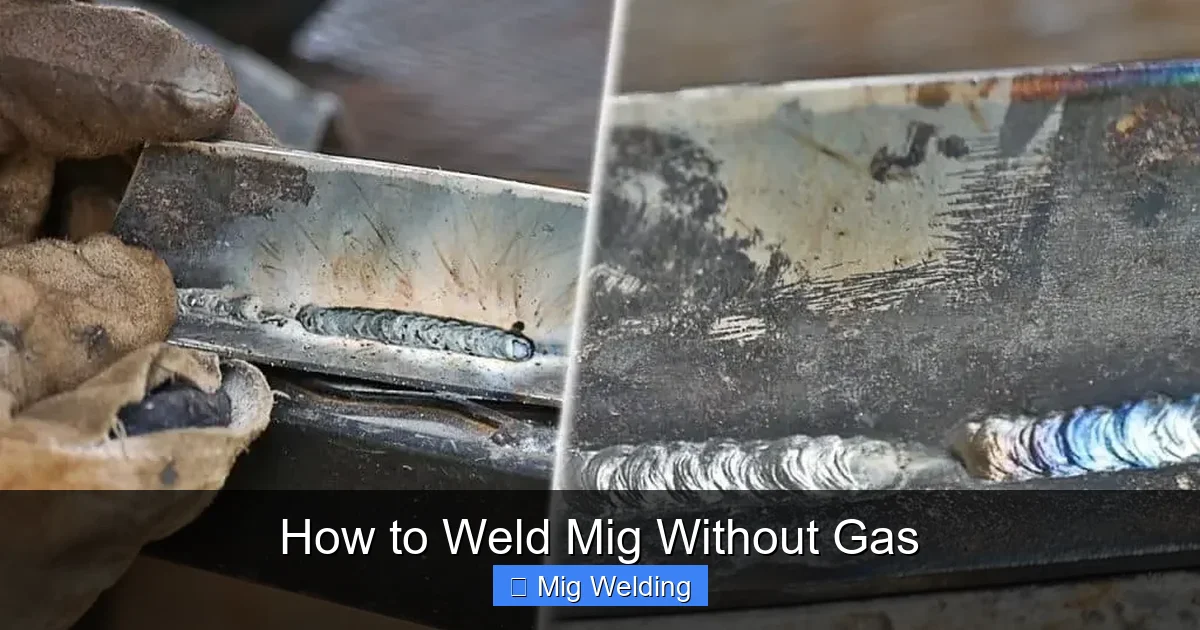
This guide shows you how to weld MIG without gas using flux-cored wire, a cost-effective and portable alternative to traditional MIG welding. You’ll learn the right equipment, setup, techniques, and safety tips to get strong, clean welds—even in windy outdoor conditions.
Key Takeaways
- Use flux-cored wire: This self-shielding wire creates its own protective gas when burned, eliminating the need for external gas tanks.
- Choose the right welder: Not all MIG welders can run flux-cored wire—make sure yours has the capability or a compatible drive roll setup.
- Reverse polarity is key: Flux-cored welding requires electrode negative (DCEN) polarity, opposite of standard MIG welding.
- Adjust voltage and wire speed: Start with manufacturer recommendations and fine-tune based on material thickness and weld appearance.
- Weld in the right conditions: Flux-cored welding works great outdoors and in drafty areas where gas shielding would be disrupted.
- Clean your material: Remove rust, paint, and dirt for better arc stability and stronger welds.
- Practice proper technique: Use a push angle and steady travel speed to avoid porosity and slag inclusions.
Introduction: What You’ll Learn
If you’ve ever wanted to MIG weld but don’t have access to a gas cylinder—or just want a more portable, budget-friendly option—you’re in the right place. This guide will teach you how to weld MIG without gas using flux-cored wire, a smart alternative that delivers strong, reliable results without the hassle of shielding gas.
Unlike traditional MIG welding, which uses solid wire and an external gas supply (like argon or CO2), flux-cored welding uses a hollow wire filled with flux. When the wire melts, the flux releases a protective gas and forms a slag layer that shields the weld pool from contamination. This means you can weld effectively in windy conditions, on rusty metal, or even in your backyard—no gas tank required.
By the end of this guide, you’ll know exactly how to set up your welder, choose the right wire, adjust your settings, and execute clean, professional-looking welds—all without a single gas cylinder. Whether you’re a DIY enthusiast or a professional looking for a versatile welding method, this technique is worth mastering.
Understanding Flux-Cored Welding
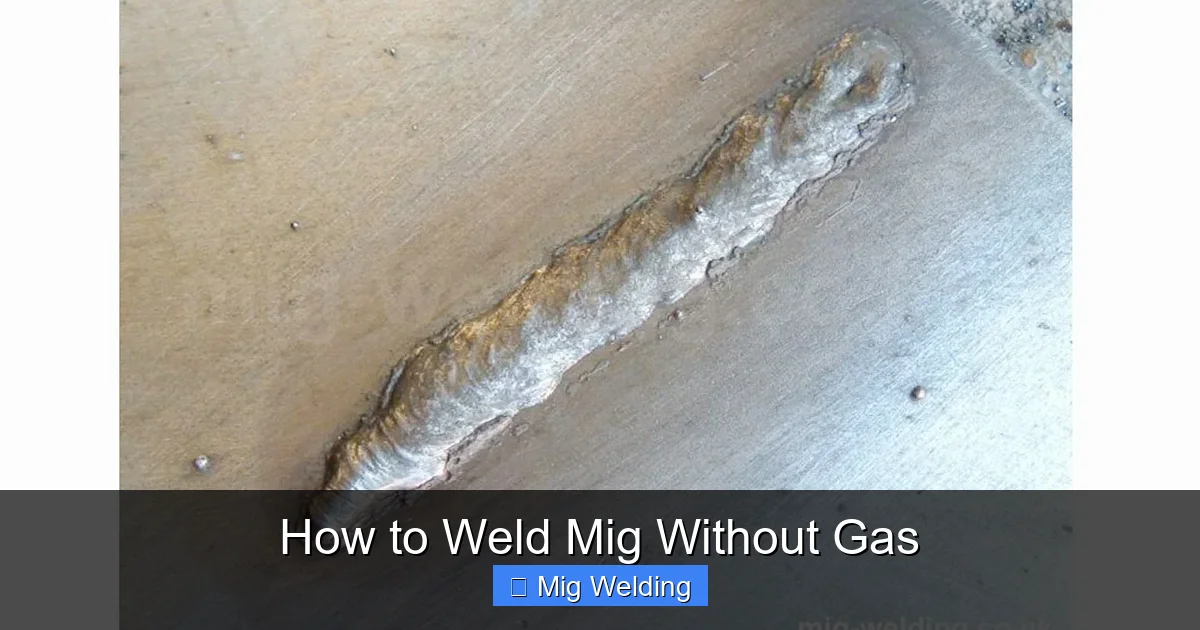
Visual guide about How to Weld Mig Without Gas
Image source: weldingproperty.com
Before diving into the steps, it’s important to understand how flux-cored welding works. There are two main types of flux-cored wire:
Self-Shielded (Gasless) Flux-Cored Wire
This is the type you’ll use when welding MIG without gas. It doesn’t require external shielding gas because the flux inside the wire generates its own protective atmosphere. It’s ideal for outdoor use, repair work, and welding on dirty or rusty metal.
Gas-Shielded Flux-Cored Wire
This type still needs external gas (usually CO2 or a mix) and is used for thicker materials or high-production environments. Since we’re focusing on gasless welding, we’ll stick with self-shielded wire.
The key advantage of self-shielded flux-cored welding is its portability and wind resistance. You can take your welder almost anywhere and still get consistent results. However, it does produce more smoke and slag than gas-shielded MIG welding, so proper ventilation and cleanup are essential.
Equipment You’ll Need

Visual guide about How to Weld Mig Without Gas
Image source: weldingproperty.com
To weld MIG without gas, you don’t need a fancy setup—just the right tools. Here’s what you’ll need:
- A MIG welder capable of flux-cored welding: Most modern MIG welders can handle flux-cored wire, but check your manual. Some require a different drive roll or polarity setting.
- Self-shielded flux-cored wire: Common sizes are 0.030″ and 0.035″. Choose based on your material thickness—0.030″ for thinner metals, 0.035″ for thicker.
- Welding helmet with auto-darkening lens: Protects your eyes from UV rays and allows you to see clearly before and during the weld.
- Welding gloves and protective clothing: Flame-resistant gloves, long sleeves, and closed-toe shoes are a must.
- Wire brush or grinder: For cleaning the metal before welding.
- Clamps and work table: To hold your workpiece steady.
Step-by-Step: How to Weld MIG Without Gas
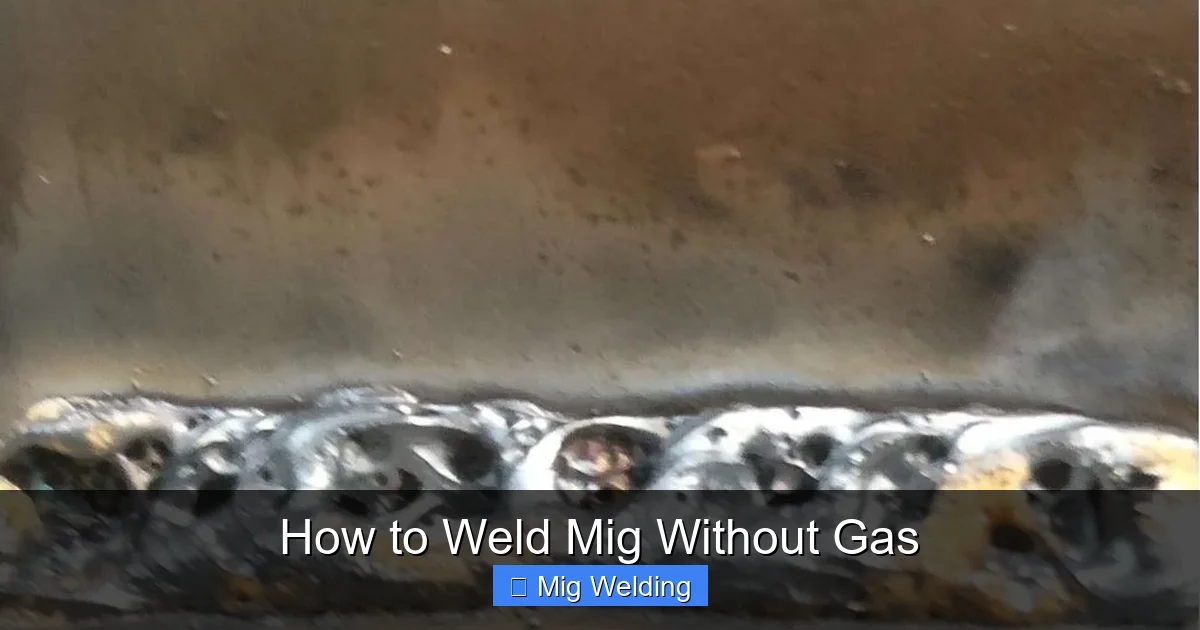
Visual guide about How to Weld Mig Without Gas
Image source: americanindustrialsupl.com
Step 1: Prepare Your Workpiece
Cleanliness is critical. Even though flux-cored welding is more forgiving than gas MIG on dirty metal, you’ll get better results with a clean surface.
- Use a wire brush or angle grinder to remove rust, paint, oil, and mill scale.
- Wipe the area with a clean cloth to remove dust and debris.
- Secure the workpiece with clamps to prevent movement during welding.
Step 2: Set Up Your Welder
Now it’s time to configure your machine for flux-cored welding.
- Switch to DCEN (Direct Current Electrode Negative): This is the opposite of standard MIG welding (which uses DCEP). Look for a polarity switch or consult your manual. Most welders have a diagram inside the wire compartment.
- Install the flux-cored wire: Feed the wire through the liner and into the drive rolls. Use the correct groove size—usually “V” or “U” shaped for flux-cored wire.
- Adjust the tension: Too tight can crush the wire; too loose causes feeding issues. Aim for a snug but smooth feed.
- Trim the wire: Cut the wire to about ¼” to ⅜” sticking out of the contact tip.
Step 3: Dial in Your Settings
Start with the manufacturer’s recommended voltage and wire speed for your wire diameter and material thickness. For example:
- 18 gauge steel: ~14 volts, wire speed 150–200 IPM
- ¼” steel: ~18–20 volts, wire speed 250–300 IPM
Make a test weld on a scrap piece. Look for:
- Good penetration: The weld should fuse deeply into the base metal.
- Smooth arc: No excessive spatter or popping sounds.
- Even bead profile: A consistent, slightly convex bead is ideal.
If the weld is too cold (shallow, rough), increase voltage or wire speed. If it’s too hot (burn-through, excessive spatter), reduce settings.
Step 4: Choose the Right Technique
Flux-cored welding works best with a push technique—point the gun away from the weld pool at a 10–15 degree angle. This helps the flux shield the arc and improves visibility.
- Maintain a steady travel speed—too slow causes buildup; too fast leads to lack of fusion.
- Keep the gun ½” to ¾” from the workpiece.
- Use a straight or slight weave motion for wider beads.
Step 5: Weld Your Joint
Start your arc by tapping the wire on the metal or using a scratch start (depending on your welder). Once the arc is established, move smoothly along the joint.
- For butt joints, aim for full penetration with a slight convex bead.
- For fillet welds, maintain consistent leg length and avoid undercut.
- Overlap each pass slightly if building up multiple layers.
Step 6: Clean the Slag
After welding, a layer of slag will cover the bead. This protects the cooling weld but must be removed before painting or further passes.
- Use a chipping hammer to knock off the slag.
- Follow up with a wire brush to clean the surface.
- Inspect for cracks, porosity, or incomplete fusion.
Troubleshooting Common Issues
Even with proper setup, you might run into problems. Here’s how to fix them:
- Excessive spatter: Reduce voltage or wire speed. Check wire feed tension.
- Poor arc stability: Ensure correct polarity and clean connections. Replace worn contact tips.
- Porosity (holes in weld): Clean the base metal better. Avoid welding in windy conditions without shielding.
- Wire feeding issues: Check for kinks in the liner, incorrect drive rolls, or worn tips.
- Burn-through: Lower voltage, increase travel speed, or use a backing bar.
Safety Tips You Can’t Ignore
Welding without gas doesn’t mean skipping safety. In fact, flux-cored welding produces more fumes and UV radiation.
- Always wear a welding helmet with proper shade (at least #10).
- Work in a well-ventilated area or use a fume extractor.
- Wear flame-resistant clothing—no synthetic fabrics.
- Keep a fire extinguisher nearby.
- Never weld near flammable materials or gases.
Conclusion: Master Gasless MIG Welding
Learning how to weld MIG without gas opens up a world of possibilities. With flux-cored wire, you can tackle projects anywhere—no gas tanks, no wind worries, no extra cost. It’s perfect for farm repairs, automotive work, and DIY builds.
Remember: clean your metal, set the right polarity, dial in your settings, and use the push technique. Practice on scrap metal until you’re confident, and always prioritize safety.
With this guide, you’re ready to weld strong, clean joints without the hassle of gas. So grab your welder, load that flux-cored wire, and start building something amazing—gas-free.
