

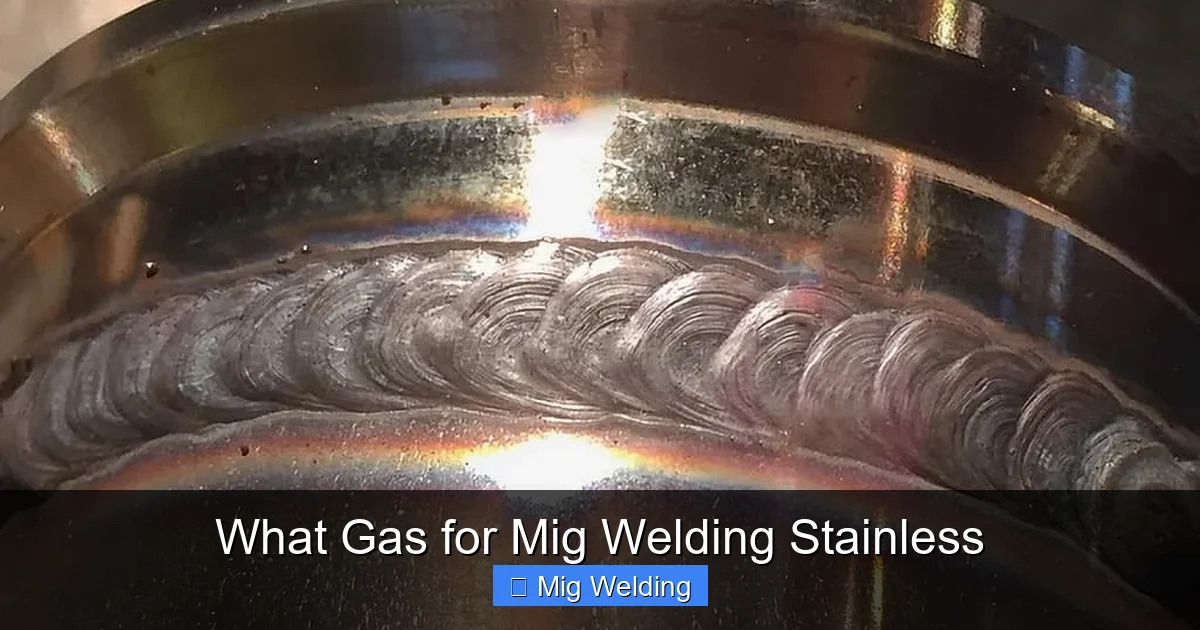
Choosing the right gas for MIG welding stainless steel is crucial for achieving strong, corrosion-resistant, and visually clean welds. This guide breaks down the best shielding gas options, including argon-CO2 and argon-O2 mixes, and explains how to use them effectively.
Key Takeaways
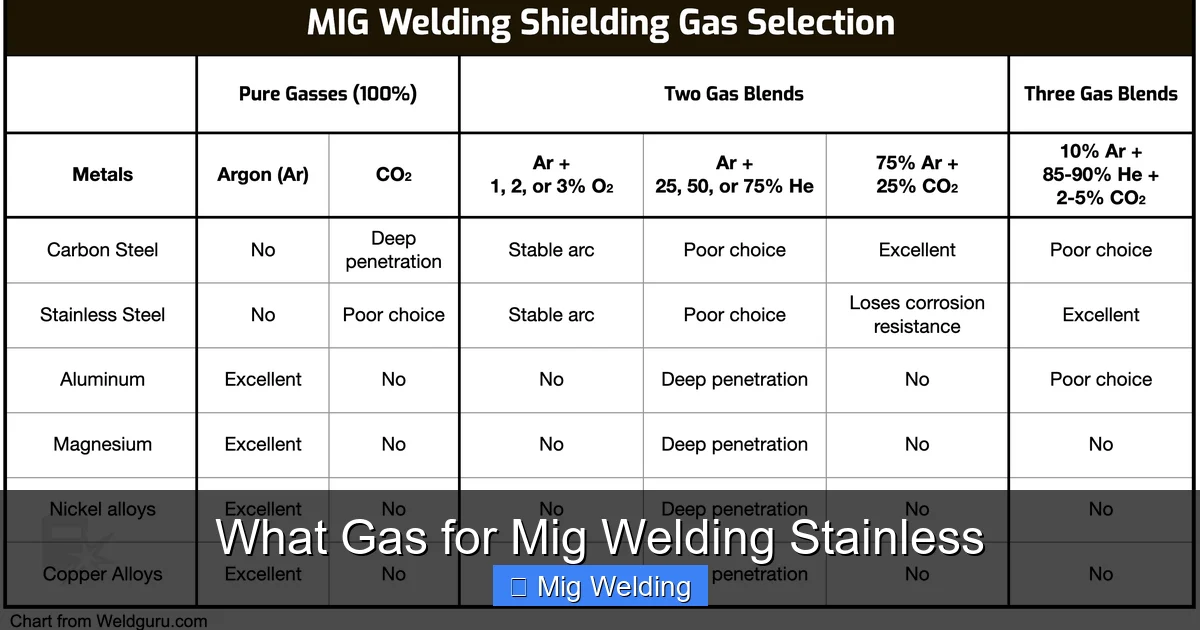
- Use a tri-mix gas (90% helium, 7.5% argon, 2.5% CO2) for best results on stainless steel: This blend offers deep penetration, smooth arc stability, and minimal spatter.
- Avoid pure CO2: It causes excessive spatter and oxidation, which compromises stainless steel’s corrosion resistance.
- Common industrial mixes include C2 (98% argon, 2% CO2) and C5 (95% argon, 5% CO2): These are good for thinner materials and general fabrication.
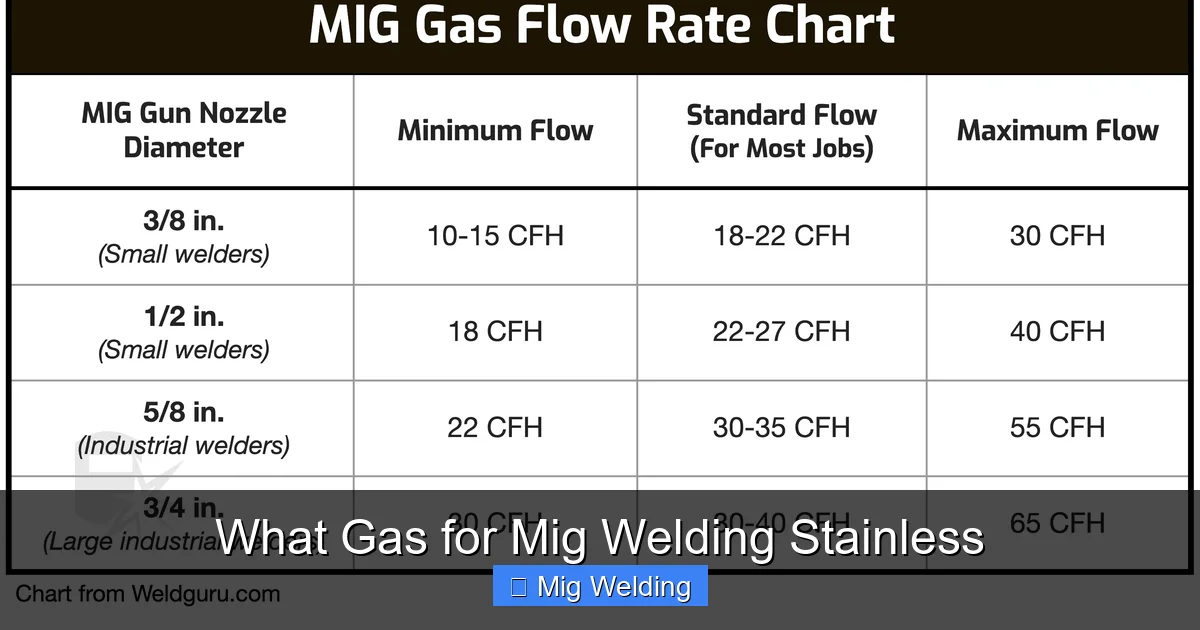
- Flow rate matters: Set your gas flow between 20–25 CFH (cubic feet per hour) to protect the weld pool without waste.
- Use a stainless steel liner and contact tips: Carbon steel components can contaminate the weld and cause rust.
- Clean your material before welding: Oil, grease, or mill scale can react with shielding gas and cause defects.
- Post-weld cleaning improves appearance and performance: Use a stainless wire brush or pickling paste to remove heat tint.
What Gas for MIG Welding Stainless Steel? A Complete Guide
If you’re welding stainless steel with a MIG welder, one of the most important decisions you’ll make is choosing the right shielding gas. The gas you use directly affects weld quality, appearance, strength, and corrosion resistance. Unlike mild steel, stainless steel is more sensitive to contamination and oxidation, so using the wrong gas can lead to weak, discolored, or rust-prone welds.
In this guide, you’ll learn everything you need to know about selecting and using the best gas for MIG welding stainless steel. We’ll cover the most effective gas mixtures, how to set up your welder, practical tips for clean welds, and troubleshooting common issues. Whether you’re a hobbyist or a professional fabricator, this guide will help you get professional-grade results every time.
Why Shielding Gas Matters for Stainless Steel
Visual guide about What Gas for Mig Welding Stainless
Image source: weldguru.com
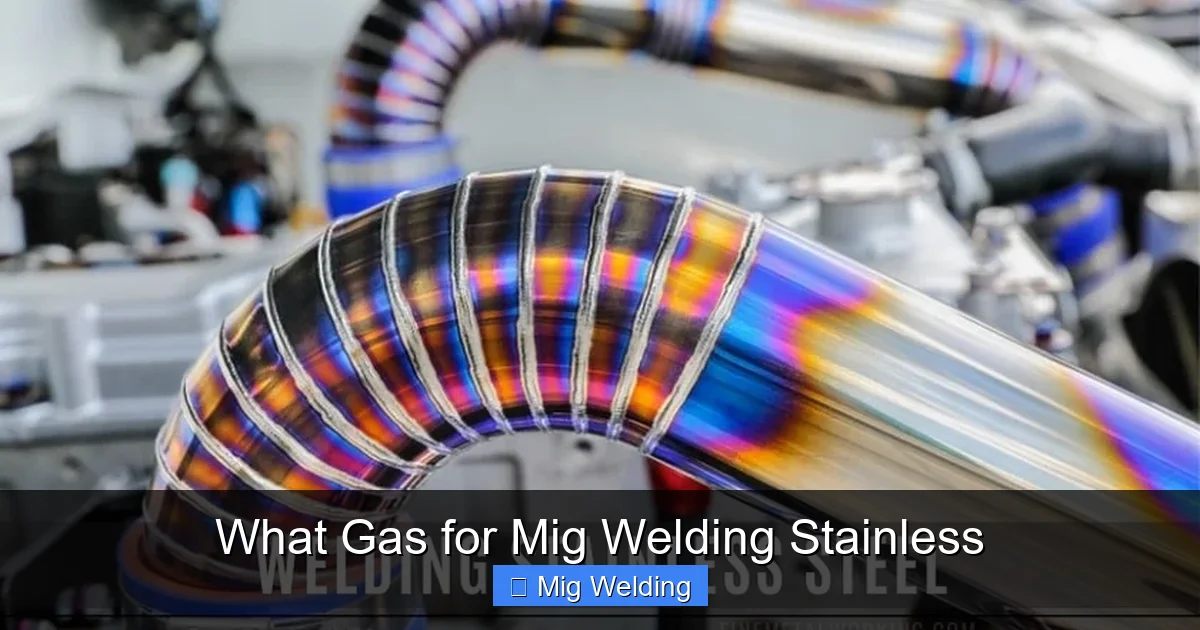
Stainless steel contains chromium, which gives it excellent resistance to rust and corrosion. However, when heated during welding, chromium can react with oxygen in the air and form chromium oxide. This not only dulls the weld’s appearance but also reduces corrosion resistance.
Shielding gas protects the molten weld pool from atmospheric gases like oxygen and nitrogen. Without proper shielding, you’ll end up with porous, brittle, or discolored welds. The right gas mixture ensures a stable arc, minimal spatter, and a clean, shiny finish.
Best Shielding Gas Mixes for MIG Welding Stainless Steel
Visual guide about What Gas for Mig Welding Stainless
Image source: weldguru.com
Not all shielding gases are created equal—especially when it comes to stainless steel. Here are the most commonly used and recommended gas mixtures:
1. Tri-Mix Gas (90% Helium, 7.5% Argon, 2.5% CO2)
This is considered the gold standard for MIG welding stainless steel. The high helium content increases heat input, which improves penetration and weld pool fluidity. The argon stabilizes the arc, while the small amount of CO2 helps with arc initiation and reduces spatter.
Best for: Thick sections, vertical and overhead welding, and applications requiring deep penetration.
Pros:
– Excellent arc stability
– Deep penetration
– Smooth, clean welds
– Minimal spatter
Cons:
– More expensive than other mixes
– Requires precise flow control
2. Argon + 2% CO2 (C2 Mix)
A popular choice for thin to medium-thickness stainless steel. The low CO2 content minimizes oxidation while still providing good arc characteristics.
Best for: Sheet metal, automotive exhaust systems, and food-grade fabrication.
Pros:
– Clean welds with little spatter
– Good for thin materials
– Widely available
Cons:
– Less penetration than tri-mix
– Can cause slight oxidation on thicker materials
3. Argon + 5% CO2 (C5 Mix)
This mix offers a balance between arc stability and penetration. It’s commonly used in industrial settings where cost and performance are both important.
Best for: General fabrication, pipe welding, and structural stainless steel work.
Pros:
– Better penetration than C2
– Still relatively clean
– Cost-effective
Cons:
– Slightly more spatter than tri-mix
– Risk of oxidation on sensitive applications
4. Argon + 1–2% Oxygen
Oxygen improves arc stability and weld pool wetting, but it’s less common for stainless steel due to the risk of oxidation. Only use this mix if recommended by your material supplier or for specific applications.
Best for: High-speed automated welding (rare for stainless)
Cons:
– Can reduce corrosion resistance
– Not recommended for most manual MIG welding
What Gas to Avoid
Visual guide about What Gas for Mig Welding Stainless
Image source: finemetalworking.com
Pure CO2
Never use 100% CO2 when MIG welding stainless steel. While it’s great for mild steel, CO2 causes excessive spatter, deep penetration that can burn through thin material, and severe oxidation. The resulting weld will be porous, discolored, and prone to rust.
Nitrogen or Air
These gases will contaminate the weld pool and destroy the corrosion-resistant properties of stainless steel. Always use a proper inert or active-inert mix.
Setting Up Your MIG Welder for Stainless Steel
Using the right gas is only half the battle. You also need to set up your welder correctly.
Step 1: Choose the Right Wire
Use a stainless steel MIG wire such as ER308L, ER309L, or ER316L, depending on your base metal. These wires are designed to match the corrosion resistance and mechanical properties of stainless steel.
Step 2: Use a Stainless Steel Liner and Contact Tips
Standard carbon steel liners and tips can contaminate the weld with iron particles, leading to rust spots. Always use a stainless steel liner and compatible contact tips.
Step 3: Set the Correct Gas Flow Rate
Set your flow meter to 20–25 CFH (cubic feet per hour). Too little gas won’t protect the weld; too much can cause turbulence and draw in air.
Step 4: Clean the Base Metal
Wipe the material with a clean cloth and acetone or a stainless-specific cleaner. Remove any oil, grease, paint, or mill scale. Even small contaminants can cause weld defects.
Step 5: Adjust Voltage and Wire Speed
Stainless steel conducts heat differently than mild steel. Use a slightly lower voltage and faster wire feed speed to prevent burn-through, especially on thin materials. Refer to your welder’s chart or start with manufacturer recommendations.
Practical Tips for Clean, Strong Welds
Use a Push Technique
Push the gun away from the weld pool (instead of pulling). This gives better gas coverage and a cleaner appearance.
Maintain a Short Arc Length
Keep the electrode close to the workpiece. A long arc increases spatter and reduces shielding effectiveness.
Weld in a Draft-Free Area
Even a slight breeze can disrupt the gas shield. Weld indoors or use windbreaks if working outside.
Use a Stainless Wire Brush for Cleanup
After welding, use a dedicated stainless steel wire brush to remove heat tint and scale. Never use a carbon steel brush—it can embed iron particles and cause rust.
Consider Post-Weld Pickling
For critical applications (like food or medical equipment), use a pickling paste to chemically remove oxidation and restore the passive layer on the surface.
Troubleshooting Common Issues
Problem: Weld is Discolored or Dull
Cause: Insufficient shielding gas or contamination.
Solution: Check for leaks in your gas line, increase flow rate slightly, and ensure you’re using the correct gas mix. Clean the material thoroughly before welding.
Problem: Excessive Spatter
Cause: Too much CO2, incorrect voltage, or dirty material.
Solution: Switch to a lower CO2 mix (like C2), reduce voltage, or clean the workpiece. Also, check your contact tip for wear.
Problem: Porosity (Bubbles in the Weld)
Cause: Gas contamination, moisture, or poor shielding.
Solution: Dry your electrodes, check for gas leaks, and ensure proper flow. Avoid welding in humid conditions.
Problem: Burn-Through on Thin Material
Cause: Too much heat input.
Solution: Reduce voltage and wire speed. Use a pulse MIG setting if available, or switch to a tri-mix gas for better control.
Conclusion
Choosing the right gas for MIG welding stainless steel doesn’t have to be complicated. For most applications, a tri-mix gas (90% helium, 7.5% argon, 2.5% CO2) delivers the best results with deep penetration, clean welds, and minimal spatter. If cost is a concern, argon with 2–5% CO2 is a solid alternative for thinner materials.
Remember to use stainless-specific consumables, clean your material, and maintain proper gas flow. With the right setup and technique, you’ll achieve strong, corrosion-resistant welds that look as good as they perform.
Whether you’re building a custom exhaust, repairing kitchen equipment, or fabricating industrial parts, the gas you choose makes all the difference. Invest in quality shielding gas, follow best practices, and your stainless steel welds will stand the test of time.
