

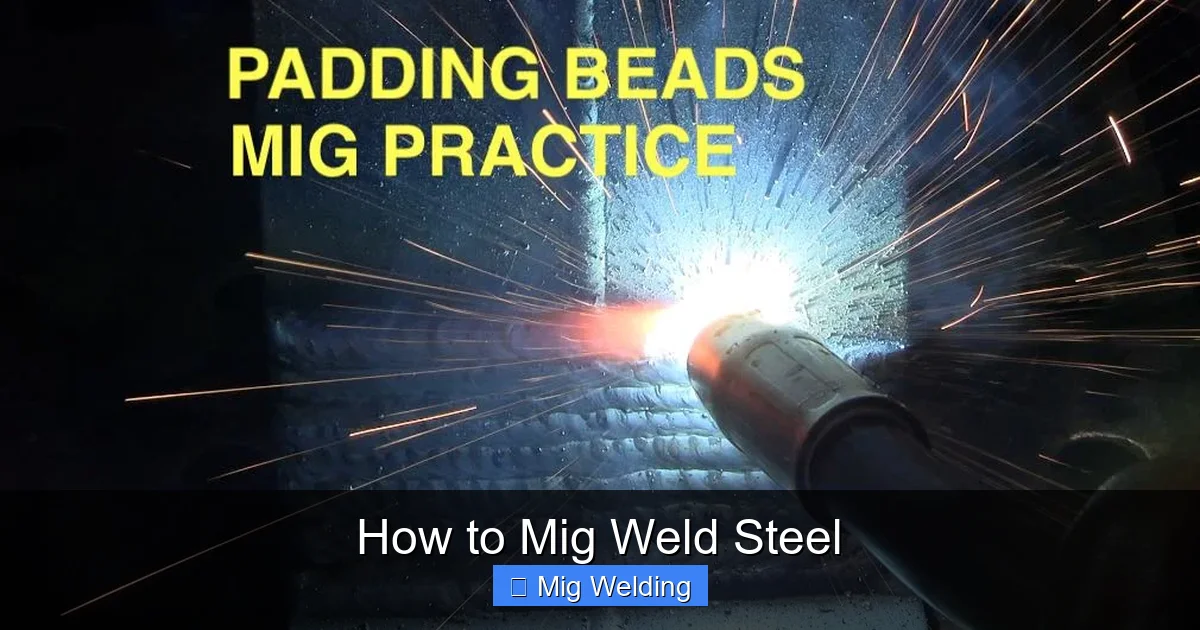
Learning how to MIG weld steel is a valuable skill for DIYers and professionals alike. This guide will walk you through the entire process, from preparing your materials to finishing your welds. With proper techniques and safety measures, you’ll be welding steel confidently in no time.
How to MIG Weld Steel
MIG welding, also known as Gas Metal Arc Welding (GMAW), is one of the most popular welding methods for steel. It’s relatively easy to learn, versatile, and produces clean, strong welds. Whether you’re a beginner or looking to improve your skills, this comprehensive guide will teach you how to MIG weld steel safely and effectively.
Key Takeaways
- Understand MIG welding basics: MIG welding uses a continuous wire feed and shielding gas to create strong welds on steel.
- Proper safety gear: Always wear protective gear including a welding helmet, gloves, and protective clothing.
- Prepare your materials: Clean and prep your steel to ensure good weld quality and prevent contamination.
- Set up your equipment correctly: Adjust voltage, wire feed speed, and gas flow according to your steel thickness.
- Master the welding technique: Use steady hand movement, maintain proper distance, and avoid common mistakes.
- Troubleshoot common issues: Learn to identify and fix problems like porosity, weak welds, or spatter.
- Practice makes perfect: Spend time practicing on scrap metal before working on your main project for best results.
Understanding MIG Welding Basics
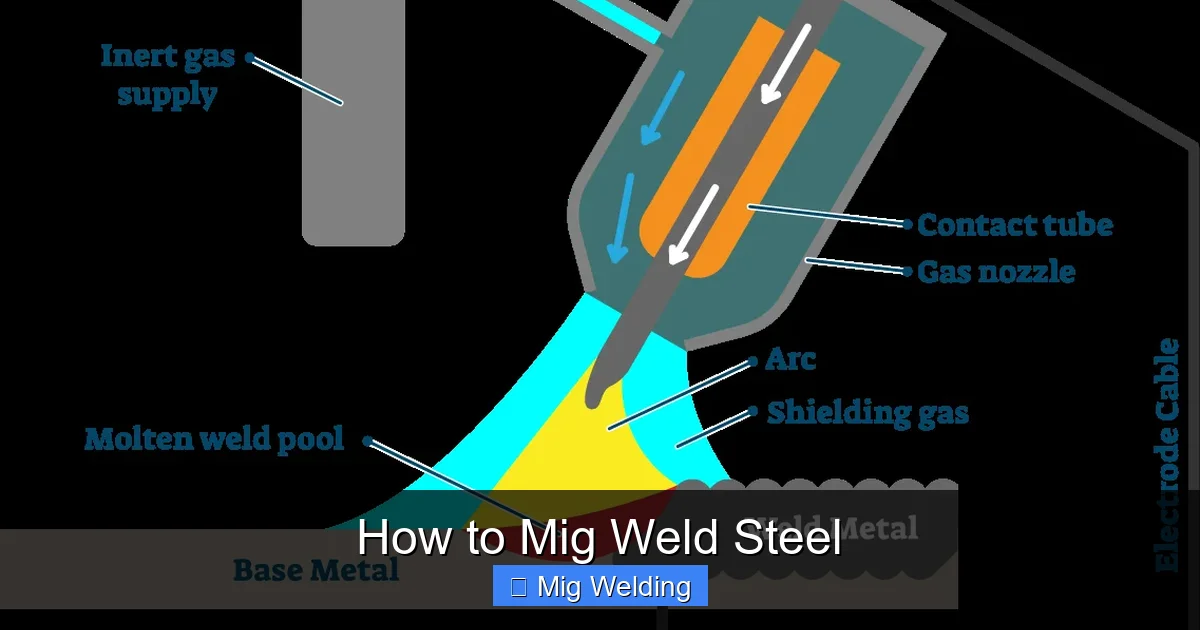
Before diving into the actual welding process, it’s essential to understand the basics of MIG welding. The process involves feeding a continuous wire electrode through a welding gun, which melts into the workpiece while shielding gas protects the weld from contamination.
Key components include:
- Welding machine: Provides the power and controls the wire feed and gas flow.
- Welding wire: The consumable electrode which melts to form the weld.
- Shielding gas: Typically argon, CO2, or a mix, which protects the weld pool from atmospheric contamination.
- Welding gun: The tool you hold to direct the wire and gas to the joint.
Step 1: Safety First
Wear Proper Safety Gear
Safety is paramount when welding. Always wear:
Visual guide about How to Mig Weld Steel
Image source: nsarc.com
- Welding helmet: To protect your eyes and face from UV rays, sparks, and spatter.
- Gloves: Heavy-duty, heat-resistant gloves to protect your hands.
- Protective clothing: Long sleeves, pants, and closed-toe shoes to shield your skin from sparks and heat.
- Ventilation: Ensure good airflow or use fume extraction to avoid inhaling harmful fumes.
Step 2: Prepare Your Materials
Clean the Steel
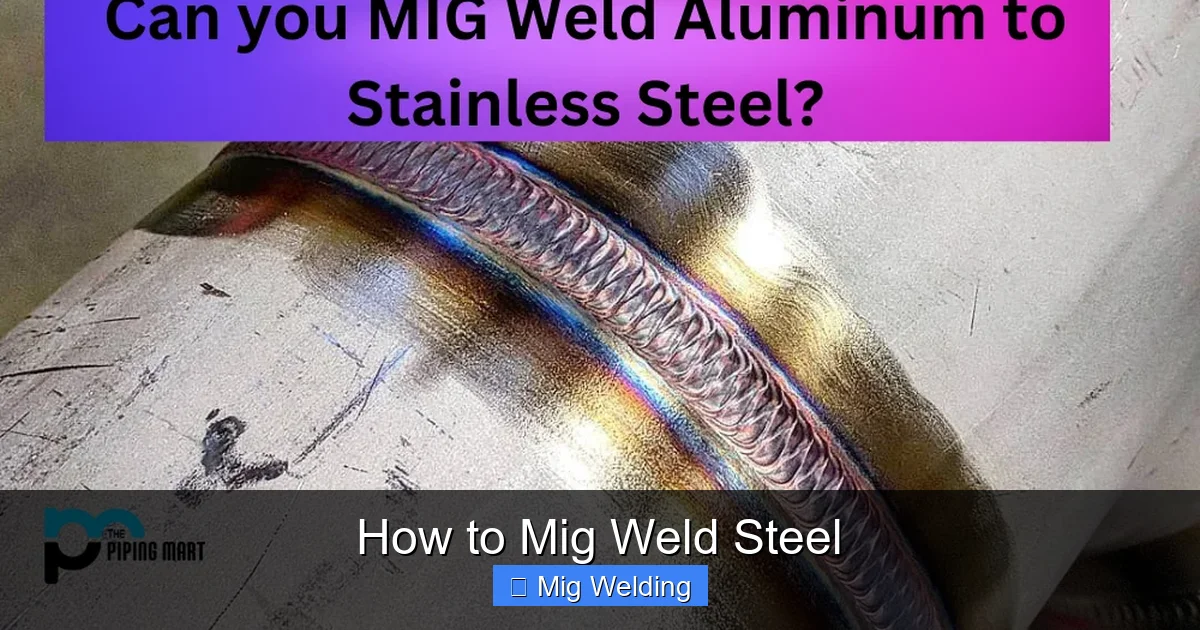
Clean steel is vital for strong, clean welds. Use a wire brush, grinder, or chemical cleaner to remove rust, paint, oil, and dirt from the steel surface.
Visual guide about How to Mig Weld Steel
Image source: cdn.thepipingmart.com
Cut and Position the Steel
Cut your steel pieces to size using a saw or grinder. Clamp or secure the pieces firmly to prevent movement during welding. Proper positioning ensures a better weld and easier access to the joint.
Step 3: Set Up Your MIG Welding Machine
Choose the Right Wire and Gas
For steel, use ER70S-6 or ER70S-3 wire. The wire diameter depends on the steel thickness; 0.030″ (0.8mm) is common for thinner steel, while 0.035″ (0.9mm) suits thicker steel.
Visual guide about How to Mig Weld Steel
Image source: weldingpros.net
Select shielding gas based on your project:
- 75% Argon / 25% CO2: Good for general steel welding, offers good stability and minimal spatter.
- 100% CO2: Cheaper, deeper penetration, but more spatter.
Adjust Settings
Set your welder’s voltage and wire feed speed according to the manufacturer’s chart or recommendations. Typically:
- Higher voltage and wire speed for thicker steel.
- Lower for thin steel to avoid burn-through.
Set your gas flow rate between 20-30 cfh (cubic feet per hour).
Step 4: Practice Welding Technique
Position Yourself
Stand comfortably with a steady hand. Maintain a 10-15 degree angle of the gun (usually pointing into the weld pool).
Start Welding
Hold the gun about ¼ inch (6mm) from the workpiece. Press the trigger to start the arc and slowly move along the joint at a consistent speed. Use short, steady movements to avoid overheating or weak welds.
Maintain Proper Speed and Distance
Moving too fast can cause weak welds and porosity; too slow can lead to burn-through. Keep a steady hand and maintain a uniform distance from the workpiece.
Step 5: Finishing the Weld
Inspect Your Weld
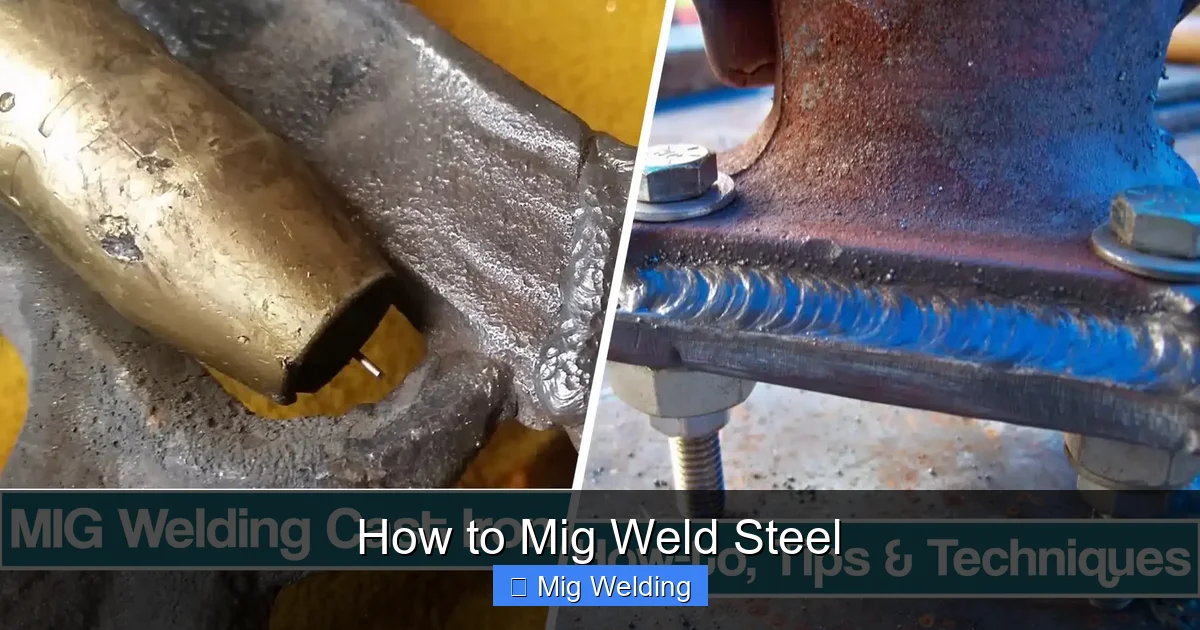
Look for a smooth, shiny bead with a consistent width. Avoid excessive spatter, porosity, or undercutting.
Clean the Weld Area
Remove slag or spatter with a wire brush. For better appearance and corrosion resistance, consider applying a protective coating or paint after cooling.
Troubleshooting Common MIG Welding Issues
- Porosity: Caused by moisture or contaminants. Fix by cleaning steel thoroughly and ensuring proper shielding gas coverage.
- Weak welds: Increase voltage or wire feed speed, or slow down movement.
- Spatter: Adjust wire speed or reduce voltage. Using the correct shielding gas helps minimize spatter.
- Burn-through: Use lower heat settings and thinner steel, or increase travel speed.
Conclusion
Mastering how to MIG weld steel takes practice, patience, and attention to safety. By understanding the process, setting up your equipment correctly, and practicing good technique, you’ll be able to produce strong, clean welds suitable for various projects. Keep practicing on scrap pieces, and don’t get discouraged by initial mistakes. With time, your MIG welding skills will improve significantly.
Remember, always prioritize safety, and enjoy welding! Happy welding!
