


Welding titanium with a MIG welder is challenging but possible with the right setup. This guide will walk you through the steps, equipment, and tips to successfully MIG weld titanium.
Learn how to handle titanium welding safely and effectively, ensuring strong, high-quality joints for your projects.
Key Takeaways
- Understanding titanium properties: Titanium is lightweight, strong, and corrosion-resistant, but it requires careful handling during welding.
- Traditional MIG welding limitations: Standard MIG welders typically struggle with titanium due to its high melting point and sensitivity to contamination.
- Specialized equipment needed: To MIG weld titanium successfully, you need a high-quality, capable MIG welder, pure inert gas shielding, and proper shielding techniques.
- Proper preparation is crucial: Clean titanium surfaces thoroughly to remove oils, dirt, and oxides before welding.
- Use of inert gas: Argon or helium-argon mixtures are essential for shielding titanium and preventing contamination.
- Techniques and settings: Lower heat input, correct wire feed speed, and proper torch angle are key to achieving quality welds on titanium.
- Safety considerations: Titanium welding produces fumes and UV radiation—use proper PPE and work in well-ventilated areas.
Can You MIG Weld Titanium?
Many metalworkers wonder if they can MIG weld titanium. The short answer is: yes, but it’s not straightforward. Titanium’s unique properties make it a challenging material to weld with a standard MIG setup. However, with the right equipment, preparation, and techniques, you can achieve strong, clean titanium welds. In this guide, we’ll explore everything you need to know to MIG weld titanium successfully.
Understanding Titanium and Its Welding Challenges
What Makes Titanium Special?
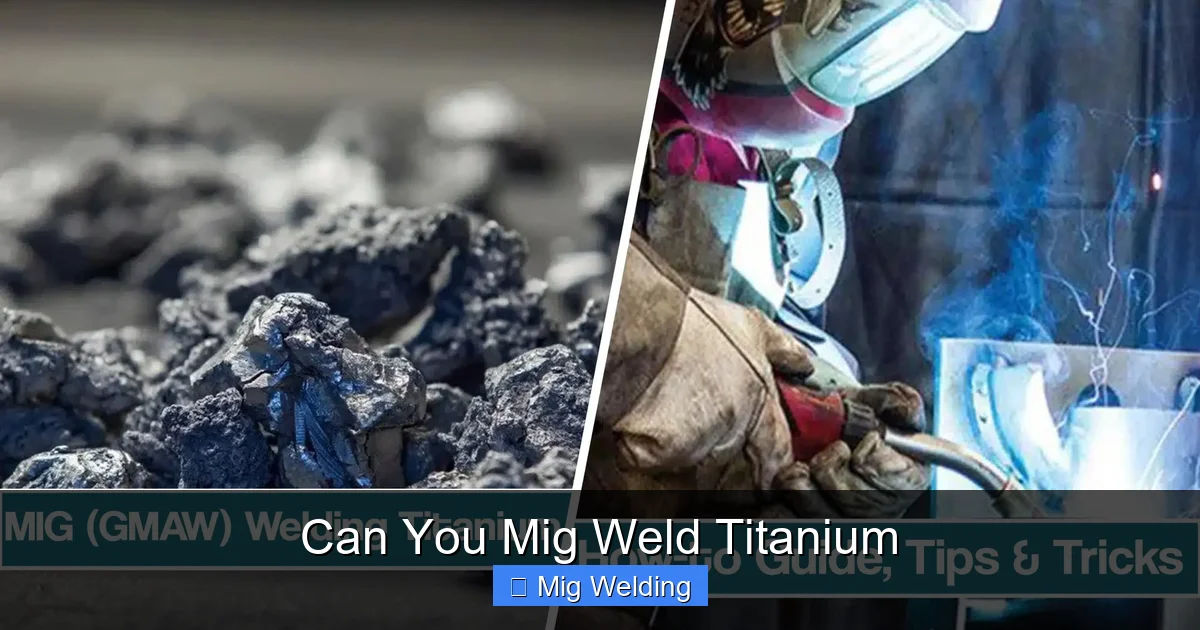
Titanium is a highly desirable metal because of its strength-to-weight ratio, corrosion resistance, and biocompatibility. It’s used in aerospace, medical implants, and high-performance sports equipment.

Visual guide about Can You Mig Weld Titanium
Image source: weldgallery.com
Despite its benefits, titanium is tricky to weld. It has a high melting point (~1,668°C or 3,034°F) and forms a thin oxide layer that can interfere with welding quality. Contamination from dirt, oil, or moisture leads to weak welds or porosity.
Why Standard MIG Welding Isn’t Usually Suitable
Most MIG welders are designed for steel or aluminum and may not handle titanium well. They typically lack the precise control needed for titanium’s high melting point and sensitivity. Moreover, common shielding gases like CO2 are unsuitable because they can cause contamination.
What Equipment Is Needed to MIG Weld Titanium?
High-Quality MIG Welder
You need a MIG welder capable of fine control over voltage and wire feed. A machine that supports pulsed MIG or synergic settings is preferred, as it helps manage heat input and stabilize the arc.
Visual guide about Can You Mig Weld Titanium
Image source: weldingpros.net
Welding Wire
Use titanium-specific filler wire, usually in the form of pure titanium or titanium alloys. The wire should match the base material’s grade for optimal weld integrity.
Shielding Gas
Pure argon or a mixture of argon with helium provides the best shielding. Helium increases heat input and arc stability, which can be beneficial for titanium.
Protective Equipment
- Welding helmet with UV protection
- Respirator or fume extraction system
- Gloves and protective clothing
Preparing for MIG Welding Titanium
Cleaning the Material
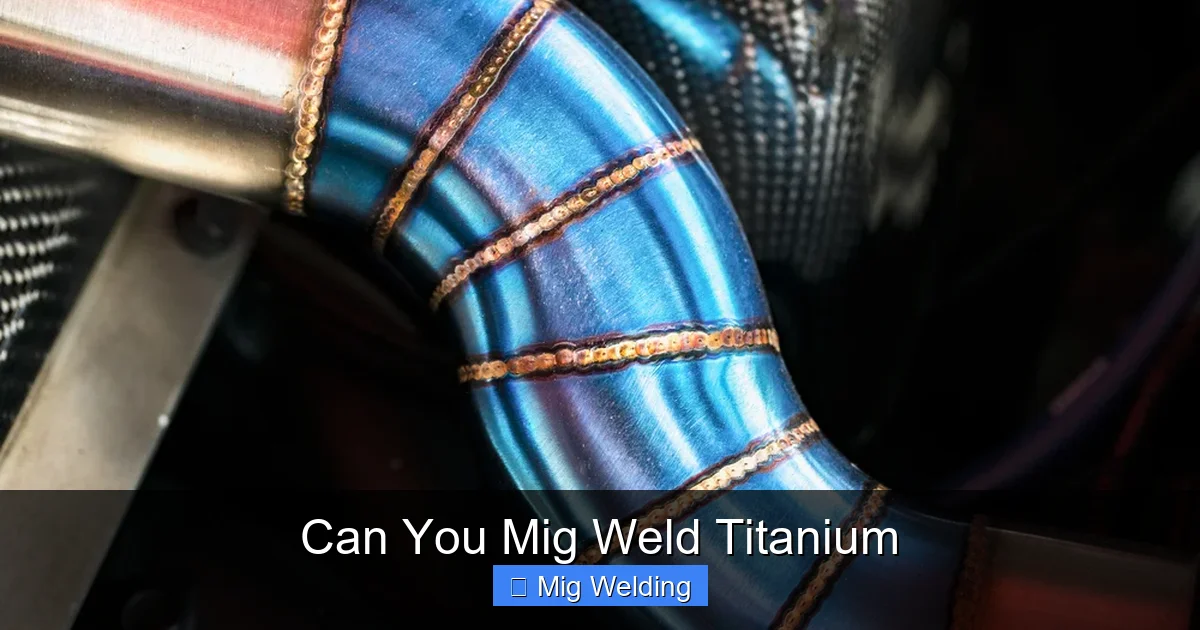
Before welding, meticulously clean the titanium surface. Use stainless steel brushes dedicated for titanium to remove oxides and contaminants. Avoid using carbon steel brushes, as they can introduce impurities.
Visual guide about Can You Mig Weld Titanium
Image source: theweldguru.com
Wipe the area with a solvent like acetone to remove oils and dirt. The cleaner the surface, the better the weld quality.
Setting Up Your Workspace
Work in a clean, dust-free environment. Use a dedicated welding area with minimal airflow to prevent contamination from drafts or moisture.
Step-by-Step Guide to MIG Welding Titanium
Step 1: Setup Your Equipment
- Install the appropriate titanium filler wire into the wire feeder.
- Connect the shielding gas supply, ensuring a steady flow of pure argon or helium-argon mix.
- Set your MIG welder to a low to medium heat setting. Start with a voltage around 15-18V and adjust based on test welds.
- Set wire feed speed to match the wire diameter, typically around 50-200 inches per minute.
Step 2: Prepare the Titanium Piece
- Thoroughly clean the surface with a dedicated titanium brush and solvent.
- Clamp the piece securely to prevent movement during welding.
Step 3: Welding Technique
- Hold the torch at a 10-15 degree angle, pointing into the weld joint.
- Maintain a consistent arc length—about the diameter of the wire tip.
- Use a steady, slow travel speed to ensure proper fusion without excessive heat input.
- Keep the shielding gas flow at around 20-30 cubic feet per hour (CFH).
Step 4: Perform the Weld
- Begin welding with a small tack to start the joint.
- Move along the joint smoothly, maintaining consistent torch angle and distance.
- Adjust parameters if you notice porosity, spatter, or poor fusion.
Practical Tips for Successful Titanium MIG Welding
- Use pulsed MIG welding if available: It provides better control over heat input and reduces warping.
- Minimize contamination: Keep the workspace clean and handle titanium with gloves to avoid oils.
- Practice welding on scrap: Before working on your actual piece, do test welds to dial in your settings.
- Control heat input: Too much heat causes burn-through or distortion; too little may cause weak welds.
- Post-weld cleaning: Clean the weld area again to remove any residual oxides or contaminants.
Troubleshooting Common Problems
Porosity in the Weld
This often results from contamination or insufficient shielding gas. Ensure your shielding gas flow is steady and your workspace is clean.
Cracks or Weak Welds
High heat input or improper preparation can cause cracking. Use lower voltage settings and ensure proper cleaning.
Incomplete Fusion
Adjust your torch angle and travel speed. Make sure the arc length is consistent and the filler wire is feeding smoothly.
Conclusion
While MIG welding titanium isn’t as common as TIG welding for this material, it can be done successfully with the right approach. Focus on proper equipment, meticulous preparation, and careful technique to produce high-quality titanium welds. Remember, safety first—always work in a well-ventilated area and wear appropriate PPE. With patience and practice, you can master MIG welding titanium for your projects.
Final Tips
If you’re new to welding titanium, consider consulting with experienced welders or taking specialized courses. Titanium welding is a skill that improves with hands-on experience. Happy welding!
