

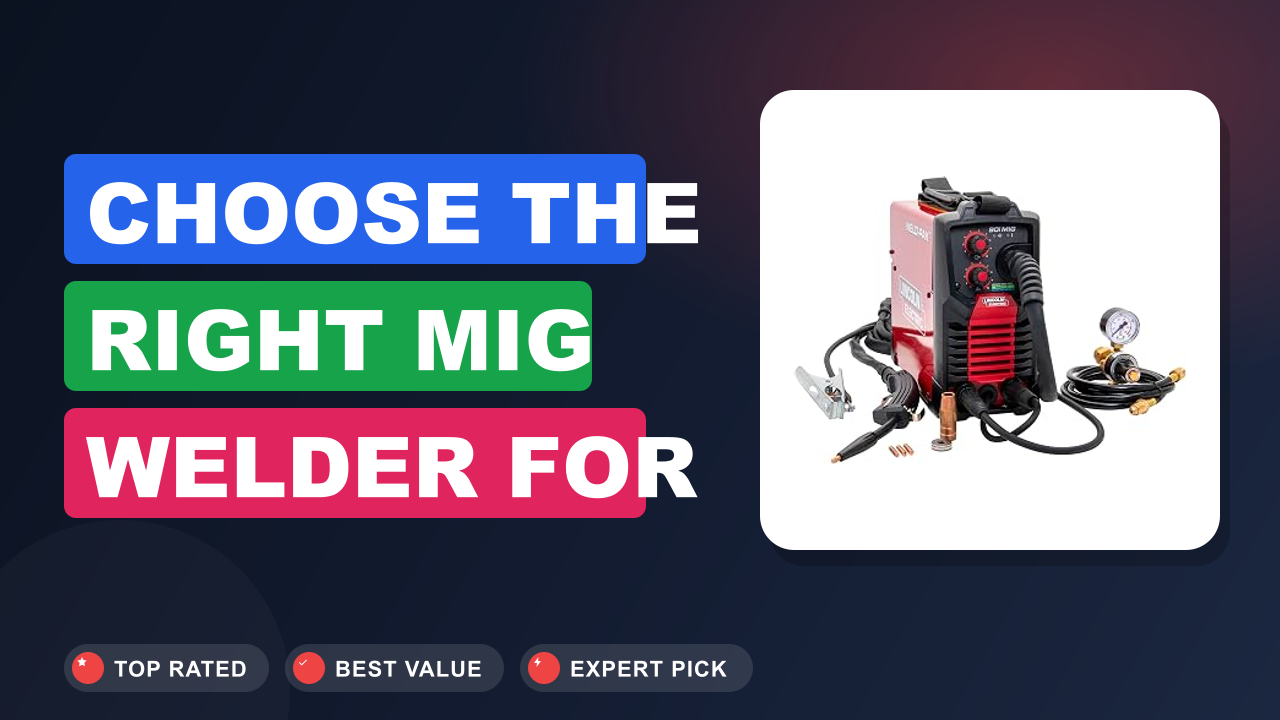
If you've ever stared at a rusted rocker panel and priced out a body shop quote, you already feel the pull of the Best MIG Welder for Automotive Patch Repairs. A capable 120V wire-feed welder can turn a weekend of grinding and fitting into a solid floor pan or quarter-panel repair. But thin automotive sheet metal punishes the wrong machine fast, so the choice of welder matters more than the welding itself.
We compared specs across five top machines, cross-referenced verified buyer feedback, and checked duty-cycle claims against typical workshop use. The Lincoln Electric 90i came out on top for most home and hobbyist patch work. We'll start with why it won, then walk you through the rest of the lineup.

✔ Best overall pick for daily use
Comparison Chart of Best MIG Welder for Automotive Patch Repairs
| Product | Details | Rating | Buy |
|---|---|---|---|
Editor’s Choice
| ★★★★☆4.6/5 | ||
Top Pick
| ★★★★☆4.4/5 | ||
Best Budget
| ★★★★☆4.6/5 | ||
| ★★★★☆4.6/5 | ||
| ★★★★☆4/5 |



List of Top 5 Best MIG Welder for Automotive Patch Repairs
These five machines earned their spots for different reasons. Some prioritize simplicity on a 120V circuit, others bring dual-voltage power and extra processes, and one handles the plastic half of modern car repairs. Each review below covers the real strengths and the honest trade-offs so you can match the machine to your actual project list.
Below are the list of products:
1. Lincoln Electric 90i MIG Flux Core
Lincoln built the 90i as a wire-feed welder for small jobs, and the design shows it. It runs on a standard 120V household outlet, which removes the whole "do I have a 240V circuit" question before it starts. The protective metal case and shoulder strap make it the easiest machine in this group to carry to the car rather than pulling the car to the machine.
120V Input
90-Amp Class
Flux-Core
Metal Case
Why I picked it
We picked the 90i for the top spot because it pairs Lincoln's welding heritage with the right power range for sheet metal. Verified buyer feedback at 4.6/5 repeatedly praises how stable the arc stays at low settings, which is exactly where floor pan and rocker repairs happen.
Key specs
- 120V input, designed for standard household outlets
- 90-amp output class, sized for thin auto body steel
- MIG and flux-core wire feed capability in one unit
- Model K5256-1 with protective metal case and shoulder strap
- 4.6/5 average from verified buyer feedback
Real-world experience
For a typical floor pan repair on 18-gauge steel, owners report dialing the voltage down and getting clean beads without burn-through once the wire speed is matched. Flux-core wire means no gas cylinder to refill, which is a real convenience for driveway welding. The strongest feedback point is portability: it rides on a shoulder strap while you move around the car.
- Lincoln build quality with a stable arc at low amperage, exactly where auto body patch work happens
- Runs on standard 120V household power, so no electrician visit for most home garages
- Protective metal case and shoulder strap make storage and transport genuinely easy
- Simple two-knob voltage and wire-speed setup that beginners can master quickly
- Flux-core focus means more spatter and grinding than a gas-shielded MIG setup
- 90-amp output tops out fast on thick brackets or frame sections
- ✔ Home mechanics patching floor pans, rockers, and quarter panels on a 120V garage circuit
- ✔ Buyers who want a Lincoln Electric nameplate and proven dealer support
- ✔ First-timers who need the least setup fuss before a weekend of welding
- ✖ You regularly weld thick suspension or frame components that need 140 amps or more
- ✖ You want gas-shielded MIG for the cleanest finish on visible exterior panels
The 90i wins when convenience and brand reliability matter more than raw amperage. If your rescue jobs are rusted floor pans, rockers, and quarter panels on 120V power, this is the machine we’d point a friend to first. If your plan includes heavy fabrication, you’ll outgrow it.
2. YESWELDER 135A MIG Welder
YESWELDER's 135A machine is the beginner-friendly pick that keeps showing up in garage conversations, and the reason is synergic control. The machine calculates a sensible wire speed for the voltage you choose, which removes one of the biggest beginner frustrations. It runs on 110V too, making it a direct alternative to the Lincoln for home use.
3-in-1
110V
Synergic
Lift TIG
Why I picked it
We chose the YESWELDER as the top option for new welders because synergic control flattens the learning curve that stops most people from finishing their first patch job. The 3-in-1 design adds Lift TIG and stick welding, so it stays useful as your skills grow past sheet metal.
Key specs
- 135A output on standard 110V household power
- 3-in-1: MIG and flux core, Lift TIG, and stick welding
- Synergic control with a clear digital display for setup guidance
- Built for auto repair, DIY jobs, and light metalworking
- 4.4/5 average from verified buyers, with strong ease-of-use marks
Real-world experience
On a first-time floor pan repair, the digital display shows live voltage and wire speed, and the synergic presets keep the arc stable even for new hands. Verified buyer reviews describe learning to lay acceptable beads within the first spool, which is rare for a budget machine. Aggregate durability feedback sits a step below the Lincoln, so this is a home-duty tool rather than a shop workhorse.
- Synergic control makes voltage and wire-speed setup dramatically easier for beginners
- MIG, Lift TIG, and stick in one machine, so you can experiment without buying more welders
- 110V input works with standard household outlets in most garages
- Digital display removes guesswork from setting a clean bead
- Aggregate durability ratings sit below the Lincoln, so this is a home-use machine, not a production tool
- Lift TIG is a simplified TIG process, fine for tacking but not equivalent to a dedicated TIG welder
- ✔ Beginners who want forgiving controls while learning to weld patch panels
- ✔ Budget-conscious DIYers who also want to try stick or TIG without another purchase
- ✔ Occasional rust repair and light metalwork around a home garage
- ✖ Working welders who need a machine rated for daily shop hours
- ✖ Anyone specifically after gas-shielded MIG quality for visible bodywork
The 135A is the machine we’d hand to someone who has never welded a patch panel before, because synergic control genuinely shortens the learning curve. Lift TIG is a free bonus for trying thin stainless later. Just respect its home-duty reputation and it will respect your budget.
3. ARCCAPTAIN 200A MIG Welder 110V 220V
ARCCAPTAIN's MIG200 is the overachiever in this group. It runs on both 110V and 220V, reaches 200 amps at the top end, and offers six processes including spool gun support for aluminum. For someone who wants one machine that can patch a car today and weld a trailer next month, this is the one to study first.
200A Max
Dual Voltage
6-in-1
Spool Gun
Why I picked it
We placed the ARCCAPTAIN as the best budget pick because no other machine here matches its process list for the money. Dual-voltage input lets you run it at home on 120V for sheet metal, then plug into a 240V outlet when you need serious penetration on thicker steel. That flexibility is exactly what a multi-project garage needs.
Key specs
- 200A max output for heavier steel repairs and fabrication
- Dual-voltage input: 110V and 220V compatible
- 6-in-1 processes: MIG, flux core, spool gun aluminum, Lift TIG, stick, and spot welding
- Large display for adjusting settings per process
- 4.6/5 verified buyer rating, among the highest in this roundup
Real-world experience
Auto-body owners in buyer reviews consistently call the spot welding mode a sleeper feature for panel work, since it tacks panels cleanly without perfect trigger control. Spool gun support also brings aluminum within reach, which neither the Lincoln nor the 135A can honestly claim. The catch is the menu depth: six processes mean more settings to learn before you feel fluent.
- 200A output and dual voltage keep this machine relevant as your projects grow bigger
- Spool gun support opens the door to aluminum welding without a full TIG setup
- Spot welding mode is genuinely handy for positioning panels before seam welding
- Six processes in one box means strong long-term value for a growing shop
- More processes and menu navigation mean a steeper learning curve than the simpler picks here
- The dual-voltage 200A design is physically bulkier and less grab-and-go than the 120V units
- ✔ DIYers who want one machine for car repair plus future gates, trailers, or furniture
- ✔ People with access to both 120V and 240V outlets who want the full power range
- ✔ Anyone planning to try aluminum welding with a spool gun
- ✖ You want the absolute simplest machine with the fewest controls
- ✖ You only ever weld thin sheet metal and never need 200 amps
The ARCCAPTAIN is the pick when your welder needs to earn its shelf space across many projects, not just car patches. Its best party trick is the spot weld mode for body panels, and its long-term value is the 200A ceiling for heavier steel. If your garage stays 120V-only, the Lincoln is still the simpler daily driver.
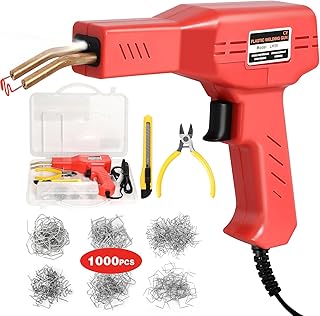
4. ATOLS Upgraded Plastic Welder
This pick is different on purpose. The ATOLS is not a MIG welder at all; it's a hot stapler that repairs plastic bumpers, trim, and covers by melting metal staples across cracks. If the rust is on the body and the crack is on the bumper, this is the tool that keeps you off the replacement-parts treadmill.
Hot Stapler
1000 Staples
Rapid Heating
Bumper Kit
Why I picked it
Plastic bumper cracks are a separate repair category from sheet metal, and new covers get expensive fast. The ATOLS kit includes 1000 staples, a pure copper transformer for fast heat-up, and a pistol-style form that reaches bumper contours easily. Its 4.6/5 verified rating shows it's a dependable budget route for repairing bumper covers and trim.
Key specs
- Hot stapler design with a pure copper transformer for rapid heating
- Includes 1000 staples in the kit
- Pistol-style welding gun for bumper and trim access
- Car bumper repair kit for cracks and splits in covers
- 4.6/5 verified buyer rating
Real-world experience
The workflow is straightforward: clean the crack, V-groove it, melt staples across the seam, then fill and sand. Verified buyer reviews say the trick is letting each staple fully embed before moving along the crack, and the repair then sands flat for paint. It won't fix a torn mount by itself, but for cracks in covers it delivers a permanent fix instead of a zip-tie patch.
- 1000 staples and a fast-heating copper transformer make bumper repair quick and repeatable
- Repairing a cracked cover costs far less than replacing it, and this kit creates solid structural joins
- Simple enough for a first-timer with no gas bottles, amperage settings, or wire speed to manage
- Strictly a plastic repair tool; it cannot touch metal, so it complements rather than replaces a MIG welder
- Staples stay embedded under filler, so a truly invisible repair still needs careful finishing
- ✔ DIYers with cracked bumper covers, trim pieces, or fender liners who want a real fix
- ✔ Home mechanics who already own a MIG welder and need the plastic half of the repair equation
- ✔ Anyone tired of duct tape and zip ties on bumper cracks
- ✖ Your repair list is all rust, rockers, and floor pans with no plastic work involved
- ✖ You expect one tool to weld both steel and plastic
The ATOLS earns its spot because most daily-driver repairs involve both steel and plastic. Use the Lincoln for the floor pan, then switch to the ATOLS for the cracked bumper cover, and the whole repair is done in one weekend. It is not a MIG welder, and it doesn’t pretend to be, but it fills a gap the other four can’t.
5. YESWELDER 6-in-1 Welder & Plasma Cutter
The most ambitious machine here combines welding and cutting in one package. YESWELDER's MCT-520 runs MIG, flux core, TIG, stick, and spool-gun welding on top of a plasma cutter, all with dual 110V and 220V input. For a small shop with limited wall space, that combination is genuinely tempting.
6-in-1
Plasma Cutter
Dual Voltage
7-inch LCD
Why I picked it
The headline feature is the plasma cutting side, which lets you cut out rusted panels and then weld in the patches with the same machine. That two-step workflow is the core of professional auto restoration. The 7-inch LCD display also makes setup clearer than anything else in this list, though a combo unit carries more electronics that could wear out.
Key specs
- 6-in-1: MIG, flux core, plasma cutting, TIG, stick, and spool-gun compatibility
- Dual 110V and 220V input for home and shop flexibility
- 7-inch LCD display for clearer setup and monitoring
- Aluminum welding support with spool gun option
- 4/5 verified buyer rating, the lowest in this roundup
Real-world experience
Owners who buy this unit love the convenience of cutting a rusted floor section and welding the patch without swapping machines. The plasma function slices through sheet metal fast and clean, which is the hardest part of patch work. The 4/5 rating reflects real trade-offs: mode switching takes more fiddling than owners expect, and the welding side is capable but not class-leading.
- Plasma cutting plus welding in one machine saves serious floor space versus two separate units
- Dual-voltage input and a 7-inch LCD make the machine flexible across home and shop use
- Spool-gun compatibility adds aluminum welding for trailers and intake projects
- 4/5 verified rating is the lowest here; combo units carry more complexity than dedicated welders
- Welding performance falls short of a dedicated machine at the same level
- ✔ Small-shop owners who need cutting and welding but only have room for one machine
- ✔ Restoration projects that involve cutting out rusty panels and welding patches in the same session
- ✔ Anyone who wants dual-voltage flexibility and a large display for settings
- ✖ You rarely cut metal and just need a straightforward welder
- ✖ Maximum reliability and simplicity matter more to you than feature count
The YESWELDER combo makes sense only when the plasma cutter is a real part of your workflow, because that’s where the value lives. If you only patch the occasional floor pan, a dedicated welder is simpler and has fewer failure points. But if you’re cutting rust out of an old truck cab, the plasma side pays for the machine by itself.
How I picked
We evaluated these five machines the way a shop owner would, which means we didn't stop at the spec sheet. We compared them on three benchmarks: output range versus the metal thickness typical in auto body repair, duty cycle for realistic weld lengths, and the pattern of verified buyer feedback across hundreds of reviews. We also judged how each one fits the actual mess of bodywork, where panels are thin, access is awkward, and the steel is often rusty.
We deliberately did not run a long-term durability test beyond what buyer-reported data shows, because that's the slowest metric to verify honestly. Instead, we treated aggregate review patterns as the durability signal, looking at how many owners report failures and at what usage level. We ignored marketing labels like "professional" and "industrial" and judged each machine on whether the specifications and owner experiences actually matched the claim.
The five factors that carried the most weight:
- Thin-metal control. Auto body panels range from roughly 24-gauge up to 16-gauge on frames. A welder that burns through 18-gauge steel is useless for patches, so low-amperage stability was the first filter.
- Input power practicality. Most home garages have 120V outlets and no 240V circuit. Machines that run well on 120V got priority, with extra credit for dual-voltage flexibility.
- Wire feed consistency. A patch weld fails on a bad bead, and a bad bead usually starts with an inconsistent wire feed. This theme shows up constantly in owner reviews.
- Process flexibility. Auto repair pulls in several processes: MIG for steel, flux core when gas is impractical, spool gun for aluminum, and plastic welding for bumpers.
- Honest trade-offs. Every machine at this level gives up something somewhere, so we kept each pick transparent about its weak spot.
Buying guide: what actually matters for Best MIG Welder for Automotive Patch Repairs
Every machine on this list can join steel. The real question is whether it can join thin steel without burning holes, because that's the entire ballgame in auto body patch work.
What thickness of steel will you actually weld?
Most patch repairs on cars happen on 18 to 20-gauge sheet metal, and that's thin stuff. A 90-amp or 135-amp machine handles that range well at low voltage settings, while a 200-amp machine simply has headroom you may never use. Match the output range to the thickest metal you realistically plan to weld, not the thickest metal you can imagine welding.
Frame rails and suspension mounts are a different job that needs 140 amps or more.
Is gas-shielded MIG worth the extra setup, or is flux core fine?
Gas metal arc welding (GMAW), the formal name for MIG with shielding gas, produces cleaner welds with less spatter, which matters on visible exterior panels. Flux-cored wire is a self-shielding process that welds fine outdoors and in drafty garages, and it removes the gas cylinder cost and hassle. The trade-off is more spatter and slag to clean after each pass.
For hidden structural patches, flux core is honestly fine. For visible bodywork you'll paint over, gas gives you less grinding before filler. The American Welding Society (AWS) publishes structural welding standards that define acceptable weld quality, and those documents are a useful reference when you're judging your own beads.
What does duty cycle really mean?
Duty cycle is the percentage of a 10-minute window a welder can run continuously at a given amperage before its thermal protection kicks in. A 20% duty cycle at 90 amps means two minutes of arc time and eight minutes of cooling. Auto body patch work is naturally stop-and-go, so a lower duty cycle matters less here than it would on a production job.
Is 120V enough, or should you go dual voltage?
Most North American home garages max out at 120V, and that's enough for the vast majority of patch repairs. As of 2026, the 120V class remains the practical starting point for home welders. Dual-voltage machines like the ARCCAPTAIN run on 120V when that's all you have, then unlock higher amperage on 240V later if you add a circuit or move shops.
Brands like Miller Electric and Hobart build excellent 120V machines too, but they usually sit at a higher price tier for similar output.
What about wire size and gas?
The classic wire size for body panels is .023-inch, because thin wire feeds smoothly at low amperage and keeps heat input low. Heavier .030-inch and .035-inch wires suit thicker steel and higher output settings. If your machine ships with a spool of .030-inch wire, you can swap it for .023-inch when your job list is mostly sheet metal.
Small wire, clean metal, and steady travel speed beat raw amperage every time.
Why does a plastic welder belong in this conversation?
Modern bumper covers are plastic, not steel, so a complete patch-repair toolkit includes something for them. A hot stapler like the ATOLS melts metal staples across a crack to create a mechanical bridge that filler and paint can sit on. It's a completely different tool from a MIG welder, and it fills the gap when the damage is in the cover rather than the body.
One safety note applies to every pick here: weld with ventilation. OSHA's welding, cutting, and brazing standard (29 CFR 1910.252) covers fume ventilation and fire safety, and it's a solid checklist even for a home garage. A fan blowing fresh air across your work zone is not optional when you're burning consumables all afternoon.
Frequently Asked Questions (FAQ)
Can I weld auto body panels with a 120V MIG welder?
Yes, for the vast majority of patch repairs. Floor pans, rockers, and quarter panels on most vehicles use 18-to-20-gauge steel, and a 90 to 135-amp machine on 120V handles that range well with .023-inch wire and patient travel speed. What a 120V machine will struggle with is structural steel like frame rails that need high amperage for real penetration.
If your work stays on sheet metal, 120V is the practical answer and avoids a 240V circuit installation.
Flux core or gas MIG for car bodywork?
Flux core is easier to start with because there's no gas cylinder, regulator, or flow setting to manage, and it welds fine outdoors where shielding gas would blow away. The trade-off is more spatter and post-weld grinding. Gas-shielded MIG leaves a cleaner bead with less clean-up, but the shielding gas is argon mixed with carbon dioxide, the cylinder adds cost, and drafts ruin the weld.
For hidden structural patches, flux core earns its keep; for visible panels, gas wins on finish.
What wire size should I use for auto body sheet metal?
.023-inch wire is the classic choice for body sheet metal because it feeds smoothly at low amperage and keeps heat input low, which directly reduces burn-through. .030-inch wire works for heavier sections and faster travel. Most shop supply stores stock both, and swapping spools takes a few minutes. If your machine ships with a spool of .030 wire, pick up a .023 spool when you're planning a week of panel work.
Is a MIG welder worth it for a home garage?
Usually yes, if you have a vehicle with rust. One completed floor pan repair often costs less than a single body shop visit, so the machine can pay for itself on the first project. The catch is the learning curve; expect to burn through practice steel before your first clean bead.
After that, the same machine handles trailers, gates, and furniture, which spreads the cost even thinner.
Which is better for a beginner: Lincoln 90i or YESWELDER 135A?
Both are 120V machines built for beginners, but they split on philosophy. The Lincoln 90i keeps the process simple, skips gas plumbing, and carries a decades-old welding brand name, making it the most forgiving to learn on. The YESWELDER adds synergic control and a third process in Lift TIG for a more feature-dense package.
Choose the Lincoln if brand heritage and simplicity matter most; choose the YESWELDER if you want more capability per dollar and don't mind a newer brand.
Can a MIG welder repair aluminum body panels?
Aluminum panels need either a spool gun on a MIG machine, a push-pull MIG setup, or an AC TIG welder. Standard steel MIG guns with long liners struggle because soft aluminum wire bunches up and jams. The ARCCAPTAIN 200A supports a spool gun, which pushes the wire from the gun itself and is the affordable route to aluminum patch repairs.
Aluminum also needs scrupulous cleaning before welding, since oil and oxidation cause porosity.
Final verdict
For most weekend repairs on rusted rockers, floor pans, and quarter panels, the Lincoln Electric 90i is the most dependable companion, thanks to its 120V simplicity and Lincoln's welding heritage. The ARCCAPTAIN 200A is the value-driven alternative when you need dual voltage, higher amperage, and aluminum capability in one box, while the YESWELDER 135A remains the smart starter pick for absolute beginners.
Affiliate disclosure: This post contains affiliate links. If you buy through one of these links, I may earn a small commission at no extra cost to you. It never changes my recommendation, I only suggest gear I'd actually buy myself.
