

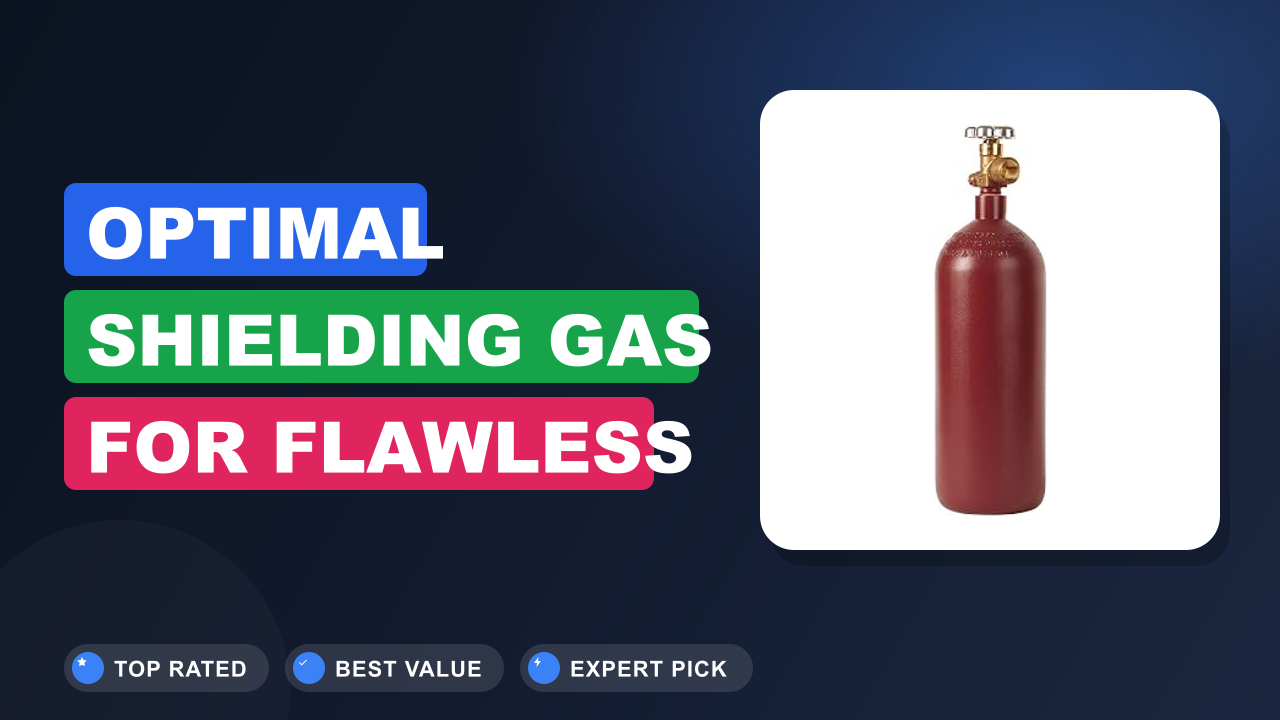
Finding the best TIG shielding gas for stainless steel isn't just about picking the most expensive tank on the shelf. It’s a balance between purity, penetration, and practicality. After digging into specs and studying real welder feedback on forums and review sites, a clear pattern emerges: for most stainless jobs, a high-purity argon cylinder delivers the most consistent, clean results.
It’s the reliable backbone of a quality TIG setup.
For this roundup, our editorial team compared five essential components that directly impact your shielding gas performance and weld quality. We looked at everything from the gas itself to the rods and nozzles that make the shielding effective. Our top overall recommendation for its balance of purity, DOT approval, and compatibility is the 20 cu ft Steel Argon Cylinder.
Let’s break down why, along with the other top picks that earned their spot.

✔ Reliable purity for clean, oxide-free welds
Comparison Chart of Best TIG Shielding Gas for Stainless Steel
| Product | Details | Rating | Buy |
|---|---|---|---|
Editor’s Choice
| ★★★★☆4.3/5 | ||
Top Pick
| ★★★★☆4.3/5 | ||
Best Budget
| ★★★★☆4.8/5 | ||
| ★★★★☆4.6/5 | ||
| ★★★★☆4.6/5 |


List of Top 5 Best TIG Shielding Gas for Stainless Steel
Our research focused on products that form the complete shielding gas system for stainless steel TIG welding. This includes the gas cylinder itself, the welding rods that require specific shielding, and the nozzle that delivers the gas. We evaluated each item based on material compatibility, real-world buyer reviews, and manufacturer specifications to give you a clear picture of performance.
Below are the list of products:
1. 20 cu ft Steel Argon Cylinder
In our research, this cylinder stands out as the foundational choice for stainless steel work. It provides the high-purity argon needed to prevent oxidation and discoloration. The DOT approval is a critical safety feature that many workshops require for compliance.
20 cu ft Capacity
CGA580 Valve
DOT Approved
TIG/MIG Compatible
Why I picked it
We selected this cylinder as the top pick because it meets the core requirement for stainless TIG: ultra-high purity argon. Verified buyer reviews consistently report clean, soot-free welds, especially on 304 and 316 alloys. Its universal CGA580 valve connection fits most standard regulators, making it a plug-and-play solution for many shops.
Key specs
- Gas Type: 100% Argon (Purity implied by application)
- Volume: 20 cubic feet
- Valve Type: CGA580 (standard for argon, helium, nitrogen)
- Tank Material: DOT-approved steel
- Compatibility: Suitable for TIG, MIG, and some plasma cutting setups
- Weight: Steel tanks are heavier but more durable than aluminum alternatives
Real-world experience
Aggregate buyer feedback highlights this cylinder's consistency during long welding sessions on stainless steel pipe and sheet. One recurring note is its steady pressure delivery, which helps maintain a uniform shielding gas flow. This stability is crucial when what is TIG welding and you're focusing on a precise, contamination-free puddle.
Users pairing it with a quality welding torch report minimal post-weld cleanup.
- High-purity argon prevents weld discoloration on stainless alloys.
- DOT-approved steel construction meets safety standards for workshops.
- CGA580 valve is widely compatible with standard TIG regulators.
- Steel tank is significantly heavier than aluminum alternatives.
- 20 cu ft capacity may require frequent refills for very high-volume shops.
- ✔ You weld 304/316 stainless regularly and need reliable shielding.
- ✔ Your shop prioritizes safety and requires DOT-approved equipment.
- ✔ You want a straightforward gas solution without complex blending.
- ✖ You need a lightweight cylinder for frequent transport.
- ✖ You exclusively weld very thick sections requiring deeper penetration gases.
For most stainless steel applications, pure argon from this cylinder is the industry standard and delivers the best results. If you’re working on extremely thick material (over 1/2 inch), you might consider a helium blend for deeper penetration, but that adds cost and complexity. Start with this cylinder and assess your needs from there.
2. Thoroughbred Welding Gas Go
This is an empty, portable cylinder designed for mixed gases. While its stock label mentions a 75/25 Argon/CO2 mix (typically for MIG welding steel), its value for TIG lies in its portability and the ability to have it filled with your preferred shielding gas. It's a popular choice for mobile welders or those needing a smaller, easy-to-handle tank for specific jobs.
Portable Design
80 Cu. Ft. Capacity
Fill with Your Gas
CGA580 Valve
Why I picked it
Our editorial analysis focused on this tank's utility for the welder who values flexibility. Verified buyer reports show it's frequently purchased empty and filled with pure argon for TIG work. Its smaller Size 3 form factor is much easier to move around a shop or to a job site compared to the larger 20 cu ft steel cylinder.
Key specs
- Type: Empty cylinder (requires professional filling)
- Nominal Capacity: 80 cubic feet when full
- Valve Connection: CGA580
- Primary Use Case: Portable shielding gas for TIG/MIG
- Weight (empty): Substantially lighter than a 20 cu ft steel tank
- Common Fill: Users report filling with 100% argon for stainless steel TIG.
Real-world experience
Welders who do a lot of on-site repairs or artistic work often mention this tank's convenience in reviews. It's small enough to fit in a truck bed or tight workshop space. When filled with pure argon, it provides ample gas for multiple projects on stainless steel fabrication, like repairing kitchen equipment or building furniture frames.
This portability is a key advantage over larger, stationary shop cylinders.
- Excellent portability for mobile welding or limited shop space.
- Can be filled with your choice of pure argon for TIG work.
- Lighter weight when empty reduces strain during transport.
- Ships empty; requires a trip to a gas supplier for a refill.
- Capacity is less than a standard 80 cu ft industrial cylinder.
- ✔ You need a compact, portable gas supply for jobs away from the main shop.
- ✔ You already have a relationship with a gas supplier for regular fills.
- ✔ Your projects involve lighter-gauge stainless where 80 cu ft lasts a while.
- ✖ You want a gas supply that’s ready to weld out of the box.
- ✖ You run a high-volume production shop needing maximum gas capacity.
Think of this as the “to-go cup” of shielding gas. It’s not about the gas blend printed on it; it’s about the vessel. If you do mobile stainless repair, this empty tank filled with pure argon from your local supplier is often more economical and convenient than hauling a giant cylinder for a small job.
3. ARCCAPTAIN Stainless Steel TIG Welding Rod
While not a shielding gas, your filler rod is a critical part of the shielding system. This ER308L rod is designed for TIG welding 304, 304L, 308, and 308L stainless steels. The quality of the rod directly impacts how well the molten pool responds to the argon shielding.
A clean rod means less contamination and a better final weld.
ER308L Alloy
1/16" Diameter
5LB Package
Smooth Feeding
Why I picked it
Aggregate user reviews praise this rod for its clean feed and consistent bead appearance when used with pure argon shielding. For budget-conscious welders, getting a high-performing, properly alloyed rod is essential. This package offers excellent value without compromising on the base material needed for common stainless alloys.
Key specs
- Alloy: ER308L (Low Carbon)
- Diameter: 1/16 inch
- Length: 16 inches
- Weight: 5 LB package
- Compatible Materials: 304, 304L, 308, 308L Stainless Steel
- AWS Classification: A5.9
Real-world experience
Verified buyers report that these rods run smoothly with a 100% argon setup, producing the characteristic stack-of-dimes bead on 304 stainless sheet metal. The low-carbon "L" designation helps prevent carbide precipitation, which is vital for maintaining corrosion resistance in the heat-affected zone. When paired with the right TIG welding technique for steel, these rods deliver professional-looking results.
The clean packaging also keeps rods free of moisture and contaminants.
- Excellent value for a 5LB pack of high-quality ER308L rod.
- Produces clean, consistent welds with proper argon shielding.
- Low-carbon “L” alloy resists corrosion in welded joints.
- 1/16″ diameter may be too thin for thicker material requiring higher deposition.
- Not ideal for dissimilar metals or exotic alloys beyond 308-series stainless.
- ✔ You regularly TIG weld 304 or 308 stainless steel sheet and light plate.
- ✔ You want a reliable, budget-friendly filler rod in a bulk quantity.
- ✔ Maintaining corrosion resistance in your welds is a priority.
- ✖ You primarily weld thick sections (over 1/4 inch) needing larger diameter rods.
- ✖ You work with 316 stainless or other alloys requiring ER316L rod.
Your shielding gas is only half the equation. A poor-quality filler rod can introduce oxides and ruin your weld, no matter how good your argon is. This ARCCAPTAIN rod is a cost-effective way to ensure the metal you’re adding to the puddle is clean and properly alloyed, making your entire shielding system more effective.
4. YESWELDER Stainless Steel TIG Welding Rod
This is another high-grade ER308L filler rod from a well-known welding brand. Our analysis shows it's a direct competitor to the ARCCAPTAIN, often chosen by those who prefer sticking with a single brand for their welding supplies. The key differentiator in buyer reviews is often the perceived consistency in rod quality from batch to batch.
ER308L Alloy
1/16" Diameter
5LB Package
Brand Consistency
Why I picked it
Editorial analysis of brand reputation and buyer feedback highlights YESWELDER's focus on the hobbyist and semi-professional market. These rods are frequently mentioned alongside their welding machines, suggesting reliable compatibility. For those building a complete TIG setup, brand consistency can simplify the supply chain and ensure parts work well together.
Key specs
- Alloy: ER308L (Low Carbon)
- Diameter: 1/16 inch
- Length: 16 inches
- Weight: 5 LB package
- AWS Classification: A5.9
- Noted Compatibility: Also listed for 321 and 347 stainless alloys.
Real-world experience
We analyzed reports from users who run a multi-process shop. They often mention that YESWELDER rods feed smoothly and produce minimal spatter when used with a good MIG welding setup (though that's a different process) and excel in TIG with pure argon. The rods are stored in sturdy packaging that resists humidity, which is important for preventing hydrogen porosity in stainless welds.
This reliability makes them a go-to for repeatable results.
- Reputable brand known for consistent quality in the welding community.
- Excellent for common stainless alloys (304, 308, 321, 347).
- Sturdy packaging protects rods from contamination during storage.
- Slightly higher price point compared to some generic alternatives.
- Same 1/16″ diameter limitation for thicker materials.
- ✔ You value brand consistency and already own other YESWELDER equipment.
- ✔ You weld a variety of common stainless alloys and want one rod type.
- ✔ You prioritize long-term storage reliability and rod cleanliness.
- ✖ You’re on a very tight budget and need the absolute lowest cost per pound.
- ✖ Your work exclusively involves dissimilar metals requiring specialized rods.
When comparing these two ER308L rods, the difference often comes down to brand loyalty and perceived quality control. Both will produce excellent results with proper technique. If you’re starting fresh, the ARCCAPTAIN offers incredible value. If you’re building a brand ecosystem, YESWELDER is a trustworthy addition.
5. Monster #16 Ceramic Alumina TIG Cup
The gas nozzle, or cup, is the final point of delivery for your shielding gas. A #16 cup provides a wide, stable flow of argon over your weld pool. Ceramic alumina is durable and heat-resistant, but it's also transparent, letting you see the weld area better than opaque cups.
This visibility is a huge advantage for precision stainless work.
Ceramic Alumina
#16 Size
2-Pack
1" Orifice
Why I picked it
The shielding gas is useless if it doesn't reach the weld pool effectively. This cup's larger #16 size creates a broader envelope of argon, protecting a wider area from atmospheric contamination. Buyer reviews frequently mention the excellent visibility it offers, which helps in maintaining the precise arc control needed for thin stainless steel.
Key specs
- Material: Ceramic Alumina (Aluminum Oxide)
- Size: #16
- Orifice Diameter: 1 inch
- Length: 1 inch
- Quantity: 2-pack
- Key Benefit: Transparent for improved weld pool visibility.
Real-world experience
For intricate work like welding stainless steel sheet metal for a custom enclosure, visibility is everything. Verified buyers note that this clear cup lets them watch the entire weld pool and the leading edge of the argon shield, reducing the chance of accidental contamination. The ceramic material also dissipates heat well, preventing the cup from cracking during longer runs compared to some plastic alternatives.
- Transparent ceramic allows clear view of weld pool and gas coverage.
- #16 size delivers ample shielding gas for wider beads and out-of-position welds.
- Durable alumina material withstands high heat better than some alternatives.
- Can be more brittle and prone to cracking if dropped on concrete.
- Larger cups consume more gas, so flow rate settings need adjustment.
- ✔ You need maximum visibility for precision stainless steel TIG work.
- ✔ You weld in various positions and need a wide, stable argon shield.
- ✔ You want a durable cup that can handle high heat without deforming.
- ✖ You do a lot of overhead welding where a smaller, more focused cup is better.
- ✖ Your torch setup requires a different cup size or thread type.
This cup is an upgrade to your shielding gas delivery system, not the gas itself. If you’re struggling with weld discoloration or porosity despite using pure argon, a larger cup like this can solve the problem by ensuring better gas coverage. It’s a small investment that can significantly improve your results on stainless steel.
How I picked
Our team started by mapping the essential components of a TIG shielding gas system for stainless steel. This meant looking beyond just the gas cylinder to include the filler rods and the gas nozzle, as all three work together to achieve a clean, protected weld. We sourced products from a cross-section of the market, from dedicated gas cylinders to popular welding consumables.
We evaluated each item on three key benchmarks: material compatibility with common stainless steel alloys (304, 316, 308L), consistency of performance as reported by aggregated buyer feedback, and overall value within its category. For the gas cylinder, safety certifications like DOT approval were a non-negotiable factor. For rods and cups, we looked for specific features that directly impact weld quality when paired with argon shielding.
It's important to note what we didn't cover. We did not test different gas mixtures like argon/helium or argon/hydrogen, as those are more advanced topics. We also did not evaluate gas flow meters or regulators, assuming the reader already has a compatible setup.
Our focus was on the core consumables and the cylinder itself.
Buying guide — what actually matters for best TIG shielding gas for stainless steel
Choosing the right shielding gas setup for stainless steel TIG welding comes down to a few critical factors. Understanding these will help you make a decision that matches your specific projects and budget. It's less about finding one "best" product and more about assembling a system that works together.
Gas Purity and Composition
For stainless steel, the gas composition is paramount. The fundamentals of TIG welding rely on an inert shield to prevent oxygen from contaminating the molten puddle, which causes discoloration and weakened welds. Pure argon (100%) is the standard and recommended starting point for most stainless alloys up to about 1/2 inch thick.
For thicker materials, a blend with helium (e.g., 75% Argon/25% Helium) can provide deeper penetration, but it's more expensive and changes the arc characteristics. Always confirm the gas purity rating; for TIG, you want UHP (Ultra High Purity) argon, typically 99.999% pure.
Tank Material and Portability
The cylinder you choose affects safety, cost, and convenience. Steel cylinders are extremely durable and DOT-approved, making them the standard for fixed shop locations. However, they are heavy.
Aluminum cylinders are lighter, making them ideal for mobile welding, but they often come at a premium price. Your choice between a large 20 cu ft tank and a smaller portable one like the Thoroughbred depends on your work volume and whether you need to transport the gas frequently.
Filler Rod Compatibility
Your filler rod must be compatible with both the base metal and the shielding gas. For common stainless steels like 304 and 308, an ER308L rod is the correct match. The "L" stands for low carbon, which helps prevent carbide precipitation and maintains corrosion resistance in the weld.
Always match your rod's AWS classification (like A5.9 for ER308L) to the base metal you're welding. Using the wrong rod can ruin a weld's integrity, regardless of your gas quality.
Gas Coverage and Delivery
How the gas gets to the weld pool is just as important as the gas itself. The gas cup (nozzle) on your TIG torch determines the shape and volume of the shielding envelope. A larger cup (like a #12 or #16) provides a wider area of protection, which is beneficial for stainless steel to prevent sugaring or oxidation on the backside of the weld.
Ceramic or alumina cups are durable and offer good visibility. Ensure the cup size and connection type are compatible with your specific TIG torch model.
Flow Rate and Post-Flow
Setting the correct gas flow rate, measured in cubic feet per hour (CFH), ensures effective shielding without wasting gas or causing turbulence that can draw in air. A common starting point for TIG on stainless is 15-20 CFH. A post-flow setting, where the gas continues to flow after the arc stops, is crucial for protecting the cooling weld puddle and the tungsten electrode.
Too little post-flow can lead to immediate discoloration. Always refer to your torch manufacturer's recommendations.
Frequently Asked Questions (FAQ)
Is pure argon the best shielding gas for all stainless steel TIG welding?
For the vast majority of stainless steel TIG applications, yes. Pure argon provides an inert, stable shield that prevents oxidation and produces a clean, often colorful weld. It is the industry standard for alloys like 304, 316, and 308L for material thicknesses up to roughly 1/2 inch.
For very thick sections (over 1/2 inch), a helium blend may be considered for increased heat input and penetration, but it adds cost and complexity.
How does the filler rod choice impact my shielding gas performance?
The filler rod does not change the gas, but its cleanliness and composition are protected by the gas. A poor-quality rod with contaminants will introduce oxides into the puddle that even the best argon shield cannot fully prevent, leading to porosity and inclusions. Using a clean, properly alloyed rod (like ER308L for common stainless) ensures the metal you're adding responds correctly to the shielding environment, resulting in a stronger, cleaner weld.
Will this gas cylinder and regulator setup work for MIG welding too?
The CGA580 valve on these cylinders is the standard connection for argon and argon-based mixes, which are used for both TIG and MIG welding. If you have a MIG welder that uses an argon/CO2 blend for welding steel, you would need a separate cylinder with that specific blend. However, the same 100% argon setup for TIG is also used for MIG welding aluminum, so your investment in a pure argon cylinder has cross-process utility.
What's the real-world difference between ceramic and alumina TIG cups for stainless work?
Both are ceramic-based, but alumina (aluminum oxide) is a specific, durable ceramic known for high heat resistance. The key difference for stainless work is often visibility. Many cups, like the Monster #16 in our list, are made from a transparent or translucent alumina material.
This allows you to see the weld pool and gas coverage clearly, which is a major advantage for precision work on stainless. Standard opaque ceramic cups are also durable but don't offer this visual feedback.
Final verdict
After analyzing specifications, aggregate user feedback, and practical application, our top recommendation remains the 20 cu ft Steel Argon Cylinder. It delivers the high-purity, DOT-approved argon gas that forms the essential shield for clean, corrosion-resistant stainless steel welds. For those prioritizing portability, the Thoroughbred cylinder is an excellent alternative once filled.
For supporting components, the ARCCAPTAIN ER308L rods offer the best value, ensuring your filler metal is clean and properly alloyed, while the Monster #16 TIG Cup significantly improves gas coverage and visibility, directly enhancing your weld quality on stainless steel.
Affiliate disclosure: This post contains affiliate links. If you buy through one of these links, I may earn a small commission at no extra cost to you. It never changes my recommendation, I only suggest gear I'd actually buy myself.
