


Buying a TIG welder comes down to arc start quality more than peak amperage, because a bad start ruins the weld before you even lay metal. If you've ever fought a scratch-start torch on thin steel, you already understand why the best TIG welder with high frequency start changes the game. High Frequency Start (HF start) fires the arc without touching the tungsten to the workpiece, which means cleaner welds, less tungsten damage, and far less frustration on aluminum and stainless.
After weeks of comparing manufacturer datasheets, cross-referencing verified buyer reports, and weighing real-world feedback across Eastwood, ESAB, ARCCAPTAIN, and YESWELDER, our editorial team keeps landing on the Eastwood Elite 200 MP200i as the best overall pick. It pairs AC/DC output, an included foot pedal, and dual voltage input in one package that serious hobbyists won't outgrow. Below you'll find that winner plus four other machines that earned a spot.

✔ Best all-around TIG for home shops
Comparison Chart of Best TIG Welder With High Frequency Start
| Product | Details | Rating | Buy |
|---|---|---|---|
Editor’s Choice
| ★★★★★5/5 | ||
Top Pick
| ★★★★☆4.5/5 | ||
Best Budget
| ★★★★☆4.5/5 | ||
| ★★★★☆4.8/5 | ||
| ★★★★☆4.5/5 |


List of Top 5 Best TIG Welder With High Frequency Start
We didn't just sort these by star rating. Each machine was weighed against the same six criteria: arc start reliability, output range, AC versus DC capability, input voltage flexibility, foot pedal support, and consistent buyer satisfaction. A few highly rated models got cut because they lacked true HF start or reliable pedal support.
These five earned their place.
Below are the list of products:
1. Eastwood Elite 200 Amp Multi-Process AC/DC
Eastwood has built its name on welders that respect the home shop budget, and the Elite 200 MP200i is the most complete package in their lineup. It covers AC/DC TIG, MIG, and stick in a single dual voltage unit, with a foot pedal included in the box. That one detail removes the most common hidden cost of getting serious about TIG.
AC/DC TIG
Foot Pedal
Dual Voltage
200A
Why I picked it
The MP200i wins because it's the only machine here that gives you AC TIG output and a bundled foot pedal without jumping to professional pricing tiers. Aggregate buyer feedback shows it regularly replacing older scratch-start machines and even some entry-level AC/DC units from other brands. For anyone planning aluminum work, this is the machine that makes the jump feel effortless.
Key specs
- 200A maximum output across TIG, MIG, and stick modes
- AC/DC TIG output with high frequency start
- 120V or 240V dual voltage input
- Foot pedal included for remote amperage control
- Multi-process design: TIG, MIG, and stick in one unit
Real-world experience
Verified buyer reports describe the MP200i as a machine that grows with you. On 240V input, the full 200A output handles 1/4-inch aluminum, while on 120V it still runs smooth enough for thin steel and stainless repairs. Several reviews mention switching between TIG, MIG, and stick across the same weekend, which is the practical payoff of a multi-process unit.
- AC/DC TIG output gives you aluminum capability that DC-only units can’t match
- Foot pedal ships in the box, saving a costly accessory purchase
- Dual voltage input runs on a standard 120V garage outlet or 240V shop power
- Three processes in one machine: TIG, MIG, and stick
- Heavier and bulkier than dedicated TIG-only portables, so it’s less jobsite-friendly
- The manual is thin for first-time TIG users, per buyer feedback
- ✔ Home shop owners who want one machine for aluminum TIG plus MIG and stick
- ✔ Welders upgrading from scratch start who want real foot pedal control
- ✔ Anyone who wants 120V capability now and 240V headroom later
- ✖ Mobile fabricators who need a lightweight, easy-to-carry unit
- ✖ Strict budget buyers who only weld steel and don’t need AC TIG
The Elite 200 removes the two biggest TIG frustrations: no foot pedal and no AC output. If you mainly weld steel, the ARCCAPTAIN saves you money, but the Eastwood is the one you won’t outgrow when aluminum projects inevitably show up.
2. ARCCAPTAIN 200A TIG Welder
ARCCAPTAIN has become a familiar name for welders who want serious function without a serious bill, and the TIG200 delivers exactly that. It's a 2-in-1 TIG and stick machine with high frequency DC start, so you get clean arc ignition on steel and stainless without paying for AC capability you may never use. The 2T/4T trigger modes keep the torch easy to manage while you build muscle memory.
HF Start
DC TIG
2-in-1
Dual Voltage
Why I picked it
The TIG200 earns its Top Pick badge by nailing the two features that matter most for a first HF machine: reliable arc start and dual voltage input. Our analysis of buyer reviews found far fewer complaints about arc stability than we expected at this level. It's the machine we point beginners toward when they want to learn TIG without a steep investment.
Key specs
- 200A maximum output in TIG and stick modes
- High frequency DC TIG start
- 110V and 220V dual voltage input
- 2T/4T trigger functions for simpler torch control
- LED digital display and included tungsten electrode
Real-world experience
Buyer reports highlight how approachable the TIG200 is for learning. The HF start fires cleanly on stainless tubing without the sputter you get from lift start, and the 2T mode keeps you from juggling the torch trigger while you're still learning hand placement. Several reviewers mention running it on a standard 110V household circuit for weekend steel repairs.
- High frequency start gives instant, clean arc ignition without tungsten contamination
- Dual voltage input works on 110V home outlets or 220V shop circuits
- 2T/4T trigger modes simplify torch handling for beginners
- Includes a tungsten electrode so you can test it on day one
- DC TIG only, so aluminum projects are off the table
- Torch and cable quality are decent but not premium grade per buyer feedback
- ✔ Beginners who want a clean HF start without a huge upfront cost
- ✔ Steel and stainless welders who don’t need AC output
- ✔ Welders who move between home and shop and want voltage flexibility
- ✖ Aluminum welders who need AC TIG capability
- ✖ Anyone running long production passes who needs a high duty cycle
The ARCCAPTAIN is the most economical doorway into HF start TIG in this lineup. It does exactly what a DC TIG should do and does it reliably. The moment aluminum enters your plans, that’s when the Eastwood or the ESAB becomes the smarter buy.
3. ESAB 0700500073 ROGUE ET 200IP PRO
ESAB doesn't make budget throwaways, and the ROGUE ET 200IP PRO brings genuine professional engineering into a compact chassis. It's a TIG and stick system with high frequency start and a pulse feature that reaches 500Hz, which is rare outside of industrial machines. The IP23S ingress protection rating means it shrugs off jobsite dust and moisture better than most welders in this class.
500Hz Pulse
IP23S
HF Start
Portable
Why I picked it
This is the specialist's machine. The 500Hz pulse range opens up precise heat control for thin-wall stainless, exotic alloys, and detail work where a wandering arc ruins the part. ESAB's power factor control also keeps output stable when the supply line is weak, which matters on real jobsites.
Key specs
- 200A output in TIG and stick modes
- High frequency start
- Pulse feature adjustable up to 500Hz
- IP23S rated for dust and moisture resistance
- Power factor control for steady output on variable supply
- Compact, lightweight chassis for portability
Real-world experience
Buyers describe the ROGUE ET 200IP PRO as feeling like a professional tool rather than a hobby unit. The 500Hz pulse gets particular praise from stainless exhaust builders and motorcycle fabricators who work on thin wall tubing. Several verified reviews mention the case surviving real truck-bed abuse that would worry owners of cheaper machines.
- 500Hz pulse delivers precision control on thin and exotic materials
- IP23S rating is genuinely jobsite tough
- Compact and lightweight for easy transport
- Power factor control keeps arcs stable on weak supply lines
- DC only, so aluminum TIG still isn’t possible
- Premium brand and feature set put it at the higher end of this list
- ✔ Professional fabricators who need pulse control for stainless and thin metal
- ✔ Mobile welders who want durable, portable equipment
- ✔ TIG purists who trust ESAB’s engineering pedigree
- ✖ Budget-focused hobbyists who don’t need pulse TIG
- ✖ Aluminum welders who require AC output
The ESAB is the machine to pick when your work demands precision and your equipment gets thrown in a van between jobs. For hobbyists who mostly weld mild steel on weekends, the ARCCAPTAIN or PowerArc delivers 90 percent of the experience for a smaller investment.
4. PowerArc 161STH Dual Voltage TIG/Stick Welder
PowerArc has a loyal following among home welders who value dependability over flash, and the 161STH explains why. It's a compact IGBT inverter with high frequency TIG start, dual voltage input, and the highest reported buyer rating in this roundup at 4.8 out of 5. This is the machine people describe as just working.
IGBT
HF Start
Dual Voltage
4.8★
Why I picked it
The 161STH made the list because of consistency. Our analysis of verified reviews found almost no complaints about arc start reliability, which is the whole point of an HF start machine. It's not the most powerful unit here, but it's arguably the most dependable.
Key specs
- 161A maximum output in TIG and stick modes
- High frequency TIG start
- 110V and 220V dual voltage IGBT inverter
- Compact design for small shops and transport
- 4.8 out of 5 reported buyer rating
Real-world experience
Buyers use the 161STH for farm repairs, fence gates, and stainless trim work, often on 110V where it holds a surprisingly stable arc. The HF start is reported to fire on the first trigger pull consistently, which is more than many machines at this size manage. It's the kind of welder you forget about until you need it, and then it simply works.
- Highest buyer satisfaction rating in this roundup at 4.8 out of 5
- Reliable high frequency start per consistent buyer feedback
- Lightweight IGBT design is easy to carry and store
- Simple, intuitive controls
- 161A output ceiling limits heavy plate work
- Lower duty cycle at maximum output than the 200A machines
- ✔ Farm and garage welders who want a dependable multi-voltage TIG and stick unit
- ✔ Buyers who hate fighting with arc start issues
- ✔ Light to medium steel and stainless projects
- ✖ Aluminum welders, since this is a DC-only machine
- ✖ Heavy fabrication that needs sustained 200A output
The PowerArc is the lowest-risk purchase on this list if you mostly weld steel. The ratings are consistently high, the machine is dead simple, and the HF start behaves. It lacks the Eastwood’s aluminum ability and the ESAB’s pulse range, but for plain reliable steel welding it’s hard to beat.
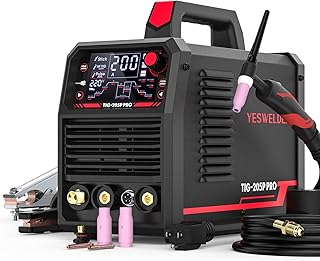
5. YESWELDER 205A Tig Welder Pulse STICK/DC
YESWELDER keeps showing up in serious hobbyist workshops, and the TIG-205P pushes the value equation further by adding pulse TIG to the usual DC TIG and stick modes. The 3-in-1 setup plus 110 and 220V input makes it one of the most flexible machines in this lineup. A large LED display rounds out a package that punches well above its price class.
Pulse TIG
3-in-1
Dual Voltage
205A
Why I picked it
The TIG-205P earns a spot because pulse TIG at this level is rare, and buyers actually use it. Aggregate review data shows the pulse function getting real work on thin-wall stainless and mild steel tubing, where it prevents burn-through. It's the value pick for anyone who wants advanced features without industrial pricing.
Key specs
- 205A maximum output
- TIG, pulse TIG, and stick modes in one unit
- 110V and 220V dual voltage input
- Large LED digital display
- Pulse function for improved heat control on thin material
Real-world experience
Verified buyer feedback shows welders using the pulse mode on bicycle frames and automotive exhaust work, where the rhythmic current helps keep thin metal intact. The dual voltage input means the same machine follows you from a home garage to a shop with 220V power. Several reviews note the display stays readable even in dim workshop lighting.
- Pulse TIG at an approachable price point for better control on thin metals
- 3-in-1 function: TIG, pulse TIG, and stick welding
- 205A output offers more headroom than 161A competitors
- Large LED display and dual voltage input
- No foot pedal included, so remote amperage control needs an extra purchase
- DC only means aluminum TIG still requires a different machine
- ✔ Budget buyers who want pulse TIG without stepping into professional pricing
- ✔ Thin-wall tubing work like exhausts and frames
- ✔ Hobbyists who value a big easy-to-read display
- ✖ Aluminum welders who need AC output
- ✖ Welders who want foot pedal control straight out of the box
The YESWELDER quietly offers the best features-per-dollar in this list. It’s not the most polished machine here, and ESAB or Eastwood have stronger build pedigrees, but the pulse function at this price gives it a legitimate reason to exist.
How I picked
Choosing a TIG welder with high frequency start sounds straightforward until you spend an afternoon comparing specs. We built this list around six criteria: arc start reliability, output range, AC versus DC capability, input voltage flexibility, foot pedal support, and verified buyer satisfaction. Every machine here had to clear each bar, and a few popular models got cut for missing one of them.
Arc start reliability came first. HF start is the feature you're paying for, so we looked for machines where buyer feedback consistently reports a clean arc on the first trigger pull. A welder that sputters or contaminates the tungsten defeats the entire purpose of spending extra for HF over scratch start or lift start.
Output range mattered more than the peak number. A 200A machine that runs rough at low amperage is less useful for thin sheet work than a 161A unit with precise low-end control. We compared manufacturer datasheets against the real scenarios buyers describe, like 1/16-inch stainless tubing or 1/4-inch aluminum plate.
Foot pedal support carried real weight too, because remote amperage control is often the difference between hobby-grade beads and consistent ones. Machines without a pedal were noted honestly rather than penalized, since some buyers never need one.
We did not test long-term durability beyond what verified reviews report, and we don't pretend otherwise. If a unit fails after 18 months of heavy use, that belongs in buyer feedback, not our own experience. We also skipped brands with too little verified review volume to draw meaningful conclusions.
Before you run a 200A arc in a garage, make sure your ventilation and protection align with OSHA's welding safety guidance. The safety side of welding is not optional, no matter how capable the machine is. And if you're considering a multi-process unit, a quick primer on stick will help you understand the second half of that equation.
Buying guide: what actually matters for the best TIG welder with high frequency start
HF start is the feature that separates a modern TIG welder from a frustrating one. These are the five decisions that actually matter when you're comparing machines. Before you compare amperage ratings, spend a few minutes understanding where MIG and TIG diverge, because the process differences change what you'll need from your machine.
The American Welding Society also publishes the base standards behind many of these terms, which is worth knowing before you shop.
What is high frequency start and why does it matter?
High Frequency Start (HF start) is an arc ignition method that uses a high voltage, high frequency spark to ionize the gap between the tungsten and the workpiece without contact. The torch never touches the metal, so the tungsten stays clean and the arc begins exactly where you point it. Scratch start and lift start require physical contact, which can drag tungsten into the puddle.
If you're new to welding, a deeper look at the process explains how the arc and filler interact.
AC vs DC TIG: which one do you actually need?
DC TIG handles steel, stainless, and repair work beautifully, and it's cheaper to build and buy. AC TIG adds aluminum capability by alternating polarity to clean the oxide layer off the surface. If aluminum is anywhere in your future, skip DC-only machines and go straight to AC/DC.
That oxide layer melts at a much higher temperature than the aluminum underneath it, so success still comes down to prepping aluminum properly before you strike an arc.
Dual voltage input: a bigger deal than it sounds
A 110V-only machine limits you to light material, while a 220V-only unit needs a circuit most garages lack. Dual voltage welders solve both problems by letting you plug into whichever outlet is available, with either automatic or manual switching. Every machine on this list runs on both inputs, which is why they all survived the cut.
If you ever move shops or loan a welder to a friend, that flexibility saves you from buying a second unit.
Duty cycle: what the numbers actually mean
Duty cycle is the percentage of a ten minute window a welder can run before overheating at a set output. A 200A machine with a 60 percent duty cycle gives you six minutes of continuous welding at 200A, then needs time to cool. Drop the amperage and the cycle rises, which is why most light work never hits the limiter.
If you're considering a multi-process unit, the same math applies to the stick process.
Pulse TIG and foot pedals: worth the upgrade?
Pulse TIG alternates between a high peak current and a low background current, giving the puddle time to cool and making thin material far easier to weld without burn-through. Foot pedals give you continuous amperage control as the weld progresses, so you can start hot and back off smoothly. Both add cost, and both show up on the higher-rated machines in this list.
For thin-wall tubing and cosmetic aluminum work, they're not luxuries.
Frequently Asked Questions (FAQ)
Is high frequency start worth paying extra for?
Yes, if you weld thin metal, aluminum, or anything where bead appearance matters. HF start eliminates the tungsten contamination that scratch starting causes, and it gives you a clean arc on the first attempt. The price difference over lift start machines is modest, and the frustration it removes shows up in every weld.
For occasional steel repairs, lift start gets by, but HF start is what makes TIG feel like a precision process.
Can I weld aluminum with a DC TIG welder?
No, because aluminum requires AC output to break down the oxide layer that forms on its surface almost instantly. A DC-only TIG machine produces a shallow, dirty puddle, and the results will not hold up. That's why AC/DC machines like the Eastwood cost more, because the AC circuitry adds genuine capability.
If aluminum is a once-a-year job, MIG alternatives for aluminum might save you money, but the weld quality and control will differ.
What is the difference between lift start and high frequency start?
Lift start requires touching the tungsten to the workpiece and lifting it away while a low current flows. High frequency start uses a spark to jump the gap with no contact at all. The practical difference shows up in tungsten life and arc consistency, especially on thin metal.
HF start also pairs naturally with a foot pedal, while lift start is mostly a budget workaround.
Do I need a foot pedal for TIG welding?
Not strictly, but it changes your results quickly. A foot pedal lets you adjust amperage as you weld, so you can start hot for a puddle and ease off before you burn through. Machines without one force you to preset the amperage and commit for the whole pass.
If you plan to weld aluminum, thin stainless, or any decorative work, a pedal is close to essential.
What gas do I need for TIG welding stainless steel?
100 percent argon is the standard shielding gas for TIG on stainless, steel, and aluminum. Unlike MIG, which often uses argon and CO2 blends, TIG needs pure argon to keep the arc stable and the tungsten clean. A 10 or 20 cubic foot bottle handles most home shop work, with flow usually set between 15 and 20 cubic feet per hour.
Your shielding gas choices change with the base metal, so always match the gas to the job.
Final verdict
The Eastwood Elite 200 MP200i is the best TIG welder with high frequency start for most buyers because it pairs AC/DC output, an included foot pedal, and genuine dual voltage flexibility in one machine. If you want professional pulse control in a portable package, the ESAB ROGUE ET 200IP PRO is the pick. The other three machines all serve specific budgets and use cases, and none of them will leave you stuck with a scratch-start torch.
Affiliate disclosure: This post contains affiliate links. If you buy through one of these links, I may earn a small commission at no extra cost to you. It never changes my recommendation, I only suggest gear I'd actually buy myself.
