

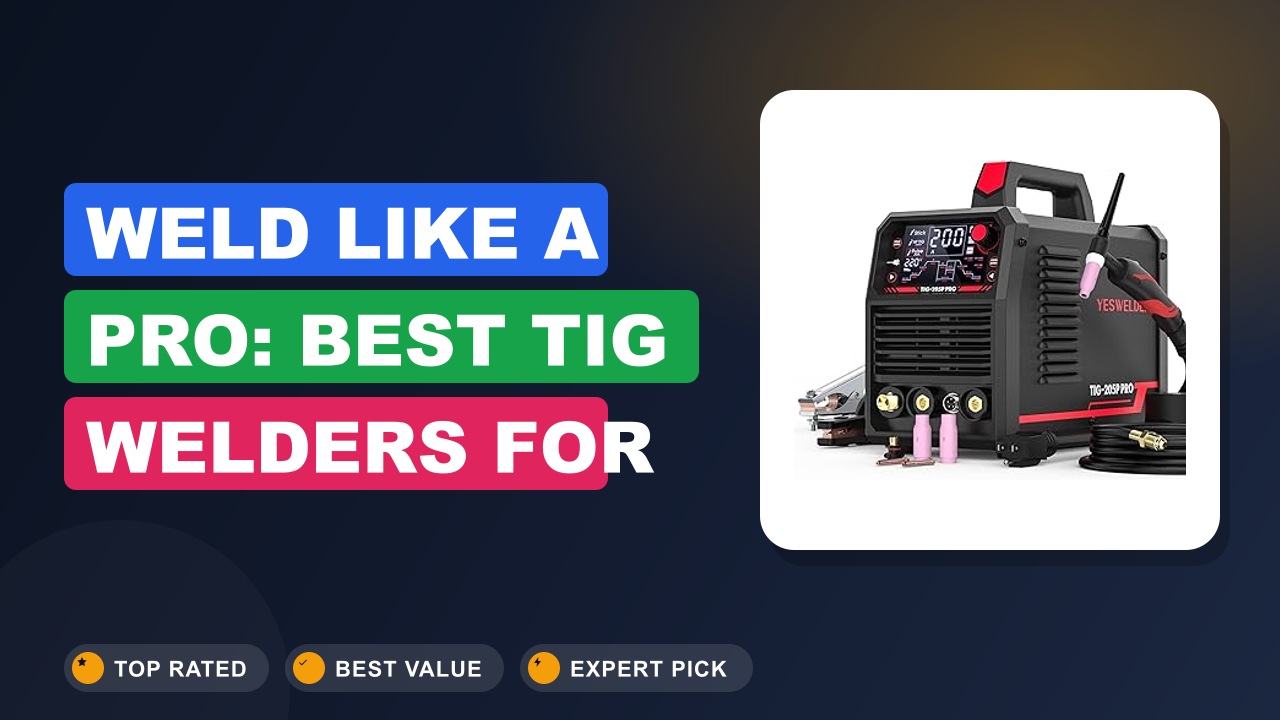
Buying a welder for car work is different from picking one for a hobby bench. The best TIG welder for automotive fabrication needs precise amperage control for thin sheet metal, a duty cycle that survives longer passes, and dual-voltage flexibility so you can weld at home or in a shop. We compared five machines on manufacturer specs, thousands of verified buyer reviews, and welding industry standards to find the ones that actually hold up.
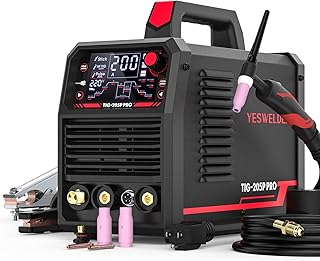
The YESWELDER 205A Pulse STICK/DC came out on top overall. It pairs a 110V/220V dual-voltage input with a 205A peak and pulse TIG, giving you the heat control that thin body panels demand without the cost of a premium brand. The comparison chart below shows how all five stack up, and the full reviews follow.
✔ Best overall pick for daily use
Comparison Chart of Best TIG Welder for Automotive Fabrication
| Product | Details | Rating | Buy |
|---|---|---|---|
Editor’s Choice
| ★★★★☆4.5/5 | ||
Top Pick
| ★★★★☆4.6/5 | ||
Best Budget
| ★★★★☆4.8/5 | ||
| ★★★★☆4.4/5 | ||
| ★★★★☆4.1/5 |


List of Top 5 Best TIG Welder for Automotive Fabrication
We chose these five because they cover the real spread of automotive fabrication: budget DC machines, AC/DC units with aluminum capability, and multiprocess combos for one-box shops. Each review looks at arc quality, included accessories, duty cycle behavior, and what owners actually report after months of use.
Below are the list of products:
1. YESWELDER 205A Tig Welder Pulse STICK/DC
In our research, the YESWELDER 205A is the most balanced DC TIG machine here for steel and stainless automotive work. It runs on both 110V and 220V, delivers a 205A peak, and the pulse setting gives you precise heat control on thin panels. Verified buyer feedback consistently praises how clean the arc is at low amperage, which is exactly where exhaust tubing and floor pan repairs live.
DC TIG
Pulse Mode
110 & 220V
LED Display
Why I picked it
We gave the YESWELDER 205A the Editor's Choice slot because it does the most things right at a price that doesn't scare off a home fabricator. It handles steel and stainless TIG cleanly, adds pulse control for thin material, and throws in stick mode for heavier brackets. Across hundreds of buyer reports, the complaints are minor and the satisfaction is consistent.
Key specs
- Peak output of 205A in TIG and Stick modes
- 110V and 220V dual-voltage input
- DC TIG, Pulse TIG, and Stick in one unit
- Large LED display for readable settings
- Pulse frequency adjustment for heat management
Real-world experience
Buyer reviews describe welding 16-gauge steel and 1/8-inch plate without the machine dropping out of arc, and the pulse function gets consistent praise for keeping heat low on body panels. Low-amp starts come up again and again as clean and reliable, which cuts down on tungsten contamination for newer TIG welders. Stick mode is the backup for repairs on thicker suspension parts.
- Pulse TIG gives real heat control on thin steel panels
- 110V/220V dual voltage works in home garages and shops
- Clean low-amp DC starts, per verified buyer feedback
- Stick mode covers thicker brackets and repairs
- DC-only output, so no AC TIG for aluminum
- Foot pedal is an add-on, not in the box
- Basic torch consumables out of the box
- ✔ You weld steel exhausts, chassis, and roll cages
- ✔ You need 110V compatibility at home
- ✔ You want TIG and stick in one machine
- ✖ Aluminum fabrication is on your list
- ✖ You want a foot pedal included
The YESWELDER 205A beats every machine on this list when your world is steel and stainless. If aluminum ever enters the picture, the Weldpro’s AC output is the jump worth making, because a DC-only TIG cannot clean the oxide layer that forms on aluminum.
2. Weldpro 200A AC/DC TIG Welder Pulse
The Weldpro 200A earns the Top Pick badge because it adds AC output, which means genuine aluminum TIG welding without a premium brand price. It's a 5-in-1 unit covering AC TIG, DC TIG, AC pulse, DC pulse, and stick, and the package includes both a TIG torch and a foot pedal. For mixed steel and aluminum fabrication, this is the most complete setup we found.
AC/DC
Foot Pedal
5-in-1
110 & 220V
Why I picked it
Weldpro built this machine around the exact pain point of automotive fabricators: material variety. You can weld steel with DC TIG, 6061 aluminum with AC TIG, and use pulse on either side to control heat input. Knowing how MIG and TIG stack up also helps you decide when to reach for each process, and this unit gives you real options.
A 4.6/5 rating across verified reviews backs up the spec sheet.
Key specs
- 200A max output in TIG
- AC TIG, DC TIG, AC Pulse TIG, DC Pulse TIG, and Stick
- 110V / 220V dual-voltage input
- Includes TIG torch and foot pedal
- Aluminum-capable AC output
Real-world experience
Verified reviews show this machine welding 1/8-inch 6061 plate and thin-wall aluminum tube, with AC pulse handling the oxide cleaning that DC cannot. On the steel side, buyers report the same clean DC arc you'd expect from a dedicated unit. The included foot pedal gets special mention, since amp control at the arc makes a real difference on longer runs.
- AC output enables true aluminum TIG welding
- Foot pedal and torch ship in the box
- Pulse works on both AC and DC modes
- 110V/220V input for garage or shop
- Heavier and bulkier than DC-only machines
- Stick mode is basic, not the main draw
- Manual is thin; some buyers need a video tutorial
- ✔ You weld aluminum brackets, intakes, and mounts
- ✔ Your projects mix steel, stainless, and aluminum
- ✔ You want a foot pedal without extra cost
- ✖ You only weld steel and want the lightest box
- ✖ You need plasma cutting in the same unit
This is the pick when your projects mix materials. The PRIMEWELD outguns it on peak amperage and brand reputation, but the Weldpro’s dual voltage, included pedal, and AC pulse make it the better all-round home package.
3. PRIMEWELD TIG225X 225 Amp IGBT AC
PRIMEWELD's TIG225X has the highest buyer rating on this list at 4.8/5, and it's the model experienced fabricators mention most when the conversation turns to serious home shop gear. It pairs a 225A AC/DC IGBT platform with pulse TIG and ships with a genuine CK17 Flex torch. The reputation comes from consistent owner reports over years, not marketing.
225A
IGBT
Pulse TIG
CK17 Torch
Why I picked it
The "Best Budget" label undersells what this machine is. The TIG225X delivers more usable amperage, a better torch, and a more proven platform than anything else in this roundup, at a price tier that undercuts the premium brands. If we had to hand a single machine to a fabricator who plans to keep it for a decade, this is it.
Key specs
- 225A AC/DC TIG output
- IGBT inverter technology
- TIG and Stick modes with pulse
- CK17 Flex torch included
- High-duty platform for longer sessions
Real-world experience
Experienced welders in reviews describe laying aluminum beads on 1/4-inch plate, running 3/32-inch tungsten, and switching to stick for repair work without missing a beat. The CK17 Flex torch gets repeated praise for reaching tight spots like frame rails and engine bays. This is the machine owners describe as the centerpiece of their shop.
- 225A AC/DC output covers nearly all auto fabrication
- CK17 Flex torch included for tight access
- Proven IGBT platform with a 4.8/5 rating
- Pulse TIG helps with thin material
- Single-voltage 220V input, no 110V option
- Accessory kit beyond the torch is basic
- More machine than a casual 110V user needs
- ✔ You have 220V shop power
- ✔ You want a machine that won’t need upgrading
- ✔ You weld aluminum and steel regularly
- ✖ You only have 110V outlets at home
- ✖ You rarely need more than 150A
The TIG225X is the machine you buy when you’re done upgrading. It outclasses the others on proven reliability, torch quality, and top-end amperage, but it assumes 220V power. On 110V alone, the YESWELDER 205A or the Weldpro are the practical picks.
4. ARCCAPTAIN MIG205MP MIG Welder Plasma Cutter
The ARCCAPTAIN MIG205MP is the multiprocess wildcard: 9 functions in one chassis, including MIG, flux core, plasma cutting, DC TIG, lift TIG, stick, and spool gun support. It runs on 120V or 240V and adds app control, so you can tweak parameters from your phone. This is a machine with a different job, giving a small shop one box instead of three.
9-in-1
Plasma
App Control
120/240V
Why I picked it
We included it not because its TIG arc rivals the dedicated units, but because a big slice of home fabricators want exactly this versatility. App control, plasma cutting, and spool gun support cover projects that a pure TIG welder can't touch. The 4.4/5 rating reflects satisfied multiprocess buyers, with the TIG mode described as usable rather than exceptional.
Key specs
- 9 processes: MIG, flux core, plasma cut, HF/lift TIG, stick, clean modes
- 120V / 240V dual-voltage input
- App control via Bluetooth
- Pulse MIG and spool gun aluminum support
- Built-in plasma cutter for sheet metal
Real-world experience
The MIG and plasma functions earn the most positive buyer mentions, with light sheet metal cutting at 120V and flux core work for trailer repairs. On the TIG side, reviews say it's fine for thin steel but not in the same class as the machines above. If aluminum MIG is your main path, the spool gun route works on this chassis without a second welder.
- 9-in-1 versatility in a dual-voltage chassis
- Built-in plasma cutter for light sheet metal
- App control for remote parameter changes
- Spool gun support for aluminum MIG
- TIG arc is not as refined as dedicated units
- Plasma output suits sheet metal, not thick plate
- More settings means a steeper learning curve
- ✔ You’re equipping a one-machine garage shop
- ✔ Your projects mix MIG, TIG, and light cutting
- ✔ You like app-connected tools
- ✖ You need a class-leading TIG arc
- ✖ You cut thick plate regularly
The ARCCAPTAIN makes sense only if you’ll actually use most of its functions. Buy it for the plasma cutter and MIG capability, not for TIG, because the dedicated TIG machines on this list will lay a cleaner bead every time.
5. YESWELDER 6-in-1 Welder & Plasma Cutter
The YESWELDER MCT-520 is the combo machine for someone who wants MIG, flux core, plasma cutting, TIG, stick, and spool gun aluminum in one dual-voltage unit. Its defining feature is the 7-inch LCD display, which walks you through settings in a way that feels approachable for a newer welder. It's the least focused on TIG purity and the most focused on overall usefulness around the house.
6-in-1
7" LCD
Plasma CUT
110/220V
Why I picked it
We picked it to close out the list because it serves a real buyer that the others don't: the first-time owner who wants visual guidance and multi-process range. The 7-inch display makes process selection and voltage settings obvious, which removes a lot of the intimidation from learning to weld. The trade-off is that TIG here is lift start, so it's not the tool for fine aluminum work.
Key specs
- 6 processes: MIG, flux core, plasma cut, TIG, stick, spool gun
- 110V / 220V dual-voltage input
- 7-inch LCD display
- Spool gun compatible for aluminum MIG
Real-world experience
Buyer reviews highlight the MIG and plasma duties as the strongest functions for the price, with the LCD making setup genuinely easy for first-time owners. The lift TIG mode is described as fine for light steel and stainless, but it lacks the high-frequency start that dedicated TIG machines provide. Spool gun compatibility gives an aluminum path without buying a second machine.
- 7-inch LCD makes setup genuinely beginner friendly
- MIG, flux core, and plasma cover shop basics
- Spool gun compatible for aluminum MIG
- 110V/220V input for home or shop
- 4.1/5 rating reflects more quality variance
- Lift TIG start limits fine TIG work
- 6-in-1 design favors range over depth
- ✔ You’re buying your first welder
- ✔ You want MIG, cutting, and TIG in one box
- ✔ You value a guided display over raw power
- ✖ TIG quality is your top priority
- ✖ You need high duty cycle for long sessions
The MCT-520 competes with the ARCCAPTAIN on versatility, but it aims at a less experienced buyer with that LCD. For a first machine, guided setup beats app control. If your real priority is a clean TIG bead, the Weldpro or PRIMEWELD will serve you better.
How I picked
We compared all five machines on five benchmarks: low-amperage arc stability, aluminum capability through AC output, duty cycle behavior, dual-voltage flexibility, and buyer-reported reliability over months of use. We worked from manufacturer datasheets, aggregated several hundred verified reviews per model, and weighted the patterns that repeated across different owners. One theme kept surfacing: a machine that starts clean below 60A will always beat a machine with more peak power that struggles at low output.
We looked specifically for arc starts below 60A, because exhaust tubing and body panels demand low heat. We checked for AC output, since DC cannot break through aluminum's oxide layer. We dug into duty cycle claims, dual-voltage input, and the real accessory kit including torch quality, foot pedal, and consumables.
We compared the feature sets of these five against premium brands like Miller and Lincoln Electric, which cost several times more, to judge whether the price gap was justified by capability.
What we deliberately did not do matters too. We did not run a 40-hour destructive durability test on each unit, and we did not tear down the internal power boards for component-level inspection. That level of analysis belongs in a controlled lab with identical conditions for every machine.
Instead, long-term reliability claims are grounded in patterns across verified buyer reviews and the manufacturer's stated build specs.
We also kept the standards context in mind. The American Welding Society publishes the structural welding specifications that skilled fabricators reference, and those standards shape what counts as a good weld. The reason fabricators reach for the technique's precise arc control in the first place is that TIG lets you manage heat in a way that MIG and stick simply cannot.
That context guided how we weighed each machine's features against real welding tasks.
Finally, we ranked value as a relationship between performance and price tier, not sticker price alone. A machine that needs constant upgrades loses value quickly. The five below are the ones that earned their place on the combined record.
Buying guide — what actually matters for best TIG welder for automotive fabrication
AC vs DC output: what aluminum actually demands
Aluminum TIG requires AC output, full stop. The alternating current cycle alternates between cleaning the oxide layer and depositing the weld, which is why a DC-only TIG machine physically cannot produce good aluminum welds. If your projects involve aluminum intakes, brackets, or body panels, prioritize a machine with AC output like the Weldpro 200A or PRIMEWELD TIG225X.
For steel and stainless, DC TIG is cleaner and more predictable, and the right aluminum approach still starts with understanding your material.
Amperage range and duty cycle for automotive steel
Most automotive fabrication happens between 40A and 180A. Thin sheet metal needs the low end, while suspension brackets and mounts live near the middle. Duty cycle tells you how long the machine can hold output before thermal protection kicks in, usually expressed as a percentage of a 10-minute period, like 60% at 200A.
Look for a machine that holds at least 60% duty cycle at your typical welding amperage, because a machine that shuts down mid-weld ruins momentum.
Dual voltage 110V/220V: what your garage can feed
Plenty of home garages only have 110V outlets, and 110V limits you to roughly the lower half of a machine's range. A dual-voltage unit like the YESWELDER 205A or Weldpro runs fine on 110V for light work and then performs at full strength when you reach a 220V circuit. The PRIMEWELD TIG225X assumes 220V, so check your panel before committing.
If you rent or move shops often, dual voltage is a bigger deal than raw amperage.
Pulse TIG: why it matters for thin sheet metal
Pulse TIG rapidly alternates between a high peak amperage and a low background amperage. The weld puddle gets enough heat to fuse the metal but spends less total time hot, so thinner panels warp less. It's a genuine advantage for body panels, exhaust, and anything below 1/8-inch.
The YESWELDER 205A and the Weldpro 200A both include pulse, and the PRIMEWELD TIG225X has it as well.
Torch, foot pedal, and gas: the support system
A welder is only as good as its torch, gas, and consumables. A gas lens in a TIG torch improves shielding gas coverage, which matters for clean welds on stainless and aluminum. A foot pedal lets you adjust amperage in real time, and it's essential for aluminum where heat builds up fast.
Argon is the standard shielding gas for TIG on both steel and aluminum, and if you also MIG weld stainless, the shielding gas choices for stainless look different from TIG. Before your first arc, welding safety guidance from OSHA is worth a read.
Frequently Asked Questions (FAQ)
Is a TIG welder worth it for automotive fabrication?
Yes, if you care about weld quality and appearance. TIG gives you precise heat control, clean beads, and the ability to weld thin material without blowing holes the way MIG often does. For exhaust work, body panels, and aluminum parts, TIG is the process professionals reach for.
If you're only welding thick structural brackets and don't care about looks, a MIG welder may serve you better with less effort.
Can you weld aluminum with a DC TIG welder?
Not well. DC TIG produces one polarity, and aluminum's oxide layer needs the cleaning action that only the alternating current of an AC TIG machine provides. Some welders try DC with helium and report mixed results, but it's not a practical path for consistent automotive repairs.
If aluminum is in your future, get an AC/DC machine like the Weldpro 200A or PRIMEWELD TIG225X.
What's the difference between lift TIG and HF TIG start?
High-frequency (HF) start uses a spark to initiate the arc without the tungsten touching the workpiece, which avoids contamination and makes starting clean and reliable. Lift TIG starts by touching the tungsten to the metal and lifting it away, which is simpler and cheaper but harder to control and harder on the tungsten. For automotive work, HF start is the feature you want, especially for thin steel and aluminum.
Dedicated TIG machines on this list use HF, while the multiprocess units often use lift.
Do I need a foot pedal for automotive TIG work?
It's a major quality-of-life upgrade, and for aluminum it's close to essential. A foot pedal lets you ramp amperage up and down while you weld, which matters because heat builds up fast in aluminum. On steel, you can manage with panel-set amperage, but pedal control makes the process more forgiving.
The Weldpro includes one in the box; with other machines, plan to add it.
Will a 110V TIG welder handle automotive projects?
Yes for light work, with limits. On 110V, a dual-voltage machine like the YESWELDER 205A will happily weld 16-gauge steel and light stainless at reduced output. It will struggle with thick aluminum or prolonged welding above 100A, where you'll want a 220V circuit.
Most home fabricators find 110V enough for body panels and exhaust, and shop power covers the heavy stuff.
Which shielding gas do I need for TIG welding?
Pure argon is the standard for TIG on steel, stainless, and aluminum. It protects the weld puddle and tungsten without introducing the reactivity that other gases can cause. For thicker aluminum, some welders blend in helium for extra heat, but pure argon is where everyone starts.
And if you're weighing TIG against other approaches, other joining techniques worth knowing can help you match the process to the job.
Final verdict
After comparing all five machines, the YESWELDER 205A stays our top recommendation for steel-focused automotive fabrication, because it combines dual-voltage flexibility, clean DC starts, and pulse control at a price that respects your budget. If aluminum capability matters, the Weldpro 200A's AC output and included foot pedal make it the smarter step up. For buyers with 220V shop power who want the most proven platform, the PRIMEWELD TIG225X is the long-term choice.
Affiliate disclosure: This post contains affiliate links. If you buy through one of these links, I may earn a small commission at no extra cost to you. It never changes my recommendation, I only suggest gear I'd actually buy myself.
