

Choosing the right gas for aluminum MIG welding is crucial for achieving strong, clean welds. This guide explains the types of shielding gases suitable for aluminum, how to select the best option, and tips for successful welding results.
What Gas to Use for Aluminum MIG Welding
If you’re into welding aluminum, you know that the right shielding gas can make or break your project. The correct gas protects your weld pool from contamination and ensures a clean, strong weld. But which gas is best for aluminum MIG welding? This comprehensive guide will walk you through the options, helping you choose the right shielding gas for your needs.
Key Takeaways
- Pure Argon is the most common gas for aluminum MIG welding: It provides excellent arc stability and a smooth weld bead.
- Argon with small amounts of helium enhances performance: Helium improves penetration and increases heat input, ideal for thicker aluminum.
- Using a mixture of Argon and Carbon Dioxide is not recommended: It can cause contamination and poor weld quality on aluminum.
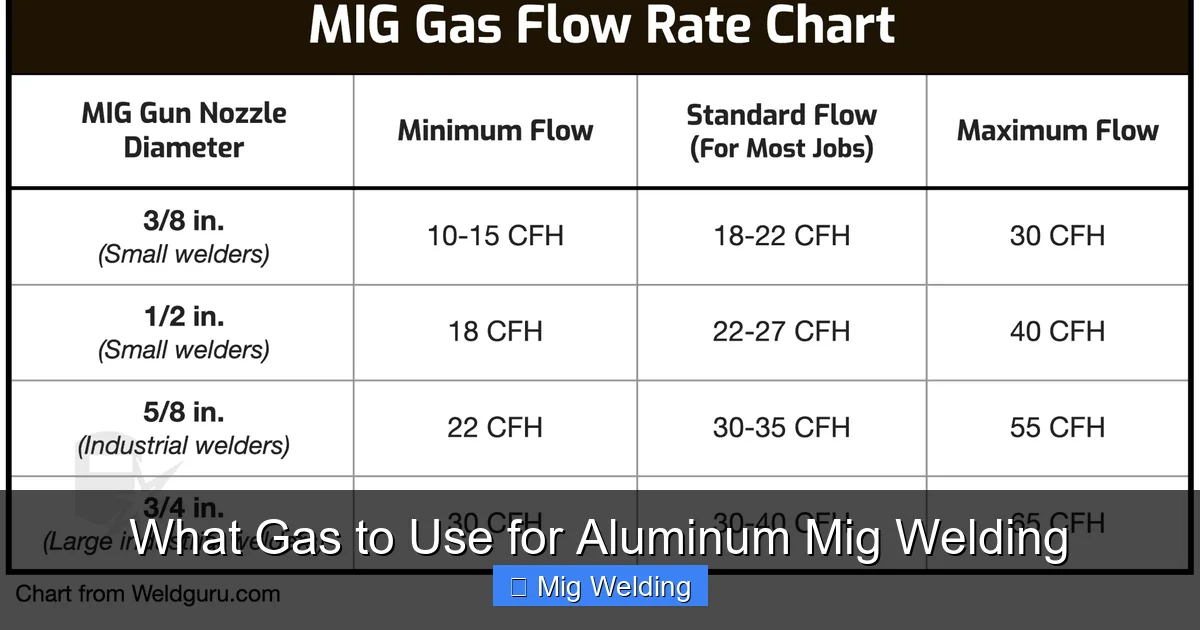
- Understanding gas flow rates: Typically, 20-30 cubic feet per hour (CFH) ensures proper shielding without waste.
- Consider your welding application: Thinner sheets need pure Argon, while thicker materials may benefit from helium blends.
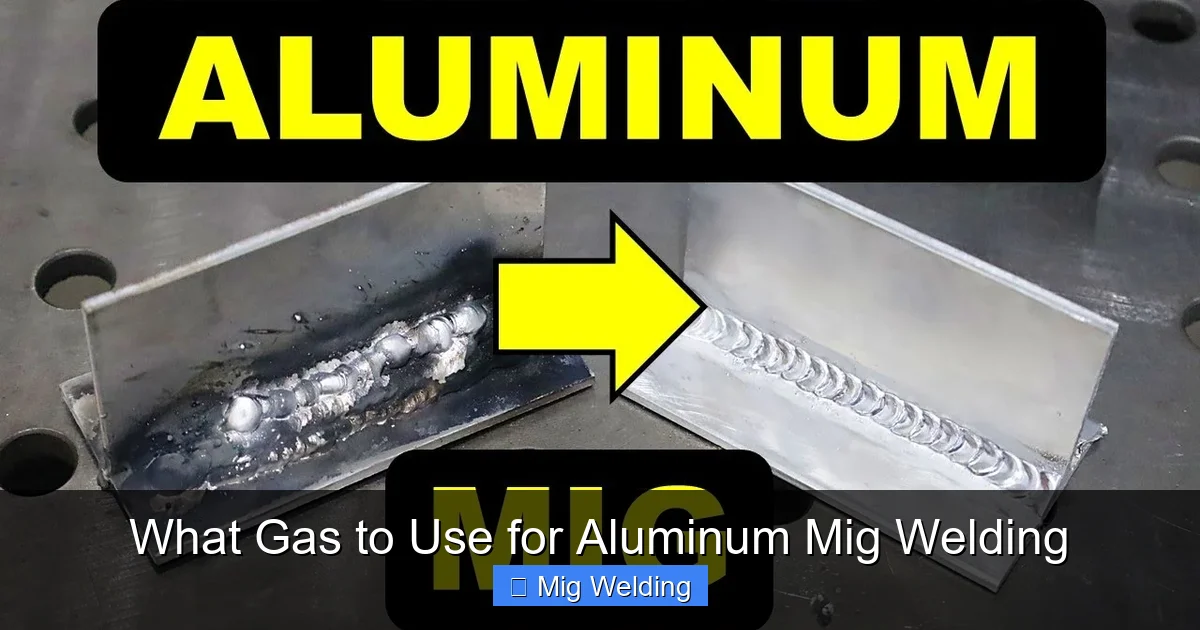
- Proper gas selection minimizes porosity and oxidation: Ensuring clean, high-quality welds with fewer defects.
Introduction: Why Shielding Gas Matters in Aluminum MIG Welding
Aluminum is a tricky metal to weld. Its high thermal conductivity and oxide layer make it different from steel or other metals. To get a quality weld, you need a shielding gas that stabilizes the arc and prevents oxidation. Using the wrong gas can lead to porosity, weak welds, or even complete failure.
In this guide, you’ll learn about the most common gases used in aluminum MIG welding, how they influence your weld, and practical tips for selecting and using them effectively.
Understanding MIG Welding of Aluminum
MIG welding (Metal Inert Gas welding) involves feeding a wire electrode through a welding gun while a shielding gas protects the weld pool from atmospheric contamination. Aluminum MIG welding requires special considerations due to its oxide layer and thermal properties.
Visual guide about What Gas to Use for Aluminum Mig Welding
Image source: makemoneywelding.com
Choosing the correct shielding gas is essential. It influences arc stability, weld appearance, penetration, and overall weld quality. Let’s explore the main options.
Common Gases Used for Aluminum MIG Welding
Pure Argon (99.99%)
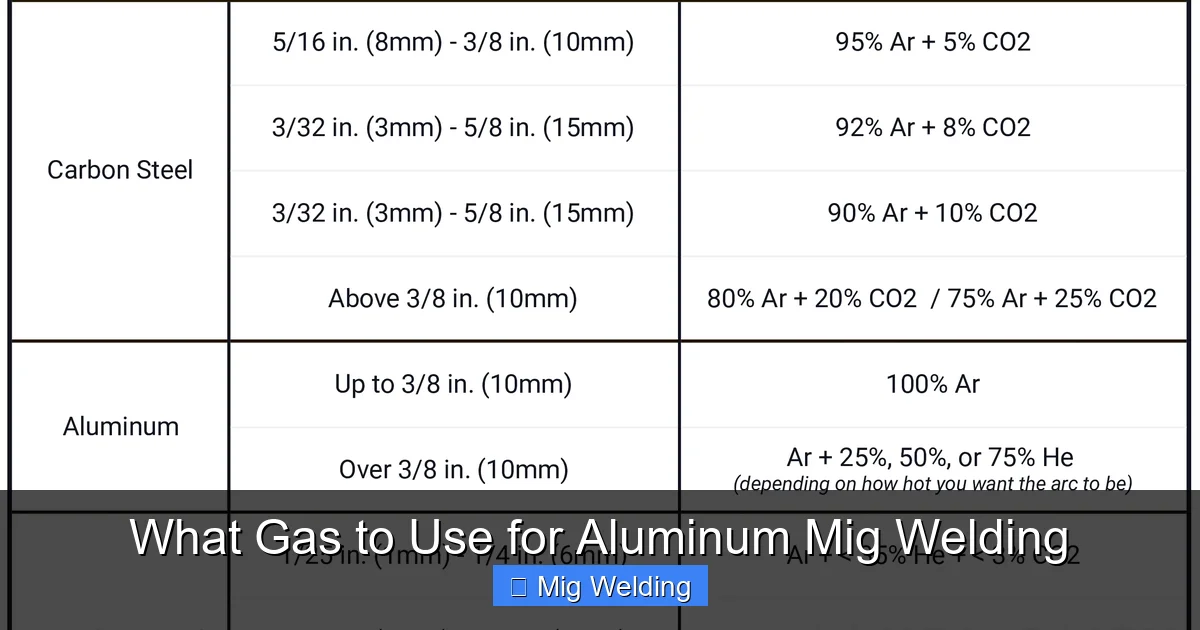
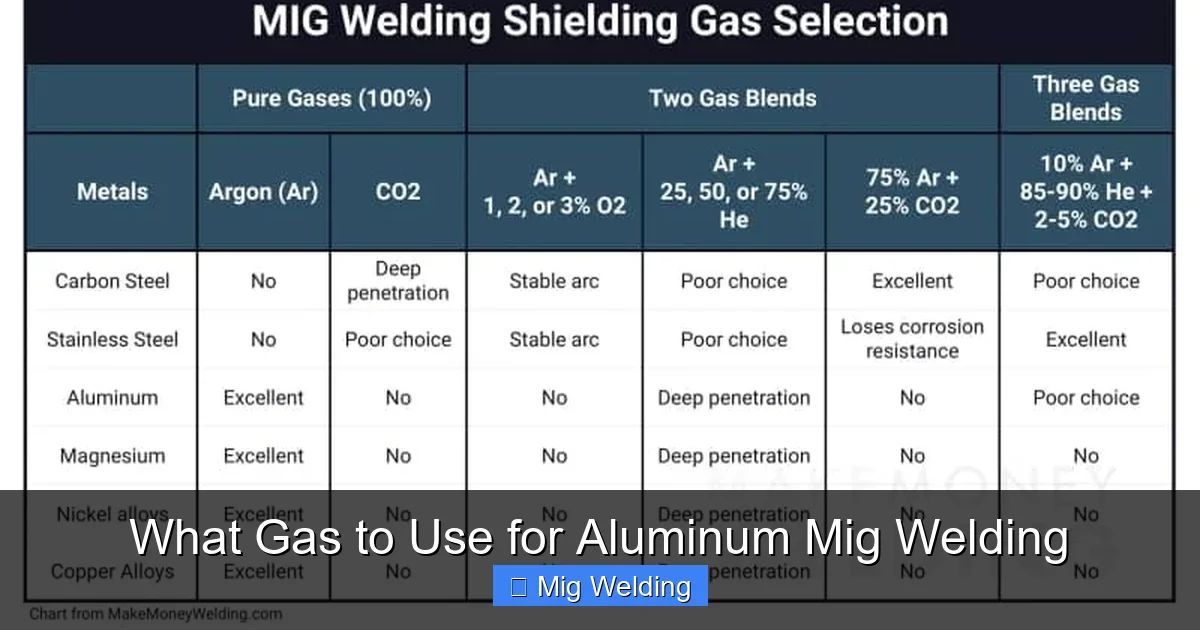
Pure argon is the most widely used shielding gas for aluminum MIG welding. It provides a stable arc, excellent weld bead quality, and smooth finishes. It is especially suitable for thin aluminum sheets and delicate projects.
Visual guide about What Gas to Use for Aluminum Mig Welding
Image source: makemoneywelding.com
Argon with Helium (Ar/He Mix)
Adding helium to argon enhances the weld’s heat input and penetration. Helium is a lighter, more energetic gas that increases arc stability and can be beneficial when welding thicker aluminum sections.
Other Mixtures (Not Recommended)
- Argon with Carbon Dioxide (Ar/CO2): This mix is commonly used for steel but not recommended for aluminum, as it can cause contamination and poor weld quality.
- Pure Helium: Rarely used alone due to high cost and difficulty in controlling the arc, but sometimes employed for specific high-heat applications.
How to Choose the Right Shielding Gas for Aluminum MIG Welding
Consider Material Thickness
For thin aluminum sheets (<1/8 inch), pure argon is usually sufficient. It provides a smooth, clean weld with minimal burn-through.
Visual guide about What Gas to Use for Aluminum Mig Welding
Image source: i.ytimg.com
For thicker aluminum (>1/4 inch), consider a mixture of argon and helium to improve penetration and reduce welding time.
Welding Application and Finish
If your goal is a high-quality, visually appealing weld, pure argon is your best choice. For structural strength in thicker materials, Helium-argon blends work better.
Cost and Equipment Compatibility
Pure argon is generally more affordable and widely available. Helium blends can be more expensive but offer performance benefits for specific applications.
Practical Tips for Using Shielding Gas Effectively
- Use proper flow rates: Typically 20-30 CFH (cubic feet per hour). Too high can cause turbulence; too low may lead to contamination.
- Check for leaks: Ensure your gas hoses and connections are airtight to prevent contamination and ensure consistent shielding.
- Maintain clean surfaces: Remove dirt, oil, and oxidation before welding to prevent porosity.
- Use the right equipment: Ensure your MIG welder is compatible with aluminum and can handle the selected gas mixture.
- Practice with test welds: Before starting your main project, do test welds to fine-tune your settings and gas flow.
Welding Tips for Best Results
Pre-weld Preparation
Clean your aluminum thoroughly. Use a stainless steel wire brush dedicated for aluminum to remove the oxide layer just before welding.
Wire Selection
Use a spool of aluminum-specific wire, such as ER4043 or ER5356, depending on your application. ER4043 is easier to weld but may produce a slightly softer weld, while ER5356 offers higher strength.
Setting Your Welder
Set your wire feed speed and voltage according to the manufacturer’s recommendations for your wire diameter and material thickness. Start with lower settings and adjust as needed.
Troubleshooting Common Issues
- Porosity in welds: Check for leaks in your gas setup, ensure proper cleaning, and increase flow rate if needed.
- Porous or rough weld beads: Use cleaner surfaces, verify your wire and gas compatibility, and adjust welding parameters.
- Poor penetration: Switch to a helium-argon mix or increase heat input.
- Oxidation or discoloration: Ensure proper shielding and clean surfaces before welding.
Conclusion: Making the Right Choice
Choosing the right gas for aluminum MIG welding depends on your project’s needs. For most hobbyists and general applications, pure argon offers excellent results. For thicker materials or structural work, consider argon-helium blends for better penetration and efficiency.
Always remember to maintain your equipment, follow safety guidelines, and practice to improve your skills. With the right gas and technique, you can achieve professional-quality aluminum welds every time.
Final Tips
- Experiment with different gas mixtures to find what works best for your specific application.
- Use high-quality shielding gas from reputable suppliers to avoid contamination.
- Keep your workspace clean and organized for the best weld quality.
