

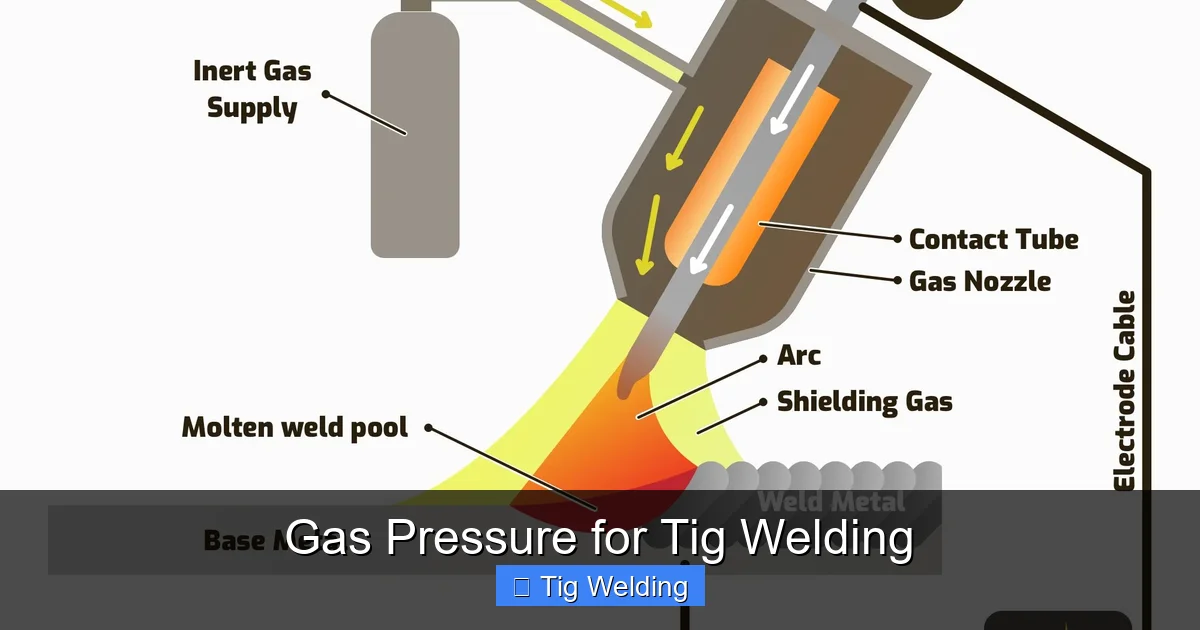
Gas pressure for TIG welding is crucial for achieving clean, high-quality welds. Properly setting the gas flow ensures protection from contamination and enhances weld integrity. Understanding the right pressure helps welders prevent porosity and other defects, making your TIG welding projects more successful and professional-looking.
Key Takeaways
- Optimal gas pressure is typically between 15-30 cubic feet per hour (CFH): This range provides sufficient shielding without waste.
- Too high pressure can cause turbulence: Excessive gas flow may lead to weld contamination and waste of shielding gas.
- Too low pressure risks contamination: Insufficient gas flow can allow atmospheric gases to spoil the weld.
- Material and thickness influence pressure settings: Thicker materials may require slightly higher pressure for better coverage.
- Consistent gas flow is key: Use a good regulator and flow meter for precise control during welding.
- Practice and testing improve results: Always test your settings on scrap before starting the actual weld.
Quick Answers to Common Questions
Question 1?
What is the typical gas pressure range for TIG welding?
Question 2?
How does high gas pressure affect TIG welding?
Question 3?
What problems can occur with low gas pressure during TIG welding?
Question 4?
Can environmental factors influence the ideal gas pressure settings?
Question 5?
How can I ensure consistent gas flow during TIG welding?
📑 Table of Contents
- Introduction to Gas Pressure in TIG Welding
- Understanding the Role of Gas Pressure in TIG Welding
- Optimal Gas Pressure Range for TIG Welding
- How to Adjust and Control Gas Pressure
- Common Mistakes and How to Avoid Them
- Practical Examples and Tips for Better TIG Welding
- Conclusion: Mastering Gas Pressure for Perfect TIG Welds
Introduction to Gas Pressure in TIG Welding
When it comes to TIG (Tungsten Inert Gas) welding, one of the critical factors for success is controlling the shielding gas pressure. Unlike other welding methods, TIG welding relies heavily on a steady, clean flow of inert gas—usually argon—to protect the weld area from atmospheric contamination. Proper gas pressure ensures that the weld remains free of porosity, oxidation, and other defects.
Many beginner welders overlook the importance of gas pressure, thinking that once the gas is flowing, the job is done. However, the right pressure setting can make the difference between a perfect weld and a compromised one. In this article, we’ll explore everything you need to know about gas pressure for TIG welding, including optimal ranges, how to adjust your settings, and tips for consistent results.
Understanding the Role of Gas Pressure in TIG Welding
What Does Gas Pressure Do?
In TIG welding, gas pressure controls the flow rate of shielding gas around the tungsten electrode and the weld pool. This shielding prevents atmospheric gases like oxygen and nitrogen from contaminating the weld. Proper pressure helps maintain a stable arc, reduces porosity, and ensures a clean, strong weld.
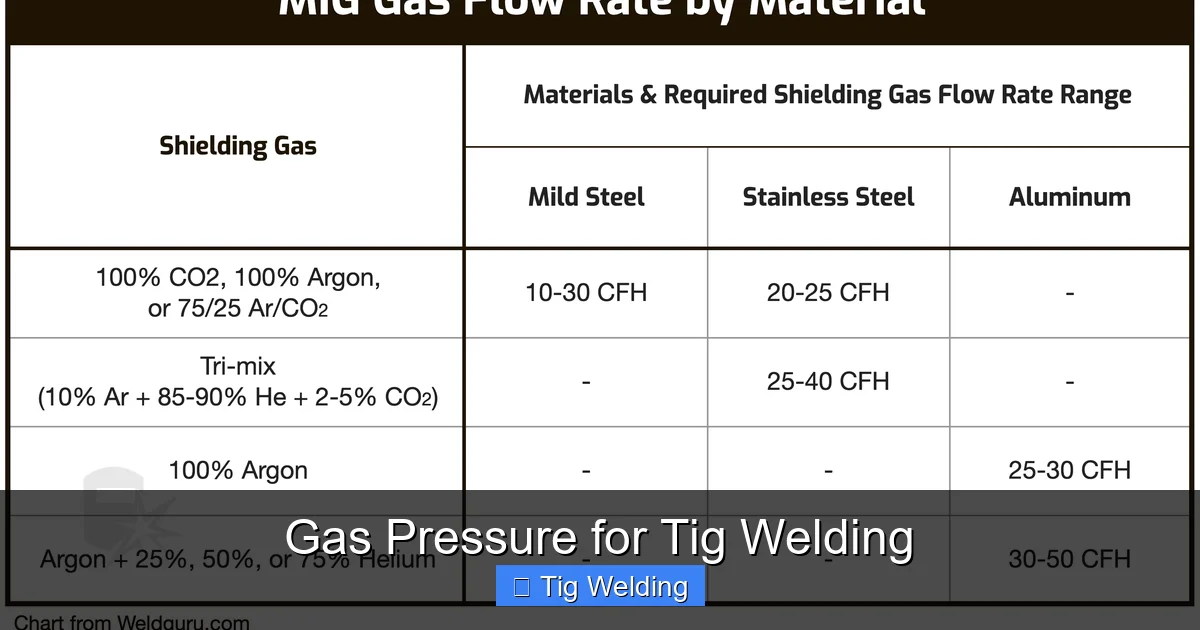
Visual guide about Gas Pressure for Tig Welding
Image source: weldguru.com
If the pressure is too low, the shield may be insufficient, allowing contaminants to spoil the weld. If it’s too high, it can cause turbulence, spillage, or unnecessary gas consumption. Finding the right balance is essential for high-quality TIG welds.
Optimal Gas Pressure Range for TIG Welding
Typical Settings
The most common gas pressure range for TIG welding is generally between 15 to 30 cubic feet per hour (CFH). Most welders find that setting their flow meter within this range provides good coverage and stable shielding.
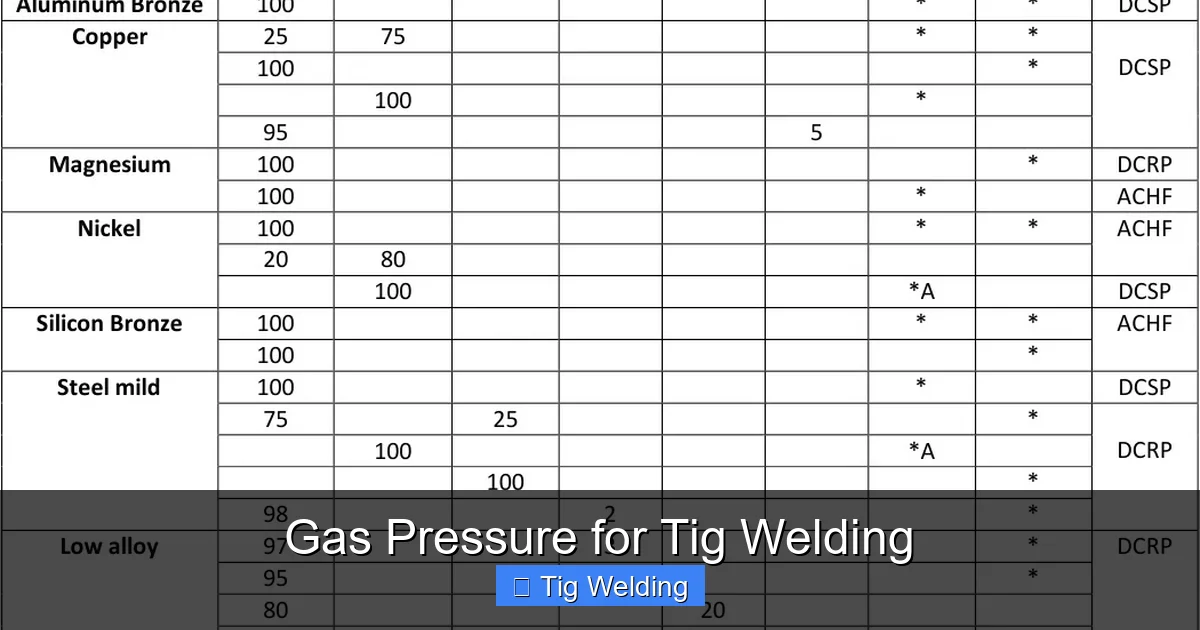
Visual guide about Gas Pressure for Tig Welding
Image source: wcwelding.com
For thin materials and precision work, lower settings around 15 CFH are often sufficient. For thicker metals or outdoor environments where wind might disturb the shield, higher settings closer to 20-30 CFH are recommended.
Factors Influencing Gas Pressure
- Material thickness: Thicker metals usually need slightly higher flow rates for better coverage.
- Environment: Windy or outdoor settings may require increased pressure for effective shielding.
- Welding position: Overhead or vertical welding might need adjustments to prevent gas blow-off.
- Welding torch size: Larger torches may require higher pressure for uniform shielding.
How to Adjust and Control Gas Pressure
Using a Regulator and Flow Meter
The key to controlling gas pressure is a good-quality regulator and flow meter attached to your gas cylinder. The regulator reduces the high-pressure gas in the cylinder to a manageable level, while the flow meter allows you to set the precise flow rate.
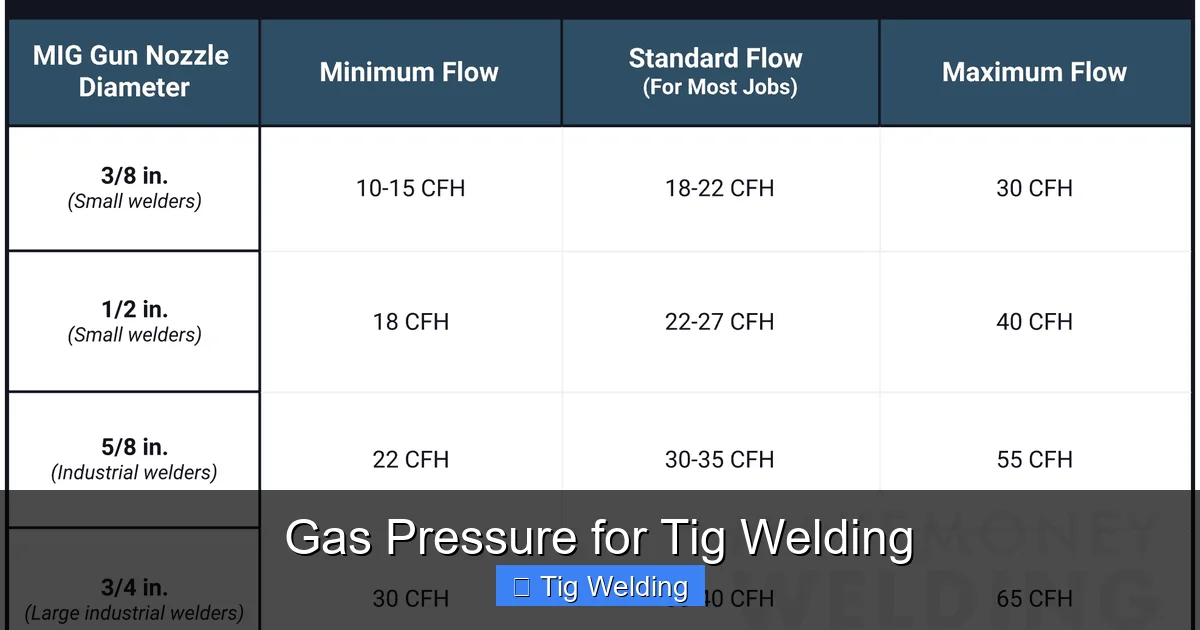
Visual guide about Gas Pressure for Tig Welding
Image source: makemoneywelding.com
Start with a setting of around 20 CFH and adjust as necessary based on your specific welding conditions. Watch the flow meter during welding; it should be steady and consistent.
Practical Tips for Proper Adjustment
- Test before welding: Always perform a test run on scrap material to verify the right flow rate.
- Check for leaks: Ensure all connections are tight to prevent loss of gas and inaccurate readings.
- Observe the weld: If you notice porosity or contamination, increase or decrease the flow slightly and test again.
- Avoid turbulence: Keep the torch at an appropriate distance from the workpiece—usually about 1/4 inch—to prevent wind or turbulence from disrupting the shield.
Common Mistakes and How to Avoid Them
Using Too Much Gas
Setting the flow rate above 30 CFH doesn’t necessarily improve shielding. Instead, it can cause turbulence, blow away the shielding gas, and waste gas. Use the lowest effective pressure to ensure good coverage.
Using Too Little Gas
Setting the flow below 15 CFH leaves the weld vulnerable to contamination. Always stay within the recommended range and test your setup.
Inconsistent Gas Flow
Fluctuating flow rates can lead to inconsistent weld quality. Use a reliable regulator and flow meter, and double-check connections regularly.
Practical Examples and Tips for Better TIG Welding
- Outdoor welding: Increase your gas flow to 20-30 CFH to counteract wind effects.
- Thin sheet metal: Use about 15-20 CFH to prevent blow-off and save gas.
- Heavy-duty applications: Slightly higher flow rates (25-30 CFH) can improve coverage and weld quality.
- Consistent practice: Regularly test your settings on scrap to fine-tune your gas flow for different materials.
- Use a flow meter: Always rely on a flow meter rather than guessing the gas flow by ear or eye.
Conclusion: Mastering Gas Pressure for Perfect TIG Welds
Getting the gas pressure right is essential for high-quality TIG welding. It impacts the weld’s appearance, strength, and durability. Remember to start with the recommended range of 15-30 CFH, adjust based on your specific conditions, and always test before working on your final piece.
With practice and attention to detail, controlling your gas pressure becomes second nature, leading to cleaner, more consistent, and professional-looking welds. Whether you’re working indoors or outdoors, mastering gas flow will elevate your TIG welding skills to the next level.
Frequently Asked Questions
What is the ideal gas flow rate for TIG welding?
The ideal gas flow rate for TIG welding typically ranges from 15 to 30 CFH, depending on the material, thickness, and environment. Always test on scrap before welding your final piece.
How do I adjust the gas pressure on my TIG welder?
Use a regulator attached to your gas cylinder to set the desired flow rate with a flow meter. Start with around 20 CFH and tweak as needed based on your weld quality and conditions.
Why is my weld porosity occurring even with gas flow?
Porosity can result from insufficient gas flow, turbulence, or contamination. Ensure your settings are within the recommended range and check for leaks or drafts around your welding area.
Does outdoor welding require higher gas pressure?
Yes, outdoor or windy conditions often require increased gas flow, usually toward the higher end of the typical range (20-30 CFH), to maintain proper shielding.
What are signs of too high or too low gas pressure?
Too high pressure can cause turbulence, spillage, and waste, while too low pressure may lead to contamination and porosity. Always observe your weld and adjust accordingly.
Can improper gas flow affect weld strength?
Absolutely. Inadequate shielding due to improper gas flow can result in weak, porous welds that may fail under stress. Proper gas pressure is essential for strong, durable welds.
