

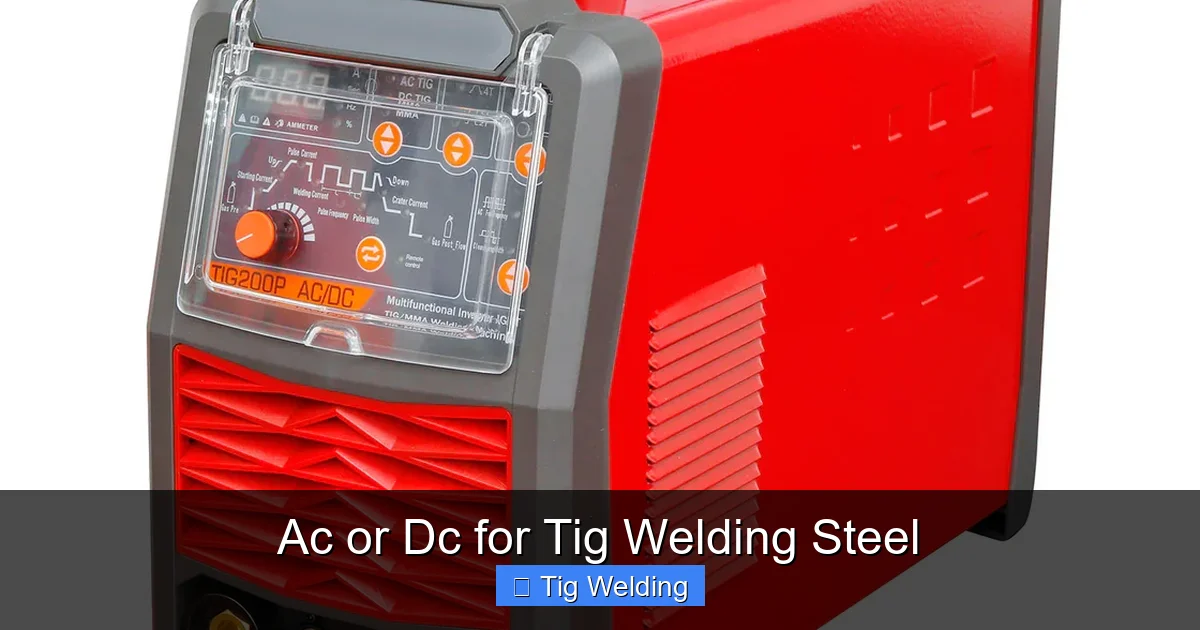
Choosing between AC and DC for TIG welding steel depends on the specific application and steel type.
DC welding offers better control and cleaner welds on steel, while AC can be useful for certain types of steel and specific situations. Understanding these differences helps welders pick the right settings for strong, high-quality welds.
Key Takeaways
- DC is generally preferred for TIG welding steel: It provides a stable arc and cleaner welds, making it ideal for most steel projects.
- AC is useful for aluminum and some steel types: It helps break up oxides and improve weld quality in specific cases.
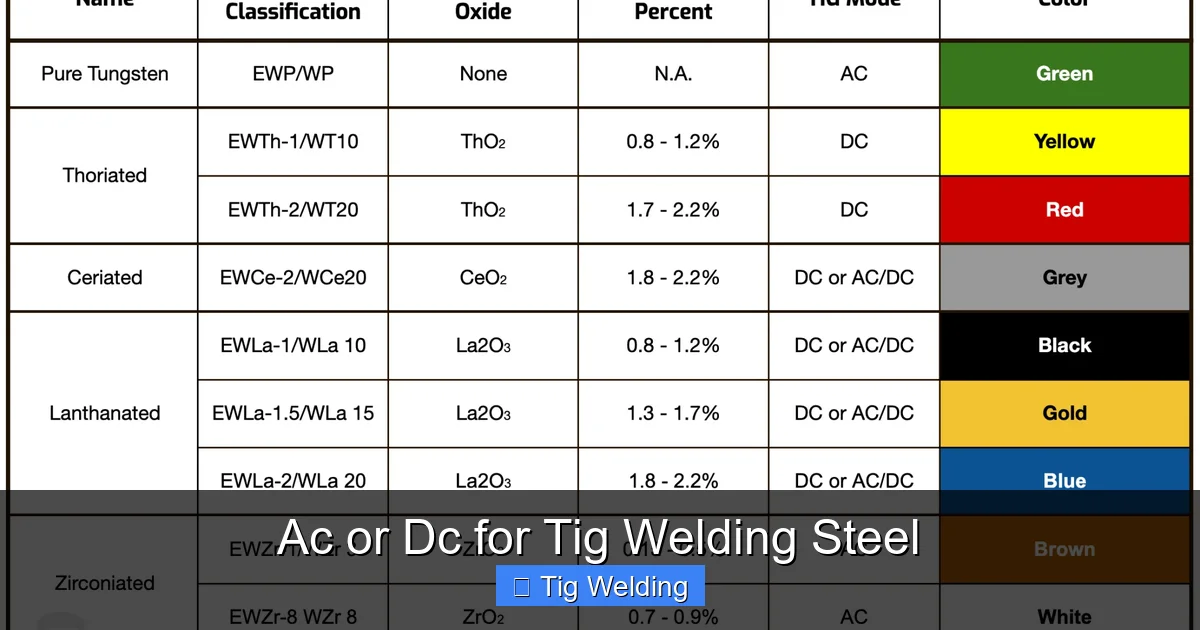
- Electrode selection matters: Different electrodes perform better with AC or DC, influencing weld quality.
- Cleaning and surface prep are critical: Proper preparation ensures better welds regardless of power source.
- Understanding your steel type is key: Steel alloys respond differently to AC and DC, so choose accordingly.
- Modern TIG welders offer versatile options: Many machines allow switching between AC and DC, giving flexibility for various projects.
Quick Answers to Common Questions
Question 1?
Should I use AC or DC for welding steel?
Generally, DC is preferred for steel because it provides a stable arc and cleaner welds. AC is mainly used for aluminum and some stainless steels.
Question 2?
Can I weld steel with AC TIG?
Yes, but it’s usually for specific purposes like oxide removal or working with certain steel alloys. DC is typically better for most steel welding tasks.
Question 3?
Why is DC better for welding steel?
DC offers a stable arc, better control, less spatter, and cleaner welds, making it ideal for most steel applications.
Question 4?
When should I use AC for steel?
Use AC when working with heavily oxidized surfaces or stainless steel, or when your project benefits from the oxide-breaking action of AC.
Question 5?
Do modern TIG welders allow switching between AC and DC?
Yes, many modern machines are versatile and let you switch easily, giving you flexibility for different materials and conditions.
📑 Table of Contents
Introduction
When it comes to TIG welding steel, one of the most common questions beginners and experienced welders ask is: should I use AC or DC power? The answer isn’t always straightforward because each power source has its advantages and specific applications. Understanding the differences can help you produce stronger, cleaner welds and improve your overall welding experience.
In this article, we’ll explore the key differences between AC and DC for TIG welding steel, discuss which is better for different types of steel, and share practical tips to optimize your welding results. Whether you’re working on structural steel, automotive parts, or artistic projects, knowing when and why to choose AC or DC makes a big difference.
Understanding TIG Welding Power Sources
What is TIG Welding?
Tungsten Inert Gas (TIG) welding, also known as Gas Tungsten Arc Welding (GTAW), uses a non-consumable tungsten electrode to create an arc that melts the base metal. Shielding gas, typically argon or helium, protects the weld from contamination. TIG welding is prized for its precision, clean welds, and ability to work with thin materials.
Visual guide about Ac or Dc for Tig Welding Steel
Image source: doughtywelder.com
Types of Power Supplies: AC vs. DC
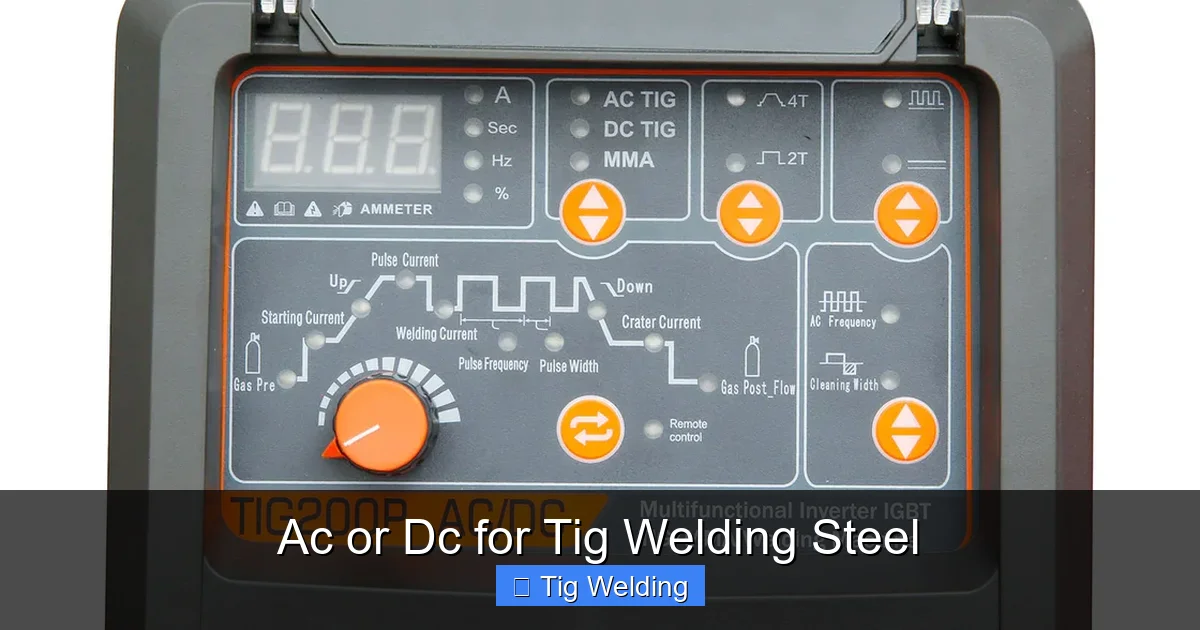
Welders can choose between alternating current (AC) and direct current (DC) power sources. Each has unique electrical characteristics that influence the welding process, especially when working on different metals like steel, aluminum, or other alloys. The choice between AC and DC depends on the specific application, material, and desired weld quality.
DC for TIG Welding Steel
Advantages of Using DC
DC power is the most common choice for TIG welding steel. It offers several advantages:
Visual guide about Ac or Dc for Tig Welding Steel
Image source: weldguru.com
- Stable Arc: DC provides a consistent, smooth arc that’s easy to control, making it ideal for beginners and precise welding tasks.
- Cleaner Welds: It produces less spatter and oxidation, resulting in a cleaner weld with a better appearance.
- Deeper Penetration: DC allows for better control of heat input, leading to deeper weld penetration when needed.
- Ease of Use: Most TIG machines default to DC, simplifying the setup process.
Practical Examples of DC Use
DC is perfect for welding structural steel, automotive panels, and other applications requiring clean, strong welds. For example, when welding a steel frame for a building or fabricating a vehicle chassis, DC provides consistent results and high-quality welds.
Tips for Using DC Effectively
- Adjust polarity: Use straight polarity (DC+), where the electrode is positive, for cleaner welds.
- Optimize amperage: Match your amperage to the thickness of the steel for best results.
- Maintain your equipment: Regularly check connections and clean your tungsten electrode for optimal performance.
AC for TIG Welding Steel
Advantages of Using AC
Although AC is more commonly associated with aluminum welding, it has specific benefits when used on steel in certain circumstances:
Visual guide about Ac or Dc for Tig Welding Steel
Image source: m.media-amazon.com
- Oxide Removal: AC’s alternating nature helps break up surface oxides, which is especially useful for certain steel alloys or heavily oxidized surfaces.
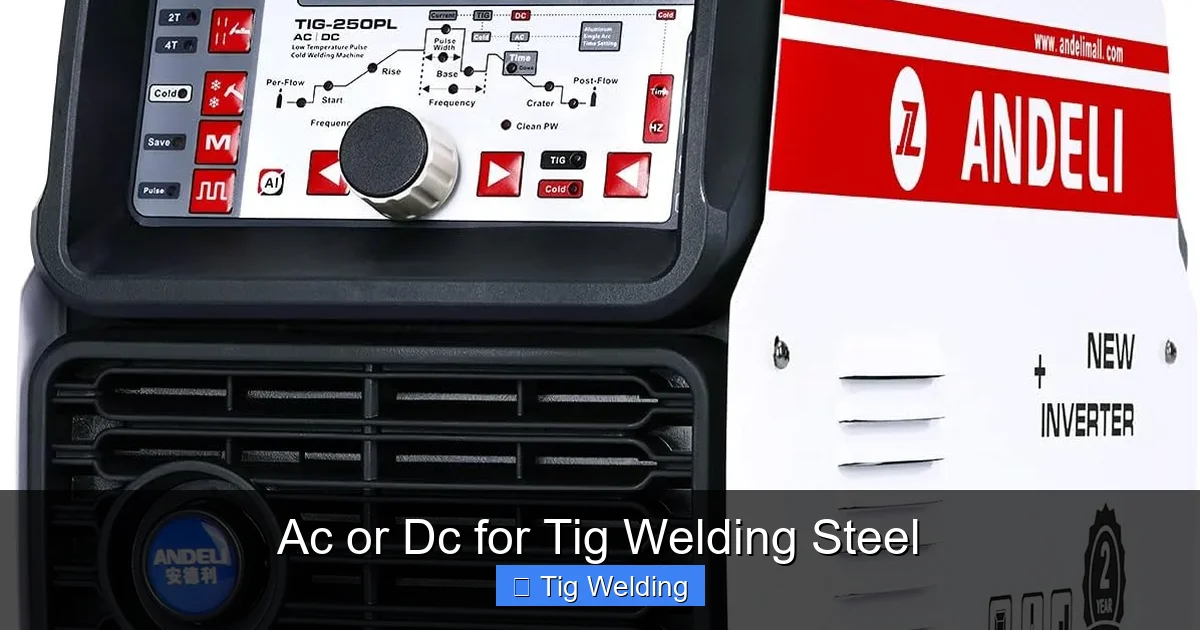
- Versatility: Some welders prefer AC for multi-metal projects, switching seamlessly between materials.
- Better for Certain Alloys: In some cases, AC can improve weld quality on stainless steel or other specialty steels.
Challenges of Using AC
While AC has benefits, it can be trickier to control than DC. The arc can be less stable, and welds may require more skill. Additionally, AC tends to produce more spatter and less penetration compared to DC on steel.
When to Use AC for Steel
- Welding Steel with Oxide Layers: When steel surfaces are heavily oxidized, AC helps clean the surface during welding.
- Working with Stainless Steel: AC is often preferred for stainless steel to prevent contamination and improve weld quality.
- Specialized Projects: Certain steel alloys respond better to the oxide-breaking action of AC.
Choosing the Right Power Source for Your Steel Project
Factors to Consider
Deciding between AC and DC depends on several factors:
- Type of Steel: Mild steel typically benefits from DC, while stainless or specialty steels might require AC.
- Surface Condition: Oxidized or dirty surfaces may need AC to clean during welding.
- Weld Appearance: For clean, smooth welds, DC is usually better.
- Machine Capabilities: Modern TIG welders often offer both options, providing flexibility.
Practical Tips for Switching Between AC and DC
- Read your machine manual: Understand how to switch modes safely and correctly.
- Practice on scrap metal: Test different settings to see how each mode affects your welds.
- Adjust parameters: Change amperage, balance, and polarity according to the material.
Conclusion
In summary, the choice between AC and DC for TIG welding steel depends on your specific project needs. DC is generally the go-to for most steel welding tasks due to its stability, control, and clean results. However, AC can be a valuable tool in certain situations, especially when dealing with oxidized surfaces or specific alloys.
Modern TIG welders that offer both options give you the flexibility to adapt to different materials and conditions. By understanding the strengths and limitations of each power source, you can improve your weld quality, reduce rework, and achieve professional results every time.
Final Tips
- Always clean and prepare your steel surfaces before welding.
- Use the correct electrode and polarity for your chosen power source.
- Practice switching between AC and DC to understand how each affects your welds.
- Invest in a versatile TIG welder with both AC and DC capabilities for maximum flexibility.
Happy Welding!
Remember, the key to great TIG welding on steel is understanding your equipment and the material you’re working with. With the right settings, technique, and a little patience, you’ll produce clean, strong welds that last.
Frequently Asked Questions
What is the main difference between AC and DC in TIG welding?
AC alternates polarity, which helps clean surfaces and is useful for certain alloys, while DC provides a stable, consistent arc ideal for most steel welding tasks.
Can I weld stainless steel with AC?
Yes, AC is often preferred for stainless steel because it prevents contamination and improves weld quality, especially on heavily oxidized surfaces.
Which mode offers better weld control on steel?
DC generally provides better control, resulting in more precise, cleaner welds on steel compared to AC.
Is it better to use pure or mixed polarity on DC for steel?
Most TIG welding on steel uses straight polarity (DC+), where the electrode is positive, for better weld quality and penetration.
How does surface condition affect the choice of AC or DC?
Heavily oxidized or dirty surfaces benefit from AC’s oxide-breaking ability, while clean surfaces are best welded with DC for smooth results.
What should I consider when choosing a TIG welder?
Look for a machine that offers both AC and DC, and choose based on the types of steel and projects you plan to work on for maximum flexibility and quality.
