

Magnesium TIG welding is a specialized process used to join magnesium metals with precision and strength. This technique requires specific skills and safety measures but offers exceptional results for lightweight and high-performance applications.
Key Takeaways
- Magnesium TIG welding: is a precise welding method ideal for lightweight and high-strength applications.
- Preparation is key: Proper cleaning and surface preparation ensure strong welds and prevent defects.
- Safety first: Magnesium is highly flammable; strict safety measures are essential during welding.
- Equipment considerations: Using the right TIG torch, filler material, and shielding gas is crucial for quality welds.
- Technical skill required: Mastering magnesium TIG welding involves understanding heat control and technique nuances.
- Applications: Commonly used in aerospace, automotive, and high-performance industries.
Quick Answers to Common Questions
Question 1?
What is magnesium TIG welding?
Magnesium TIG welding is a precise welding process using tungsten inert gas to join magnesium metals, providing clean, high-quality welds suitable for lightweight applications.
Question 2?
Is magnesium welding safe?
Welding magnesium can be safe if proper precautions are taken, such as using appropriate safety gear, working in well-ventilated areas, and handling magnesium carefully due to its flammability.
Question 3?
What equipment do I need for magnesium TIG welding?
You need a suitable TIG welder, pure argon shielding gas, a tungsten electrode, magnesium filler rods, and safety gear like gloves, helmet, and fire extinguisher.
Question 4?
Can I weld magnesium without preheating?
Preheating is recommended for thicker magnesium parts to reduce thermal shock and warping, but for thin sheets, careful control of heat input may suffice.
Question 5?
What industries use magnesium TIG welding?
Industries like aerospace, automotive, electronics, and defense extensively use magnesium TIG welding for lightweight, durable components.
📑 Table of Contents
- Introduction to Magnesium TIG Welding
- Understanding Magnesium and Its Welding Challenges
- Equipment Needed for Magnesium TIG Welding
- Preparation and Safety Measures
- Technique and Best Practices for Magnesium TIG Welding
- Practical Tips and Troubleshooting
- Applications of Magnesium TIG Welding
- Conclusion
Introduction to Magnesium TIG Welding
Magnesium is a lightweight metal with impressive strength-to-weight ratio, making it a popular choice in aerospace, automotive, and electronics industries. However, welding magnesium isn’t as straightforward as welding steel or aluminum. Among various techniques, TIG welding (Tungsten Inert Gas welding) is often preferred for magnesium because it provides precise control, clean welds, and high-quality finishes.
In this article, we’ll explore the ins and outs of magnesium TIG welding, including the equipment needed, safety precautions, techniques, and practical tips to help you achieve professional results. Whether you’re a hobbyist or a professional welder, understanding the nuances of magnesium TIG welding will ensure your projects are successful and safe.
Understanding Magnesium and Its Welding Challenges
Properties of Magnesium
Magnesium is a light, silvery-white metal with excellent strength and thermal properties. It’s the eighth most abundant element in the earth’s crust and is highly recyclable. Its physical characteristics include a low melting point (around 650°C or 1202°F), which makes it easier to melt than some other metals but also more prone to ignition.
Visual guide about Magnesium Tig Welding
Image source: aesis-aes-sales-gob2b.b-cdn.net
Welding Challenges
Despite its benefits, welding magnesium presents unique challenges:
- Flammability: Magnesium is highly flammable, especially in powder or thin sheet form, and can ignite easily when heated.
- Oxidation: Magnesium forms a tough oxide layer that can hinder weld quality.
- Heat sensitivity: Excessive heat can cause burn-through or warping.
- Contamination: Dirt, oil, and moisture must be meticulously removed to prevent weld defects.
Understanding these challenges is essential for safe and effective magnesium TIG welding.
Equipment Needed for Magnesium TIG Welding
1. Power Source
A stable, high-frequency TIG welder capable of fine current control is necessary. Pulse welding features can help manage heat input, preventing burn-through and warping.
Visual guide about Magnesium Tig Welding
Image source: magrealloys.com
2. Tungsten Electrode
Use a pure tungsten or zirconiated tungsten electrode. Thoriated tungsten is generally avoided due to radioactivity concerns. The electrode should be sharp and free of contamination.
3. Shielding Gas
Pure argon is the most common shielding gas for magnesium TIG welding, providing an inert environment to prevent oxidation. Sometimes, a small amount of helium can be added to improve heat input and arc stability.
4. Filler Material
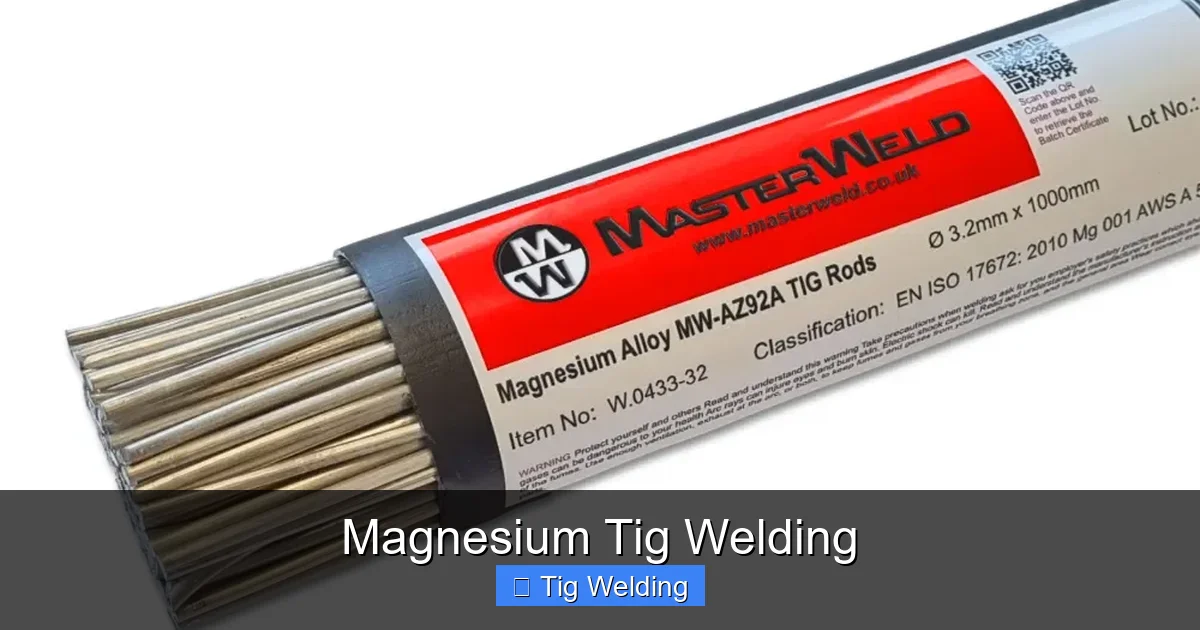
Use magnesium filler rods matching the base metal composition. Filler rods should be clean and dry, free from oxidation or contaminants.
5. Safety Equipment
Proper PPE includes welding gloves, a welding helmet with a suitable shade, and protective clothing. Fire extinguishers rated for metal fires are essential nearby.
Preparation and Safety Measures
Surface Preparation
Clean the magnesium thoroughly. Use a stainless steel wire brush dedicated to magnesium or chemical cleaners to remove oxide layers, dirt, and oil. The surface must be free of contaminants for a strong weld.
Visual guide about Magnesium Tig Welding
Image source: mewelding.com
Work Area Safety
Welding magnesium produces intense UV and infrared radiation. Always work in a well-ventilated space with proper eye protection. Keep flammable materials away, and have fire extinguishing equipment ready.
Handling Magnesium Safely
Since magnesium is highly flammable, avoid grinding or machining in areas with combustible dust. Store magnesium in a dry, fireproof container and keep it away from heat sources.
Technique and Best Practices for Magnesium TIG Welding
Setting Up the Welder
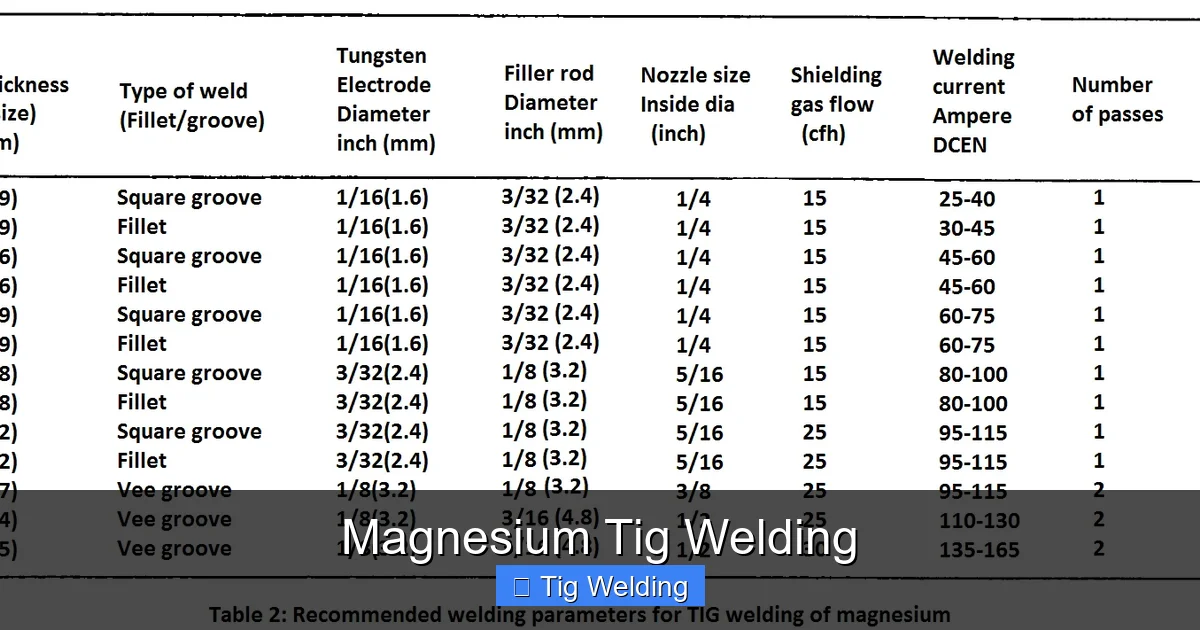
Start with a low amperage, typically around 50-80A for thin materials. Adjust current based on material thickness, aiming for a steady, controlled arc. Use high-frequency start to initiate the arc without contact.
Welding Process
- Arc Control: Maintain a consistent arc length, usually 1/8 inch from the tungsten tip to the workpiece.
- Filler Addition: Feed the magnesium filler rod into the weld puddle smoothly and steadily, ensuring good fusion.
- Heat Management: Use short, controlled weld passes to prevent overheating. Employ pulse welding if available to control heat input.
Common Mistakes to Avoid
- Overheating the magnesium, leading to burn-through or ignition.
- Using contaminated or oxidized filler material.
- Incorrect shielding gas flow, resulting in oxidation or porosity.
- Applying excessive heat, causing warpage or distortion.
Practical Tips and Troubleshooting
- Use a water-cooled torch: Prevents overheating of the tungsten and enhances control.
- Maintain a steady hand: Consistent motion ensures uniform welds.
- Preheat thin sheets: Slight preheating can reduce thermal stress and improve weld quality.
- Post-weld cleaning: Remove oxide and residue with a soft brush after welding.
- Store magnesium properly: Keep in a dry, fireproof container to avoid accidental ignition.
Applications of Magnesium TIG Welding
Magnesium TIG welding is widely used in industries where weight savings and strength are critical:
- Aerospace: Manufacturing aircraft structures and components.
- Automotive: Building lightweight parts, especially in racing cars.
- Electronics: Creating enclosures and structural elements for electronic devices.
- Military and Defense: Producing lightweight armor and structural parts.
Mastering magnesium TIG welding opens doors to advanced manufacturing and innovative designs.
Conclusion
Magnesium TIG welding is a valuable skill for fabricators working with lightweight, high-performance metals. While it presents unique challenges, proper understanding of equipment, safety, and technique can lead to excellent, durable welds. Always prioritize safety, preparation, and precision—your projects and safety depend on it. With practice, you can harness the full potential of magnesium through TIG welding and contribute to innovative industries that rely on this versatile metal.
Frequently Asked Questions
What makes magnesium welding different from aluminum or steel?
Magnesium welding requires specific techniques due to its high flammability and oxide layer. It also needs different shielding gases and careful heat control to prevent ignition and defects.
Is magnesium TIG welding suitable for beginners?
While it’s possible, magnesium TIG welding is more challenging than welding steel or aluminum. Beginners should gain experience with simpler metals before attempting magnesium welding.
How do I prevent magnesium from catching fire during welding?
Use proper shielding gas, keep the workspace free of combustible materials, and control heat input carefully. Always have fire extinguishers rated for metal fires nearby.
Can I weld magnesium outdoors?
Welding outdoors increases risks from wind and environmental factors. It’s best to weld magnesium in a controlled, indoor environment for safety and quality reasons.
What are the most common defects in magnesium TIG welds?
Common defects include porosity, cracking, and oxidation. Proper cleaning, shielding, and technique can minimize these issues.
