

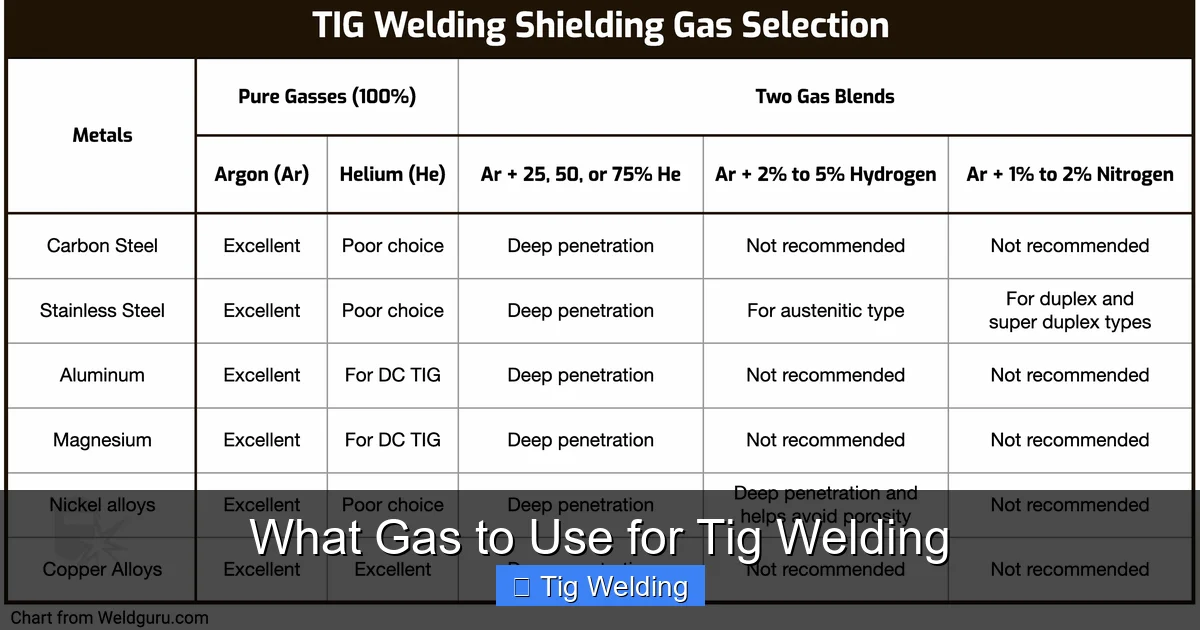
Choosing the right gas for TIG welding is crucial for achieving strong, clean, and visually appealing welds. This guide breaks down the most common TIG welding gases, including argon, helium, and their mixtures, explaining their properties and ideal applications for different metals. Learn to match the gas to your project for optimal penetration, arc stability, and weld quality.
Key Takeaways
- Pure Argon is the most common TIG gas: It provides excellent arc stability and clean welds, making it ideal for most common TIG welding applications, especially with aluminum and stainless steel.
- Helium increases heat input: It offers deeper penetration and a wider, hotter arc, beneficial for thicker metals or when faster travel speeds are desired, though it can make arc starting more challenging.
- Gas mixtures offer tailored performance: Blends of argon with small amounts of other gases (like helium, hydrogen, or CO2) can improve specific welding characteristics such as penetration, arc force, or speed.
- Material dictates gas choice: Different metals have varying electrical conductivity and heat transfer properties, meaning the optimal shielding gas will change depending on whether you’re welding aluminum, steel, stainless steel, copper, or titanium.
- Flow rate is critical: Too little gas leaves welds vulnerable to contamination, while too much can cause turbulence and introduce atmospheric contaminants. Proper flow rate is essential for effective shielding.
- Consider your TIG welder’s capabilities: Some machines are better suited for specific gas types or mixtures due to their power output and control features.
What Gas to Use for TIG Welding? A Comprehensive Guide
TIG welding, also known as Gas Tungsten Arc Welding (GTAW), is a highly respected welding process known for its precision, cleanliness, and the ability to produce aesthetically pleasing welds. One of the most critical, yet often overlooked, aspects of TIG welding is selecting the correct shielding gas. The gas you choose plays a vital role in protecting your molten weld pool from atmospheric contamination, stabilizing the arc, and influencing the overall weld characteristics like penetration and bead width.
If you’ve ever stared at a TIG welding gas cylinder and wondered, “Which one is right for my project?” you’re not alone. This guide is designed to demystify TIG welding gases. We’ll walk you through the most common options, explain their properties, and help you make informed decisions so you can achieve the best possible results, whether you’re a hobbyist working on a simple repair or a professional fabricating critical components.
By the end of this guide, you’ll understand:
- The fundamental role of shielding gas in TIG welding.
- The properties of pure argon and why it’s so popular.
- When and why to use helium for TIG welding.
- The benefits and applications of argon-helium mixtures.
- How other gases like hydrogen and CO2 can be used in TIG welding.
- How to select the right gas based on the material you’re welding.
- Tips for setting the correct gas flow rate.
The Essential Role of Shielding Gas in TIG Welding
Before diving into specific gases, let’s briefly cover why shielding gas is indispensable in TIG welding. The tungsten electrode used in TIG welding is non-consumable, meaning it doesn’t melt into the weld. This is fantastic for control, but it also means the molten weld pool and the hot tungsten electrode are exposed directly to the surrounding atmosphere. The air around us contains oxygen and nitrogen, both of which can react negatively with the molten metal, leading to:
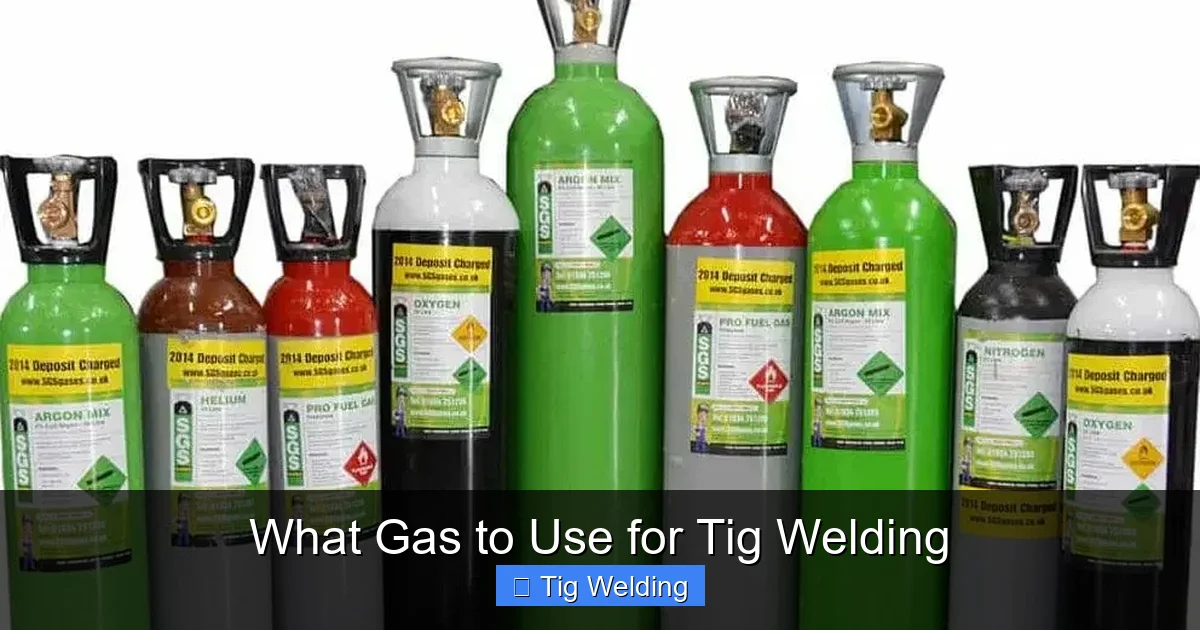
Visual guide about What Gas to Use for Tig Welding
Image source: cdn.sheetstainlesssteel.com
- Oxidation: This can result in porosity (small holes), a brittle weld structure, and poor mechanical properties.
- Inclusions: Nitrogen can dissolve into the molten metal, causing embrittlement and reducing the weld’s strength.
- Contamination: Other airborne particles can also compromise the weld quality.
The shielding gas displaces the surrounding air, creating a protective envelope around the arc and the molten weld pool. This prevents contamination, allowing for a clean, strong, and defect-free weld. Furthermore, the type of gas influences the arc’s characteristics, affecting heat input, penetration depth, and the appearance of the weld bead.
Pure Argon: The Workhorse of TIG Welding
When most people think of TIG welding gas, they think of argon. And for good reason – it’s the most widely used shielding gas for TIG welding, and it’s an excellent all-around choice for a vast majority of applications.
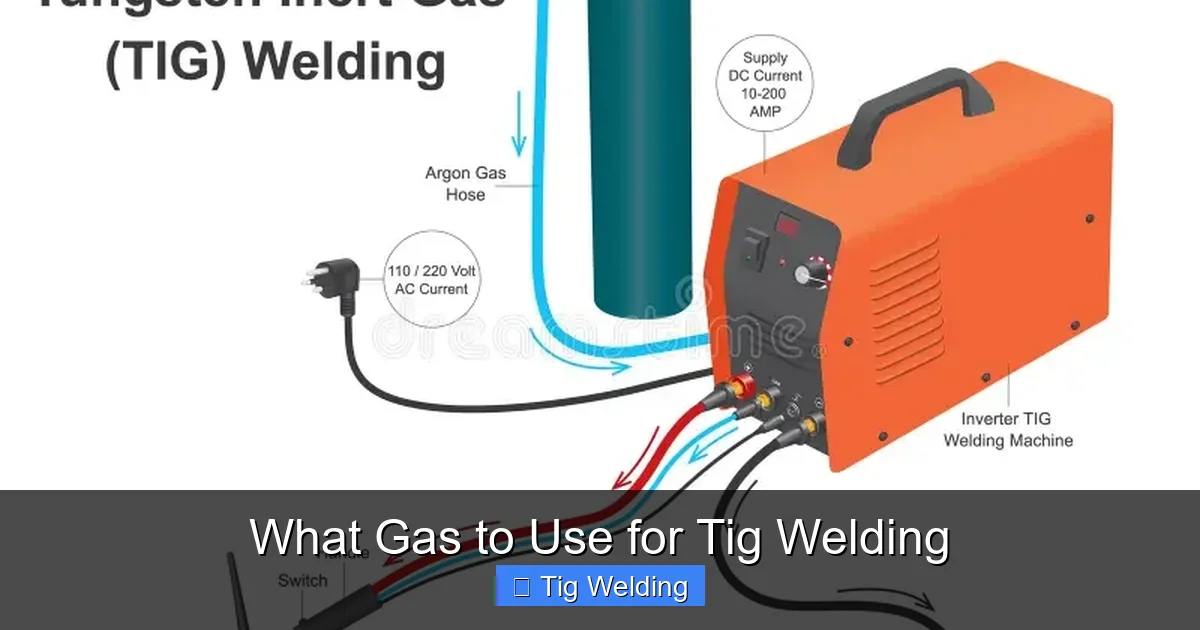
Visual guide about What Gas to Use for Tig Welding
Image source: thumbs.dreamstime.com
Properties of Argon
Argon is an inert, noble gas. This means it’s chemically unreactive, which is precisely what you want in a shielding gas. Its key properties include:
- Excellent Arc Stability: Argon creates a stable, focused arc, making it easy to control and manipulate, especially for beginners.
- Good Cleaning Action (especially on AC): When welding aluminum and magnesium with AC, argon helps to break up the oxide layer that forms on these metals, promoting better fusion and a cleaner weld.
- Low Ionization Potential: This makes it easy to initiate and maintain an arc.
- Relatively Inexpensive: Compared to some other specialty gases, argon is generally more affordable.
- Lower Heat Input: It provides a good balance of heat, allowing for control without excessive melt-through on thinner materials.
When to Use Pure Argon
Pure argon is the go-to gas for welding a wide range of materials:
- Aluminum: For AC TIG welding of aluminum, pure argon is almost always the preferred choice. It provides the necessary arc stability and cleaning action for this challenging metal.
- Stainless Steel: For DC TIG welding of stainless steel, pure argon is also a standard choice. It produces clean welds with good appearance.
- Carbon Steel: While other gases can be used for steel, pure argon is perfectly suitable for most carbon steel TIG welding applications, especially for thinner materials.
- Copper and its Alloys: Argon works well for TIG welding copper, brass, and bronze.
- Titanium: For titanium, extremely high purity is essential, and pure argon is commonly used, though a very strict purging procedure is also vital.
Practical Tip:
If you’re just starting with TIG welding or are unsure which gas to use for a general-purpose project, you can’t go wrong with pure argon. It’s forgiving, widely available, and effective for many common metals and thicknesses.
Helium: For Deeper Penetration and Higher Heat
While argon is the standard, helium offers different advantages, primarily related to heat input and penetration. Helium is also an inert gas.

Visual guide about What Gas to Use for Tig Welding
Image source: cdn.thepipingmart.com
Properties of Helium
- Higher Thermal Conductivity: Helium transfers heat much more efficiently than argon. This results in a hotter, wider arc.
- Deeper Penetration: The increased heat input allows for deeper penetration into the base metal.
- Faster Travel Speeds: Because more heat is available, you can often weld faster with helium.
- Higher Ionization Potential: This means helium is slightly harder to initiate an arc with compared to argon.
- More Expensive: Helium is typically more expensive than argon.
When to Use Pure Helium
Pure helium is less commonly used as a standalone TIG gas than argon, but it has specific applications:
- Thicker Sections of Aluminum: For welding thicker aluminum plates (e.g., 1/4 inch or thicker), the extra heat from helium can be beneficial to achieve full penetration.
- High-Productivity Applications: In industrial settings where speed is paramount, helium can enable faster welding speeds on various materials.
- Specific Exotic Metals: For some less common metals where high heat input is required, pure helium might be considered.
Caveat: While helium provides more heat, it can also lead to wider beads and potentially more distortion if not managed carefully. It also requires a higher flow rate than argon to provide adequate shielding.
Argon-Helium Mixtures: The Best of Both Worlds
Often, the ideal solution lies in combining the benefits of argon and helium. Argon-helium mixtures offer a tunable way to control heat input and penetration while maintaining good arc stability.
Properties of Argon-Helium Mixtures
By varying the ratio of argon to helium, you can tailor the welding characteristics:
- Increased Heat: Adding helium to argon increases the arc’s temperature and heat transfer.
- Improved Penetration: More heat means deeper penetration.
- Wider Arc: Helium tends to spread the arc out more than argon.
- Reduced Arc Wander: In some cases, helium can help stabilize the arc, especially at higher amperages.
- Cost-Effectiveness: Using a mixture can be more economical than pure helium while still providing some of its benefits.
Common Argon-Helium Mixtures and Their Uses
You’ll commonly see mixtures like 75% Argon / 25% Helium, 50% Argon / 50% Helium, or even higher helium concentrations.
- 75% Ar / 25% He: This is a very popular mixture for welding thicker aluminum (above 1/4 inch) and for applications where you want a bit more heat than pure argon provides, but without the full intensity of pure helium. It offers a good balance of arc stability and heat.
- 50% Ar / 50% He: For even thicker sections or when very high travel speeds are needed on materials like aluminum or copper, this mixture provides significantly more heat.
- Higher Helium Content (e.g., 25% Ar / 75% He): Reserved for specialized applications requiring extreme heat input.
When to Use Argon-Helium Mixtures
- Thick Aluminum: As mentioned, this is a prime application.
- Thick Carbon Steel and Stainless Steel: While less common than for aluminum, mixtures can be used to speed up welding on thicker steels or to achieve deeper penetration.
- Copper Alloys: The higher heat can be beneficial for welding copper and its alloys, which are excellent heat conductors.
Specialty Gases: Hydrogen and CO2
While argon and helium are the primary choices, small additions of other gases can also be beneficial for specific TIG welding scenarios.
Hydrogen (as an addition, not pure)
Pure hydrogen is rarely used as a shielding gas due to its high reactivity and tendency to cause hydrogen embrittlement in many metals. However, small amounts of hydrogen (typically 1-5%) are sometimes added to argon for specific applications.
- Properties: Hydrogen is a strong reducing agent. It can help prevent oxidation and creates a “pushed” arc, which can lead to faster travel speeds and narrower beads.
- When to Use: Primarily used for TIG welding stainless steel and nickel alloys. The hydrogen acts as a cleaning agent, helping to reduce oxides and prevent discoloration, resulting in a brighter, cleaner weld. It can also help increase travel speed.
- Caution: Hydrogen additions can increase the risk of hydrogen embrittlement in some materials, especially high-strength steels. It’s also not suitable for aluminum or carbon steel as it can cause excessive porosity. Always ensure your welder is configured for AC or DC appropriately.
Carbon Dioxide (CO2) (as an addition)
Pure CO2 is generally not used for TIG welding because it dissociates at arc temperatures, producing oxygen and carbon monoxide, which are highly contaminating. However, very small additions of CO2 (less than 1%) are sometimes made to argon for specific steel welding applications.
- Properties: Small amounts of CO2 can slightly increase arc energy and penetration on carbon steels.
- When to Use: For high-speed TIG welding of carbon steels where a slight increase in arc force and penetration is desired.
- Caution: Even small amounts can cause some discoloration and may not be ideal for applications requiring pristine cosmetic appearance. It’s much more common in MIG welding.
Selecting the Right TIG Welding Gas: A Material-Based Approach
The most critical factor in choosing your TIG welding gas is the base metal you are welding. Here’s a breakdown by material:
1. Aluminum
- Thin Aluminum: Pure Argon (AC)
- Thicker Aluminum (1/4″ and up): Argon-Helium Mixtures (e.g., 75% Ar / 25% He or 50% Ar / 50% He). Helium helps with penetration and speed.
- Note: Always use AC (Alternating Current) for aluminum TIG welding.
2. Stainless Steel
- General Use: Pure Argon (DC). For DC welding, argon provides good control and clean welds.
- To Improve Color and Speed: Argon with a small addition of Hydrogen (e.g., 95% Ar / 5% H2). This is excellent for preventing oxidation and achieving a bright, clean finish, especially on thinner stainless steels.
- Note: Always use DC (Direct Current Electrode Negative – DCEP) for stainless steel unless using AC for specific cleaning action on certain alloys.
3. Carbon Steel
- General Use: Pure Argon (DC). It’s versatile and provides clean welds.
- For Faster Welding on Thicker Sections: Argon-Helium Mixtures can be used to increase heat input and travel speed.
- Note: DC (DCEP) is standard for steel.
4. Copper and Copper Alloys (Brass, Bronze)
- General Use: Pure Argon (DC).
- For Thicker Sections or Faster Welding: Argon-Helium Mixtures (higher helium content is often beneficial due to copper’s high thermal conductivity).
- Note: Copper is a great heat sink, so you’ll often need more heat than for steel.
5. Titanium
- Critical Purity: Pure Argon (DC). For titanium, extreme cleanliness is paramount. The shielding gas is essential, but so is rigorous purging of the weld area with a pure inert gas (like argon) to prevent contamination.
- Note: Only DC (DCEP) is used.
Setting the Correct Gas Flow Rate
Once you’ve selected your gas, setting the correct flow rate is crucial. The goal is to create a stable gas shield that effectively displaces atmospheric contaminants without causing turbulence or wasting gas.
How to Determine Flow Rate
The recommended flow rate is usually printed on the gas cylinder label or can be found in the welding machine’s manual. However, a good rule of thumb is:
- Standard Flow Rate: For pure argon, a common starting point is 15-25 cubic feet per hour (CFH) or 7-12 liters per minute (LPM).
- Higher Flow Rate: For helium or argon-helium mixtures, you’ll generally need a higher flow rate due to their lower density and thermal properties – often 25-40 CFH or 12-19 LPM.
Factors Affecting Flow Rate
- Gas Type: As noted, helium and mixtures require higher flow than pure argon.
- Amperage: Higher amperages require a stronger gas flow to protect the larger, hotter weld pool.
- Drafts and Air Movement: In windy conditions or areas with significant air currents, you’ll need to increase your gas flow rate to maintain adequate shielding. This is why gas lenses are so valuable, as they create a more laminar and stable gas flow.
- Nozzle Size: Larger nozzles generally require higher flow rates.
Practical Tips for Flow Rate
- Start Conservatively: Begin with the lower end of the recommended range and increase if you observe contamination or poor arc stability.
- Observe the Weld: Look for signs of contamination like discoloration (bluish or greyish hues on stainless steel) or porosity.
- Listen to the Arc: A stable, consistent arc sound is a good indicator.
- Consider a Gas Lens: A gas lens is a specialized collet body that improves gas coverage and stability, especially at higher flow rates or in slightly windy conditions. It allows for longer electrode stick-out and a more laminar flow of shielding gas.
- Pre-flow and Post-flow: Ensure your TIG welder has adjustable pre-flow and post-flow settings. Pre-flow allows gas to emerge from the torch *before* you strike the arc, creating a protective shield from the start. Post-flow keeps gas flowing *after* you break the arc, protecting the hot tungsten electrode and weld pool as they cool. Typical settings are 0.5-1 second of pre-flow and 5-15 seconds of post-flow, depending on the gas and material.
Troubleshooting Gas Issues
- Porosity (tiny holes in the weld): This is almost always a shielding gas issue. Check for:
- Low gas flow rate.
- Drafts or wind.
- Incorrect gas type for the material.
- Dirty base metal or filler rod.
- Faulty regulator or flowmeter.
- Poor Arc Stability / Wandering Arc:
- Low gas flow.
- Using the wrong gas (e.g., pure helium on thin materials can be hard to control).
- Issues with the gas lens or nozzle.
- Excessive Discoloration (especially on stainless steel):
- Insufficient gas flow.
- Wind or drafts.
- Not enough post-flow, allowing oxygen to reach the cooling weld.
- Using a gas unsuitable for achieving a clean, bright finish (e.g., pure argon on some stainless steel applications might not give as bright a result as an argon-hydrogen mix).
Conclusion
Selecting the correct TIG welding gas is a fundamental skill that directly impacts the quality, strength, and appearance of your welds. While pure argon serves as an excellent starting point for a vast array of applications, understanding the benefits of helium and various gas mixtures opens up possibilities for optimizing performance on different metals and thicknesses.
By considering the material you’re welding, the required penetration, desired travel speed, and even your budget, you can confidently choose the gas that will help you achieve superior TIG welding results. Remember to also pay close attention to your gas flow rate and settings, as these are just as critical as the gas itself. With this knowledge, you’re well-equipped to select the right TIG welding gas for your next project and elevate your welding game.
