

This comprehensive guide explores the diverse uses of TIG welding, a precise and versatile joining process. Discover how TIG welding excels in various industries, from aerospace to art, due to its ability to produce clean, strong, and aesthetically pleasing welds on a wide range of metals. Learn about the key applications, essential techniques, and crucial considerations for achieving professional results with TIG welding.
TIG Welding Uses
Welcome to our comprehensive guide on TIG welding uses! If you’re looking to understand where and why this incredible welding process shines, you’ve come to the right place. TIG welding, also known as Gas Tungsten Arc Welding (GTAW), is renowned for its precision, control, and ability to produce beautiful, high-quality welds. It’s a favorite among professionals and hobbyists alike who demand the best.
In this guide, we’ll dive deep into the many applications of TIG welding. You’ll learn about the specific industries that rely on it, the types of projects it’s perfect for, and the reasons behind its widespread adoption. We’ll cover everything from delicate repairs to robust structural work, showcasing the true versatility of TIG welding.
Key Takeaways
- Versatile Material Compatibility: TIG welding is exceptionally versatile, capable of joining a wide array of metals, including stainless steel, aluminum, titanium, copper, magnesium, and exotic alloys.
- Precision and Control: The process offers unparalleled control over heat input and filler metal addition, making it ideal for intricate work, thin materials, and situations requiring a pristine finish.
- High-Quality Welds: TIG welding produces clean, strong, and often visually appealing welds with minimal spatter and slag, eliminating the need for extensive post-weld cleaning.
- Key Industry Applications: Its precision makes TIG indispensable in industries like aerospace, automotive (especially for custom builds and repairs), medical equipment manufacturing, and high-end fabrication.
- Artistic and Decorative Uses: Beyond industrial applications, TIG welding is a favored method for creating sculptures, jewelry, and decorative metalwork due to its finesse and clean aesthetic.
- Repair and Maintenance: TIG is excellent for repairing delicate or high-value components where minimal distortion and a strong bond are critical.
- Controlled Welding on Thin Materials: The ability to precisely control amperage makes TIG ideal for welding thin gauge metals without burning through.
What is TIG Welding? A Brief Overview
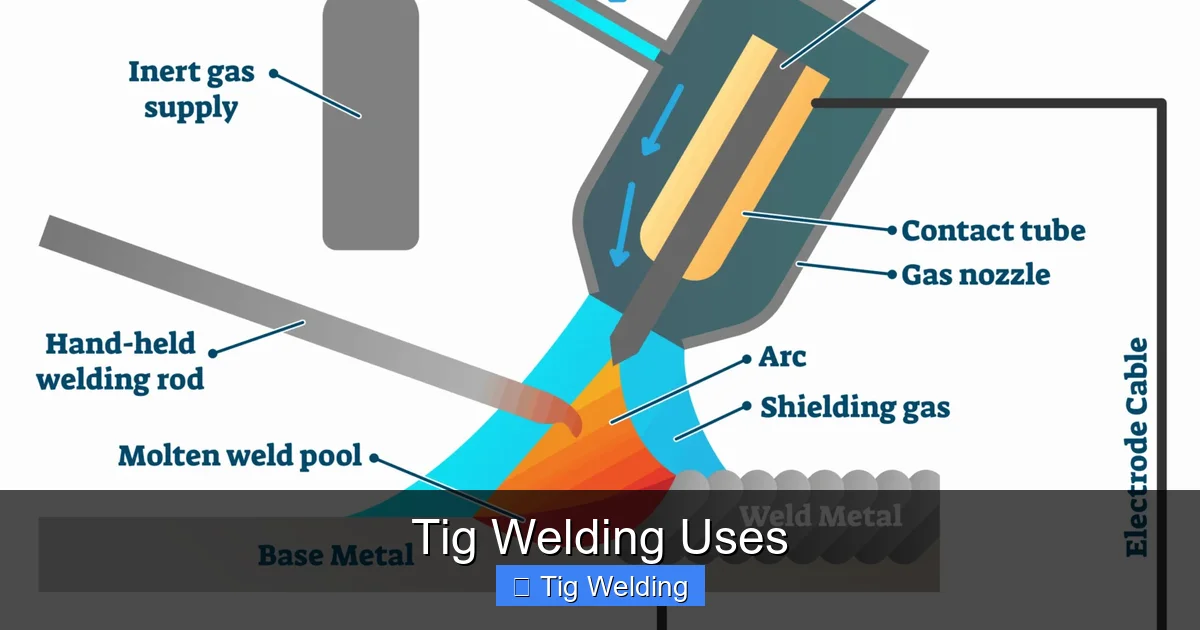
Before we explore its uses, let’s quickly touch on what TIG welding is. TIG welding uses a non-consumable tungsten electrode to create the arc. An inert gas, typically argon, shields the weld area, preventing contamination. Filler metal is added separately by hand, allowing the welder to control the amount and flow precisely. This makes TIG welding a slower but far more controlled process than other welding methods.
This level of control is what opens up a world of possibilities for TIG welding uses.
The Versatility of TIG Welding Across Industries

Visual guide about Tig Welding Uses
Image source: alroys.com
One of the most significant advantages of TIG welding is its versatility. It’s not confined to a single industry; instead, its precision and quality make it valuable in a vast array of sectors.
Aerospace and Aviation
The aerospace industry demands the highest standards of quality, precision, and material integrity. TIG welding is an essential process for fabricating aircraft components.
* **Component Manufacturing:** TIG welding is used to join critical parts made from lightweight yet strong materials like aluminum alloys, titanium, and stainless steel. These components often need to withstand extreme temperatures and pressures, and TIG provides the clean, strong, and defect-free welds required.
* **Repair and Maintenance:** For repairing sensitive or high-value aircraft parts, TIG welding’s precision minimizes distortion and ensures the structural integrity of the repair.
Automotive Industry
While MIG welding is common for many automotive applications, TIG welding has its unique and crucial roles, especially in custom builds, high-performance vehicles, and repairs.
* **Custom Exhaust Systems:** TIG welding is the go-to for fabricating custom exhaust systems from stainless steel or titanium. It produces aesthetically pleasing welds that are also strong and resistant to corrosion, which is vital for exhaust components.
* **Performance Parts:** Building or repairing high-performance engine components, turbocharger piping, and intercooler plumbing often requires TIG welding for its clean welds and ability to handle thin, exotic materials.
* **Classic Car Restoration:** For restoring classic cars, where originality and a clean finish are paramount, TIG welding is used for delicate repairs to body panels, frame components, and engine parts.
* **Motorcycle Fabrication:** Similar to custom cars, custom motorcycle frames and components, especially those made from aluminum or stainless steel, benefit greatly from TIG welding’s precision and appearance.
Medical Equipment and Devices
The medical field requires exceptional cleanliness, accuracy, and material purity. TIG welding plays a vital role in manufacturing medical equipment.
* **Stainless Steel Fabrication:** Many medical instruments, surgical tools, implantable devices, and laboratory equipment are made from high-grade stainless steel. TIG welding ensures these items are joined without contamination, maintaining their biocompatibility and corrosion resistance.
* **Clean Room Environments:** TIG welding processes used in medical manufacturing are often carried out in highly controlled environments to prevent any particulate contamination of the weld.
Food and Beverage Industry
Hygiene and corrosion resistance are paramount in the food and beverage industry. TIG welding is crucial for constructing and maintaining equipment.
* **Sanitary Piping and Vessels:** Stainless steel tanks, vats, piping systems, and other processing equipment used in dairies, breweries, wineries, and food processing plants are often TIG welded. The smooth, crevice-free welds produced by TIG are easier to clean and sanitize, preventing bacterial growth.
* **Brewery and Dairy Equipment:** The high-quality, corrosion-resistant welds ensure the longevity and safety of equipment in these sensitive industries.
Art, Sculpture, and Decorative Metalwork
TIG welding isn’t just for heavy industry; its finesse makes it a favorite among artists and craftspeople.
* **Sculptures:** Artists use TIG welding to join various metals, often thin or irregular shapes, to create intricate and detailed sculptures. The clean, precise welds are often left visible as part of the artistic aesthetic.
* **Jewelry Making:** For creating durable and beautiful jewelry from precious metals like gold, silver, and platinum, TIG welding offers the delicate control needed.
* **Architectural Metalwork:** Custom railings, gates, decorative panels, and other architectural features benefit from TIG welding’s ability to produce aesthetically pleasing and structurally sound joints.
General Fabrication and Repair
Beyond these specialized industries, TIG welding is a valuable tool for general metal fabrication and repair tasks.
* **General Repairs:** Repairing cracked engine blocks, damaged tool heads, or broken machinery parts where precision and strength are needed.
* **Prototyping:** Creating prototypes for new products often involves TIG welding due to its ability to work with various materials and produce clean results for evaluation.
* **Custom Metal Projects:** For any bespoke metal project that requires high-quality, visually appealing welds, TIG is often the preferred choice.
Key Applications and Materials for TIG Welding

Visual guide about Tig Welding Uses
Image source: weldguru.com
Let’s break down some of the most common materials and specific applications where TIG welding truly excels.
Welding Stainless Steel
Stainless steel is one of the most common materials TIG welded. Its corrosion resistance and strength make it ideal for numerous applications.
* **Kitchen Equipment:** Sinks, countertops, appliances, and commercial kitchen fabrication.
* **Industrial Piping:** Chemical processing, pharmaceutical, and food-grade piping systems.
* **Automotive:** Exhaust systems, custom components.
* **Marine:** Boat fittings and structures requiring corrosion resistance.
* **Benefits:** TIG provides clean, strong welds that maintain the stainless steel’s corrosion resistance. It’s excellent for preventing carbide precipitation, which can weaken the steel.
Welding Aluminum
Aluminum presents unique challenges due to its low melting point and tendency to oxidize. TIG welding, particularly with AC current, is ideal for aluminum.
* **Automotive:** Custom parts, chassis components, motorcycle frames.
* **Marine:** Boat hulls and components, especially custom builds.
* **Aerospace:** Aircraft structures and components.
* **Art and Fabrication:** Creating lightweight structures and decorative items.
* **Benefits:** AC TIG welding allows for the cleaning action needed to break through the aluminum oxide layer, while still offering excellent control over heat input, preventing burn-through on thinner aluminum.
Welding Titanium
Titanium is a strong, lightweight, and highly corrosion-resistant metal, but it’s also prone to contamination from oxygen and nitrogen in the air, which can make it brittle.
* **Aerospace:** Aircraft engine components, airframes.
* **Medical:** Implants, surgical instruments.
* **High-Performance Automotive:** Exhaust systems, engine components.
* **Benefits:** TIG welding with a proper gas shielding (including trailing shields for larger pieces) is essential to prevent contamination and ensure strong, ductile welds.
Welding Other Metals
TIG welding isn’t limited to these common metals. It’s also excellent for:
* **Copper and Brass:** Used in plumbing, heat exchangers, and decorative items. TIG allows for precise heat control, which is important for these conductive materials.
* **Magnesium:** Lightweight and strong, used in automotive and aerospace.
* **Exotic Alloys:** Many specialized alloys used in demanding applications can be successfully TIG welded with the correct settings and filler materials.
* **Dissimilar Metals:** With careful selection of filler materials and procedures, TIG can sometimes be used to join different types of metals.
Essential Techniques for Mastering TIG Welding Uses

Visual guide about Tig Welding Uses
Image source: blog.red-d-arc.com
To unlock the full potential of TIG welding, mastering a few key techniques is crucial.
Maintaining the Correct Electrode Angle
* **Step 1:** Hold the tungsten electrode at a slight angle (around 10-15 degrees) relative to the direction of travel. This helps direct the shielding gas effectively and guides the arc.
* **Tip:** Avoid grinding the tungsten to a sharp point; a slightly rounded or balled tip is often better for DC welding. For AC, a pointed tip is usually preferred.
Adding Filler Metal
* **Step 1:** Feed the filler rod into the leading edge of the molten weld puddle.
* **Step 2:** Maintain consistent contact between the filler rod and the weld puddle.
* **Step 3:** Dip and withdraw the filler rod rhythmically, adding small amounts of metal to build the bead.
* **Tip:** The amount of filler metal added controls the bead width and reinforcement. Practice smooth, consistent additions for uniform beads.
Controlling the Arc Length
* **Step 1:** Keep the arc length consistent, typically between the diameter of the tungsten electrode and twice that.
* **Step 2:** A shorter arc length generally results in a narrower, more concentrated bead, while a longer arc length produces a wider bead and more heat input.
* **Tip:** Too long an arc can lead to excessive spatter and porosity. Too short an arc can cause tungsten inclusions.
Managing Heat Input
* **Step 1:** Adjust amperage based on material thickness and type. Thicker materials and hotter metals require higher amperage.
* **Step 2:** Use the torch angle and travel speed to manage heat. Moving faster can help reduce heat.
* **Tip:** For thin materials, consider using a pedal or torch control to pulse the amperage, allowing the weld to cool slightly between pulses to prevent burn-through.
Troubleshooting Common TIG Welding Issues
Even experienced welders encounter issues. Here are some common problems and how to address them when using TIG welding.
Porosity
* **Cause:** Contamination in the shielding gas, dirty base metal, or insufficient gas flow.
* **Solution:** Ensure the base metal is thoroughly cleaned. Check gas flow rate and make sure there are no drafts in the welding area. Verify the tungsten is not touching the filler rod or puddle.
Lack of Fusion or Incomplete Penetration
* **Cause:** Insufficient amperage, travel speed too fast, or incorrect joint preparation.
* **Solution:** Increase amperage. Slow down travel speed. Ensure edges are properly beveled for thicker materials.
Undercut
* **Cause:** Arc too close to the base metal, or too much amperage.
* **Solution:** Increase arc length slightly, or reduce amperage. Ensure proper filler rod placement.
Tungsten Inclusions
* **Cause:** Tungsten electrode touching the weld puddle or filler rod.
* **Solution:** Maintain a consistent arc length and proper filler rod addition technique. Ensure the tungsten is not too close to the puddle.
Conclusion: The Unmatched Precision of TIG Welding
TIG welding is a remarkable process that offers unparalleled precision and control, making its uses incredibly diverse and valuable across countless industries and applications. From the intricate components of an airplane to the delicate beauty of a piece of jewelry, TIG welding delivers high-quality, clean, and strong welds.
Whether you’re working with exotic alloys, thin metals, or simply demanding the highest aesthetic finish, TIG welding is often the answer. While it requires practice and patience to master, the rewards in terms of weld quality and versatility are immense. Embrace the journey of learning TIG welding, and you’ll unlock a powerful skill that opens doors to a world of precise and beautiful metal fabrication.
