

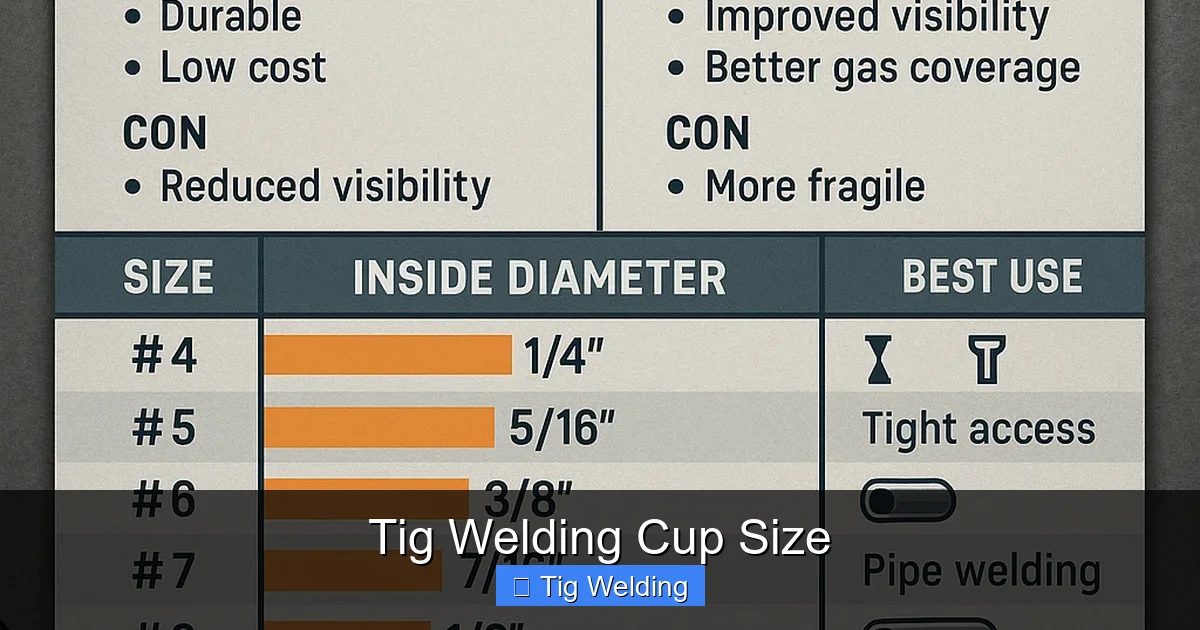
Choosing the correct TIG welding cup size is crucial for achieving high-quality welds. This guide will walk you through understanding how cup size affects gas flow, arc stability, and overall weld appearance. We’ll cover the different cup sizes, their applications, and provide practical tips for selecting the best one for your specific project, ensuring optimal shielding gas coverage and superior weld results.
Tig Welding Cup Size
Key Takeaways
- Understanding Cup Size is Essential: The size of your TIG cup directly influences the volume and pattern of shielding gas, which is vital for preventing weld contamination.
- Larger Cups Offer Better Gas Coverage: Generally, larger cups provide a wider and more consistent flow of shielding gas, ideal for open environments or when welding on larger parts.
- Smaller Cups for Precision Work: Smaller cups offer tighter gas columns, suitable for intricate work, tight spaces, and when maximum precision is required.
- Consider the Material and Thickness: The type of metal and its thickness will influence the heat input and thus the required gas coverage, impacting cup selection.
- Cup Material Matters: While ceramic is common, other materials like quartz or pyrex offer different benefits like visibility and heat resistance.
- Experimentation is Key: While guidelines exist, personal preference and specific welding situations often necessitate experimentation to find the perfect cup size.
- Proper Gas Flow Settings are Crucial: A correctly sized cup is only effective when paired with the appropriate shielding gas flow rate.
Introduction: Why Your TIG Cup Size Matters
Welcome to your comprehensive guide to TIG welding cup size! If you’re diving into the world of TIG welding, you’ve likely encountered a dazzling array of cups. You might be wondering, “Does the size of this ceramic thing really make a difference?” The short answer is: absolutely! Your TIG cup isn’t just a decorative piece; it’s a critical component that directly impacts the success of your welds.
In TIG (Tungsten Inert Gas) welding, a shielding gas, usually argon, is used to protect the molten weld pool from atmospheric contamination. This contamination can lead to porosity, weak welds, and unsightly imperfections. The TIG cup, also known as a nozzle, is responsible for directing this shielding gas over the weld area. Its size, shape, and material play a significant role in how effectively this gas protects your weld.
In this guide, we’ll demystify the world of TIG welding cup sizes. You’ll learn about how different cup sizes affect gas flow, arc stability, and the overall quality of your welds. We’ll break down the common cup sizes, their ideal applications, and provide practical tips to help you choose the perfect cup for your next project. By the end of this guide, you’ll be confident in your ability to select the right TIG cup for any welding task, ensuring cleaner, stronger, and more aesthetically pleasing welds.
Understanding the Role of the TIG Cup
Before we dive into specific sizes, let’s quickly recap what the TIG cup does. Its primary functions are:
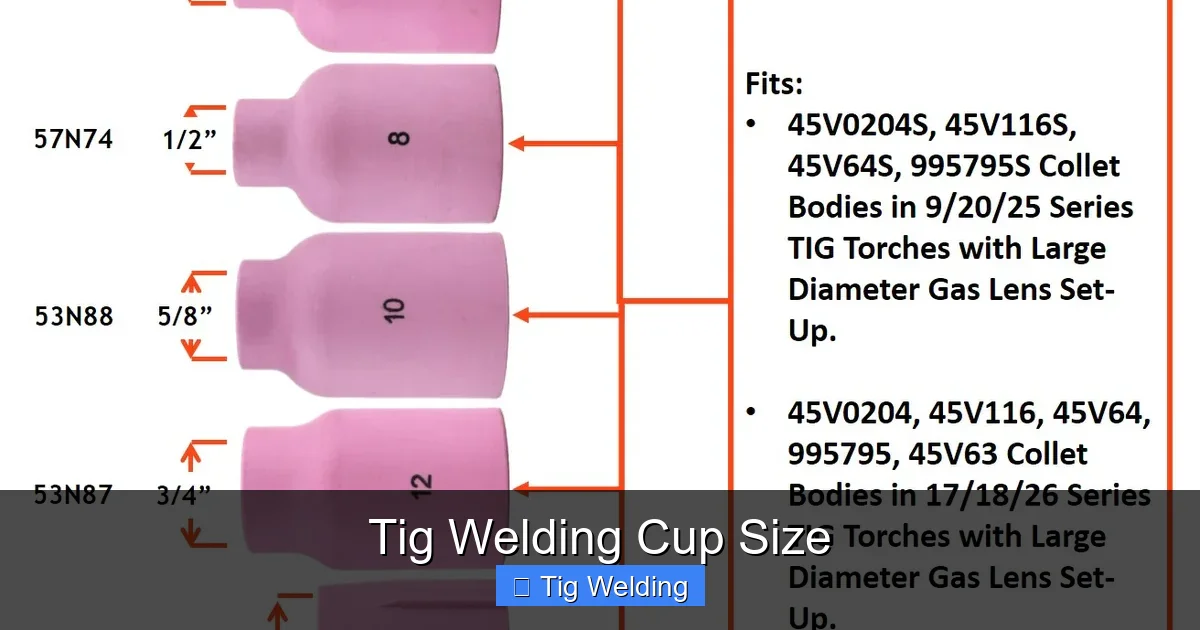
Visual guide about Tig Welding Cup Size
Image source: cdn.shopify.com
- Shielding the Weld Pool: This is its most important job. The cup directs the inert gas, pushing out oxygen and nitrogen from the weld zone.
- Stabilizing the Arc: The cup helps to contain and focus the arc, leading to a more stable and predictable welding process.
- Protecting the Tungsten Electrode: It provides a physical barrier to prevent accidental contact between the tungsten and the workpiece.
The size of the cup dictates the volume and velocity of the shielding gas. A larger cup can accommodate a higher gas flow, creating a broader and more consistent gas shield. A smaller cup, conversely, produces a more concentrated gas stream, which can be beneficial in certain situations.
Common TIG Cup Sizes and Their Applications
TIG cups are typically measured by their diameter in inches. While there’s a wide range, some sizes are more common and versatile than others. Let’s explore the most prevalent ones.
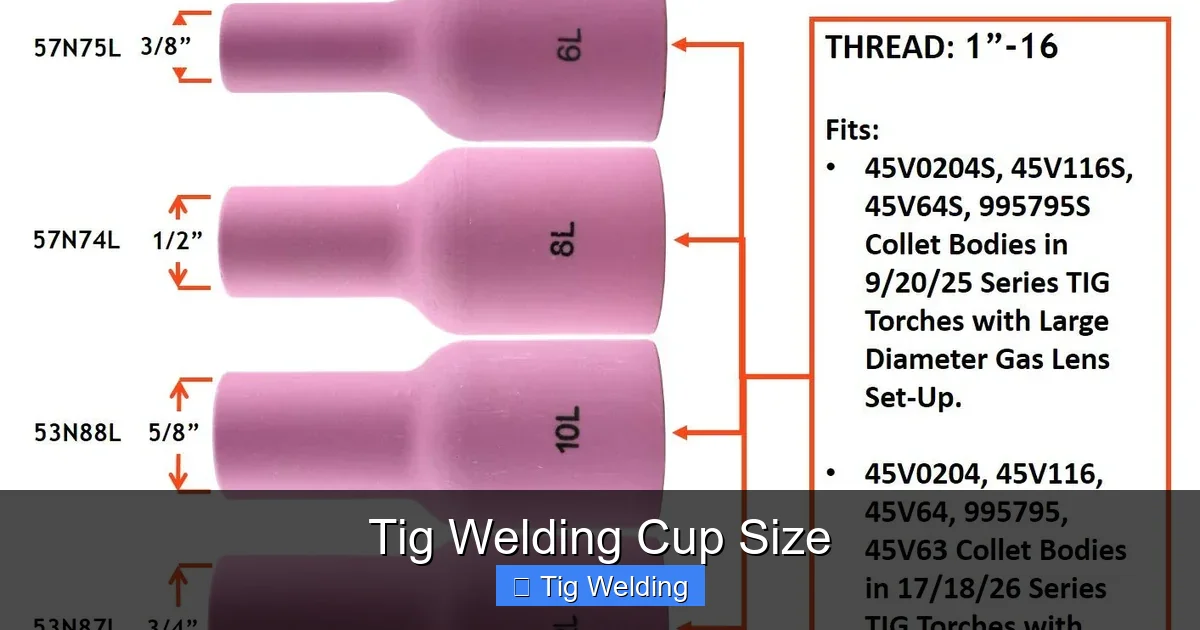
Visual guide about Tig Welding Cup Size
Image source: cdn.shopify.com
Small Cups (e.g., #4, #5, #6)
Small cups, generally ranging from a #4 (4/8 inch or 1/2 inch diameter) to a #6 (6/8 inch or 3/4 inch diameter), are excellent for detailed work and confined spaces.
- #4 Cup: This is a very small cup, often used for precision welding on delicate materials or in extremely tight spots. It provides a very focused gas stream.
- #5 Cup: A step up from the #4, the #5 cup offers a bit more gas coverage while still maintaining good control for intricate welds.
- #6 Cup: This is a popular choice for many general TIG welding applications where precision is still important, but a slightly wider shield is beneficial.
When to Use Small Cups:
- Welding thin materials (e.g., sheet metal less than 1/16 inch thick).
- Working in tight corners or hard-to-reach areas.
- Achieving intricate detail on small parts or hobby projects.
- When you need to minimize heat input and focus the arc tightly.
Example: Imagine you’re TIG welding a delicate stainless steel jewelry piece. A #4 or #5 cup would be ideal. It will provide just enough shielding gas to protect the tiny weld puddle without blowing away filler material or causing excessive heat. You’ll have excellent visibility of your arc and puddle.
Medium Cups (e.g., #7, #8)
Medium-sized cups, such as the #7 (7/8 inch diameter) and #8 (1 inch diameter), are arguably the most versatile and frequently used. They strike a good balance between gas coverage and focused shielding.
- #7 Cup: Offers a broader gas cone than the smaller cups, making it suitable for a wider range of materials and joint types.
- #8 Cup: This is a workhorse cup for many TIG welders. It provides excellent gas coverage for most general fabrication tasks on steel, aluminum, and stainless steel.
When to Use Medium Cups:
- General fabrication and repair work.
- Welding mild steel, stainless steel, and aluminum in common thicknesses (e.g., 1/8 inch to 1/4 inch).
- Fillet welds, butt welds, and lap joints.
- Situations where you need good arc stability and protection without being in an extremely confined space.
Example: You’re welding a steel frame for a bicycle. A #8 cup would be a great choice. It will provide ample shielding gas to protect your weld puddle from the air as you join the tubing, ensuring strong and clean welds. You’ll still have good control over your arc.
Large Cups (e.g., #10, #12, and larger)
Large cups, starting from #10 (10/8 inch or 1.25 inch diameter) and going up, are designed for situations requiring extensive gas coverage.
- #10 Cup: Provides a significantly wider gas shield, ideal for larger diameter pipes, thicker materials, or when welding in windy conditions.
- #12 Cup and Larger: These massive cups are used for very demanding applications, such as welding large-diameter pipes or when the highest level of gas coverage is paramount. They require higher gas flow rates.
When to Use Large Cups:
- Welding thicker materials (e.g., 1/4 inch and up).
- Joining larger diameter pipes or structural steel.
- Outdoor welding where wind can disrupt the gas shield.
- When a very wide and protective gas envelope is necessary.
Example: You’re TIG welding a thick stainless steel exhaust pipe on a custom car. Using a #10 or even a #12 cup would be beneficial. The larger cup ensures that the entire molten area, including the surrounding heat-affected zone, is blanketed by argon, preventing contamination on this critical component.
Factors Influencing Cup Size Selection
Choosing the right TIG cup size isn’t an exact science, but several factors will guide your decision. Think of these as a checklist to help you make the best choice.
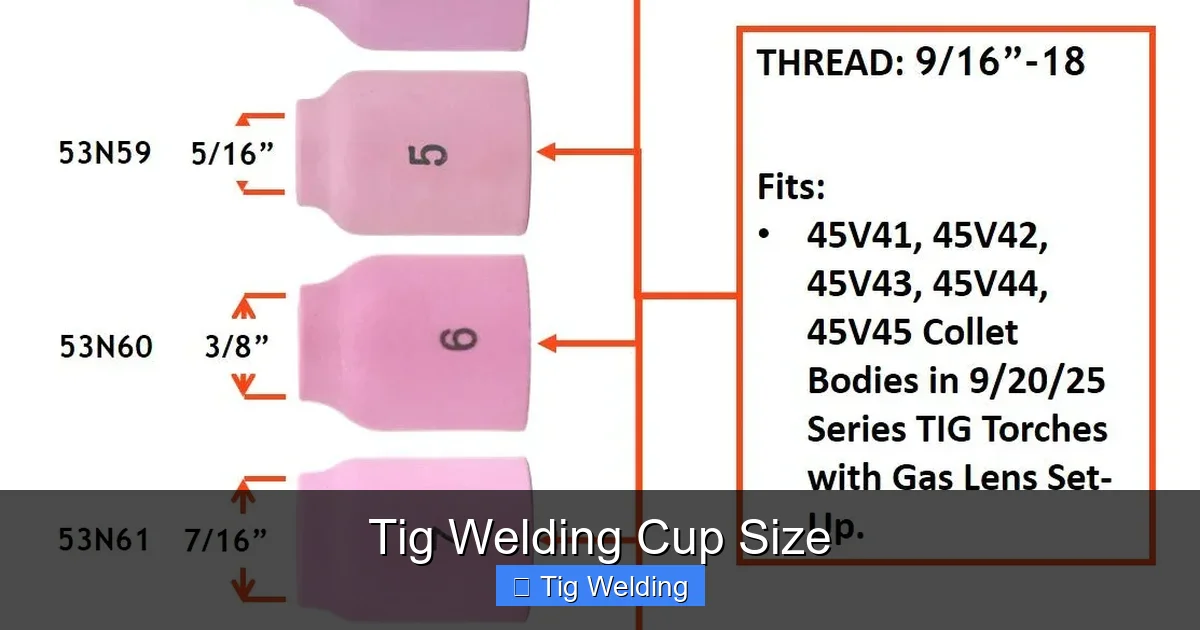
Visual guide about Tig Welding Cup Size
Image source: cdn.shopify.com
1. Material Type and Thickness
Thin Materials: For very thin metals (think 16 gauge or less), you generally want a smaller cup. This allows for more precise control of the arc and prevents the shielding gas from blowing away too much heat or filler metal.
Thick Materials: For thicker metals (1/4 inch and up), you’ll need a larger cup. Thicker materials require more heat, and a larger cup can accommodate the wider gas flow needed to protect the larger weld puddle and surrounding heat-affected zone.
Aluminum vs. Steel vs. Stainless Steel: While not a hard and fast rule, aluminum tends to be more forgiving with slightly larger cups due to its fluidity when molten. Steel and stainless steel benefit from precise shielding, especially on thinner sections.
2. Joint Type and Accessibility
Open Joints (Butt Welds): These generally allow for more flexibility. You can often use medium-sized cups.
Fillet Welds and Corner Joints: These can be tighter. A medium cup usually works well, but if the corner is very acute, you might consider a slightly smaller one.
Tubular Joints: These often require precise gas placement. Smaller to medium cups are common.
Accessibility: If you’re welding in a tight spot, like inside a chassis or between pipes, a smaller cup is often your only option. You might need specialized gas lenses and cups designed for restricted access.
3. Welding Environment
Indoors: In a controlled indoor environment with no drafts, you have more freedom. A cup size that provides adequate coverage is sufficient.
Outdoors or Windy Conditions: This is where cup size becomes critical. Wind can easily blow away your shielding gas, leading to weld contamination. In such situations, you’ll want to use a larger cup. The larger volume of gas from a larger cup can better resist the disruptive effects of wind. You might also consider using a windscreen for your TIG torch.
4. Gas Flow Rate and Gas Lens
Your shielding gas flow rate is directly tied to your cup size. A larger cup requires a higher gas flow rate to achieve effective coverage. Conversely, a smaller cup needs a lower flow rate.
Gas Lenses: These are crucial for optimizing gas coverage, especially with larger cups. A gas lens creates a laminar (smooth, non-turbulent) flow of shielding gas, which extends further and provides a more consistent blanket over the weld puddle. Using a gas lens with a properly sized cup will significantly improve your weld quality.
Rule of Thumb for Gas Flow: A common starting point for gas flow is 1-2 cubic feet per hour (CFH) for every 1/8 inch of cup diameter. For example, a #8 cup (approx. 1 inch diameter) might start at 8-16 CFH. Always consult your gas supplier or TIG welding resources for specific recommendations.
5. Arc Stability and Visibility
The cup size affects how well you can see your weld puddle and the arc. Smaller cups provide a tighter view, which can be good for detailed work. Larger cups offer a wider view but might obscure very fine details.
The way the gas flows also influences arc stability. A consistent, non-turbulent gas flow provided by a good cup and gas lens helps maintain a stable arc. An unstable arc can lead to spatter and inconsistent penetration.
Practical Tips for Choosing and Using Your TIG Cup
Now that you understand the factors, here are some actionable tips to help you get the most out of your TIG cup selection.
- Start with the “Go-To” Cups: For general TIG welding on common materials like steel and aluminum (1/8″ to 1/4″ thick), a #6, #7, or #8 cup with a gas lens is an excellent starting point. These cover a vast majority of common welding tasks.
- Invest in a Gas Lens Kit: If you don’t have one, consider purchasing a gas lens kit. They usually come with various collet bodies and screen sizes, and they dramatically improve shielding gas performance. This allows you to use your cups more effectively.
- Listen to Your Weld: Pay attention to the sound of your arc. A smooth, consistent hum usually indicates good gas coverage. A crackling or hissing sound might suggest turbulence or insufficient shielding.
- Observe Your Weld Puddle: Look at the surface of your molten puddle. Is it clean and bright? Or does it appear dull, discolored, or develop little pinholes (porosity) after solidification? Porosity is a strong indicator of inadequate gas shielding, often due to an incorrect cup size or flow rate.
- Experimentation is Your Friend: While these guidelines are helpful, every welder and every welding situation is unique. Don’t be afraid to try a slightly larger or smaller cup than recommended to see what gives you the best results. Make small adjustments to your gas flow rate as well.
- Check for Damage: Ensure your cup is clean and free from chips or cracks. Damaged cups can disrupt gas flow and lead to poor welds.
- Tungsten Stick-Out: The amount you stick your tungsten electrode out of the cup also influences gas coverage. For most applications, a stick-out of about 1/4 inch to 1/2 inch is standard. Longer stick-out can lead to contamination if the gas shield isn’t adequate, while shorter stick-out can restrict your view and cooling.
Troubleshooting Common Cup-Related Issues
Even with the best intentions, you might encounter problems. Here are a few common issues related to TIG cup size and how to address them.
Issue: Porosity in the Weld
Cause: Insufficient shielding gas. This is the most common cause of porosity.
Solutions:
- Increase Cup Size: If your current cup is too small for the weld puddle, switch to a larger one.
- Increase Gas Flow Rate: Add more shielding gas. Be careful not to overdo it, as excessive flow can cause turbulence.
- Check for Drafts: Ensure there are no air currents (wind, fans) disturbing the gas shield.
- Verify Gas Lens Function: Make sure your gas lens is properly assembled and functioning.
- Check Tungsten Stick-out: Reduce tungsten stick-out if it’s excessive.
Issue: Arc Wander or Instability
Cause: Turbulent gas flow or insufficient gas coverage.
Solutions:
- Reduce Gas Flow Rate: Too much gas can create turbulence.
- Use a Larger Cup: A larger cup can help to stabilize the gas flow.
- Ensure Proper Gas Lens Use: A gas lens promotes laminar flow.
- Check for Damaged Cup: A chipped or cracked cup can disrupt gas flow.
Issue: Poor Weld Appearance (Discoloration, Rough Surface)
Cause: Inadequate shielding gas, leading to oxidation.
Solutions:
- Increase Cup Size or Gas Flow: Ensure the entire molten puddle and heat-affected zone are covered.
- Clean Your Base Metal Thoroughly: Contamination on the base metal can also cause discoloration.
- Use a Gas Lens: For a cleaner, more consistent shield.
Conclusion: Mastering Your TIG Cup for Superior Welds
You’ve now journeyed through the essential aspects of TIG welding cup size. From understanding its fundamental role in shielding your weld to exploring the nuances of different sizes and their applications, you’re well-equipped to make informed decisions.
Remember, the correct TIG cup size is a cornerstone of achieving high-quality welds. It’s not just about picking a number; it’s about understanding how that size interacts with your material, your joint, your environment, and your gas delivery system. By considering the material thickness, accessibility, potential drafts, and the benefits of a gas lens, you can move beyond guesswork and confidently select the optimal cup for your task.
Don’t be afraid to experiment. Your eyes, ears, and the resulting welds are your best teachers. Practice with different cup sizes, adjust your gas flow, and observe the results. With each weld, you’ll hone your intuition and develop a deeper mastery of TIG welding. So, go forth, choose wisely, and weld with confidence!
