

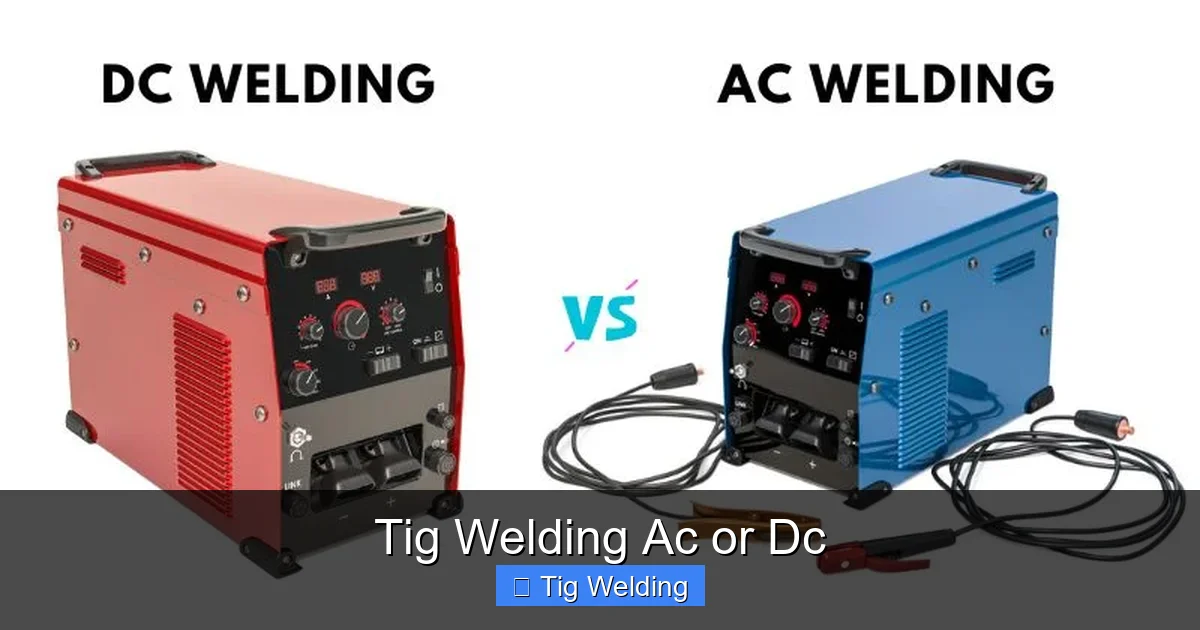
Choosing between AC and DC is crucial for successful TIG welding. This guide breaks down the differences between AC and DC welding currents, explaining which to use for which metal and application. Learn how to optimize your TIG welder settings for aluminum, steel, stainless steel, and more. Mastering AC/DC selection leads to stronger, cleaner, and more efficient welds.
Tig Welding Ac or Dc
Welcome to the world of TIG welding! If you’re looking to create beautiful, strong, and precise welds, you’ve come to the right place. One of the most fundamental decisions you’ll make when TIG welding is whether to use AC or DC current. It might seem confusing at first, but understanding the differences will significantly improve your welding results. This guide will demystify AC and DC TIG welding, helping you confidently choose the right setting for any project.
You’ll learn what AC and DC current mean in the context of TIG welding, why they affect your welds differently, and most importantly, how to select the correct one for various metals. We’ll dive into the specifics of aluminum, steel, stainless steel, and more. Get ready to elevate your TIG welding game!
Key Takeaways
- AC (Alternating Current): Ideal for non-ferrous metals like aluminum and magnesium, providing cleaning action to break through the oxide layer.
- DC (Direct Current): Best suited for ferrous metals like steel, stainless steel, and titanium, offering deeper penetration and a narrower arc.
- DCEN (Direct Current Electrode Negative/Straight Polarity): Most common for steel and stainless steel, providing excellent penetration.
- DCEP (Direct Current Electrode Positive/Reverse Polarity): Less common in TIG, often used for specific applications like spot welding or thinner materials where heat input needs to be minimized.
- Understanding the Metal: The type of metal you’re welding is the primary factor in deciding between AC and DC.
- Penetration vs. Cleaning: AC prioritizes cleaning, while DC prioritizes penetration.
- Machine Settings Matter: Always consult your TIG welder’s manual for specific AC/DC settings and recommendations.
Understanding TIG Welding Current Types
TIG welding, also known as Gas Tungsten Arc Welding (GTAW), uses a non-consumable tungsten electrode to create the arc. The heat from this arc melts the base metal and any filler rod you might be using. The type of electrical current flowing through the arc is what differentiates AC and DC TIG welding.
What is AC (Alternating Current) Welding?
AC current constantly reverses its direction. In TIG welding, this means the electron flow switches back and forth between the electrode and the workpiece. Think of it like a seesaw – the current flows one way, then the other.
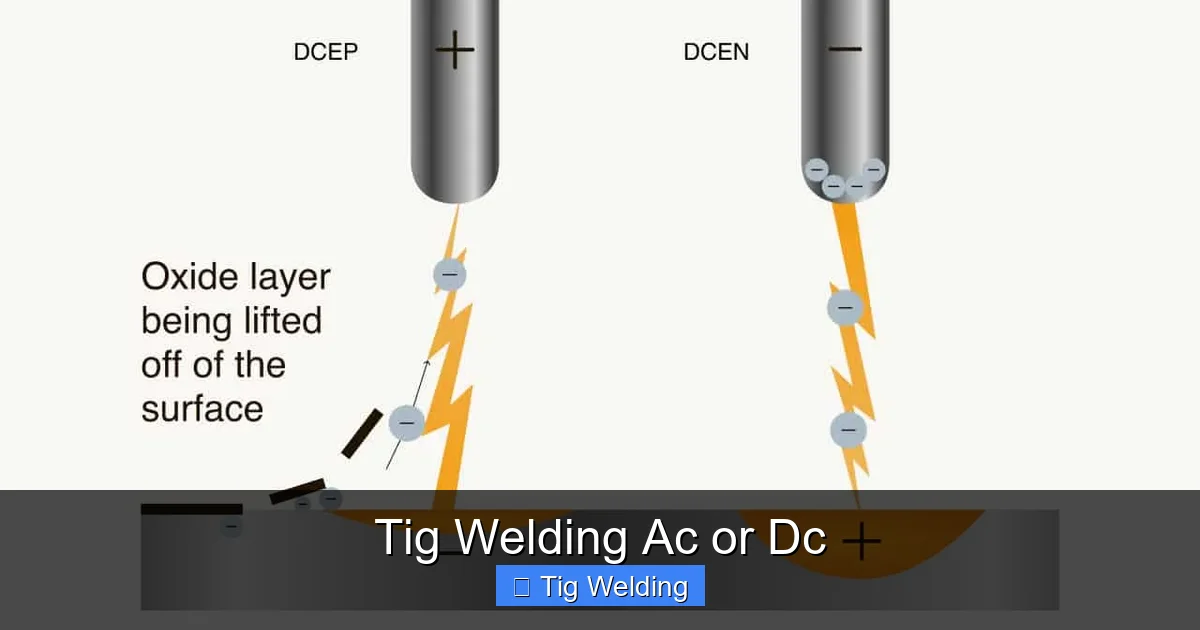
The key benefit of AC welding is its “cleaning action.” Aluminum and magnesium, for example, develop a tough, invisible oxide layer on their surface. This layer has a much higher melting point than the base metal itself. Without proper cleaning, this oxide layer can contaminate your weld puddle, leading to porosity and weak joints. AC current’s alternating nature helps to break down this oxide layer as it welds, allowing for a cleaner, more fluid weld puddle.
However, AC current can also lead to less focused penetration compared to DC. The constant switching means less consistent heat directed into the workpiece, which can be a disadvantage when you need deep, concentrated heat.
What is DC (Direct Current) Welding?
DC current flows in only one direction. In TIG welding, this means the electron flow is consistently from one point to another – either from the electrode to the workpiece or vice-versa.
DC welding is generally known for providing deeper and more concentrated penetration. This is because the arc is more stable and focused. It’s the preferred choice for metals that don’t have a challenging oxide layer to contend with, or where deep penetration is critical for structural integrity.
There are two main configurations for DC TIG welding:
DCEN (Direct Current Electrode Negative)
Also known as straight polarity, DCEN is the most common DC TIG welding setup. In this configuration, the tungsten electrode is negative, and the workpiece is positive. This directs the majority of the heat (about two-thirds) into the workpiece, resulting in excellent penetration. It’s the go-to for welding steel, stainless steel, and titanium.
Think of it this way: The negative electrode is where the electrons originate, and they are attracted to the positive workpiece. This flow creates a powerful, focused arc that digs into the metal.
DCEP (Direct Current Electrode Positive)
Also known as reverse polarity, DCEP is less common in standard TIG welding. Here, the tungsten electrode is positive, and the workpiece is negative. This sends most of the heat back to the electrode, which can cause it to overheat and contaminate the weld. DCEP is sometimes used for specific applications like spot welding or joining very thin materials where you want to minimize heat input into the base metal and prioritize a broader, less penetrating arc.
In summary: For most TIG welding applications, you’ll be choosing between AC or DCEN. DCEP is a niche setting.
When to Use AC TIG Welding
AC is your primary choice when welding non-ferrous metals that are prone to forming a tenacious oxide layer. The most common examples are:
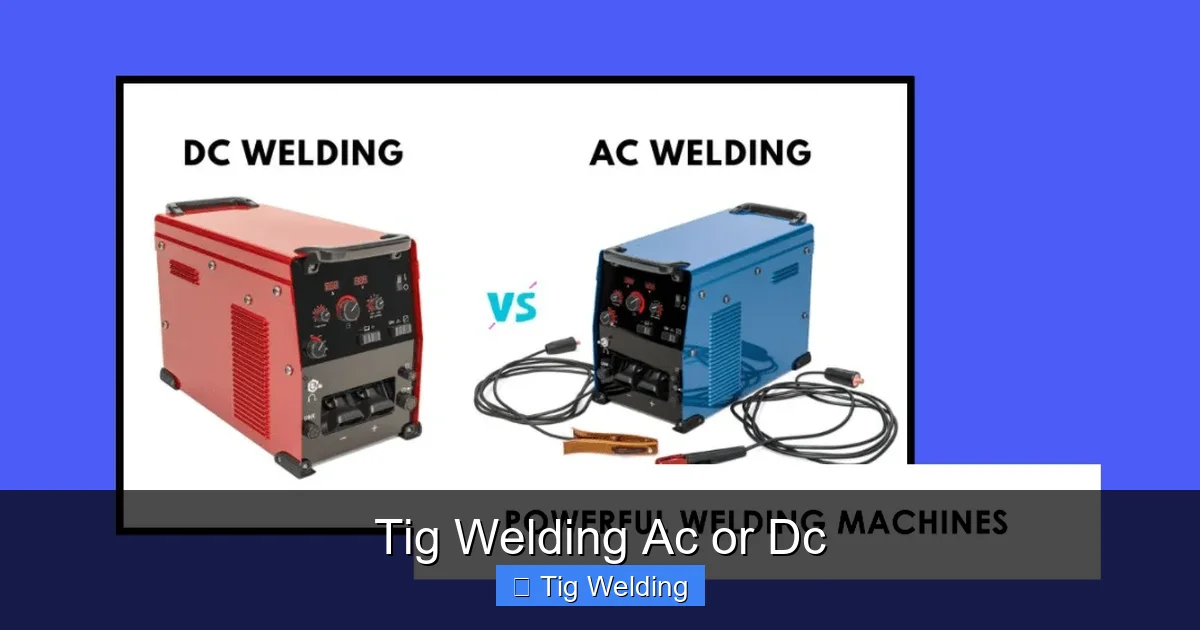
Visual guide about Tig Welding Ac or Dc
Image source: welding-world-awards.com
Aluminum
Aluminum is the undisputed king of AC TIG welding. Its oxide layer, aluminum oxide (Al₂O₃), is incredibly hard and has a melting point around 3700°F (2037°C), while aluminum itself melts at around 1220°F (660°C). If you try to weld aluminum with DC, that oxide layer will likely end up in your weld, causing inclusions and defects. AC’s cleaning action breaks down this layer, allowing you to achieve clean, strong welds.
Practical Tip: When welding aluminum with AC, you’ll notice the arc “wobbles” or dances. This is the cleaning action at work. You’ll also often see a slight “frothing” or bubbling around the puddle – this is the oxide layer being vaporized. Adjust your amperage and travel speed to manage this.
Magnesium
Similar to aluminum, magnesium also forms a tough oxide layer. AC TIG welding is the best method for joining magnesium alloys.
Other Non-Ferrous Metals
While less common, AC can also be used for certain other non-ferrous metals that exhibit similar oxide layer challenges.
When to Use DC TIG Welding
DC welding, particularly DCEN, is the workhorse for most other metals. Its ability to deliver deep, focused penetration makes it ideal for structural applications and materials where the oxide layer isn’t a major concern.
Visual guide about Tig Welding Ac or Dc
Image source: weldguru.com
Steel (Mild Steel and Carbon Steel)
Steel is a prime candidate for DCEN TIG welding. You’ll achieve excellent penetration, leading to strong, reliable joints. Whether you’re fabricating exhaust systems, building roll cages, or working on general repairs, DCEN is your go-to for steel.
Practical Tip: For thinner gauge steel, you’ll need to be mindful of heat input to avoid burn-through. Lower your amperage and move quickly. For thicker sections, you can increase amperage and ensure you have sufficient joint preparation (like beveling).
Stainless Steel
Stainless steel also welds beautifully with DCEN. You’ll get deep penetration and a clean bead. Stainless steel does have an oxide layer, but it’s not as problematic as aluminum’s and is easily managed by DCEN’s arc.
Practical Tip: Stainless steel is more prone to warping than mild steel due to its lower thermal conductivity. Use minimal heat input, consider using copper backing bars to help dissipate heat, and tack your pieces generously before welding the full seam.
Titanium
Titanium requires a clean weld environment to prevent contamination, and DCEN TIG welding provides the necessary penetration and focus. However, titanium is also very sensitive to contamination from oxygen and nitrogen, which can make it brittle. Proper shielding gas (argon is standard, sometimes with helium) and cleanliness are paramount.
Copper and Brass
While often joined with other methods, TIG welding is possible for copper and brass. DCEN is typically used, often with filler metals specifically designed for these alloys. These metals are excellent heat conductors, so you’ll need higher amperages and potentially a higher flow rate of shielding gas to compensate.
Optimizing Your TIG Welder Settings
Once you’ve decided on AC or DC, there are several other settings on your TIG welder that influence your weld quality.
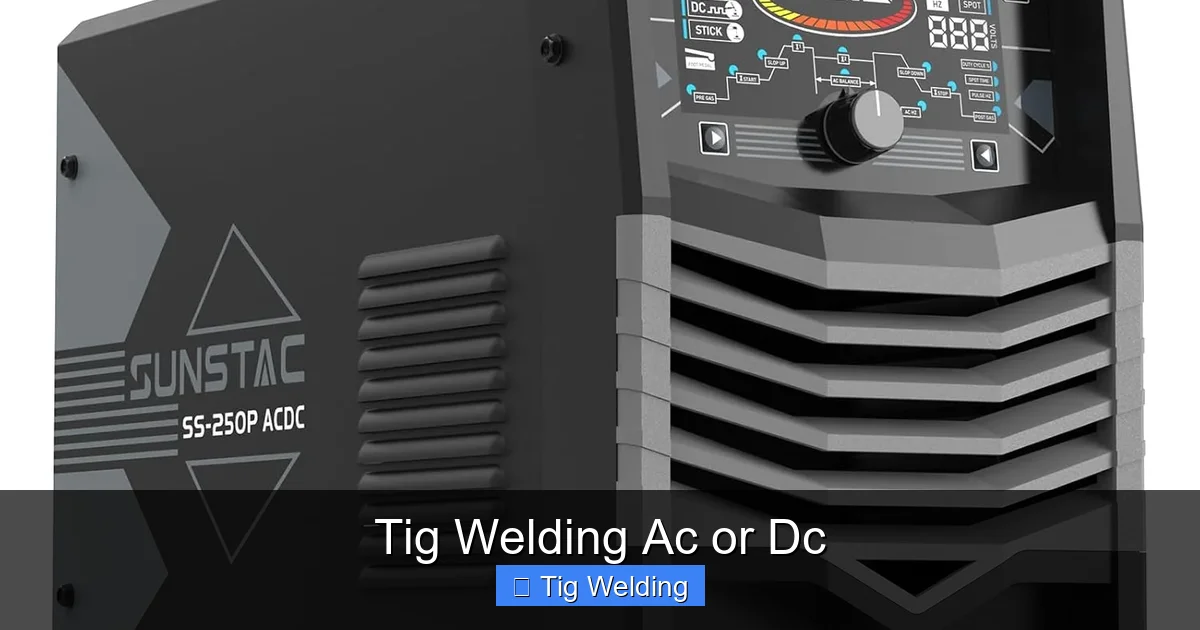
Visual guide about Tig Welding Ac or Dc
Image source: m.media-amazon.com
Amperage
This is the primary control for heat input.
- Too low: You won’t melt the base metal effectively, leading to a weak, cold weld.
- Too high: You risk burning through the material, creating excessive spatter, or damaging your tungsten electrode.
A general rule of thumb for steel is around 1 amp per thousandth of an inch of material thickness, but this is just a starting point and varies with the specific alloy and joint type.
Frequency (for AC)
Many modern AC TIG welders allow you to adjust the AC frequency.
- Higher frequency (e.g., 100-200 Hz): Creates a more focused, narrower arc. This can provide better directional control and a more intense puddle, ideal for precise work.
- Lower frequency (e.g., 50-60 Hz): Results in a wider, softer arc. This can be useful for broader coverage or when you want a bit more cleaning action.
Experiment to find what works best for your application.
Balance (for AC)
Balance, also called AC balance or negative balance, controls the ratio of electrode negative (EN) time to electrode positive (EP) time within a single AC cycle. It’s often expressed as a percentage of EN.
- Higher EN % (e.g., 70-80% EN): More cleaning action on the workpiece, less heat on the tungsten. This is good for thicker aluminum or when you need more penetration and cleaning.
- Lower EN % (e.g., 50-60% EN): More heat on the tungsten, less aggressive cleaning. This is useful for thinner aluminum or when you need more control over the puddle and less aggressive cleaning.
Improper balance can lead to tungsten contamination or excessive electrode wear. For aluminum, a balance around 70% electrode negative is a good starting point.
Pulse (for AC and DC)
Pulsing the arc involves rapidly switching the amperage between a high peak setting and a lower background setting.
- Benefits: Reduces overall heat input, allowing for better control on thin materials, reducing distortion, and helping to achieve a more consistent bead appearance. It can also aid puddle freezing on out-of-position welds.
Pulse settings include peak amperage, background amperage, pulse frequency (pulses per second), and pulse width (percentage of time at peak amperage). Experimentation is key here.
Gas Flow Rate
Proper shielding gas is critical for both AC and DC TIG welding. Argon is the standard for TIG.
- Too low: Inadequate shielding, leading to weld contamination, porosity, and a weak weld.
- Too high: Can cause turbulence in the gas shield, drawing in atmospheric contaminants and creating porosity. It also wastes gas.
A good starting point for argon on steel and aluminum is around 15-25 CFH (Cubic Feet per Hour), depending on your nozzle size and ambient conditions. Always use a flowmeter and regulator on your gas cylinder.
Tungsten Electrode Type and Size
The type and diameter of your tungsten electrode also matter.
- Pure tungsten (green band): Historically used for AC, but less common now due to poor arc stability and electrode consumption.
- Thoriated tungsten (red band): Good all-around for DC, but thoriated tungsten contains radioactive thorium, so handle with care.
- Ceriated tungsten (orange band): Excellent for DC, and good for AC on lower amperages. Non-radioactive.
- Lanthanated tungsten (blue or gold band): Versatile, performs well on both AC and DC across a wide range of amperages. Often considered the best all-around choice.
Electrode diameter should be matched to the amperage range. Smaller diameters for lower amperages, larger diameters for higher amperages.
Troubleshooting Common AC/DC TIG Welding Issues
Even with the right settings, you might encounter problems. Here are a few common ones:
Porosity (Gas Pockets in the Weld)
Causes:
- Insufficient shielding gas (low flow, leaks, wind).
- Contaminated base metal or filler rod.
- Dirty tungsten electrode.
- Incorrect AC balance or frequency leading to poor oxide removal.
Solutions:
- Check gas flow and connections.
- Clean base metal thoroughly (grinding, degreasing).
- Keep filler rod clean.
- Ensure tungsten is clean and properly shaped (balled for AC, pointed for DC).
- Adjust AC balance and frequency.
Lack of Fusion or Penetration
Causes:
- Insufficient amperage.
- Arc length too long.
- Incorrect DC polarity (e.g., using DCEP instead of DCEN for steel).
- Poor joint preparation.
Solutions:
- Increase amperage.
- Maintain a consistent, short arc length.
- Verify correct polarity (DCEN for steel).
- Ensure joints are clean and properly fitted.
Tungsten Contamination (Tungsten Inclusions in the Weld)
Causes:
- Arcing the tungsten to the weld puddle or filler rod.
- Incorrect AC balance or frequency (too much EP on the tungsten).
- Overheating the tungsten.
- Filler rod touching the tungsten.
Solutions:
- Maintain a consistent arc length.
- Keep filler rod slightly away from the tungsten.
- Adjust AC balance to favor electrode negative.
- Ensure tungsten is properly sharpened (DC) or balled (AC).
- Use appropriate amperage for the tungsten size.
Arc Instability or Wander
Causes:
- Dirty tungsten.
- Insufficient shielding gas.
- Incorrect AC balance.
Solutions:
- Clean or replace tungsten.
- Verify gas flow.
- Adjust AC balance.
Conclusion
Choosing between AC and DC TIG welding is a critical skill that directly impacts the quality and integrity of your welds. Remember, AC is your ally for aluminum and magnesium, providing essential cleaning action. DCEN is your reliable partner for steel, stainless steel, and titanium, delivering the penetration you need for strong joints.
By understanding the fundamental differences between these current types and how they interact with various metals, you’re well on your way to mastering TIG welding. Don’t be afraid to experiment with your welder’s settings, practice on scrap material, and always prioritize safety. With practice and this knowledge, you’ll be producing clean, strong, and aesthetically pleasing TIG welds in no time!
