
Understanding TIG welding AC balance is essential for achieving high-quality welds, especially on aluminum and other reactive metals. In this article, we explore what AC balance is, how to adjust it, and practical tips to optimize your TIG welding process for better results.
Key Takeaways
- AC Balance Definition: AC balance controls the ratio of cleaning (oxidation removal) to penetration during TIG welding on AC current.
- Importance: Proper AC balance improves weld quality, especially on aluminum, by balancing cleaning and penetration.
- Adjustments: Most TIG welders allow you to adjust the AC balance to suit specific welding needs.
- Optimal Settings: Typically, a balance of 60-70% cleaning (electrode positive) works well for most applications.
- Effects of Improper Balance: Too much cleaning can cause oxidation, while too little can lead to poor cleaning and weld defects.
- Practical Tips: Experiment with settings, monitor weld quality, and adjust based on the material and thickness.
Quick Answers to Common Questions
Question 1?
What is AC balance in TIG welding?
AC balance controls the ratio of cleaning (electrode positive) to penetration (electrode negative) during AC TIG welding, affecting weld quality and surface cleanliness.
Question 2?
Why is adjusting AC balance important?
It helps optimize weld cleanliness and penetration, reducing defects like porosity or oxidation, especially on aluminum and reactive metals.
Question 3?
What is a typical AC balance setting for aluminum TIG welding?
Most welders start around 60-70% cleaning (EP), but it can be adjusted based on material thickness and welding conditions.
Question 4?
How do I know if my AC balance is set correctly?
Inspect your weld for cleanliness, porosity, and penetration. Fine-tune the balance based on these observations for optimal results.
Question 5?
Can adjusting AC balance improve weld appearance?
Yes, a proper balance results in cleaner, smoother, and more visually appealing welds, especially on aluminum surfaces.
📑 Table of Contents
- Introduction to TIG Welding AC Balance
- What Is AC Balance in TIG Welding?
- How to Adjust AC Balance on Your TIG Welder
- Factors Influencing Optimal AC Balance Settings
- Practical Tips for Using AC Balance Effectively
- Common Mistakes and How to Avoid Them
- Conclusion: Mastering AC Balance for Better TIG Welding
Introduction to TIG Welding AC Balance
If you’ve ever dabbled in TIG welding, especially on aluminum or other reactive metals, you’ve probably come across the term “AC balance.” But what exactly is it, and why does it matter? Understanding AC balance is key to improving your weld quality and making your welding process smoother and more consistent.
TIG (Tungsten Inert Gas) welding on AC current involves a delicate balance between cleaning the metal surface and penetrating the material. Too much or too little of either can lead to weld defects, poor appearance, or structural weaknesses. In this article, we’ll explore everything you need to know about TIG welding AC balance, including how to set it, why it matters, and practical tips to get the best results.
What Is AC Balance in TIG Welding?
Definition and Basic Concept
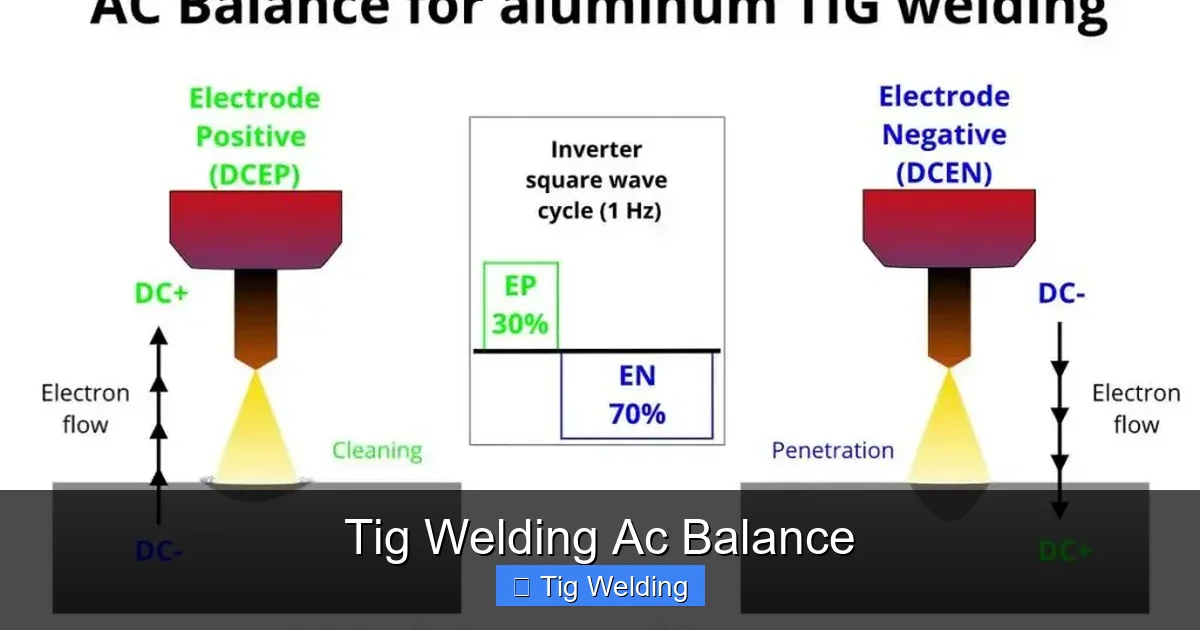
AC balance refers to the proportion of time the electrical current spends in the electrode positive (EP) and electrode negative (EN) modes during AC TIG welding. In simpler terms, it controls how much of the welding cycle is dedicated to cleaning the metal surface versus penetrating the material.
Visual guide about Tig Welding Ac Balance
Image source: weldguru.com
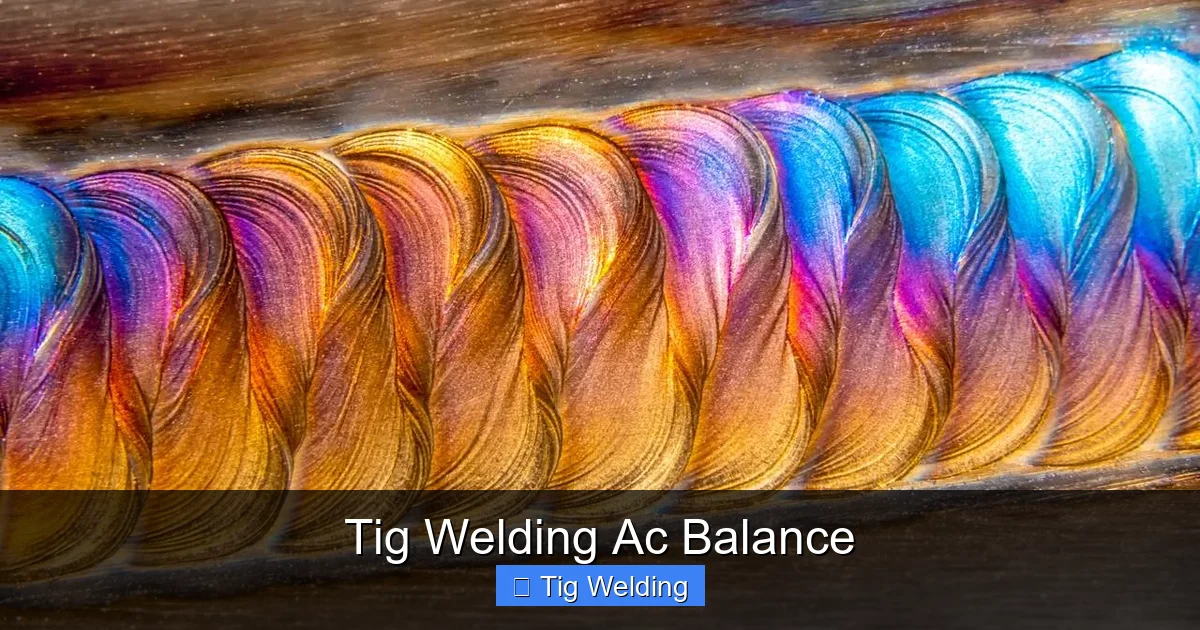
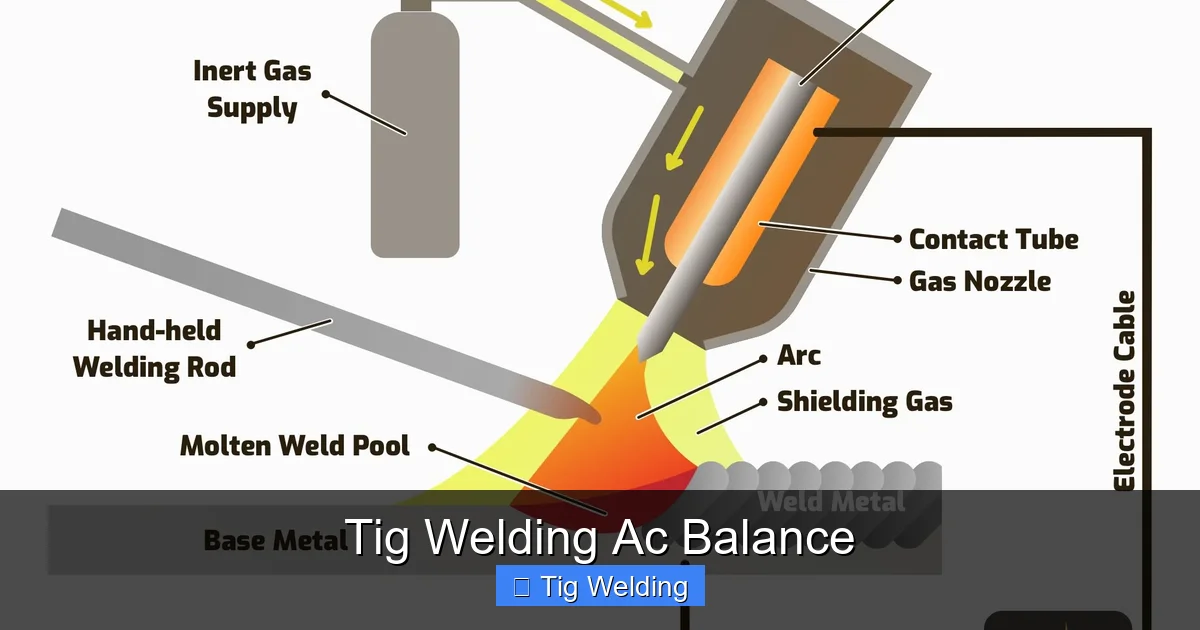
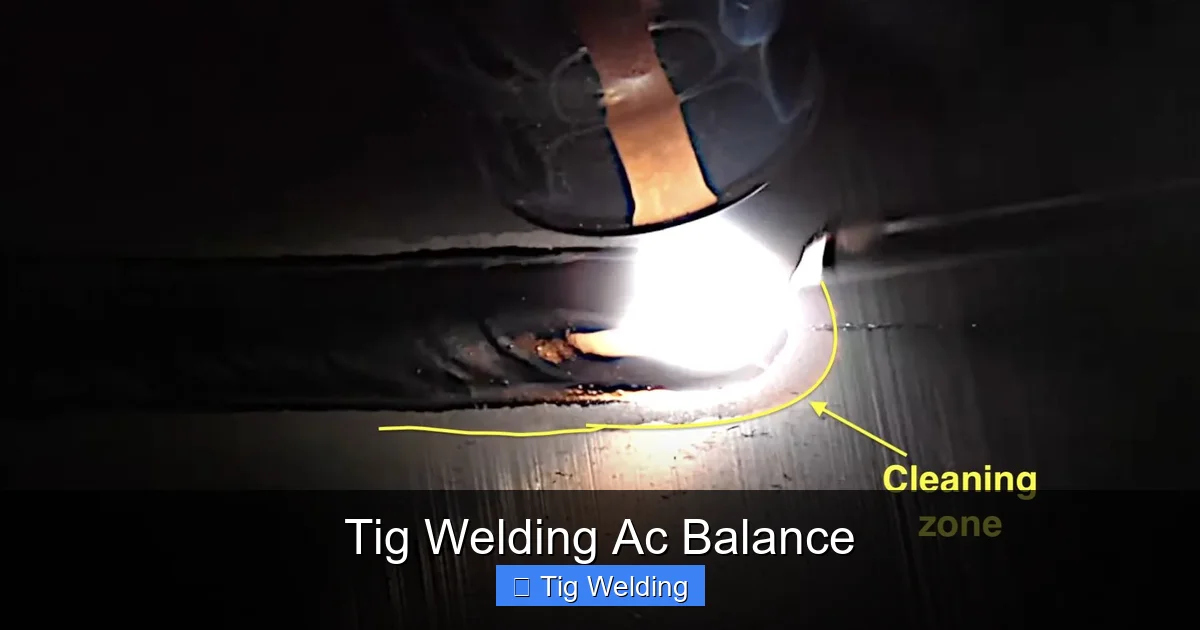
In AC TIG welding, the current alternates between EP and EN. The electrode positive phase produces a cleaning action, removing oxides like aluminum oxide. The electrode negative phase provides heat for penetration and fusion. Adjusting the AC balance shifts the cycle towards more cleaning or more penetration.
Why Is AC Balance Important?
The right AC balance ensures that the weld surface is properly cleaned while maintaining sufficient penetration for a strong weld. If you set it too high (more cleaning), you might remove oxides but risk oxidation and weak welds. If it’s too low (less cleaning), oxides may remain, leading to porosity and weak joints.
Proper AC balance also affects arc stability, weld appearance, and overall process efficiency. Mastering this setting helps achieve cleaner, stronger, and more visually appealing welds, especially on aluminum and magnesium.
How to Adjust AC Balance on Your TIG Welder
Locating the AC Balance Control
Most modern TIG welders have a dedicated dial or digital setting for AC balance. It might be labeled as “Balance,” “Electrode Positive/Negative,” or shown as a percentage. Usually, the default setting is around 50%, meaning equal time in EP and EN modes.
Visual guide about Tig Welding Ac Balance
Image source: weldguru.com
Refer to your welder’s user manual to locate and understand how to adjust this control properly.
Understanding the Settings Range
Typically, AC balance can be adjusted from about 20% to 80%. A lower percentage means less cleaning and more penetration, while a higher percentage emphasizes cleaning. The optimal setting depends on the material, thickness, and specific welding conditions.
For aluminum, a common starting point is around 60-70% cleaning (EP), but this can be fine-tuned as needed.
Practical Steps to Adjust AC Balance
- Start with a middle-range setting like 50-60%.
- Perform a test weld on a scrap piece similar to your workpiece.
- Inspect the weld for cleanliness, penetration, and appearance.
- Adjust the balance slightly—higher for more cleaning, lower for more penetration.
- Repeat until you find the optimal balance for your project.
Factors Influencing Optimal AC Balance Settings
Material Type and Thickness
Aluminum is the most common material welded with AC TIG. Thicker aluminum may require more penetration, so a lower AC balance (more EN) could be beneficial. Conversely, thinner materials or those requiring a cleaner surface benefit from higher AC balance settings.
Visual guide about Tig Welding Ac Balance
Image source: weldingtipsandtricks.com
Welding Position and Technique
Vertical or overhead welding may need different settings compared to flat position. Consistent technique and proper torch angle also influence how you should set your AC balance.
Welding Environment
Variables like shielding gas purity, amperage, and torch condition can impact arc stability and cleaning action. Adjust the AC balance accordingly for best results amid these conditions.
Practical Tips for Using AC Balance Effectively
- Experiment: Always test different settings on scrap before working on your actual project.
- Observe: Look for signs of oxidation, porosity, or poor fusion to determine if your balance needs adjustment.
- Maintain Cleanliness: Keep your tungsten tip and shielding gas clean for stable arc and better control.
- Adjust Gradually: Small changes in AC balance can significantly affect weld quality.
- Combine with Other Settings: Balance works best when paired with correct amperage, gas flow, and torch angle.
Common Mistakes and How to Avoid Them
- Using Too Much Cleaning: Excessively high AC balance can cause oxidation and weak welds. Stick to recommended ranges like 60-70% for aluminum.
- Too Little Cleaning: Low AC balance may leave oxides behind, leading to porosity. Ensure adequate cleaning action for a smooth weld.
- Ignoring Material Specifics: Different materials and thicknesses require different settings. Adjust accordingly.
- Neglecting Equipment Calibration: Ensure your welder’s settings are accurate and functioning properly for consistent results.
Conclusion: Mastering AC Balance for Better TIG Welding
In TIG welding, especially on aluminum, AC balance is a powerful yet often overlooked tool. By understanding how it works and how to adjust it, you can significantly improve your weld quality, appearance, and strength. Remember, the key is to experiment, observe, and fine-tune your settings based on your specific project needs.
With practice and attention to detail, mastering AC balance will become an essential part of your welding skillset, helping you produce cleaner, more reliable welds every time.
Frequently Asked Questions
What happens if I set the AC balance too high?
Setting the AC balance too high emphasizes cleaning action, which can lead to oxidation and weak welds. It’s best to stay within the recommended range for your material.
How does material thickness affect AC balance adjustment?
Thicker materials often require more penetration, so a lower AC balance (more EN) is suitable. Thinner materials benefit from higher cleaning (more EP) for a clean surface.
Is AC balance adjustable on all TIG welders?
No, some older or basic models may lack this feature. However, most modern TIG welders include an AC balance control for fine-tuning.
Can I adjust AC balance while welding?
Yes, many welders allow real-time adjustments, which is useful for optimizing the weld as conditions change.
Does AC balance affect arc stability?
Yes, incorrect settings can cause unstable arcs. Proper adjustment ensures a stable arc and better weld quality.
What is the best way to learn the right AC balance for my project?
Start with manufacturer recommendations, perform test welds, and observe the results. Adjust gradually until you achieve the desired weld quality.
