
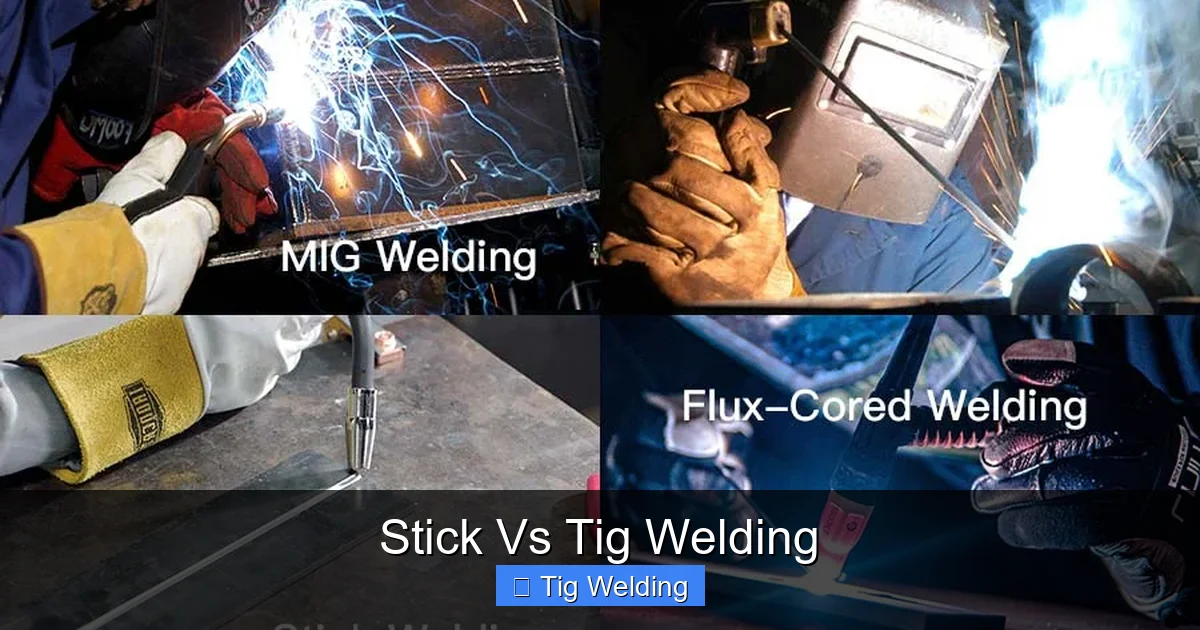
Stick welding and TIG welding are two popular methods with distinct advantages and challenges. Understanding their differences helps you choose the right technique for your welding projects, whether you’re a beginner or a professional.
Key Takeaways
- Ease of Use: Stick welding is more forgiving for beginners, while TIG requires more skill and precision.
- Quality of Welds: TIG welding produces cleaner, more precise welds compared to stick welding.
- Portability: Stick welders are generally more portable and easier to set up in the field.
- Material Compatibility: TIG welding is versatile with various metals, including aluminum and stainless steel, with greater control.
- Cost: Stick welding equipment is typically cheaper upfront, but TIG offers better quality for critical projects.
- Application Suitability: Stick welding is ideal for outdoor, heavy-duty jobs; TIG is preferred for precision work and thin materials.
Quick Answers to Common Questions
Question 1?
What is the main difference between stick and TIG welding?
The main difference lies in technique and quality; stick welding is simpler, more rugged, and better for heavy-duty work, while TIG welding offers higher precision and cleaner welds.
Question 2?
Which welding method is easier for beginners?
Stick welding is generally easier for beginners because it requires less skill and setup compared to TIG welding.
Question 3?
Can I weld thin metals with stick welding?
While possible, stick welding is less ideal for thin metals; TIG welding provides more control and produces cleaner, precise welds on thin materials.
Question 4?
Which welding method is better for outdoor projects?
Stick welding is better suited for outdoor projects due to its ability to handle wind, dirt, and rust better than TIG welding.
Question 5?
Is TIG welding more expensive than stick welding?
Yes, TIG welding equipment and consumables tend to be more expensive, but it provides higher-quality welds suitable for critical applications.
📑 Table of Contents
Introduction
Welding is a fundamental skill in metalworking, construction, and manufacturing. Among the many techniques, stick welding and TIG welding are two of the most common methods. Each has its unique strengths, challenges, and ideal applications. Whether you’re a DIY enthusiast or a seasoned professional, understanding the differences between stick vs TIG welding can help you make better choices for your projects.
Choosing the right welding method depends on various factors like the type of material, working environment, desired weld quality, and budget. This guide will dive deep into the differences between stick and TIG welding, helping you understand which technique is best suited for your needs.
What is Stick Welding?
Overview of Stick Welding
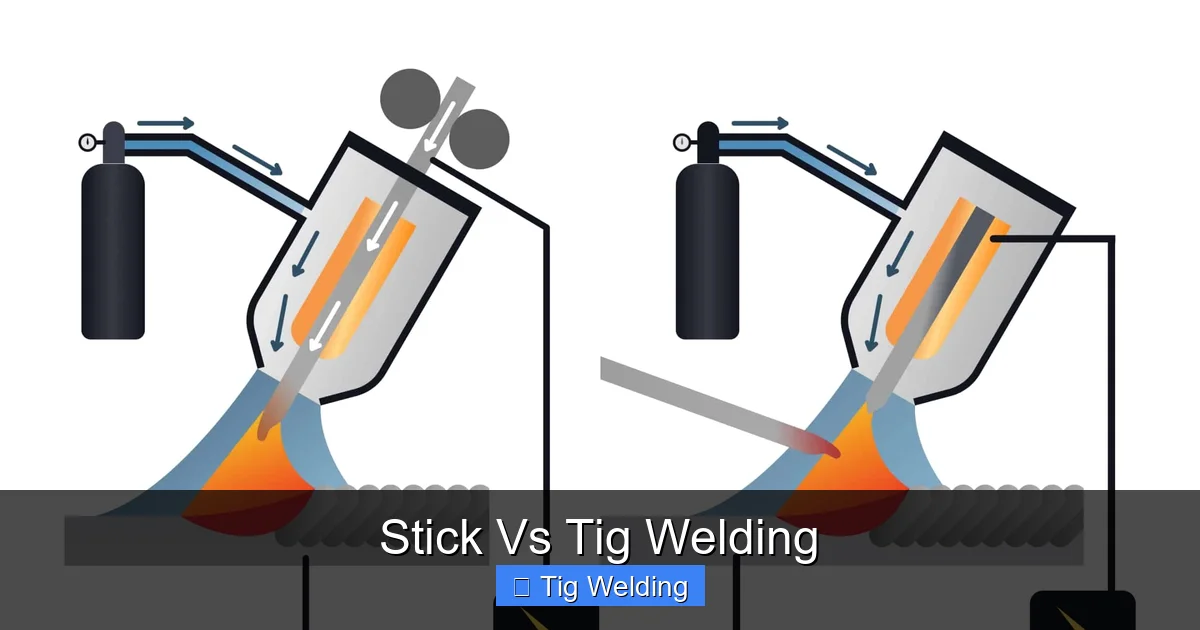
Stick welding, also known as Shielded Metal Arc Welding (SMAW), is one of the oldest and most straightforward welding methods. It uses a consumable electrode coated with flux, which melts to create the weld. The process involves striking an arc between the electrode and the metal workpiece, melting the electrode and the base metal to form a strong bond.
Visual guide about Stick Vs Tig Welding
Image source: makemoneywelding.com
This method is popular because of its simplicity, portability, and ability to work in various environments, including outdoors and on rusty or dirty metals.
Advantages of Stick Welding
- Cost-Effective: Equipment and consumables tend to be inexpensive.
- Portability: Easy to carry and set up anywhere, making it suitable for fieldwork.
- Versatility: Works well on different metals and thick materials.
- Good for Outdoor Use: Less affected by wind and dirt compared to other methods.
Disadvantages of Stick Welding
- Lower Quality Finish: The welds are often rough and require cleanup.
- Skill Level: Requires practice to master the technique.
- Speed: Generally slower than TIG welding for precise work.
- Limited Precision: Not ideal for delicate or thin materials.
What is TIG Welding?
Overview of TIG Welding
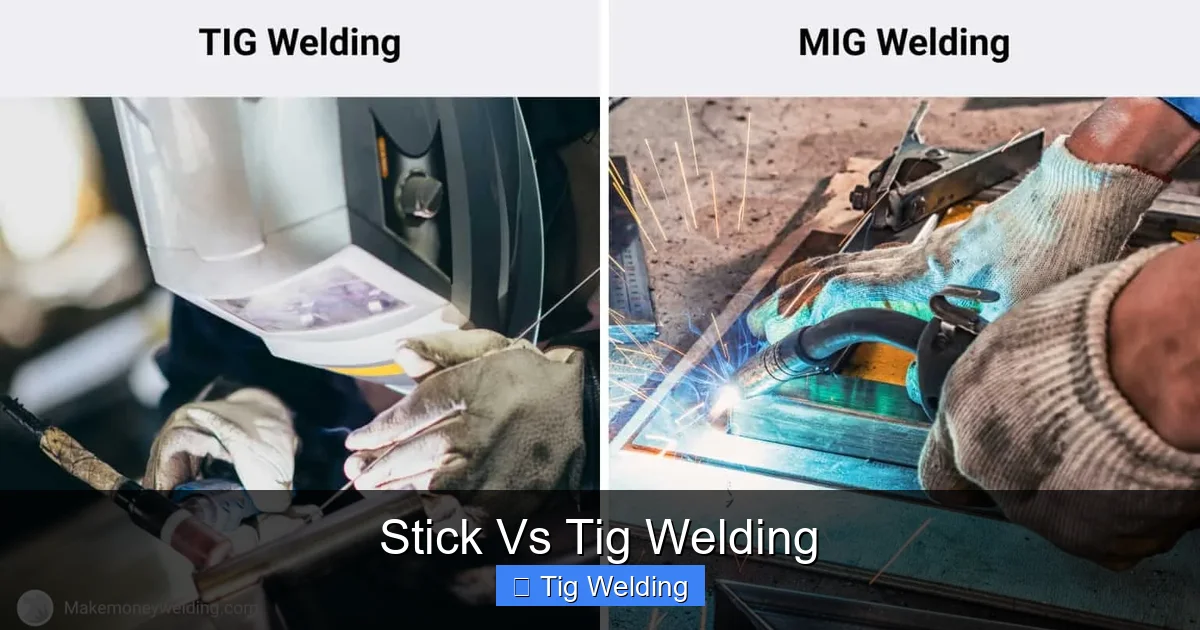
TIG (Tungsten Inert Gas) welding, also called Gas Tungsten Arc Welding (GTAW), is a highly precise welding method. It uses a non-consumable tungsten electrode to produce the weld. A separate filler rod can be added manually if needed. The process involves creating an arc between the tungsten electrode and the workpiece, with an inert gas (usually argon) shielding the weld area from contamination.
Visual guide about Stick Vs Tig Welding
Image source: makemoneywelding.com
Known for its clean, strong, and aesthetically pleasing welds, TIG welding is favored in industries requiring high-quality results, such as aerospace, automotive, and decorative metalwork.
Advantages of TIG Welding
- High-Quality Welds: Produces clean, precise, and professional-looking welds.
- Control: Greater control over heat and weld pool, ideal for delicate projects.
- Versatility: Suitable for various metals, including aluminum, stainless steel, and thin materials.
- Less Post-Processing: Minimal cleanup needed after welding.
Disadvantages of TIG Welding
- Cost: Equipment and consumables are generally more expensive.
- Learning Curve: Requires more skill, coordination, and practice to master.
- Speed: Slower process, especially for thick or heavy-duty welds.
- Portability: Less portable due to equipment complexity.
Differences Between Stick and TIG Welding
Ease of Use
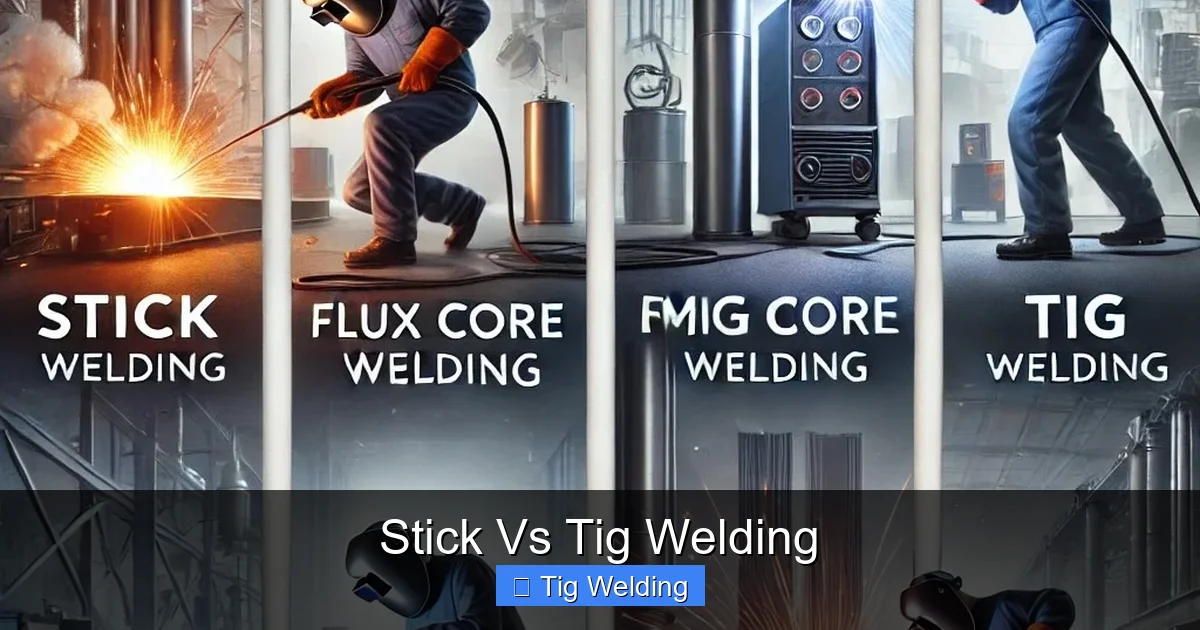
For beginners, stick welding is usually easier to pick up due to its straightforward setup and forgiving nature. You can quickly start welding with minimal preparation. Conversely, TIG welding demands more skill, steady hand control, and proper technique, making it more challenging for newcomers.
Visual guide about Stick Vs Tig Welding
Image source: minhasmobilewelding.ca
Weld Quality and Finish
TIG welding is renowned for delivering superior weld quality. It produces smooth, clean, and precise welds with minimal spatter and slag. Stick welding often leaves rougher welds that require grinding or cleanup but is more than adequate for structural or heavy-duty applications.
Application and Material Compatibility
While both methods can weld a variety of metals, TIG welding excels with thin, delicate, or exotic metals like aluminum, magnesium, and stainless steel. Stick welding is more suited for thicker, rusted, or dirty metals, especially in outdoor or construction environments.
Portability and Setup
In terms of portability, stick welders are lightweight and easy to transport, making them ideal for fieldwork. TIG welding units are typically bulkier and require a steady power supply, limiting their portability but offering greater control in controlled environments.
Cost Considerations
Initial investment in stick welding equipment tends to be lower, making it attractive for hobbyists and small businesses. TIG welding machines and consumables are more expensive but provide higher-quality results, making them suitable for professional applications where precision matters.
Practical Examples and Tips
Choosing the Right Method
If you’re working on outdoor projects, heavy fabrication, or need a budget-friendly option, stick welding is usually the way to go. For automotive repairs, artistic projects, or thin metal work where appearance matters, TIG welding is preferable.
Tips for Beginners
- Start with stick welding: It’s more forgiving and easier to learn basic welding concepts.
- Practice safety: Always wear appropriate protective gear, including gloves, helmet, and protective clothing.
- Invest in training: Consider tutorials or classes to improve your technique, especially for TIG welding.
- Use the right settings: Adjust current, voltage, and shielding gas appropriately for the material you’re welding.
Conclusion
Both stick and TIG welding have their place in the world of metalworking. Your choice depends on factors like project type, material, desired finish, budget, and skill level. While stick welding remains a versatile and accessible option for many, TIG welding offers unmatched precision and quality for specialized tasks.
Understanding the key differences helps you make informed decisions, ensuring your projects are successful and your skills grow. Whether you’re tackling a construction project or creating a delicate art piece, choosing the right welding method is crucial.
Frequently Asked Questions
What is the main advantage of stick welding?
Stick welding is cost-effective, portable, and effective on dirty or rusty metals, making it ideal for outdoor and heavy-duty work.
Is TIG welding suitable for beginners?
Generally, no. TIG welding requires more skill, coordination, and practice, making it less suitable for complete beginners without proper training.
Can I weld aluminum with stick welding?
While possible with specialized electrodes, TIG welding is typically preferred for aluminum due to its ability to produce cleaner, more controlled welds.
Which method is faster for large projects?
Stick welding is usually faster for large, heavy-duty projects, but TIG offers better precision for detailed work, albeit at a slower pace.
What safety precautions should I take?
Always wear protective gear like gloves, helmet, and protective clothing, and work in a well-ventilated area to avoid inhaling fumes.
Can I switch between stick and TIG welding on the same project?
Yes, many professionals use both techniques depending on the specific requirements of different parts of a project.
