

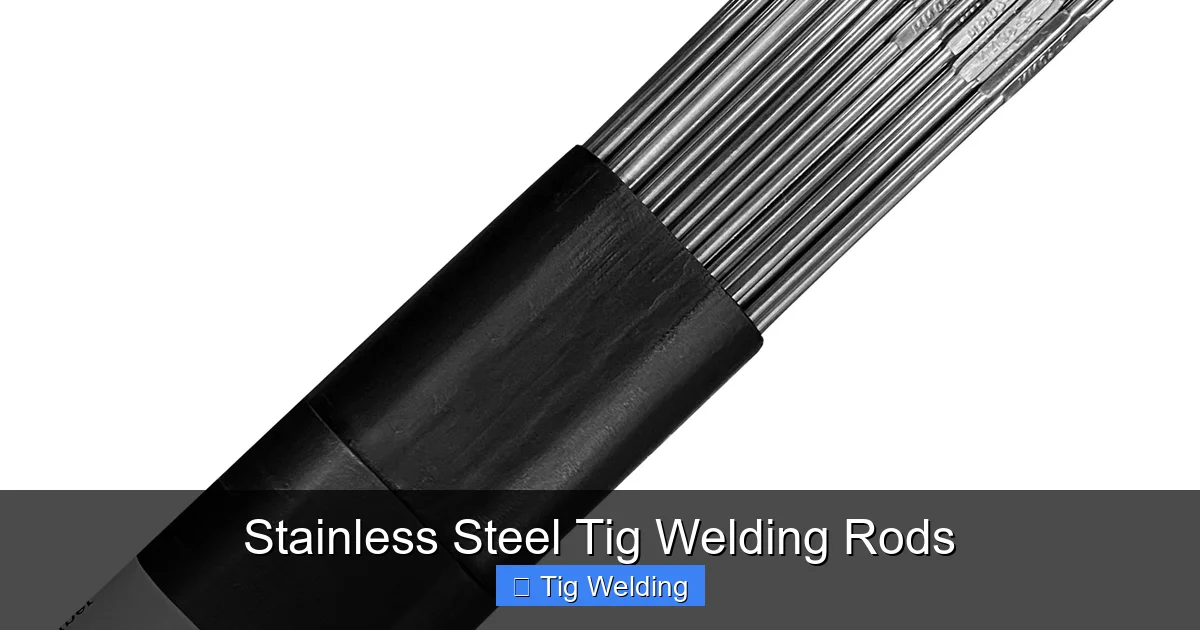
This guide offers a comprehensive look at stainless steel TIG welding rods. You’ll learn everything from selecting the right rod for your specific stainless steel alloy to the precise techniques for achieving strong, clean, and aesthetically pleasing welds. Master essential steps like preparation, arc control, and filler metal manipulation to elevate your TIG welding skills.
Stainless Steel TIG Welding Rods: Your Complete How-To Guide
Welcome to your ultimate guide to mastering stainless steel TIG welding rods! TIG (Gas Tungsten Arc Welding) welding is renowned for its precision and the beautiful, clean welds it produces, especially on stainless steel. However, achieving those flawless stainless steel TIG welds hinges significantly on using the correct TIG welding rods and employing the proper techniques.
This guide will equip you with the knowledge to confidently select, prepare, and utilize stainless steel TIG welding rods for a wide range of applications. Whether you’re a beginner looking to understand the basics or an experienced welder seeking to refine your skills, you’ll find valuable insights here. We’ll cover everything from understanding different rod types to the intricate art of filler metal manipulation. Get ready to elevate your stainless steel welding game!
Key Takeaways
- Understanding Rod Types is Crucial: Stainless steel TIG welding rods come in various alloys (e.g., 308, 309, 316) designed for specific base metal compatibility and performance characteristics.
- Proper Rod Preparation Ensures Quality: Cleaning the TIG welding rod surface of oils, dirt, and oxides is vital to prevent weld contamination and ensure a clean, strong joint.
- Matching Rod to Base Metal is Key: Always choose a TIG welding rod that matches or has similar metallurgical properties to the stainless steel you are welding to prevent corrosion issues and ensure structural integrity.
- Technique Dictates Weld Appearance and Strength: Consistent torch angle, travel speed, and filler rod dipping technique are essential for controlling the weld puddle and achieving a smooth, uniform bead.
- Shielding Gas is Non-Negotiable: Pure Argon is the standard shielding gas for most stainless steel TIG welding, protecting the molten puddle from atmospheric contamination.
- Troubleshooting Prevents Common Issues: Recognizing and addressing common problems like porosity, undercut, and lack of fusion by adjusting technique, amperage, or gas flow leads to better weld quality.
Understanding Stainless Steel TIG Welding Rods
Stainless steel TIG welding rods are essentially thin, solid wires made from specific stainless steel alloys. Their primary purpose is to act as a filler metal, adding material to the joint as you weld. The composition of these rods is critical because it directly influences the mechanical properties, corrosion resistance, and appearance of the final weld.
Types of Stainless Steel TIG Welding Rods
The most common stainless steel grades you’ll encounter in TIG welding fall into the austenitic family (300 series). Each TIG welding rod is designed with specific applications in mind:
- 308/308L: This is the workhorse for welding 308 and 308L stainless steels, the most common types. ‘L’ stands for low carbon, which helps prevent sensitization (carbide precipitation) during welding, thus preserving corrosion resistance. Use 308L for general-purpose applications and 308 when low carbon isn’t a primary concern or for dissimilar welding.
- 309/309L: These rods are designed for welding dissimilar metals, particularly carbon steels to stainless steels, or for welding 309 stainless steel. The higher alloy content in 309 rods bridges the gap between the properties of carbon steel and stainless steel, preventing cracking in the weld.
- 316/316L: Used for welding 316 and 316L stainless steels. The addition of molybdenum in 316 alloys provides enhanced corrosion resistance, especially in environments containing chlorides (like saltwater or chemical processing). 316L is preferred for its low carbon content, similar to 308L.
- 347: This rod contains columbium (niobium) as a stabilizer, making it suitable for high-temperature applications where sensitization is a risk. It’s often used for welding 321 and 347 stainless steels.
Choosing the correct TIG welding rod is paramount. Using the wrong type can lead to compromised weld strength, poor corrosion resistance, and potential cracking. Always refer to the base metal specifications and consult welding procedure specifications (WPS) when available.
Selecting the Right Stainless Steel TIG Welding Rod
This is arguably the most crucial step before you even strike an arc. Your selection process should be guided by the type of stainless steel you are welding.
Matching Base Metal to Filler Metal
The golden rule is to match your TIG welding rod to the base metal.
- If you are welding 304 or 304L stainless steel, use 308L TIG welding rods.
- If you are welding 316 or 316L stainless steel, use 316L TIG welding rods.
- If you are joining a stainless steel to a carbon steel, 309L TIG welding rods are typically the go-to choice.
- For higher temperature applications or specific stainless grades like 321, consider 347 TIG welding rods.
Consider the Application and Environment
Think about where the welded part will be used.
- Corrosive Environments: If the application involves exposure to chemicals, saltwater, or high temperatures, prioritize rods with enhanced corrosion resistance like 316L.
- Mechanical Stress: For parts that will undergo significant stress or vibration, ensure the filler metal’s tensile strength is adequate.
- Post-Weld Treatments: Some post-weld processes, like annealing or passivation, might influence the best rod choice.
Preparing Your Stainless Steel TIG Welding Rods
Even the best TIG welding rods can lead to poor welds if not properly prepared. Contamination is the enemy of stainless steel TIG welding.
Cleaning the Rods
Stainless steel TIG welding rods are often coated with a thin layer of flux or can pick up contaminants during handling.
- Degreasing: If the rods feel oily or greasy, wipe them down with a clean, lint-free cloth and a solvent like acetone or isopropyl alcohol. Ensure the solvent evaporates completely before welding.
- Mechanical Cleaning: For any visible dirt, rust (though less common on new rods), or oxidation, gently clean the rod using a stainless steel wire brush dedicated solely to TIG welding filler material. Avoid using brushes that have touched carbon steel, as this can introduce iron contamination.
- Handling: Always handle TIG welding rods with clean gloves or ensure your hands are free from oils and grease.
Storage
Proper storage keeps your TIG welding rods clean and ready for use.
- Store rods in their original packaging or in a clean, dry container.
- Avoid storing them in damp areas or where they can be exposed to dirt and grime.
The TIG Welding Process with Stainless Steel Rods
Now that you have your rod selected and prepared, let’s dive into the actual welding process. This requires a steady hand and good control over your equipment.
Setting Up Your TIG Welder
Correct settings are crucial for a clean, strong stainless steel TIG weld.
- Amperage: This depends on the thickness of the material and the diameter of your TIG welding rod. Thicker material requires higher amperage, and larger diameter rods generally need more amperage. Start with a recommended range and adjust as needed.
- Shielding Gas: For most stainless steel applications, 100% Argon is the preferred shielding gas. The flow rate should be set to provide adequate coverage of the weld puddle without causing turbulence. A common starting point is 15-25 CFH (Cubic Feet per Hour).
- Tungsten Electrode: For DC (Direct Current) welding of stainless steel, a pure tungsten or a zirconiated tungsten electrode is often used. For AC (Alternating Current), a pure tungsten or a lanthanated tungsten is common. Ensure the tungsten is properly sharpened to a point for DC or a balled tip for AC.
Technique for Stainless Steel TIG Welding
Precision is key.
Establishing the Arc
Initiate the arc using either a high-frequency start or by “scratching” the surface (though high-frequency is preferred for cleaner starts and to avoid tungsten contamination).
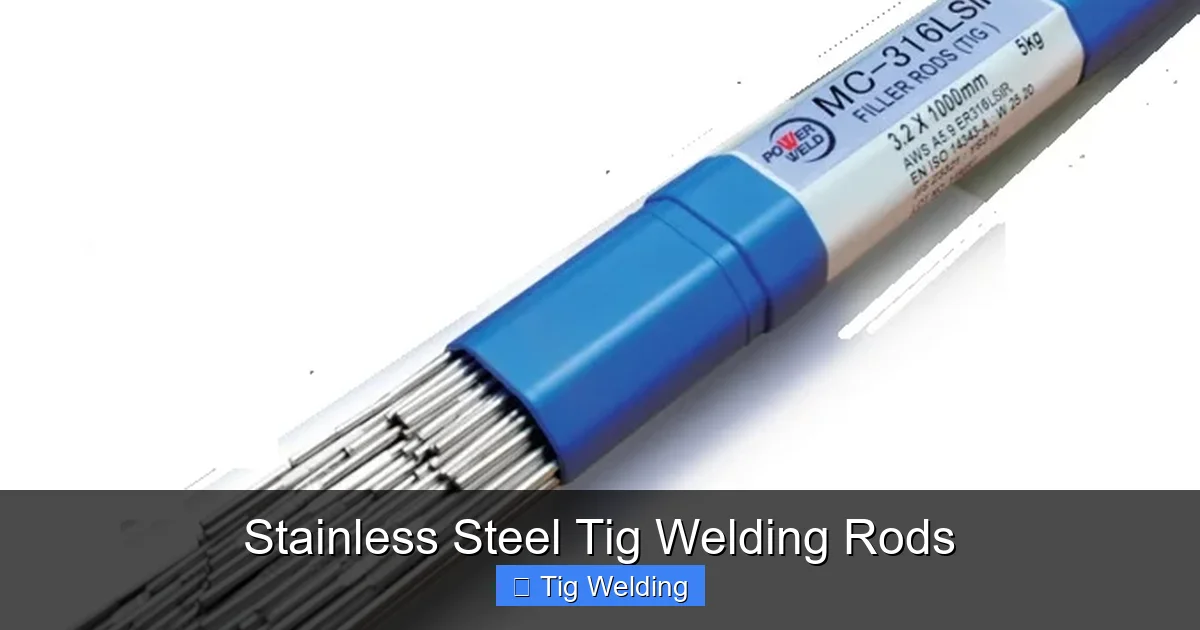
Visual guide about Stainless Steel Tig Welding Rods
Image source: down-my.img.susercontent.com
Visual guide about Stainless Steel Tig Welding Rods
Image source: collinstools.com.au
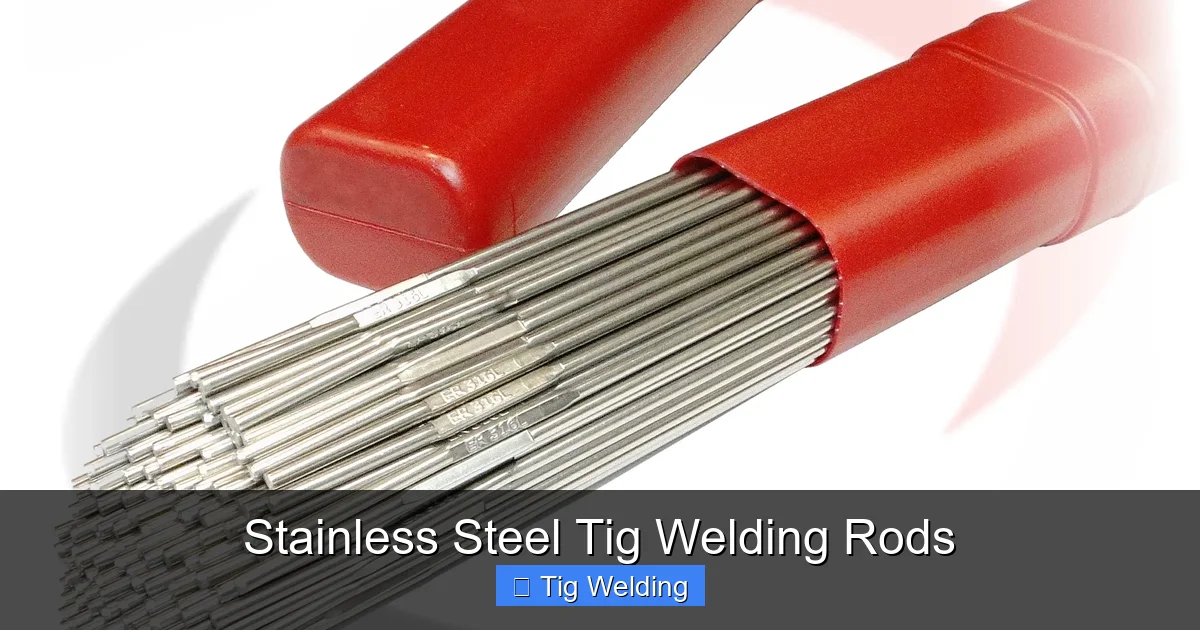
Visual guide about Stainless Steel Tig Welding Rods
Image source: betaweld.com.au
Torch Angle and Travel Speed
Maintain a consistent torch angle, typically between 5-15 degrees, leaning slightly in the direction of travel. Your travel speed should be consistent to ensure a uniform bead width and penetration. Too fast, and you risk a cold lap or lack of fusion; too slow, and you can burn through or create an overly wide, convex bead.
Dipping the TIG Welding Rod
This is where your filler metal comes into play. The goal is to introduce the TIG welding rod into the leading edge of the weld puddle.
Sub-steps:
- Keep the Rod Tip Clean: Ensure the end of the TIG welding rod you dip into the puddle remains clean. Avoid dipping the rod into the arc itself, as this can contaminate the tungsten.
- Consistent Dipping: Dip the rod into the puddle just enough to add filler metal. The frequency of your dips will determine the size of your weld beads. For stringer beads, dip intermittently. For a wider bead, use more frequent dips.
- Angle of Entry: Introduce the rod at a shallow angle, matching your torch angle. This helps maintain consistent puddle control and prevents the rod from “dragging” or introducing porosity.
- Avoid Arc Breakage: When removing the rod, pull it back slightly away from the puddle to avoid creating a small arc that can lead to a pinhole porosity.
Puddle Control
Watch the weld puddle closely. It should appear fluid and consistent. You’re essentially “walking the cup” or controlling the torch’s movement while the rod feeds into the puddle’s leading edge.
Post-Weld Cleaning
Stainless steel welds can form a heat tint (discoloration) due to oxidation during welding.
- Brushing: After the weld has cooled slightly, use a dedicated stainless steel wire brush to remove the heat tint. This helps restore the stainless steel’s corrosion resistance.
- Pickling and Passivation: For critical applications or maximum corrosion resistance, a chemical pickling and passivation process may be necessary. This removes any embedded iron particles and forms a protective chromium oxide layer.
Practical Tips for Stainless Steel TIG Welding Rods
Here are some additional tips to help you achieve superior results:
- Listen to the Arc: A good TIG arc has a distinct, consistent humming sound. If it sounds crackly or inconsistent, check your settings or gas flow.
- Practice, Practice, Practice: The best way to master TIG welding with stainless steel rods is through consistent practice on scrap pieces.
- Watch for Undercut: Undercutting occurs when the weld metal doesn’t fully fuse with the base metal, creating a groove along the edge of the weld. This is often caused by too much amperage or moving too quickly.
- Prevent Burn-Through: On thinner materials, maintain a faster travel speed and a slightly lower amperage to avoid burning a hole through the metal.
- Consider Pulsed TIG: For thin stainless steel or out-of-position welding, pulsed TIG welding can offer excellent control over heat input and puddle solidification, leading to cleaner welds and reduced distortion.
Troubleshooting Common Issues
Even with the best intentions, problems can arise. Here’s how to address some common issues when using stainless steel TIG welding rods:
Porosity
Porous welds are characterized by small holes or cavities within the weld metal.
- Causes:
- Insufficient shielding gas (low flow rate, wind drafts).
- Contaminated TIG welding rod or base metal (oils, dirt).
- Dipping the TIG welding rod into the arc.
- Incorrect tungsten grinding.
- Solutions:
- Increase shielding gas flow rate.
- Ensure a draft-free environment.
- Thoroughly clean the rod and base metal.
- Practice clean rod dipping technique.
- Ensure proper tungsten preparation.
Lack of Fusion/Incomplete Penetration
The weld metal hasn’t fully bonded with the base metal, or the weld hasn’t gone deep enough.
- Causes:
- Insufficient amperage.
- Too fast travel speed.
- Incorrect torch angle.
- Contaminated TIG welding rod or base metal preventing proper wetting.
- Solutions:
- Increase amperage.
- Slow down travel speed.
- Adjust torch angle for better puddle control.
- Ensure meticulous cleaning of all materials.
Cracking
Cracks in the weld can be a serious structural issue.
- Causes:
- Using the wrong filler metal (e.g., a rod not designed for dissimilar joints).
- Excessive heat input, leading to rapid cooling and stress.
- Improper joint preparation.
- Base metal contamination.
- Solutions:
- Verify you are using the correct TIG welding rod for the base metal.
- Optimize amperage and travel speed to control heat.
- Ensure proper joint fit-up.
- Maintain strict cleanliness standards.
Conclusion
Mastering stainless steel TIG welding rods is a journey that combines understanding material science with honed welding skills. By carefully selecting the right TIG welding rod for your specific stainless steel alloy, meticulously preparing your materials, and employing precise TIG welding techniques, you are well on your way to producing beautiful, strong, and corrosion-resistant welds.
Remember that practice, attention to detail, and a commitment to cleanliness are your greatest allies. Embrace the learning process, and soon you’ll be confidently tackling stainless steel projects with your TIG welder and the right stainless steel TIG welding rods. Happy welding!
