

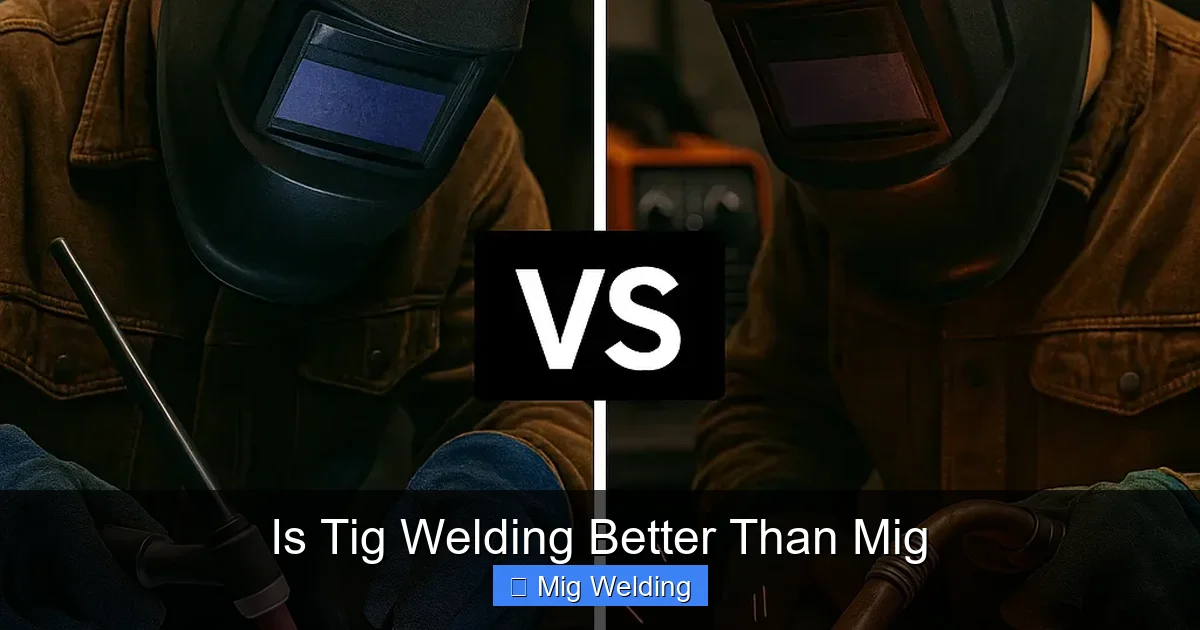
In this guide, we compare TIG and MIG welding to help you decide which is better for your needs. We explore the differences, pros, cons, and best applications of each welding technique, making your choice easier.
Key Takeaways
- Difference in Process: TIG welding uses a tungsten electrode and provides precise, clean welds, while MIG welding uses a wire feed for faster production.
- Ease of Use: MIG welding is generally easier for beginners due to its straightforward setup and faster learning curve.
- Quality of Welds: TIG offers higher quality, cleaner, and more precise welds, ideal for detailed work.
- Speed and Productivity: MIG welding is faster, making it better for large projects and high-volume tasks.
- Material Compatibility: MIG welding works well with a variety of metals, including thicker materials, whereas TIG is better for thin metals and specialty alloys.
- Cost and Equipment: MIG welders tend to be less expensive and more portable; TIG equipment can be pricier and more complex.
- Best Applications: Use MIG for speed and volume, TIG for precision and quality craftsmanship.
Introduction
If you’re new to welding or looking to upgrade your skills, you might ask yourself: Is TIG welding better than MIG? Both methods have their strengths and are suited to different projects. In this guide, we’ll compare TIG and MIG welding in detail, helping you understand which technique is better for your specific needs.
We’ll cover the processes, advantages, disadvantages, and ideal applications of each welding type. By the end, you’ll have a clear idea of which method suits your projects, budget, and skill level.
Understanding TIG and MIG Welding
What is TIG Welding?
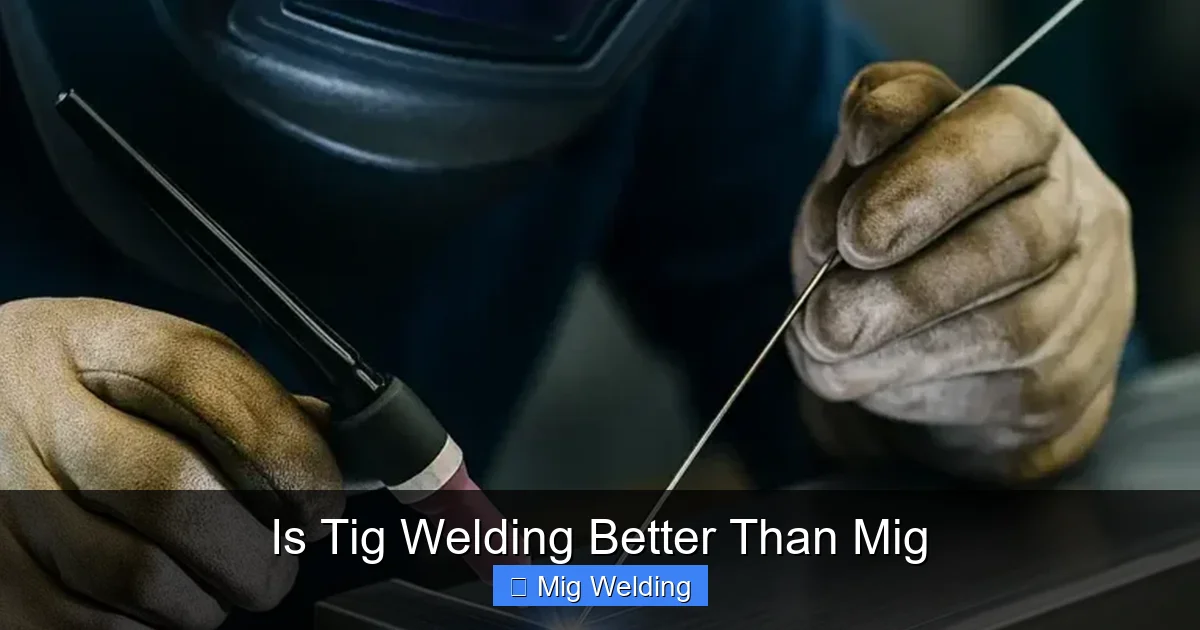
TIG stands for Tungsten Inert Gas welding. It uses a non-consumable tungsten electrode to produce the weld. You feed a filler metal manually if needed, and shielding gas (usually argon) protects the weld from contamination.
Visual guide about Is Tig Welding Better Than Mig
Image source: welderology.com
TIG welding is known for its precision and ability to produce clean, high-quality welds. It’s often used in aerospace, automotive, and artistic projects where detail matters.
What is MIG Welding?
MIG stands for Metal Inert Gas welding, also called Gas Metal Arc Welding (GMAW). It uses a continuously fed wire electrode that acts as both the filler and the electrode. Shielding gas (like argon or CO2) protects the weld pool.
MIG welding is faster and more user-friendly, making it popular for construction, manufacturing, and home repairs.
Step-by-Step Guide: Choosing the Right Welding Method
Step 1: Assess Your Project Needs
Start by understanding what you want to weld. Consider the metal type and thickness, project complexity, and desired finish.
Visual guide about Is Tig Welding Better Than Mig
Image source: welderology.com
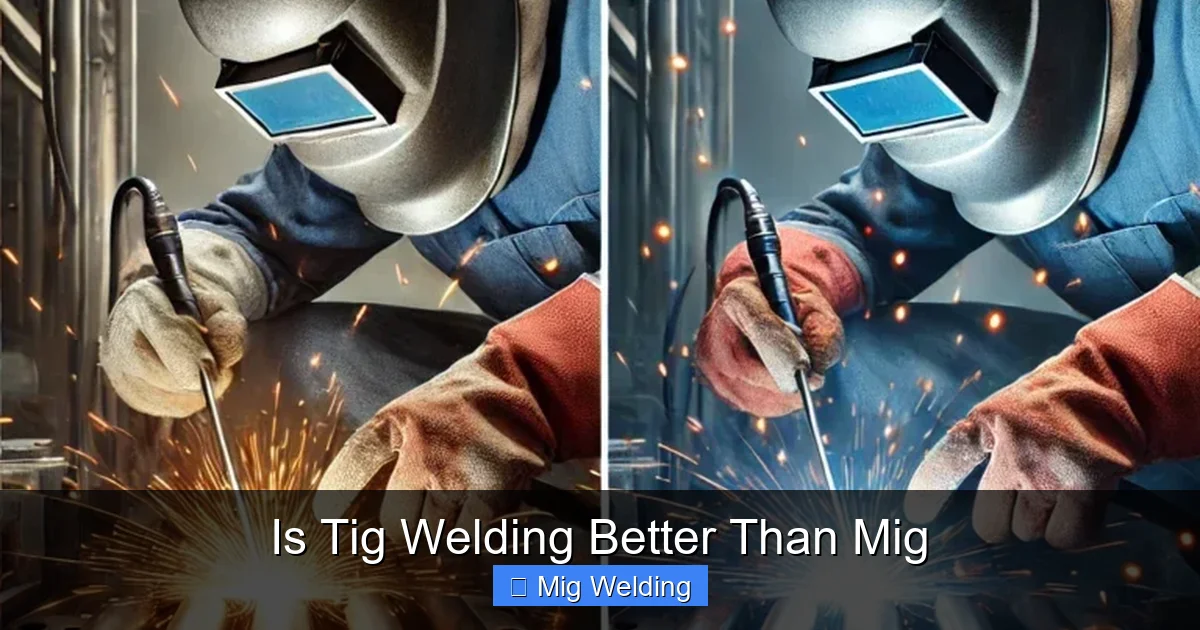
- For detailed, high-quality work: TIG is preferable.
- For quick, high-volume projects: MIG is better.
Step 2: Evaluate Your Skill Level
Beginners often find MIG welding easier to learn due to its straightforward process. TIG requires more skill and patience but offers superior results for fine work.
- New to welding: Start with MIG.
- Experienced welders or artistic projects: Try TIG.
Step 3: Consider Equipment and Cost
Budget plays a role. MIG welders are generally less expensive and more portable. TIG machines are pricier and require more accessories.
- Budget-friendly option: MIG welding kit.
- For quality and precision: Invest in TIG equipment.
Step 4: Match the Material
Different metals respond better to specific welding techniques:
- Steel and aluminum (thinner metals): TIG excels here.
- Thicker metals or ferrous alloys: MIG provides better penetration and speed.
Practical Tips for TIG and MIG Welding
Tips for TIG Welding
- Maintain a steady hand for precise control.
- Use the correct tungsten electrode type for your material.
- Keep your work area clean to avoid contamination.
- Adjust your amperage according to the metal thickness.
Tips for MIG Welding
- Set the appropriate wire feed speed and voltage for your material.
- Keep the welding gun at a consistent angle, typically 10-15 degrees.
- Use the right shielding gas for your metal type.
- Practice steady movements for smooth beads.
Common Challenges and Troubleshooting
For TIG Welding
- Porosity in the weld: Check gas flow and ensure no leaks.
- Inconsistent welds: Practice steady hand movements and proper torch angle.
For MIG Welding
- Spattering: Lower the voltage or adjust wire speed.
- Burn-through on thin metals: Reduce amperage and use proper technique.
Conclusion: Which Is Better?
There’s no one-size-fits-all answer. Whether TIG or MIG welding is better depends on your project requirements, skill level, and budget.

Visual guide about Is Tig Welding Better Than Mig
Image source: welderology.com
If you need precision, high-quality finishes, and are willing to invest time to learn, TIG is the way to go. For faster work, easier learning, and larger projects, MIG is typically better.
Consider your specific needs, practice both methods if possible, and choose the one that aligns with your goals. Happy welding!
