

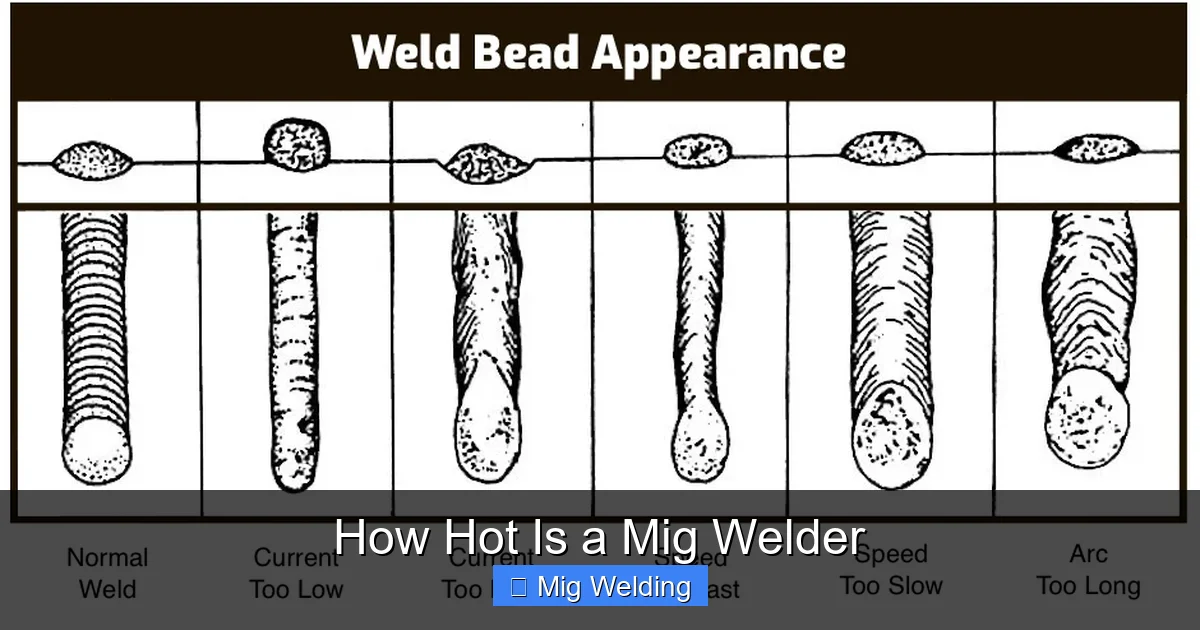
Understanding how hot a MIG welder gets is essential for safety, quality welding, and equipment care. This guide breaks down the temperatures involved, how heat affects your work, and practical tips to manage it effectively.
Key Takeaways
- MIG welders produce arc temperatures up to 6,500°F (3,600°C): This extreme heat melts metal instantly, forming strong welds.
- Base metal surface temperatures vary widely: Depending on material and settings, surfaces can reach 1,000°F to over 2,500°F during welding.
- Heat control prevents warping and burn-through: Adjust voltage, wire speed, and travel speed to manage heat input.
- Safety gear is non-negotiable: Always wear flame-resistant clothing, gloves, and a welding helmet with proper shade.
- Cooling time matters: Let welded pieces cool slowly to avoid cracking, especially with thick or dissimilar metals.
- Different materials require different heat settings: Steel, aluminum, and stainless steel each respond uniquely to MIG welding heat.
- Use a temperature indicator or thermal camera for precision: These tools help monitor heat buildup in real time.
How Hot Is a MIG Welder? A Complete Guide to Understanding Welding Temperatures
If you’re new to MIG welding or just curious about the science behind it, one of the most common questions is: How hot is a MIG welder? The short answer? Extremely hot. But understanding the exact temperatures involved—and how they affect your welding—can make a big difference in your results, safety, and equipment longevity.
In this guide, we’ll break down the heat generated by MIG welding, explain what those temperatures mean in real-world terms, and give you practical tips to manage heat for better, safer welds. Whether you’re welding thin sheet metal or thick steel plates, knowing how to control and respond to heat is key.
What Temperature Does a MIG Welder Reach?
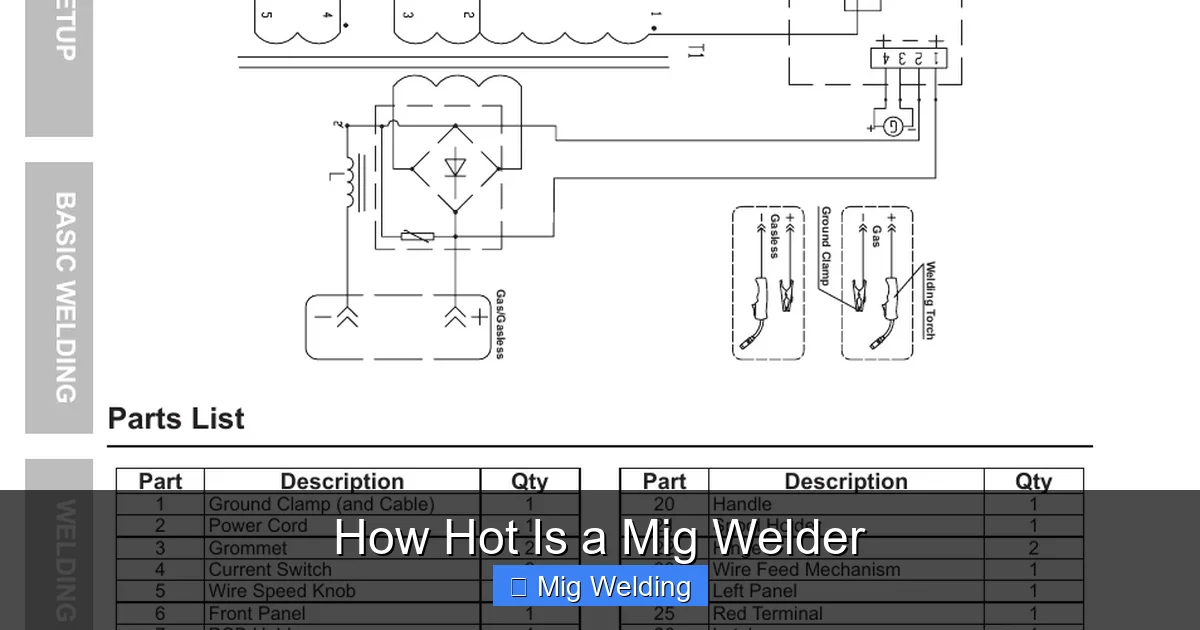
Visual guide about How Hot Is a Mig Welder
Image source: i1.wp.com
Let’s start with the big number: MIG welding arcs can reach temperatures of up to 6,500°F (3,600°C). That’s hotter than the surface of Venus and more than enough to vaporize most metals instantly.
But that’s just the arc temperature. The actual heat transferred to your workpiece depends on several factors, including:
- The type of metal you’re welding
- The thickness of the material
- Your welding settings (voltage, amperage, wire speed)
- Your travel speed
- The shielding gas used
For example, a typical MIG weld on mild steel might operate at 18–25 volts and 100–250 amps. At these settings, the surface of the metal can heat up to 1,500°F to 2,500°F (815°C to 1,370°C) in the weld zone. That’s hot enough to melt steel, which has a melting point around 2,500°F (1,370°C).
Why Does Temperature Matter in MIG Welding?
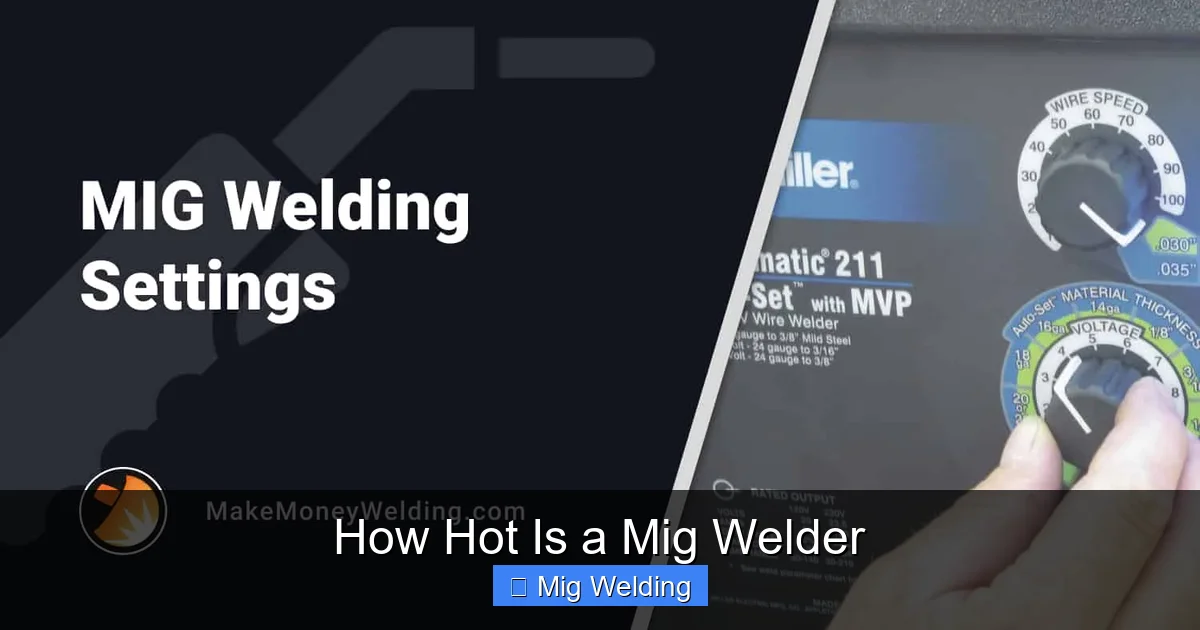
Visual guide about How Hot Is a Mig Welder
Image source: makemoneywelding.com
Heat is both your best friend and your worst enemy in welding. Too little heat, and the weld won’t penetrate properly. Too much, and you risk warping, burn-through, or weakening the metal.
Here’s why temperature control is so important:
1. Prevents Warping and Distortion
When metal heats up, it expands. As it cools, it contracts. If one area cools faster than another, the metal can warp or twist. This is especially common with thin materials or long welds.
Tip: Use a lower heat setting and weld in short segments (called “stitch welding”) to reduce distortion. Allow each segment to cool slightly before moving to the next.
2. Avoids Burn-Through
Burn-through happens when the weld penetrates completely through the metal, creating a hole. This is common with thin-gauge steel or aluminum.
Example: If you’re welding 18-gauge steel (about 0.05 inches thick), even a slightly high voltage setting can burn right through. Use a lower voltage (around 16–18V) and faster travel speed to minimize heat input.
3. Ensures Proper Penetration
On the flip side, too little heat means the weld won’t fuse deeply into the base metal. This leads to weak, brittle joints.
Tip: For thicker materials (like ¼-inch steel), increase voltage and wire speed to boost penetration. But don’t go too high—balance is key.
How to Measure and Monitor Welding Heat
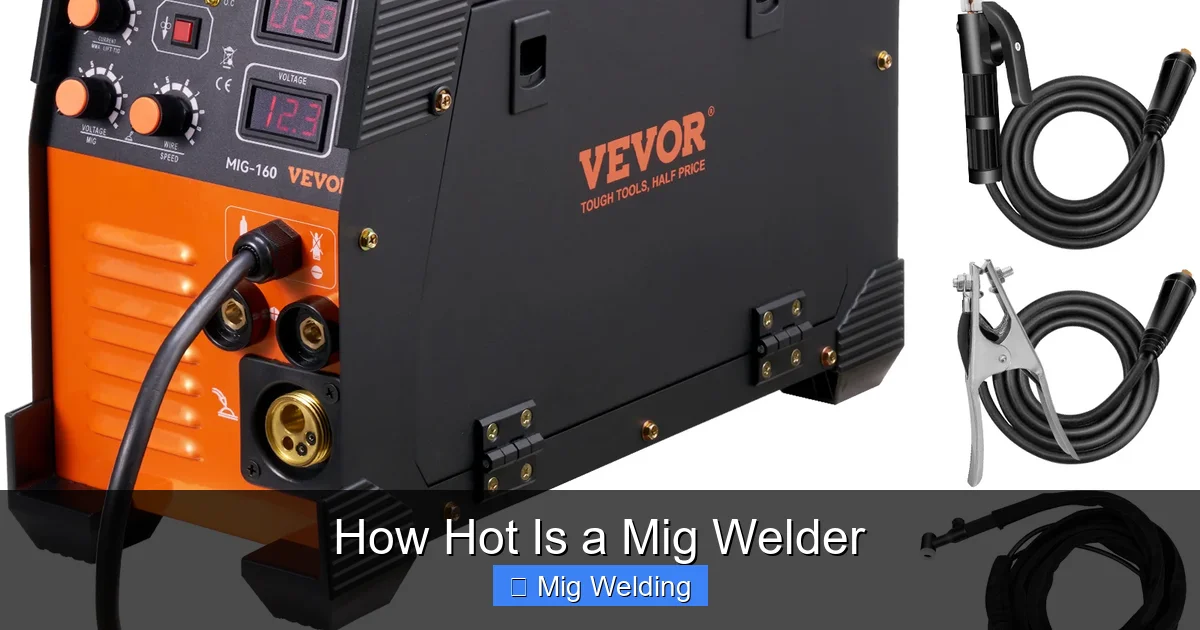
Visual guide about How Hot Is a Mig Welder
Image source: d2qc09rl1gfuof.cloudfront.net
You can’t see 6,500°F with the naked eye, but you can monitor heat in other ways.
Use a Temperature-Indicating Stick or Paint
These are wax-like sticks or liquid paints that change color at specific temperatures. For example, a stick rated for 1,200°F will melt when the metal reaches that temp.
How to use: Apply a small dot near your weld area. Watch for it to melt or change color. This gives you a rough idea of how hot the metal is getting.
Invest in an Infrared Thermometer or Thermal Camera
These tools measure surface temperature without contact. A thermal camera gives a full heat map, showing hot spots and cooling rates.
Best for: Welding thick materials, aluminum, or when working on critical joints where overheating could cause failure.
Watch for Visual Cues
Even without tools, you can learn to read heat by sight:
- Dark red glow: Around 1,100°F (593°C)
- Bright red: 1,400°F (760°C)
- Orange-yellow: 2,000°F (1,093°C)
- White-hot: Over 2,500°F (1,370°C)
If your weld puddle is glowing white, you’re likely using too much heat.
How to Control Heat in MIG Welding
Now that you know how hot a MIG welder can get, let’s talk about how to manage that heat for better results.
Step 1: Choose the Right Settings
Most MIG welders have a chart that matches material thickness to voltage and wire speed. Start there, then fine-tune.
Example settings for mild steel:
- 18-gauge (0.047”): 16–18V, 60–80 inches per minute (IPM)
- 16-gauge (0.060”): 18–20V, 80–100 IPM
- ¼-inch (0.250”): 22–24V, 120–150 IPM
Step 2: Adjust Your Travel Speed
Moving too slowly puts more heat into the metal. Moving too fast gives poor penetration.
Rule of thumb: Keep a steady, consistent speed. The weld puddle should be about the size of a dime for thin metal, slightly larger for thicker pieces.
Step 3: Use the Right Shielding Gas
Gas affects arc stability and heat transfer.
- 75% Argon / 25% CO2: Best for mild steel. Provides good penetration and low spatter.
- 100% CO2: Hotter arc, deeper penetration, but more spatter.
- 90% Argon / 10% CO2: Softer arc, less heat—good for thin materials.
- Argon/Helium mix: Used for aluminum. Helium increases heat input.
Step 4: Preheat Thick or Crack-Prone Metals
Materials like cast iron or high-carbon steel can crack if heated too quickly. Preheating to 300°F–500°F (150°C–260°C) slows cooling and reduces stress.
Tip: Use a propane torch or induction heater for preheating. Monitor with a temp stick.
Step 5: Let It Cool—Don’t Quench
After welding, let the metal cool naturally. Quenching with water or compressed air can cause cracking, especially in hardenable steels.
Exception: Aluminum benefits from rapid cooling to prevent grain growth, but still avoid extreme shocks.
Troubleshooting Common Heat-Related Problems
Even with the best settings, things can go wrong. Here’s how to fix common heat issues.
Problem: Warped or Twisted Metal
Cause: Uneven heating and cooling.
Solution:
- Weld in short, alternating segments (backstep or skip welding)
- Use clamps or fixtures to hold parts in place
- Preheat thin materials slightly
Problem: Burn-Through on Thin Metal
Cause: Too much heat or slow travel speed.
Solution:
- Reduce voltage by 1–2 volts
- Increase travel speed
- Use a backing bar or copper heat sink to absorb excess heat
- Switch to a smaller wire diameter (e.g., 0.023” instead of 0.030”)
Problem: Lack of Fusion or Weak Welds
Cause: Insufficient heat or improper technique.
Solution:
- Increase voltage or wire speed
- Clean the base metal thoroughly (remove rust, paint, oil)
- Ensure proper gun angle (usually 10–15 degrees)
- Use a push technique for better visibility and control
Safety Tips When Working with High Heat
MIG welding involves extreme temperatures, so safety is critical.
- Wear proper PPE: Flame-resistant jacket, gloves, and a welding helmet with auto-darkening lens (shade 10–13).
- Protect your eyes and skin: UV radiation from the arc can cause “welder’s flash” (like sunburn on your eyes).
- Work in a well-ventilated area: Welding fumes can be hazardous. Use an exhaust fan or respirator if needed.
- Keep a fire extinguisher nearby: Sparks and molten metal can ignite flammable materials.
- Let metal cool before handling: Even after the arc is off, metal stays hot for minutes or hours.
Conclusion: Mastering Heat in MIG Welding
So, how hot is a MIG welder? The arc hits up to 6,500°F—hot enough to melt steel in seconds. But the real challenge isn’t just the heat itself; it’s knowing how to control it.
By understanding the temperatures involved, adjusting your settings, and using the right techniques, you can avoid common pitfalls like warping, burn-through, and weak welds. Whether you’re repairing a trailer, building a custom frame, or just learning the craft, heat management is one of the most important skills you’ll develop.
Remember: Great welding isn’t about brute force—it’s about precision, control, and respect for the heat. With practice and the right knowledge, you’ll be able to harness that incredible temperature to create strong, clean, professional-quality welds every time.
