

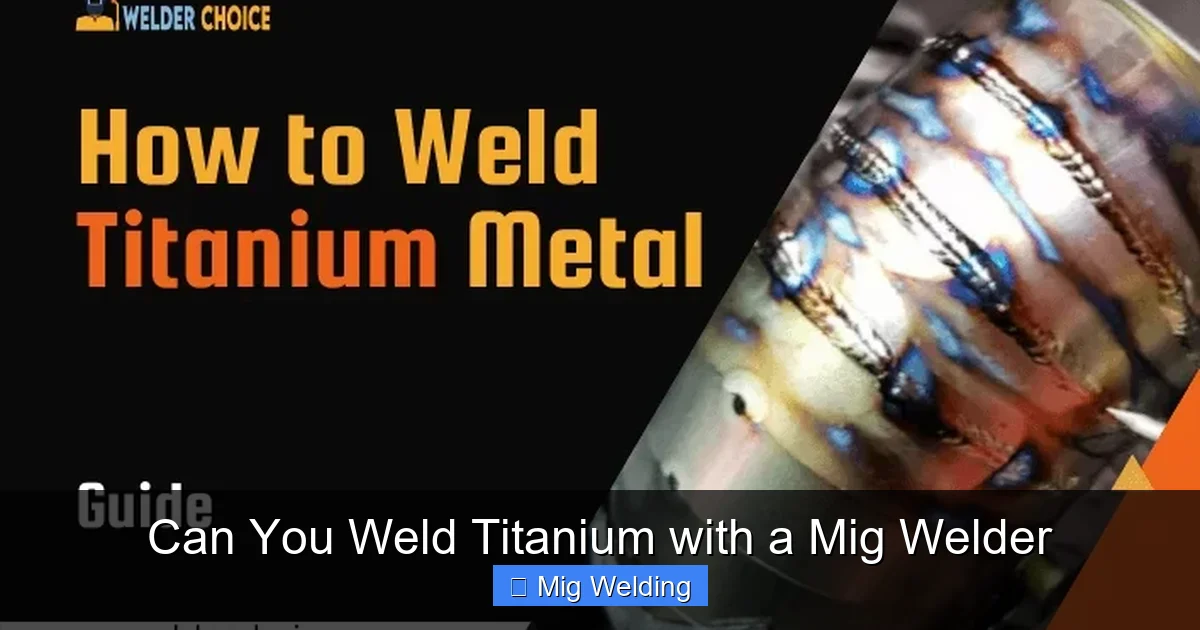
Welding titanium with a MIG welder is possible, but it requires special equipment and techniques. This guide walks you through the process step-by-step, ensuring you understand the necessary precautions and settings for a successful weld.
Can You Weld Titanium with a MIG Welder?
If you’re wondering whether a MIG (Metal Inert Gas) welder can handle titanium, you’re not alone. Titanium is a strong, lightweight metal used in aerospace, medical devices, and high-performance applications. But welding it isn’t as straightforward as welding steel or aluminum. In this guide, we’ll explore whether MIG welding can be used for titanium, and if so, how to do it successfully. You’ll learn about the equipment, settings, techniques, and safety tips needed to weld titanium with a MIG welder effectively.
Key Takeaways
- Ti welding with MIG is possible: It requires specific equipment and techniques to achieve quality results.
- Use pure argon shielding gas: A high-purity argon environment minimizes oxidation and contamination.
- Adjust your welder settings carefully: Proper voltage, wire feed speed, and shielding are crucial for titanium welds.
- Clean the titanium thoroughly: Remove oils, dirt, and oxide layers before welding to ensure good fusion.
- Practice proper safety measures: Titanium fumes and high heat demand protective gear and ventilation.
- Expect some challenges: Titanium is difficult to weld and may require trial runs and adjustments.
Understanding Titanium and MIG Welding
Before diving into the process, it’s important to know a few basics:
- Titanium’s properties: Titanium is corrosion-resistant, lightweight, and has high strength. However, it easily reacts with oxygen, nitrogen, and moisture, which can compromise the weld quality.
- MIG welding overview: MIG welding uses a continuously fed wire electrode and shielding gas to create a weld. It’s popular for its speed and ease of use on various metals.
While MIG welding is versatile for many metals, welding titanium presents unique challenges. Titanium requires a controlled environment, high-quality shielding, and precise settings to avoid oxidation and defects. Traditionally, TIG (Tungsten Inert Gas) welding is preferred for titanium, but with the right precautions, MIG welding can be a viable method in certain situations.
Can You Weld Titanium with a MIG Welder?
The short answer: Yes, it is possible to weld titanium with a MIG welder, but it’s not common for beginners or in general fabrication. It demands specialized equipment, strict control of the environment, and experience. If you’re working on small projects or repairs and have the right setup, MIG welding can work for titanium, provided you follow best practices.
Visual guide about Can You Weld Titanium with a Mig Welder
Image source: welderology.com
In the next sections, we’ll guide you through the steps, equipment, and tips to help you successfully weld titanium with a MIG welder.
Equipment Needed for MIG Welding Titanium
1. A High-Quality MIG Welder
Choose a MIG welder that can handle fine, precise welding. Features to look for include:

Visual guide about Can You Weld Titanium with a Mig Welder
Image source: welderology.com
- Adjustable voltage and wire feed controls: Precise control helps prevent overheating or insufficient penetration.
- Capability for low amperage settings: Titanium often requires lower heat input.
- Compatibility with specialized power supplies: Some titanium welding may need pulse or inverter-based machines for better control.
2. Shielding Gas
The most critical factor is the shielding gas. Use high-purity argon (at least 99.99%). For better results, some welders use a mix of argon with a small percentage of helium or other inert gases to improve arc stability.
3. Filler Wire
Use titanium-specific filler wire. Common types include Grade 2 or Grade 5 (Ti-6Al-4V). The wire diameter should match your project needs, typically between 0.030″ and 0.045″.
4. Welding Environment and Safety Equipment
- Clean workspace: Minimize contamination and drafts.
- Proper PPE: Welding helmet, gloves, long sleeves, and respiratory protection.
- Good ventilation: Titanium fumes can be hazardous.
Preparing to Weld Titanium with MIG
1. Clean the Titanium Surface
Thorough cleaning is essential. Remove oils, grease, dirt, and oxide layers using:
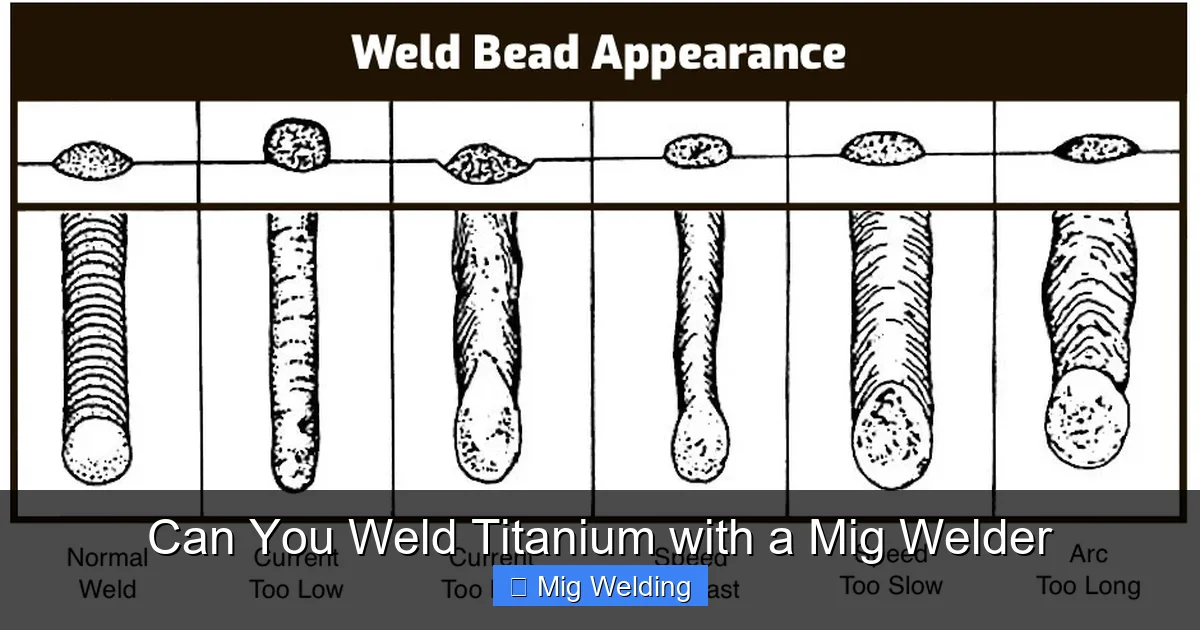
Visual guide about Can You Weld Titanium with a Mig Welder
Image source: weldguru.com
- Solvent or degreaser
- Fine-grit abrasive or wire brush (dedicated for titanium)
A clean surface prevents contamination and ensures a strong weld.
2. Set Up Your Equipment
Adjust your MIG welder to appropriate settings:
- Voltage: Lower than standard steel welding, typically around 10-15 volts.
- Wire feed speed: Moderate, around 200-300 inches per minute, depending on wire diameter.
- Shielding gas: Pure argon or a high-purity inert gas mixture.
- Wire type: Solid titanium wire or a compatible alloy.
Note that some welders may require special features like pulse welding, which helps control heat input.
Welding Technique for Titanium with a MIG Welder
1. Set Up Your Workspace
Ensure your workspace is clean, free of drafts, and well-ventilated. Use a dedicated welding station if possible.
2. Tacking and Positioning
Start with small tack welds to hold pieces together. Use a steady hand and minimal heat to prevent warping.
3. Welding Passes
Apply short, controlled weld passes. Keep the torch at a consistent angle, about 10-15 degrees from vertical. Maintain a steady travel speed to avoid overheating.
Use a weaving or stringer bead technique depending on the joint design.
4. Monitoring and Adjustments
Watch the weld pool closely. If you notice oxidation (a dull or discolored weld), stop and check shielding gas flow. Adjust settings if needed.
Keep the arc stable, and avoid excessive heat input to prevent burn-through or warping.
Post-Welding Care and Inspection
- Clean the weld: Remove any oxidation or spatter with a stainless steel brush dedicated for titanium.
- Inspect the weld: Look for uniformity, proper fusion, and absence of cracks or porosity.
- Perform non-destructive testing (if necessary): Ultrasonic or dye penetrant testing can confirm weld integrity.
Common Challenges and Troubleshooting
- Oxidation or contamination: Ensure the shielding gas flow is continuous and adequate. Clean surfaces thoroughly.
- Porosity in the weld: Check for drafts, leaks, or contaminated gas. Use high-purity argon.
- Warping or burn-through: Reduce heat input, slow down travel speed, or use smaller weld passes.
- Inconsistent weld quality: Practice your technique, and verify equipment calibration.
Conclusion
While MIG welding titanium is more challenging than other metals, it is achievable with the right equipment, environment, and technique. It’s not the most common method—TIG is usually preferred—but for certain applications, MIG can do the job. Remember to prioritize safety, cleanliness, and precision for the best results. Practice makes perfect, so start with scrap pieces before working on your main project.
By understanding the right setup and process, you can successfully weld titanium with a MIG welder and produce strong, high-quality joints.
Final Tips
- Always use high-purity argon as shielding gas.
- Keep your workspace clean and free of drafts.
- Practice on scrap titanium to refine your technique.
- Stay patient and methodical—welding titanium takes time to master.
