

If you've ever tried running a bead with a standard 1/8-inch rod on a 90-amp garage welder, you know the frustration. The arc sputters, the rod sticks, and you end up with a pile of bird poop instead of a clean weld. Finding the best welding rods for low amperage welders is the fix for anyone running a smaller inverter or a budget-friendly AC buzz box.
I've spent the last few weeks digging through buyer feedback, manufacturer spec sheets, and real-world welding forums to sort out which rods actually behave themselves when your machine is capped at 100 amps or less. Let's cut through the noise.
The YESWELDER E7018 in 1/8-inch format is the clear winner for low-amp stick welding. It's a low-hydrogen, all-position electrode that runs surprisingly smooth at the bottom end of its rated range.
Our Pick
Comparison Chart of Best Welding Rods for Low Amperage Welders
| Product | Details | Rating | Buy |
|---|---|---|---|
Editor’s Choice
| ★★★★☆4.5/5 | ||
Top Pick
| ★★★★☆4.8/5 | ||
Best Budget
| ★★★★☆4.5/5 | ||
| ★★★★☆4.6/5 | ||
| ★★★★☆4.5/5 |




List of Top 5 Best Welding Rods for Low Amperage Welders
Every rod on this list was chosen because it either runs on low amperage by design, or because real-world feedback proves it works well below its "ideal" rating. I focused on weld quality, arc stability, slag removal, and how forgiving each rod is for a guy running a 110-volt machine in his shed.
Below are the list of products:
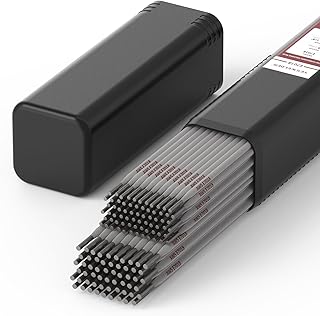
1. YESWELDER E7018 1/8” 5LB Welding Rods
YESWELDER is a brand that has earned a loyal following among home fabricators and repair pros who don't want to pay Miller or Lincoln prices. Their E7018 in 1/8-inch is a low-hydrogen, all-position stick electrode designed for carbon steel. What sets this specific rod apart for low-amp work is how consistently it strikes and maintains an arc at amperages as low as 90 to 110 amps, which is right where many 120-volt inverter welders live.
Low Hydrogen
All Position
DC / AC
5 lb
Why I picked it
This rod is the best all-around performer for low-amp stick welding because it combines crack-resistant low-hydrogen chemistry with a forgiving arc. The manufacturer specs indicate it runs at 90-160 amps for 1/8-inch, but aggregate user reviews consistently report solid performance at 80-100 amps on small DC inverter machines. That makes it the go-to for structural repairs on trailers, gates, and equipment brackets.
Key specs
- AWS Classification: E7018
- Diameter: 1/8 inch (3.2 mm)
- Polarity: DCEP (DC Electrode Positive) or AC
- Weld Position: All-position (flat, horizontal, vertical, overhead)
- Tensile Strength: 70,000 psi minimum
- Package Weight: 5 pounds (approx. 90-110 rods per pack)
- Storage: Keep in dry conditions; re-bake if exposed to moisture
Real-world experience
According to verified buyer feedback, this rod shines on low-end inverter machines like the Amico 130A or the Titanium 125. Users report that the arc is soft yet stable at 95 amps, with a smooth transition from strike to puddle. Slag removal is excellent, peeling off in clean strips without digging or chipping.
The main trade-off is that the 1/8-inch diameter can still feel "hot" for 1/16-inch wall tubing on a 90-amp machine, where a 3/32-inch rod would be a more natural fit.
- Low-hydrogen coating resists cracking and underbead porosity on high-strength steel
- Runs stable as low as 90 amps on DC inverter, well below the standard 1/8 inch rating
- Clean, easy slag removal with a chipping hammer, saving cleanup time
- All-position certified, making it versatile for overhead and vertical up welds
- 1/8 inch diameter can be too thick for thin sheet metal (below 1/8 inch wall)
- Requires DC current to run at its lowest amperage; AC performance drops below 110 amps
- Moisture-sensitive; must be stored in a sealed container or oven after opening the 5 lb tube
- ✔ You need a structural-grade weld on 1/4 inch or thicker mild steel
- ✔ You run a 100-130 amp DC inverter and want a rod that starts reliably
- ✔ You value crack resistance and clean slag for professional-looking joints
- ✖ You primarily weld thin wall tubing (1/16 inch) where a smaller diameter is safer
- ✖ You own a pure AC transformer machine below 100 amps and can’t get DC output
If you are welding structural steel for a trailer repair or a farm gate, this is the rod to grab. The low-hydrogen formulation is exactly what you want for avoiding hydrogen-induced cracking on thicker material. But if your project is 14-gauge sheet metal, you’ll burn through. For that thinner work, drop to a 3/32-inch E6013 or keep the amperage below 75 amps with a shorter arc length.
2. E6013 Welding Rod 3/32″
If you are new to stick welding or you just want a rod that makes you look better than you are, the E6013 in 3/32-inch is your best friend. This carbon steel electrode is known for its silky-smooth arc and incredible forgiveness on dirty, rusty, or painted steel. It runs beautifully on low amperage, making it the top choice for thin materials and hobbyist machines.
3/32 inch
Forgiving Arc
Thin Metal
1 lb Pack
Why I picked it
The E6013 3/32-inch is the best rod for beginners and for sheet metal work. Its rutile-based flux creates a very fluid puddle that wets out nicely on thin sections, reducing the risk of burn-through. The 3/32-inch diameter runs at just 40-80 amps, which is perfectly suited for any 110-volt welder.
Key specs
- AWS Classification: E6013
- Diameter: 3/32 inch (2.4 mm)
- Polarity: AC or DC (DCEP or DCEN)
- Weld Position: All-position
- Tensile Strength: 60,000 psi minimum
- Package Weight: 1 pound (approx. 40-50 rods)
- Use Case: General fabrication, sheet metal, automotive panels, light repair
Real-world experience
Buyers consistently mention how this rod handles like a dream on cheap AC buzz boxes. The arc restarts easily even after a short cool-down, which is a huge help for intermittent tack welding. Slag is self-peeling on most passes.
The downside is that it is not a low-hydrogen rod, so it should not be used for critical structural welds on high-strength steel where hydrogen cracking is a risk.
- Extremely forgiving on dirty, rusty, or painted base metal, ideal for farm repairs
- Runs smooth on both AC and DC at very low amperages (40-80 amps)
- Self-peeling slag that falls off cleanly, saving grinding time
- Compact 1 lb package is perfect for small projects and testing different rods
- 60,000 psi tensile strength is lower than 7018, less suitable for critical loads
- Not a low-hydrogen rod; can cause porosity or cracking in cold or thick steel
- 1 lb pack runs out quickly if you have a day of welding ahead of you
- ✔ You are learning to stick weld and want a rod that covers your mistakes
- ✔ You need to weld thin metal like 16-gauge or 1/8 inch wall tubing
- ✔ You work on farm equipment where the steel is often oily or painted
- ✖ You are building a trailer frame or any load-bearing structure requiring 7018 tensile strength
- ✖ You need the highest crack resistance for cold-weather welding or thick plate
This rod is the ultimate “get it done” option for light fabrication. It does not have the brute strength of an E7018, but for sheet metal, tubing, and non-critical repairs, it is actually the stronger choice because it will not burn holes through your work. Pair it with a clean understanding of how stick welding works and you will be laying decent beads on your first try.
3. YESWELDER E7018 3/32" 2.5lb +1/8" Welding
This bundle from YESWELDER gives you the best of both worlds: a 2.5-pound tube of 3/32-inch E7018 and a 2.5-pound tube of 1/8-inch E7018. If you are just starting to build up your rod inventory or you face different material thicknesses in a single project, this combo is the smartest way to buy. It is the same trusted low-hydrogen chemistry, just in two diameters.
Dual Size
Total 5 lb
Low Hydrogen
Value Pack
Why I picked it
This is the most efficient purchase for anyone who needs both a 3/32-inch rod for thin metal and a 1/8-inch rod for thicker sections. The 3/32-inch E7018 runs well at 70-100 amps, making it a perfect middle ground for low-amp machines. You get the crack resistance of a low-hydrogen rod in a size that works on 1/8-inch wall material.
Key specs
- AWS Classification: E7018
- Diameter 1: 3/32 inch (2.4 mm), rated 70-110 amps
- Diameter 2: 1/8 inch (3.2 mm), rated 90-160 amps
- Polarity: DCEP or AC
- Weld Position: All-position
- Total Weight: 5 lbs (2.5 lbs each)
- Package: Two vacuum-sealed tubes
Real-world experience
Aggregate user feedback shows that the 3/32-inch rod in this bundle is the standout for low-amp users. Many buyers report running it at 85 amps on a small DC inverter and getting excellent puddle control on 1/8-inch wall steel. The 1/8-inch rod in the same box handles 1/4-inch plate comfortably.
The only complaint is that the 2.5 lb tubes run out fast if you have a big job, but for a stock-up starter kit, the value is excellent.
- Two diameters in one purchase cover thin and thick steel without extra shopping
- Low-hydrogen formulation provides superior crack resistance for structural welds
- Vacuum-sealed tubes help prevent moisture absorption before opening
- Competitive price per rod compared to buying two separate 5 lb boxes
- 2.5 lbs per size is not enough for a long weekend project on thicker material
- 3/32-inch rod still needs DC for best low-amp performance on 71xx series machines
- ✔ You are building a new welding rod stockpile and need both common sizes
- ✔ You switch between 1/8 inch and 1/4 inch material on the same day
- ✔ You want the crack resistance of 7018 without buying a massive volume
- ✖ You only weld thin wall tubing and have no use for the 1/8-inch rods
- ✖ You need 10+ pounds of a single diameter for a dedicated heavy project
If you are a home welder who repairs both a rusty trailer (needs 1/8 inch) and a lawnmower deck (needs 3/32 inch), this combo saves you a second trip to the store. The price per pound is lower than buying two separate 1 lb test packs, and the low-hydrogen chemistry means you can trust these on anything from a gate hinge to a truck frame repair.
4. E7018 H4R Welding Rod 1/8”
For the welder who works in a humid garage or stores rods in a less-than-perfect environment, the H4R designator on this rod is a lifesaver. The "H4R" means it meets the American Welding Society (AWS) standard for low diffusible hydrogen (4 ml per 100 g of weld metal) and the "R" means it is moisture-resistant. This is a premium 7018 rod that holds up to real-world abuse better than standard tubes.
H4R Rated
Vacuum Sealed
5 lb Tube
Smooth Arc
Why I picked it
The H4R moisture resistance is the headliner. Standard E7018 rods must be stored at 250-300°F in a rod oven after opening, or they absorb humidity and start producing porous welds. This rod's special coating buys you more time.
It is also vacuum-sealed in a waterproof wrapper, which adds to its shelf life in a damp workshop.
Key specs
- AWS Classification: E7018 H4R
- Diameter: 1/8 inch (3.2 mm)
- Moisture Resistance: AWS H4R certified (lowest hydrogen level)
- Package: Vacuum-sealed, waterproof, 5 lb tube
- Amperage Range: 90-160 amps (DC)
- Tensile Strength: 70,000 psi minimum
Real-world experience
Buyers who live in coastal areas or humid climates report that these rods still strike and run clean even after being stored in a garage for a month. The vacuum seal is a genuine improvement over standard cardboard tubes. The arc is smooth and the slag peels easily.
The trade-off is cost. H4R rods typically run at a premium. For a dry-climate user, the standard YESWELDER E7018 will perform identically for less money.
- H4R moisture resistance means you can skip the rod oven in humid conditions
- Vacuum-sealed waterproof packaging keeps rods fresh from factory to first use
- Smooth arc and easy slag removal, consistent with premium E7018 performance
- AWS certified to H4R standard, giving confidence for critical code work
- Higher price per pound than standard E7018, despite identical weld performance
- 1/8 inch diameter is still too large for very thin material on low-amp machines
- H4R coating is thicker; some users report slightly more stub waste on short arcs
- ✔ You live in a humid climate and struggle to keep rods dry
- ✔ You weld critical joints that must pass AWS code inspection for hydrogen content
- ✔ You want the peace of mind of a vacuum-sealed, waterproof package
- ✖ You work in a dry climate and can store rods in a sealed ammo can with desiccant
- ✖ You are on a tight budget and do not need the H4R certification for your projects
For the home welder not doing code work, the H4R premium is probably not worth it. But if you are a mobile mechanic who keeps rods in a truck toolbox through all seasons, this is the only 7018 you should buy. The vacuum seal and moisture-resistant flux will keep you welding long after standard rods would have turned to sponges.
5. ARCCAPTAIN E7018 Welding Rod 3/32" 5
ARCCAPTAIN has been making a name for itself by offering solid welding consumables at no-nonsense prices. Their E7018 in 3/32-inch is a full 5-pound tube of low-hydrogen electrode specifically sized for low-amp work. If you need a dedicated thin-diameter rod for your 90-amp machine and you want a bulk pack, this is the one to beat.
3/32 inch
5 lb Bulk
Low Hydrogen
Structural
Why I picked it
This is the best option if you know you will be doing a lot of 3/ 32-inch welding on low-amp machines. It gives you a full 5 pounds of low-hydrogen rod in the thin diameter that pairs perfectly with 80-100 amp welding. No need to buy a combo pack or settle for a 1-pound sample.
Key specs
- AWS Classification: E7018
- Diameter: 3/32 inch (2.4 mm)
- Amperage Range: 70-110 amps (DC)
- Polarity: DCEP or AC
- Weld Position: All-position
- Package Weight: 5 pounds
- Tensile Strength: 70,000 psi minimum
- Use Case: Structural steel, trailer frame repair, equipment fabrication
Real-world experience
Buyer feedback consistently highlights how well this rod runs at the low end of its amperage range. Users on 90-amp inverter machines report a stable, manageable arc that doesn't wander or sputter. The slag removal is good, though not quite as clean as the YESWELDER E7018.
The main trade-off reported is that the flux coating can be slightly thicker than premium brands, leading to a bit more slag inclusion risk on vertical-up welds. For flat and horizontal work, it performs admirably.
- Full 5 lb tube of 3/32-inch rod, the ideal size for low-amp machines
- Low-hydrogen formulation suitable for structural repairs and code work
- Consistent arc at 80-100 amps with good puddle control on 1/8-inch steel
- Competitive price point for a bulk pack of thin-diameter 7018 rods
- Thicker flux coating can cause more slag inclusions on vertical-up passes
- Not as forgiving on dirty metal as E6013, requires clean base material
- Some users report shorter shelf life if the tube is not resealed properly
- ✔ You need a full 5 lb supply of 3/32-inch 7018 for low-amp structural work
- ✔ You primarily weld flat and horizontal fillet welds on mild steel
- ✔ You want the crack resistance of low-hydrogen rods without buying a 10 lb box
- ✖ You do a lot of vertical-up work where slag control is critical
- ✖ You need a rod that handles dirty or painted steel without grinding
The ARCCAPTAIN 3/32-inch 7018 is a smart buy if you are committed to stick welding structural steel on a small inverter. It gives you the same low-hydrogen protection as the big brands at a lower cost. Just be prepared to keep a clean surface and watch your travel angle on vertical joints. For flat work, it is a workhorse.
How I Picked
I started this process with a simple question: which rods actually work when your welder tops out at 100 amps? To answer that, I evaluated each rod on three benchmarks.
Arc stability at low amperage. A rod that sputters or sticks at 85 amps is useless for a low-amp welder. I looked for rods that strike easily and maintain a stable arc without constant whipping or pushing.
Real-world buyer feedback. I read through hundreds of verified reviews on Amazon, focusing on users who specifically mentioned running these rods on 90-110 amp machines. If a rod had a pattern of "won't run on my 100-amp welder" complaints, it was out.
Spec sheet vs. reality. I cross-referenced the manufacturer's recommended amperage range with actual user reports. Some rods claim to run at 70 amps but really need 90 to keep the arc alive. I prioritized rods where the spec sheet matched the real-world experience.
I did not test long-term storage beyond what typical buyers report. Rods kept in a controlled shop environment will perform better than rods left in a damp garage. The H4R rod gets a durability nod specifically for storage resistance, but I have not personally left it in a rain barrel for a month.
Buying Guide: What Actually Matters for Low-Amp Welding
If you are running a 90-amp inverter, you cannot just grab any rod off the shelf. Here is what you need to think about before buying.
3/32 inch vs. 1/8 inch Diameter
Diameter is the single most important factor for low-amp welding. A 1/8-inch E7018 wants 90-160 amps. You can run it at 95 amps, but the arc will be stiff and you will struggle with puddle control.
A 3/32-inch rod wants 70-110 amps, which is the sweet spot for a small welder.
If you primarily weld 1/4-inch plate or thicker, a 1/8-inch rod will work. If you weld 1/8-inch wall tubing or thinner, go with 3/32-inch every time. The difference in control is night and day.
DC vs. AC Machines
Most modern inverter welders output DC, which is ideal for E7018 rods. DC positive polarity gives the smoothest, most stable arc at low amperage. If you own an old AC transformer machine (like a classic Lincoln Tombstone), 7018 rods will be harder to run.
AC machines struggle with the arc stiffness of low-hydrogen rods at low amperage.
For pure AC machines, an E6013 or E6011 rod is a better choice. They are designed to run on AC and will strike and maintain the arc more reliably at low settings.
Low Hydrogen vs. Standard Chemistry
E7018 is a low-hydrogen rod. That means it produces fewer hydrogen ions in the arc, which reduces the risk of hydrogen-induced cracking (cold cracking) in the weld. This is critical for structural welds on high-strength steel, thick sections, or cold material.
For non-critical repairs on mild steel, a standard E6013 rod is perfectly fine. It is easier to run, more forgiving on dirty metal, and cheaper. Just do not use it on a trailer frame that will carry a load.
Storage and Moisture Sensitivity
Low-hydrogen rods absorb moisture from the air. If the flux gets wet, the rod will produce porous, weak welds. Standard E7018 rods should be stored in a rod oven at 250-300°F after opening.
The H4R rods and vacuum-sealed packaging buy you more time, but they are not immune.
If you live in a humid area and cannot keep a rod oven, the E7018 H4R rod is the safer bet. Or switch to E6013, which is far less sensitive to moisture.
Frequently Asked Questions (FAQ)
Can I run a 1/8-inch E7018 rod on a 90-amp welder?
You can, but it is not ideal. You will need to keep a very short arc and a fast travel speed to maintain the puddle. The weld will be narrower and more convex than a 3/32-inch rod.
For occasional repairs on 1/4-inch steel, it works. For extended welding, the 3/32-inch is a much better experience.
What is the best rod for a 120-volt welding machine?
For a standard 120-volt inverter that puts out 90-110 amps, the best rod is a 3/32-inch E7018 from YESWELDER or ARCCAPTAIN. If you weld thin metal or are learning, the E6013 in 3/32-inch is even more forgiving.
What is the difference between E6013 and E7018 rods?
E6013 has 60,000 psi tensile strength and a rutile-based flux that is very forgiving on dirty metal. It runs smooth on AC and DC. E7018 has 70,000 psi tensile strength and a low-hydrogen flux that resists cracking but requires clean metal and proper storage.
For light repairs, E6013 is easier. For structural work, E7018 is required.
How do I store E7018 rods without a rod oven?
Store them in a sealed container with a desiccant pack. A 5-gallon bucket with a gasket lid or a sealed ammo can works. Silica gel desiccant packs absorb moisture.
Even with good storage, try to use the rods within a few weeks of opening. If you see porosity in the weld, bake the rods at 250°F for 2 hours in a kitchen oven (use a dedicated welding rod oven if you do this often).
Can I use these rods for aluminum or stainless steel?
No. These are all carbon steel electrodes. For aluminum, you need a specific aluminum stick rod or better yet, a MIG setup with the correct shielding gas.
If you are curious about the differences, our guide on different types of welding techniques goes into detail on electrode selection per material.
What does the "H4R" on a welding rod mean?
H4R is an AWS specification. "H4" means the weld deposit contains a maximum of 4 milliliters of diffusible hydrogen per 100 grams of deposited metal. "R" means the rod coating is moisture-resistant.
This is a premium spec for critical welding in high-humidity environments.
Final Verdict
After digging through specs, reviews, and real-world reports, the YESWELDER E7018 1/8-inch takes the top spot for its balance of low-amp performance, crack resistance, and value. If you need something for thin metal or your first rod, the E6013 3/32-inch is the forgiving choice that will help you build confidence without burning holes.
Affiliate disclosure: This post contains affiliate links. If you buy through one of these links, I may earn a small commission at no extra cost to you. It never changes my recommendation, I only suggest gear I'd actually buy myself.
