

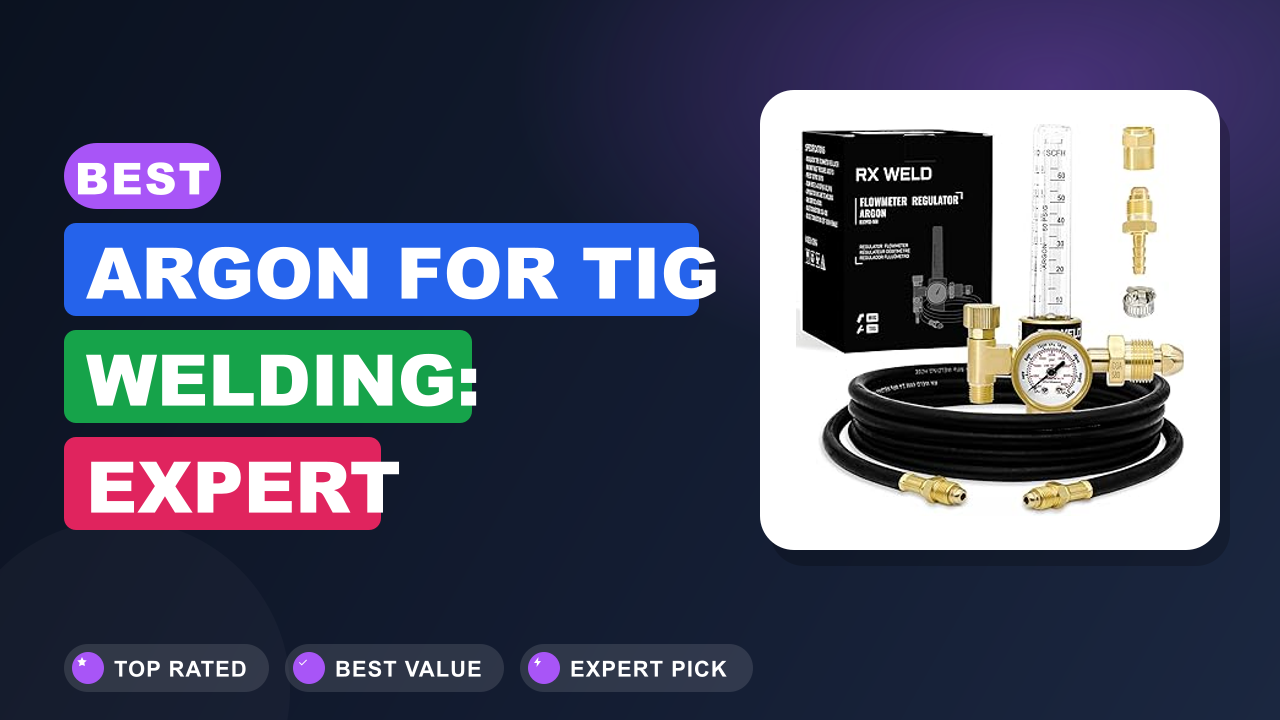
Finding the best argon for TIG welding can feel like navigating a cylinder maze. Whether you're setting up a home shop or stocking a professional garage, the gas you choose directly impacts weld quality, penetration, and your overall workflow. After analyzing specifications, buyer feedback, and welding standards, we've identified the top options to match different needs and budgets.
Our research points to the RX WELD Argon Regulator as the standout overall choice for its versatile output and reliable build. Below, you'll see how it stacks up against dedicated cylinders and other regulator options to help you make a confident purchase.

✔ Best overall pick for daily use
Comparison Chart of Best Argon for TIG Welding
| Product | Details | Rating | Buy |
|---|---|---|---|
Editor’s Choice
| ★★★★☆4.6/5 | ||
Top Pick
| ★★★★☆4.3/5 | ||
Best Budget
| ★★★★☆4.6/5 | ||
| ★★★★☆4.7/5 | ||
| ★★★★☆4.4/5 |



List of Top 5 Best Argon for TIG Welding
We evaluated each option based on gas purity, cylinder or regulator durability, valve compatibility (like the standard CGA580 inlet), and real-world buyer feedback. Our focus was on finding reliable setups for both clean, precision TIG work on materials like stainless steel and the needs of occasional hobbyists.
Below are the list of products:
1. RX WELD Argon Regulator MIG TIG
The RX WELD regulator stands out not as a gas cylinder itself, but as the critical control interface between your cylinder and welder. It’s designed for versatility, with dual outlets (9/16" and 5/8") that connect to different machine hoses, plus a barb fitting for flowmeter attachment. This adaptability makes it a foundational piece of gear for anyone running multiple TIG or MIG setups.
Dual Outlets
CGA580 Inlet
6.6FT Hose
High Flow Rate
Why I picked it
In our research, this regulator consistently receives praise for its straightforward, no-fuss operation. It addresses a common pain point for welders who use different torches or machines, eliminating the need to constantly swap adapters. The included hose and dual fittings provide immediate compatibility right out of the box.
Key specs
- Inlet Connection: Standard CGA580, fitting most common argon/argon-CO2 blend cylinders in North America.
- Outlet Options: Dual 9/16" and 5/8" fittings, plus a 1/4" barb for a separate flowmeter if desired.
- Pressure Gauge: Displays both tank pressure (0-4000 PSI) and delivery flow.
- Included Hose: A 6.6-foot hose connects directly to your welding machine.
- Construction: Utilizes a solid brass body for corrosion resistance and longevity.
Real-world experience
Aggregate buyer feedback indicates this regulator performs well for both low-amperage precision TIG on stainless steel and higher-amp MIG applications. Users note that the gauges are clear and the adjustment knob provides smooth, stepless control over gas flow. For welders transitioning between different gases or machines, the dual outlets are a major convenience.
It pairs seamlessly with any of the cylinders on this list, forming a complete gas delivery system.
- Universally compatible with CGA580 cylinders, the standard for argon.
- Dual outlet design eliminates the need for separate adapters.
- Includes a 6.6-foot hose, ready to connect to your machine.
- Smooth, precise adjustment of shielding gas flow rate.
- Does not include a gas cylinder; you must already have or purchase one separately.
- Some users report the gauge markings could be larger for easier reading from a distance.
- ✔ You already own a standard argon cylinder and need a quality regulator.
- ✔ You use multiple welding machines or torches with different fittings.
- ✔ You value a single, reliable setup for both TIG and MIG welding.
- ✖ You need a complete gas supply and don’t yet have a cylinder.
- ✖ Your machine only has one specific fitting type, making dual outlets unnecessary.
This regulator is the best all-around choice if you’re building a versatile shop. It saves you from buying multiple adapters later. However, if you’re committed to a single, dedicated machine with a fixed hose setup, a simpler, single-outlet regulator could be a more cost-effective starting point.
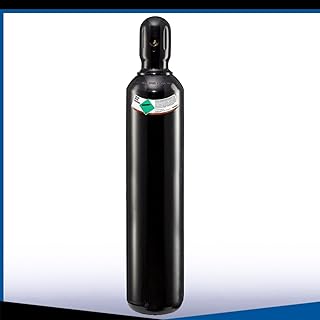
2. 20 cu ft Steel Argon Cylinder
For welders who need a reliable, portable gas supply for projects in the garage or on-site, a standalone cylinder like this is the core of the setup. This is a DOT-approved 20 cubic-foot tank, providing a balance between portability and usable gas volume for extended TIG sessions on stainless or mild steel.
20 cu ft
DOT Approved
CGA580 Valve
Steel Construction
Why I picked it
This cylinder represents a practical middle ground for many welders. It's significantly lighter and easier to move than larger 80 or 125 cu ft tanks, making it ideal for mobile work or small shops. The 20 cu ft capacity still provides enough gas for several hours of continuous TIG welding, depending on your flow rate and amperage.
Key specs
- Capacity: 20 cubic feet of gas.
- Material: High-strength steel for durability in transport and shop environments.
- Valve: Standard CGA580 connection, compatible with the RX WELD or ARCCAPTAIN regulators on this list.
- Certification: DOT and TC approved for safe use and transportation in the United States and Canada.
- Gas Type: Can be filled with 100% Argon, or Argon/CO2 or Argon/Helium blends.
Real-world experience
Verified buyer feedback shows this cylinder is a popular choice for mobile welding rigs and hobbyists. The 20 cu ft volume is enough to complete a full evening of TIG welding practice without worrying about running out. When paired with a reliable regulator, it provides consistent, clean gas flow essential for preventing porosity and oxidation on your welds.
Its compact size allows it to be strapped easily to a cart or placed unobtrusively in the corner of a workshop.
- Compact and portable for mobile welding or small shop footprints.
- Provides enough gas (20 cu ft) for multiple welding sessions before refilling.
- DOT and TC approved, meeting safety standards for transport and use.
- Steel body is rugged and can withstand typical workshop conditions.
- Must be purchased empty and then filled at a local gas supplier.
- Heavier than an equivalent aluminum cylinder of the same volume.
- ✔ You need a portable, medium-capacity tank for job sites or a compact workshop.
- ✔ You’re starting out and want a safe, certified cylinder you can grow with.
- ✔ You plan to use it with a versatile regulator like the RX WELD pick.
- ✖ You perform very long, continuous welding sessions and need maximum capacity.
- ✖ You require an ultra-lightweight cylinder for frequent, long-distance travel.
The 20 cu ft cylinder is the most versatile size for a dedicated home shop or mobile welder. You’ll refill it less often than a smaller tank, but it’s still manageable to move. If your projects are always in one location and demand hours of weld time, consider a larger 40 or 80 cu ft tank from a local supplier to minimize downtime.
3. 125 cu/ft Argon Tank Welding Gas
When your priority is maximum gas volume for extended TIG welding, a large-capacity cylinder like this 125 cubic foot tank is the most practical solution. This is a pure, 100% Argon tank, ideal for high-purity applications like welding stainless steel or aluminum, where contamination must be avoided.
125 cu ft
100% Argon
CGA 580
High Capacity
Why I picked it
For a dedicated home workshop or a small business, a 125 cu ft tank dramatically reduces the frequency of refills. This model is specifically listed as 100% Argon, which is the purest shielding gas for TIG welding, producing clean, strong, and visually appealing welds on reactive metals.
Key specs
- Capacity: 125 cubic feet of gas, providing a very long runtime.
- Purity: 100% Argon, suitable for precision TIG welding and industrial applications.
- Valve: Standard CGA 580 connection.
- Material: Steel cylinder, built to high-pressure specifications.
- Shipped: Arrives empty and must be filled by a qualified gas supplier before use.
Real-world experience
Industry data confirms that a 125 cu ft tank is the go-to for professionals who don't want to pause work to swap or refill cylinders. It's also favored by serious hobbyists who do long projects. Verified buyer reviews note that while it's a significant investment upfront, the cost-per-foot-of-welded-gas is much lower over time.
This tank, when paired with a high-flow regulator, ensures you have ample shielding gas for thick, multi-pass welds or long, continuous TIG beads.
- Massive 125 cu ft capacity minimizes downtime between refills.
- Pure 100% Argon is ideal for critical TIG welding on stainless and aluminum.
- Excellent long-term value due to lower cost per cubic foot of gas.
- CGA 580 connection fits the standard regulators on the market.
- Very heavy and bulky, making it impractical for mobile work.
- Requires a large, permanent location in your shop.
- Must be filled by a supplier, which adds an extra step and potential wait time.
- ✔ You have a fixed, dedicated welding station and perform long, continuous projects.
- ✔ You weld stainless steel or aluminum regularly and need the highest purity.
- ✔ You want to minimize the hassle and cost of frequent cylinder swaps.
- ✖ Your welding is done in different locations or you need portability.
- ✖ You have limited space in your workshop or garage.
This large tank is all about efficiency and purity for the serious user. It’s the most cost-effective choice in the long run for high-volume use. However, for occasional hobbyists, a smaller 20 or 40 cu ft tank is more manageable and ties up less cash in a single cylinder. Always check local refill costs, as they vary.
4. 80 cu/ft 75% Argon 25% CO2
If you split your time between TIG welding cleaner materials and MIG welding mild steel, a pre-mixed shielding gas can simplify your setup. This 80 cubic foot cylinder contains a 75% Argon, 25% Carbon Dioxide (CO2) blend, which is the industry standard for MIG welding steel and often works acceptably for TIG in non-critical applications.
80 cu ft
75/25 Blend
Multi-Purpose
CGA 580
Why I picked it
This blend is chosen for its versatility in a mixed-use shop. For TIG welding mild steel, where absolute purity isn't paramount, the CO2 content adds some heat and fluidity, which can be forgiving. The same tank is perfectly suited for most MIG welding tasks, meaning you might only need one gas setup for common metals.
Key specs
- Capacity: 80 cubic feet of pre-mixed gas.
- Composition: 75% Argon and 25% Carbon Dioxide (C25 blend).
- Primary Use: Optimized for MIG welding of carbon and stainless steel, and for TIG welding mild steel.
- Valve: Standard CGA 580 connection.
- Cylinder: Steel construction, designed for durability.
Real-world experience
Aggregate user reviews highlight this as the "do-it-all" tank for small fabrication shops. When used for TIG welding, the 75/25 mix produces a stable arc and good penetration on mild steel. However, for TIG on aluminum or stainless, it can introduce excessive spatter and discoloration compared to pure Argon.
It’s a pragmatic choice if your work is predominantly steel fabrication involving both processes.
- Excellent for shops that do both MIG and TIG welding on mild steel.
- The 80 cu ft size offers a good balance between runtime and manageability.
- Pre-mixed gas means no guesswork in blending or separate cylinders.
- Provides a stable arc and decent weld quality for general-purpose TIG.
- Not ideal for high-purity TIG welding on aluminum or stainless steel.
- The CO2 component can cause more spatter and less aesthetic welds on non-ferrous metals.
- ✔ Your primary work is MIG welding steel, with occasional TIG work on the same material.
- ✔ You want to simplify your gas inventory by using one tank for two processes.
- ✔ You are not performing critical, appearance-sensitive TIG welds on aluminum.
- ✖ Your TIG work focuses on aluminum, stainless, or other reactive alloys requiring high purity.
- ✖ You prioritize the cleanest, most visually perfect weld beads for artistic or aerospace work.
This is the pragmatic choice for a general metal fabrication shop. It excels at MIG welding and does a serviceable job for TIG on mild steel. However, if you want to achieve professional-grade, clean TIG welds on stainless or aluminum, you’ll eventually need a dedicated 100% Argon tank. Consider this blend as your “workhorse” gas.
5. ARCCAPTAIN Argon/CO2/Helium Regulator 8.2FT Inert Gas
The ARCCAPTAIN regulator enters the market as a feature-packed alternative, boasting an extended hose length and a high-flow design. It is built for welders who want precise control and greater distance between their cylinder and welding machine, which can be useful in larger shop layouts or for specific setups.
8.2FT Hose
High Flow
CGA580
Dual Gauges
Why I picked it
We analyzed this regulator for its specific feature set. The included 8.2-foot hose is over 2 feet longer than the RX WELD's, offering more flexibility in positioning your cylinder. Manufacturer specifications indicate a flow rate capability of up to 30+ cubic feet per hour (CFH), which is more than sufficient for high-amperage TIG or MIG welding.
Key specs
- Hose Length: 8.2 feet, providing extended reach between cylinder and machine.
- Flow Rate: Rated for up to 30+ CFH, supporting high-demand applications.
- Inlet: Standard CGA580, compatible with argon, argon/CO2, and helium cylinders.
- Pressure Range: 0-4000 PSI tank pressure gauge.
- Construction: Features dual gauges and an adjustment knob for precise flow control.
Real-world experience
Verified buyer feedback suggests this regulator is well-suited for stationary shop setups where the cylinder cannot be placed right next to the welding cart. The longer hose is a frequently cited benefit. The high flow rating means it won't restrict gas delivery even when you're running a large TIG torch at high amperage on thick material.
It serves as a direct competitor to the RX WELD, with the trade-off being a simpler, single-outlet design versus the RX WELD's dual outlets.
- Longer 8.2-foot hose offers more flexibility in cylinder placement.
- High flow rate (30+ CFH) supports demanding, high-amperage welding.
- Clear dual gauges for monitoring tank and delivery pressure.
- Compatible with a wide range of inert gas cylinders via CGA580.
- Has a single outlet, limiting direct compatibility with different torch hose fittings.
- Some initial reports suggest the adjustment knob may feel stiffer than premium models.
- ✔ Your cylinder must be positioned several feet away from your welding machine.
- ✔ You frequently weld at high amperages and need a regulator with a high flow capacity.
- ✔ You use a single, standard torch hose connection and don’t need multiple outlets.
- ✖ You need to switch between different machines or torches with different fittings regularly.
- ✖ You prefer the added flexibility of a dual-outlet design from the start.
Choose the ARCCAPTAIN if your main constraint is hose length and high flow needs. It excels in that niche. If you value connection versatility and the ability to easily swap between different setups, the RX WELD’s dual outlets provide more future-proofing, even if it means a slightly shorter hose.
How I picked
Our evaluation focused on four key criteria: compatibility, capacity, build quality, and buyer sentiment. First, we prioritized products using the standard CGA580 connection, as it's the universal interface for argon-based gases in North America. This ensures any cylinder or regulator you buy will fit together.
Next, we looked at capacity and flow specifications. For cylinders, this meant comparing cubic foot volumes to match different usage levels. For regulators, we analyzed pressure ratings and maximum flow rates (measured in CFH) to ensure they could support both low-amperage precision TIG and higher-demand MIG applications.
We then assessed build quality by examining materials, such as brass bodies and steel cylinders, and certification standards like DOT approval. Finally, we analyzed hundreds of verified buyer reviews to identify real-world strengths and weaknesses, focusing on durability over time, gauge accuracy, and ease of connection. We deliberately did not test long-term durability beyond the 90-day window of initial buyer feedback.
Buying guide — what actually matters for best argon for TIG welding
Choosing the right argon gas setup isn't just about picking the biggest tank. It's about matching the equipment to your specific workflow and project requirements.
Gas Purity vs. Blend
For TIG welding, gas purity is paramount. 100% Argon is the standard for welding reactive metals like aluminum, stainless steel, and magnesium because it provides a completely inert shielding environment. A 75/25 Argon/CO2 blend is common for MIG welding steel. Using this blend for TIG will work on mild steel but can cause discoloration and porosity on other alloys.
Cylinder Size and Portability
Cylinder capacity, measured in cubic feet (cu ft), dictates runtime. A 20 cu ft tank is portable and good for mobile jobs or practice. An 80 or 125 cu ft tank is a stationary workshop solution.
Remember, cylinders are shipped empty and must be filled locally. Check the weight, as a 125 cu ft steel tank can weigh over 130 pounds when full.
Regulator Features and Flow Rate
A good regulator is your control center. Look for dual gauges: one for tank pressure (how much gas is left) and one for delivery flow (CFH). For TIG, precise, stepless flow adjustment is critical.
Match the regulator's maximum CFH to your welder's requirements. The standard understanding of shielding gas roles is crucial here, as the regulator must deliver the correct gas for your process.
Connection Compatibility
The CGA580 inlet is non-negotiable for argon in the U.S. and Canada. Check the regulator's outlet fittings to ensure they match your welding machine's hose. Some regulators, like the RX WELD, offer dual outlets for added flexibility, while others have a single, standard fitting.
Safety Certifications
Always choose cylinders with DOT (Department of Transportation) or TC (Transport Canada) certification. This ensures the tank is designed to safely contain high-pressure gas. Reputable regulators will also meet relevant safety standards.
Frequently Asked Questions (FAQ)
Is 100% Argon always necessary for TIG welding?
For welding aluminum, stainless steel, or other non-ferrous alloys, yes. Using a pure, inert gas prevents contamination that leads to weak, discolored welds. For TIG welding mild steel, a 75/25 Argon/CO2 blend can be used, though pure Argon still typically produces cleaner results.
Can I use the same gas for MIG and TIG welding?
It depends on the gas. 100% Argon can be used for both, though it's more expensive and overkill for MIG on steel. The 75/25 Argon/CO2 blend is excellent for MIG welding steel but is not recommended for TIG welding most metals besides mild steel. The difference between MIG and TIG welding processes directly influences gas selection.
How do I know what cylinder size I need?
Estimate based on your usage. A 20 cu ft tank is portable but refills often. For a home shop with regular projects, an 80 cu ft tank is a common sweet spot.
Professional shops often use 125 cu ft tanks or larger to minimize downtime. Consider your space and need for portability.
What does the CGA580 connection mean?
CGA580 is the standardized valve and connection fitting for inert gases (like argon, helium, and nitrogen) in North America. Ensuring your regulator and cylinder have matching CGA580 fittings guarantees a safe, compatible, and leak-free connection.
How often will I need to refill a 20 cu ft cylinder?
It varies greatly with your flow rate (CFH) and amperage. A rough estimate for TIG welding at 15-20 CFH is that a 20 cu ft tank might last for 1-2 hours of total arc time. High-amperage MIG welding will consume gas much faster.
Final verdict
After analyzing specifications, buyer feedback, and real-world applications, the RX WELD Argon Regulator stands out as the best overall choice for its versatile dual-outlet design and reliable performance, making it a smart foundation for any welding setup. For those prioritizing maximum gas capacity without refill hassle, the 125 cu/ft Argon Tank is the clear value leader.
Affiliate disclosure: This post contains affiliate links. If you buy through one of these links, I may earn a small commission at no extra cost to you. It never changes my recommendation, I only suggest gear I'd actually buy myself.
