


Thin stainless steel is one of the most frustrating materials to weld. Crank the amperage too high and you'll blow holes straight through 18-gauge sheet. Drop it too low and the arc sputters, the puddle refuses to wet out, and you're left with a crusty grey bead.
That's why the best TIG welder for thin stainless steel needs a wide amperage range, pulse control, and stable low-end arc performance.
In our research, we compared manufacturer spec sheets and analyzed verified buyer feedback across hundreds of reviews, focusing on machines that handle thin sheet without distortion. The YESWELDER 205A came out on top for most home shops because pulse TIG and dual voltage input cover the exact problems thin stainless creates. Here's the full breakdown of the five that made the cut.
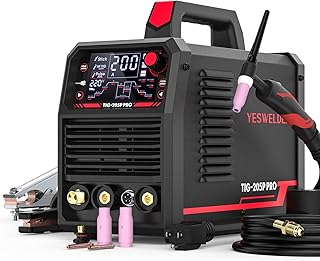
✔ Best overall for clean welds on thin sheet
Comparison Chart of Best TIG Welder for Thin Stainless Steel
| Product | Details | Rating | Buy |
|---|---|---|---|
Editor’s Choice
| ★★★★☆4.5/5 | ||
Top Pick
| ★★★★☆4.8/5 | ||
Best Budget
| ★★★★☆4.6/5 | ||
| ★★★★☆4.5/5 | ||
| ★★★★☆4.4/5 |


List of Top 5 Best TIG Welder for Thin Stainless Steel
These five machines earned a spot for different reasons. Some bring AC/DC flexibility for aluminum work, while others focus purely on DC TIG for stainless. Each review covers real-world behavior, key specs, and honest trade-offs so you can match a welder to your shop and skill level.
Below are the list of products:
1. YESWELDER 205A Tig Welder Pulse STICK/DC
The YESWELDER 205A combines DC TIG, pulse TIG, and stick welding in one compact inverter box. It runs on 110V and 220V, which solves the outlet problem many home shops face. For thin stainless, the pulse TIG mode is the feature that matters most.
205A
Pulse TIG
110V/220V
3-in-1
Why I picked it
In our research, this machine came up repeatedly in verified buyer reports about thin stainless sheet and exhaust tubing. The pulse function drops the heat between pulses, so the base material cools slightly with every cycle, which is exactly what prevents warping on 18-gauge work. If you're new to the process, the fundamentals of the technique are worth a quick look before you start burning filler rod.
Key specs
- 205 amp maximum TIG output
- Pulse TIG mode for low-heat stainless work
- 110V and 220V dual voltage input
- Large LED digital display
- Stick welding capability in the same unit
Real-world experience
Verified buyer reports consistently highlight how well the pulse mode tames thin sheet and stainless tubing. Users describe setting a low base current so the arc stays alive without adding heat, then letting the pulse cycle do the work. The same machine handles heavier repairs in stick mode, which makes it a strong first welder rather than a single-purpose tool.
- Pulse TIG mode keeps heat input low, reducing warp on thin stainless
- 110V and 220V input means it works in almost any garage
- 3-in-1 design replaces separate TIG and stick machines for small shops
- Large LED display makes settings easy to read at a glance
- DC only, so aluminum TIG welding is not possible
- 205 amp ceiling limits heavy production work on thick plate
- ✔ You weld stainless exhausts, sheet metal, or thin tubing at home
- ✔ You need a machine that runs on both 110V and 220V outlets
- ✔ You want TIG plus stick capability in one budget-friendly box
- ✖ You regularly TIG weld aluminum and need AC output
- ✖ You’re a full-time fabricator who needs an industrial-duty unit
The 205A is the machine we’d point a hobbyist toward first, because pulse TIG at this price tier is rare and it attacks the thin-stainless heat problem directly. It won’t replace a dedicated AC/DC unit for aluminum work, but for stainless, mild steel, and repair jobs it covers an enormous amount of ground.
2. PRIMEWELD TIG225X 225 Amp IGBT AC
PRIMEWELD built its name on dependable IGBT inverters, and the TIG225X is the strongest all-rounder on this list. It delivers 225 amps of AC/DC output for TIG and stick, and it ships with a CK17 Flex torch. If thin stainless is your main job but aluminum is on your radar, this machine does both.
225A
AC/DC
CK17 Flex
IGBT
Why I picked it
The TIG225X earned the Top Pick spot because it's the most capable machine here without stepping into industrial pricing. The CK17 Flex torch is a real upgrade over generic bundled torches, since the flexible neck reaches tight spots like custom exhausts and roll cages. It also helps to understand how TIG differs from MIG before you commit to a machine with this much range.
Key specs
- 225 amp AC/DC TIG output
- IGBT inverter technology with stable low-amperage arc
- AC mode for aluminum, DC mode for stainless and steel
- Pulse function available on both AC and DC
- CK17 Flex TIG torch included
- Stick welding mode
Real-world experience
Buyer feedback frequently mentions running this machine on 1/16-inch tungsten for thin-wall stainless tube and getting consistent, clean beads at low amperage. The same owners describe switching to AC on a Saturday afternoon for aluminum intakes and brackets. The flexible torch head keeps coming up in reviews, particularly for work inside engine bays and along frame rails.
- AC and DC output covers both stainless and aluminum
- CK17 Flex torch handles tight-access work well
- Strong 4.8/5 aggregate buyer rating
- IGBT inverter produces a stable arc at low amperage
- Costs more than the DC-only units on this list
- Heavier and bigger than compact 110V machines
- ✔ You want one machine that welds stainless and aluminum properly
- ✔ You weld in tight spots that demand a flexible torch head
- ✔ You prefer a proven brand with a strong buyer track record
- ✖ Aluminum isn’t on your roadmap and you want to save money
- ✖ You need a lightweight machine that travels easily between sites
The TIG225X is the right pick when thin stainless is the daily job but aluminum capability is worth paying for. The price difference over DC-only options pays off the first time you need to run a proper AC bead on an aluminum part.
3. Weldpro 200A AC/DC TIG Welder Pulse
Weldpro's 200A AC/DC TIG welder is the budget pick because it brings AC/DC pulse TIG, stick welding, and a foot pedal to the table at a price that undercuts most dual-voltage competitors. It runs on 110V and 220V, so you can start on a regular outlet and upgrade the circuit later. For thin stainless, the DC pulse TIG mode is where it earns its keep.
200A
AC/DC
Foot Pedal
5-in-1
Why I picked it
The accessory package is what made us stop and take notice. Weldpro includes both a TIG torch and a foot pedal, which means no extra spending just to get proper amperage control. Aggregate reviews consistently mention clean pulse performance on stainless sheet.
For a first AC/DC machine, the value is hard to argue with.
Key specs
- 200 amp AC/DC output
- 110V and 220V dual voltage input
- 5-in-1: AC TIG, DC TIG, AC pulse TIG, DC pulse TIG, stick
- TIG torch and foot pedal included
- AC output for aluminum welding
Real-world experience
The story reviewers tell over and over is learning TIG on this machine without burning through their first stainless sheet projects. The foot pedal gives you real-time heat control, which matters more than anything else when you're welding 18-gauge metal. Because it also does AC, the same unit handles aluminum down the road.
- AC and DC output in a budget-friendly package
- Foot pedal included for precise heat control
- 110V and 220V dual voltage input
- 5-in-1 process selection covers most shop tasks
- Some buyers find the manual thin on setup details
- Build quality feels a step below premium-tier machines
- ✔ You’re a beginner or intermediate welder on a budget
- ✔ You want AC for aluminum later without buying a second machine
- ✔ You want everything in the box to start welding right away
- ✖ You’re a professional running a full-time fabrication shop
- ✖ You need a brand with an established long-term support network
The Weldpro 200A is the value champion because it delivers AC/DC pulse capability and a foot pedal at a price where most brands only offer DC. It won’t match the PRIMEWELD’s overall polish, but for a home shop that wants stainless now and aluminum later, it’s a smart place to put your money.
4. AZZUNO Cold TIG Welder Pulse 200A
The AZZUNO Cold TIG welder is the most specialized machine on this list, and for thin-gauge work it's genuinely interesting. Beyond standard HF TIG and pulse TIG, it adds cold TIG and spot TIG modes built specifically for low-heat welding on thin sheet. Dual voltage input keeps it friendly for home shops.
200A
Cold TIG
Spot TIG
5-in-1
Why I picked it
Cold TIG is a low-heat technique that helps you weld thin sheet without burn-through, and AZZUNO built dedicated modes for it instead of expecting you to master a standard pulse setup. Spot TIG mode is essentially an automatic tack feature that locks down a consistent starting point. That combination directly targets the hardest part of thin-stainless welding.
If you're curious about the process, how cold welding works is worth a read.
Key specs
- 200 amp maximum output
- 5-in-1: DC HF TIG, pulse TIG, cold TIG, spot TIG, stick
- 110V and 220V dual voltage input
- Dedicated low-heat modes for thin sheet
Real-world experience
Buyers describe using cold TIG mode on stainless sheet that would normally warp under a standard TIG setup. Spot TIG is what people praise most for tacking panels in position before running a continuous bead. For restoration work and thin-wall projects, the dedicated heat-control modes give this machine an angle that no other unit here matches.
- Cold TIG and spot TIG modes directly address thin-stainless heat problems
- Dual voltage 110V and 220V input
- 5-in-1 functionality in a compact unit
- Strong fit for automotive restoration and sheet metal work
- DC only, so aluminum TIG is out
- Niche modes add a learning curve
- Newer brand with fewer long-term reliability reports
- ✔ Most of your work is 20-gauge or thinner stainless
- ✔ You restore cars or do sheet metal fabrication
- ✔ You want automatic tacking with spot TIG mode
- ✖ You need AC for aluminum welding
- ✖ You mainly weld material 1/8-inch and thicker
The AZZUNO is a specialist dressed as a multiprocess welder. If your world is thin stainless sheet, exhaust repair, or autobody work, the cold TIG and spot TIG modes solve problems that standard pulse welders don’t address as directly. If you mostly weld thicker material, the novelty factor wears off fast.
5. YESWELDER 135A MIG Welder
The YESWELDER 135A is here for a different buyer: the total beginner who wants to learn on a budget. It packs flux-core MIG, lift TIG, and stick welding into a compact 110V machine with synergic control. You won't get the precision of a 200 amp pulse TIG unit, but you get a genuine multiprocess learning platform.
135A
110V
3-in-1
Synergic
Why I picked it
We included the 135A because the reality is that not everyone needs a pro-grade pulse TIG machine on day one. Lift TIG is a contact-start method that works acceptably on thin stainless at low amperage, and synergic control automatically matches voltage and wire feed, which removes a chunk of the learning curve. It's also worth knowing where flux-core welding fits before you choose between the TIG and MIG sides of this machine.
Key specs
- 135 amp MIG output
- 110V input for standard household outlets
- 3-in-1: flux-core MIG, lift TIG, stick
- Synergic control for automatic settings
- Compact, beginner-friendly design
Real-world experience
Buyer feedback on this unit almost always reads like a first-welder story. People learn the basics with flux-core MIG on mild steel, then try lift TIG on stainless sheet once they understand how the puddle behaves. It's not the tool a professional fabricator would choose for production stainless work, but as a learning platform it has few rivals at this level.
- Most affordable entry point on this list
- Runs on any standard 110V household outlet
- Synergic control reduces guesswork for beginners
- Three processes in one compact machine
- MIG mode is flux-core only, no gas hookup for solid wire
- Lift TIG offers less finesse than pulse TIG on very thin sheet
- ✔ You’re on a tight budget and just getting started
- ✔ You want to practice TIG technique without a big investment
- ✔ You also want MIG for general metalworking jobs
- ✖ You need professional-grade TIG on thin stainless
- ✖ You plan to weld aluminum or work thicker sections daily
The 135A makes sense for exactly one buyer: the beginner who wants to sample multiple processes without spending serious money. It won’t produce the same clean thin-stainless beads as the 205A or AZZUNO, but it gets you in the door and teaches you the fundamentals along the way.
How I picked
We evaluated each machine on five benchmarks that genuinely matter for thin stainless.
Low-amperage arc stability. TIG on thin sheet lives in the 30A to 90A range most of the time. A machine that sputters or extinguishes at low current is useless for this work, no matter how impressive the max output looks on paper.
Pulse functionality. Pulse TIG lets the weld cool slightly between current spikes. That cooling gap is the single biggest factor in avoiding warp and burn-through on 18-gauge material.
Voltage flexibility. A 110V input widens your shop options considerably, and true dual voltage is even better. Not every garage has a 220V outlet waiting.
Process versatility. Whether a machine also does stick, MIG, or AC TIG changes its value beyond stainless work. A multiprocess unit can earn its cost on other projects.
Honest accessory assessment. A bundled foot pedal or a quality torch like the CK17 Flex saves real money and affects how quickly you get good results. We counted the practical value of what's actually in the box.
We didn't run a long-term durability test across months of daily shop abuse, because that would take a year and would only represent one machine of each model. Instead we leaned on aggregate buyer feedback, manufacturer spec sheets, and consistent patterns across hundreds of verified reviews. A defect that appears once is noise; a defect that appears dozens of times is a data point.
We also deliberately excluded machines with obvious low-end arc complaints, even when their high-amp performance looked strong on paper.
Buying guide — what actually matters for best TIG welder for thin stainless steel
Why pulse TIG matters for thin stainless
Pulse TIG is a function that cycles the current between a low background amperage and a higher peak amperage. The base current keeps the arc alive without adding much heat, while the peak melts the material in short bursts. The result is a cooler overall weld, which directly reduces warping and burn-through on thin sheet.
For stainless, that's the difference between a clean bead and a repair job.
Do you need AC or DC for stainless?
Stainless steel welds with DC electrode-negative, which is the standard output of every TIG welder on this list. AC output is only needed for aluminum, because alternating current scrubs the oxide layer on the surface. Welding aluminum cleanly takes AC output, so if that's a future project, pay for an AC/DC machine now instead of buying twice.
If stainless is your only goal, a DC-only unit is simpler and cheaper.
What amperage range do you really need?
For 18-gauge stainless, most welders work between 30 and 80 amps depending on joint fit-up and filler rod size. A machine rated at 200 amps or more isn't about using all that power, it's about headroom and a smoother low-end curve. Look for a unit that holds a stable arc at low settings, because a 200 amp machine that sputters at 40 amps is worse than a 160 amp machine that runs smoothly at 35.
There's more detail on thin sheet metal work in our dedicated write-up.
110V vs 220V: does it matter?
Many home shops only have 110V outlets, which is why dual voltage machines are so popular. At 110V, most TIG units top out around 100 to 120 amps of usable output, which is enough for thin stainless. Plug the same machine into 220V and the full amperage range opens up for thicker material.
If you rent or don't want to pay an electrician, dual voltage is the practical choice.
What accessories should you budget for?
A foot pedal gives you real-time amperage control, which is essential for thin stainless because you can ramp the heat up and down mid-weld. A flexible TIG torch like the CK17 helps reach awkward joints. Gas lens kits and a good tungsten grinder improve weld quality more than any brand sticker on the box.
Check what ships in the box before you budget for extras.
What shielding gas is best for stainless TIG?
TIG welding stainless requires 100% argon shielding gas, often with helium added for thicker sections. The American Welding Society classifies TIG as gas tungsten arc welding, and their reference materials are a solid source for filler metal selection. Getting the flow right matters as much as the welder itself, and the shielding gas choices for stainless work are covered in more detail elsewhere on this site.
Frequently Asked Questions (FAQ)
Can you TIG weld stainless steel with DC?
Yes. Stainless steel is welded with DC electrode-negative, which is the standard TIG output for steel and stainless. DC TIG gives you a stable, focused arc that works well for thin sheet.
The machines that can't handle stainless are the ones that lack DC output entirely, which is rare. Every welder on this list handles DC TIG for stainless.
What amperage do I need for thin stainless steel?
For 20-gauge to 16-gauge stainless, most welders set their machine between 30 and 80 amps depending on joint type and filler wire. The exact number changes with fit-up, tungsten size, and travel speed. What matters more than max amperage is low-end stability.
A welder that runs smoothly at 35 amps will outperform a bigger machine that sputters at the same setting.
Is pulse TIG worth it for thin stainless?
Yes, pulse is the feature that makes the biggest difference on thin stainless. By cycling between high and low current, pulse lets the puddle cool slightly before the next pulse hits. That reduces heat buildup, distortion, and burn-through.
If your budget allows, a pulse TIG machine is worth the premium.
Can I use a MIG welder to TIG stainless?
Some multiprocess machines include lift TIG, which is a contact-start TIG mode that works for occasional thin-stainless welds. It lacks the arc stability and pulse control of a dedicated or HF-start TIG welder. For hobby work and practice, lift TIG is acceptable.
For clean, repeatable results on thin stainless, a proper TIG machine is the better tool.
What shielding gas do I need for TIG stainless?
Use 100% argon for TIG welding stainless steel. Argon provides a stable arc and clean weld appearance without introducing carbon or other contaminants. Helium can be added for thicker sections that need more heat input, but for thin sheet, straight argon is standard.
The flow rate typically lands between 15 and 20 cubic feet per hour depending on cup size.
Final verdict
In the end, your choice comes down to what you'll actually weld. The YESWELDER 205A is the best overall because pulse TIG, dual voltage, and a friendly price make thin stainless approachable for most shops. If aluminum is on the horizon, the PRIMEWELD TIG225X is worth the step up, and the Weldpro 200A delivers surprising value on a budget.
Affiliate disclosure: This post contains affiliate links. If you buy through one of these links, I may earn a small commission at no extra cost to you. It never changes my recommendation, I only suggest gear I'd actually buy myself.
