

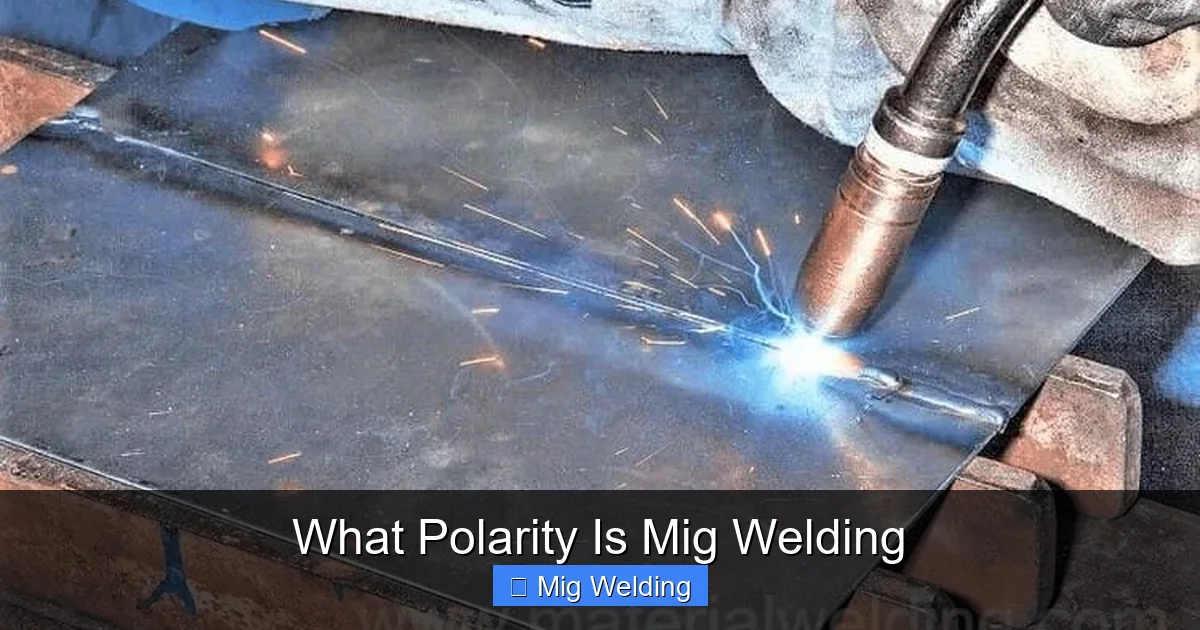
Polarity in MIG welding determines the electrical direction during the welding process, impacting weld quality and penetration. Understanding how to set and adjust polarity is essential for achieving strong, clean welds on various materials.
What Polarity Is MIG Welding
If you’re new to MIG welding, you might wonder what polarity means and how it affects your welds. In simple terms, polarity is about the direction of electrical current during the welding process. It plays a vital role in determining the quality, strength, and appearance of your welds. In this guide, we’ll explore what polarity is in MIG welding, how to set it correctly, and how it influences your welding results.
Key Takeaways
- Polarity defines the electrical flow: It controls the direction of current between the power supply and the welding gun.
- DC and AC polarities: Mig welding mostly uses Direct Current (DC), with polarity choices affecting weld characteristics.
- Electrode positive (DCEP): Provides deeper penetration and is ideal for thicker metals.
- Electrode negative (DCEN): Results in a cleaner weld with less penetration, suitable for thin materials.
- Adjusting polarity: Involves switching the wire and work clamp connections on your welding machine.
- Material-specific settings: Different metals require specific polarity setups for optimal results.
- Troubleshooting weld issues: Correct polarity can solve problems like porosity, weak welds, or excessive spatter.
Understanding the Basics of MIG Welding
MIG (Metal Inert Gas) welding, also called GMAW (Gas Metal Arc Welding), uses a continuous wire electrode fed through a welding gun. An electric arc forms between this wire and the metal workpiece, melting both to create a strong weld. Shielding gas protects the weld pool from contamination.
One of the key settings on your welding machine is polarity. Proper polarity ensures the arc is stable, the weld penetrates correctly, and the weld surface is clean.
What Is Polarity in MIG Welding?
Polarity in MIG welding refers to the direction of electrical current flow between your power source, the welding gun, and the workpiece. It determines which part is positive and which is negative during welding. This setting impacts the characteristics of the arc, heat distribution, and weld quality.
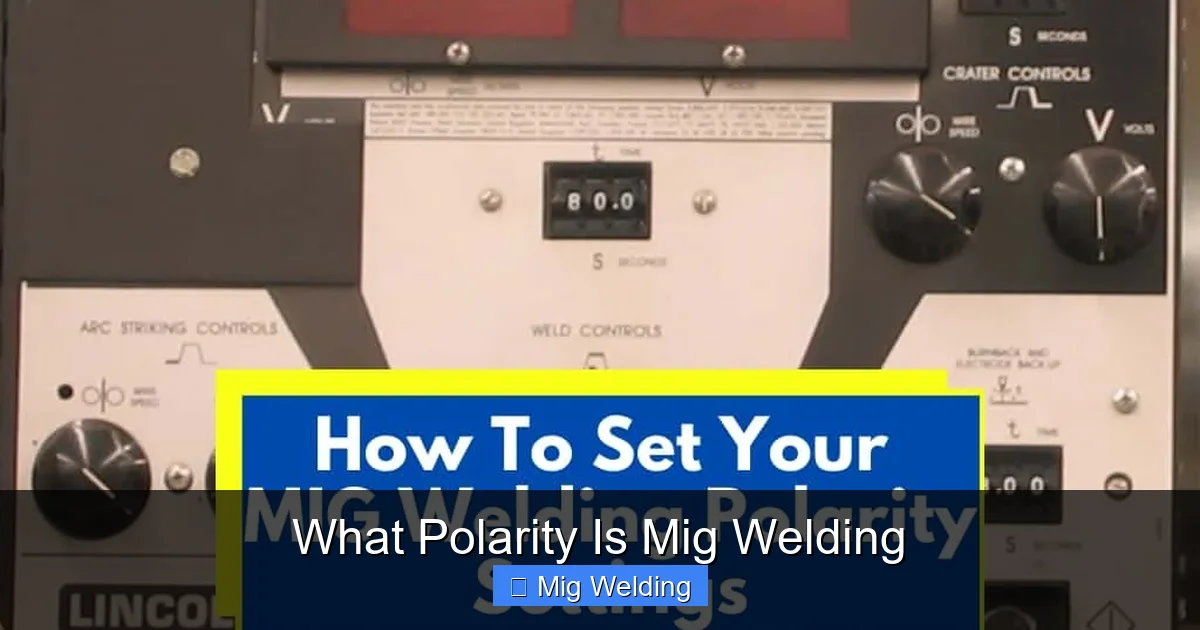
Visual guide about What Polarity Is Mig Welding
Image source: weldingtroop.com
Most MIG welders operate with DC (Direct Current), where current flows in one direction. Some machines can also use AC (Alternating Current), but it’s less common in MIG welding.
Types of Polarity in MIG Welding
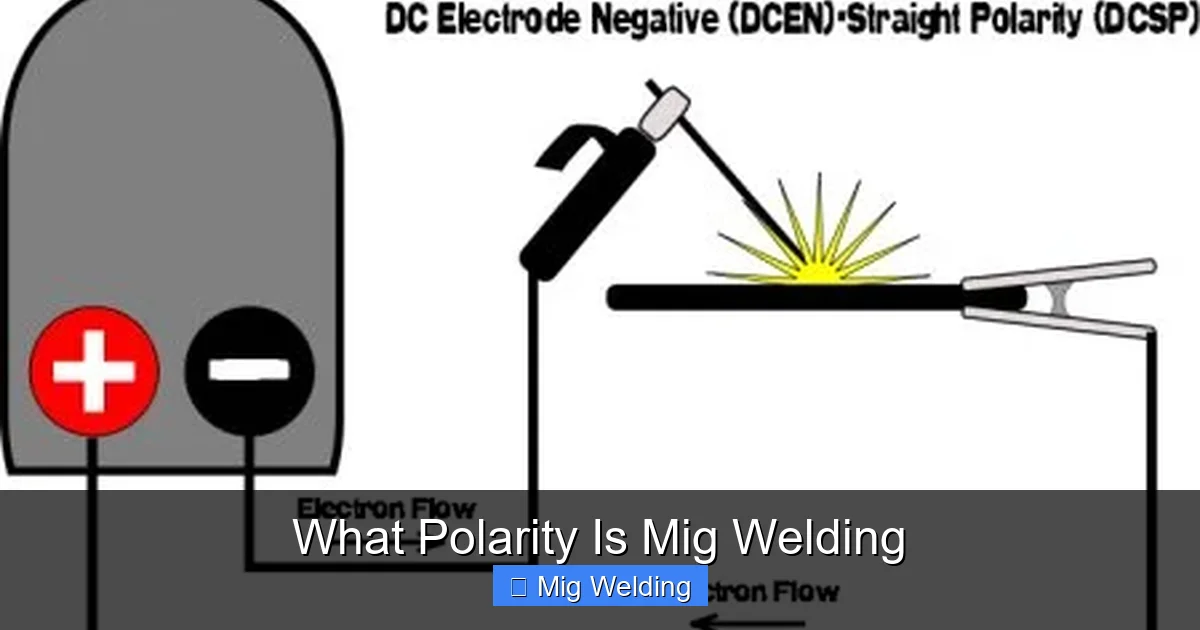
Electrode Positive (DCEP – Direct Current Electrode Positive)
In DCEP, the electrode (wire) is connected to the positive terminal, and the workpiece is connected to the negative terminal. This setting causes the current to flow from the electrode into the workpiece.
Visual guide about What Polarity Is Mig Welding
Image source: makemoneywelding.com
Advantages: Deep penetration, strong welds, good for thicker metals.
Disadvantages: More spatter, higher heat input, and more wear on the electrode.
Electrode Negative (DCEN – Direct Current Electrode Negative)
In DCEN, the electrode is connected to the negative terminal, and the workpiece to the positive terminal. The current flows from the workpiece to the electrode.
Advantages: Cleaner welds, less spatter, suitable for thin metals.
Disadvantages: Shallower penetration, less suitable for thick materials.
How to Set Polarity in MIG Welding
Adjusting polarity depends on your welding machine and setup. Here’s a simple step-by-step guide:
Visual guide about What Polarity Is Mig Welding
Image source: materialwelding.com
Step 1: Check Your Welding Machine
Most MIG welders have a switch or setting to select polarity. Review your machine’s manual to understand how to change it.
Step 2: Connect the Electrode and Work Clamp
- For DCEP, connect the wire spool to the positive terminal and the work clamp to the negative terminal.
- For DCEN, connect the wire spool to the negative terminal and the work clamp to the positive terminal.
Step 3: Set the Polarity Switch
Switch your machine to the appropriate polarity setting based on the material and welding requirements. For most steel MIG welding, DCEP is common.
Step 4: Adjust the Welding Parameters
Set your voltage and wire feed speed according to the material thickness and wire type. Remember that polarity affects heat input, so tweak settings accordingly.
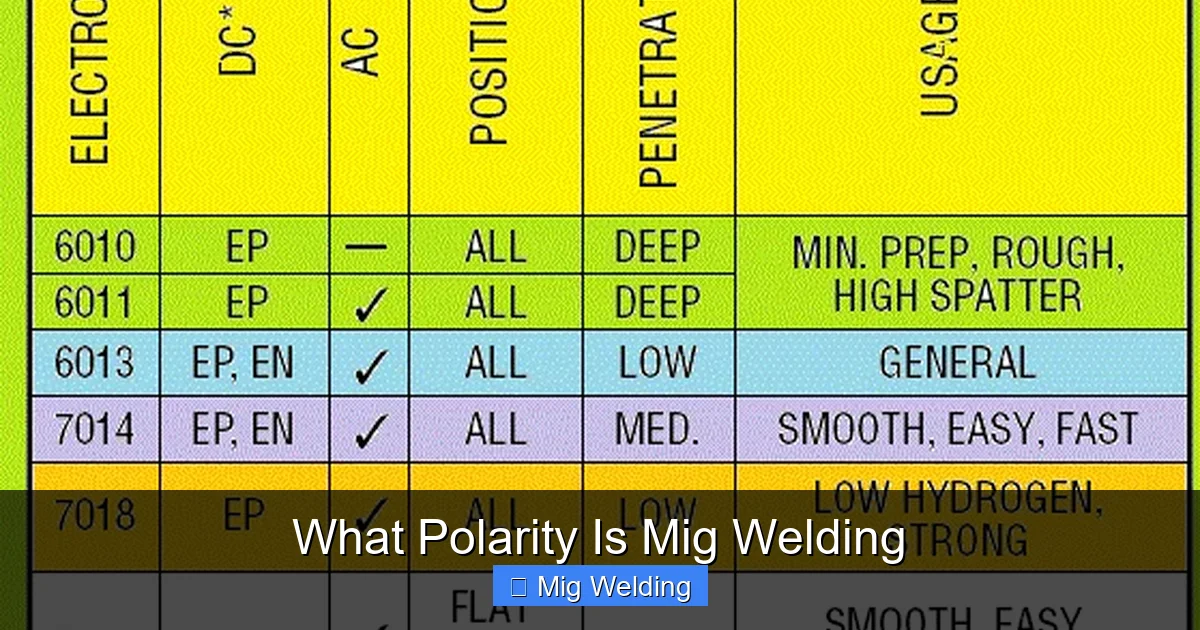
Choosing the Right Polarity for Different Materials
The type of metal you’re welding influences the ideal polarity setting. Here’s a quick guide:
- Steel: DCEP is typically preferred for its deep penetration.
- Stainless Steel: DCEP or specific settings depending on the grade.
- Aluminum: Usually requires specialized MIG setups; polarity choices vary.
- Thin Metals: DCEN is better to avoid burn-through and achieve cleaner welds.
Practical Tips for MIG Welding Polarity
- Always check your machine manual: Different models may have unique setups.
- Test on scrap metal: Experiment with polarity settings before working on your project.
- Monitor weld quality: Look for proper penetration, minimal spatter, and clean welds.
- Adjust settings as needed: Sometimes, changing polarity slightly can improve weld results.
- Regular maintenance: Keep your equipment in good condition to ensure correct polarity operation.
Troubleshooting Common Welding Issues Related to Polarity
If your welds are not turning out well, check your polarity settings:
- Porosity or weak welds: Might be due to incorrect polarity, especially if using the wrong setting for the material.
- Excessive spatter: Usually occurs with DCEP on thin metal; try switching to DCEN.
- Poor penetration: Ensure you’re using DCEP on thicker metals.
- Weld burn-through: Reduce heat input by adjusting polarity and voltage.
Conclusion
Understanding what polarity is in MIG welding is key to producing high-quality welds. By knowing when to use electrode positive (DCEP) or electrode negative (DCEN), you can tailor your welding process to suit different materials and thicknesses. Proper setup, testing, and adjustments will help you achieve strong, clean, and professional-looking welds every time.
Remember, always follow your equipment’s instructions and safety guidelines. With practice, mastering polarity will become second nature, improving your overall welding skills.
Final Thoughts
Whether you’re a beginner or an experienced welder, understanding and correctly setting polarity is fundamental. It influences heat transfer, penetration, and weld appearance. Keep experimenting and refining your settings to get the best results for each project.
