

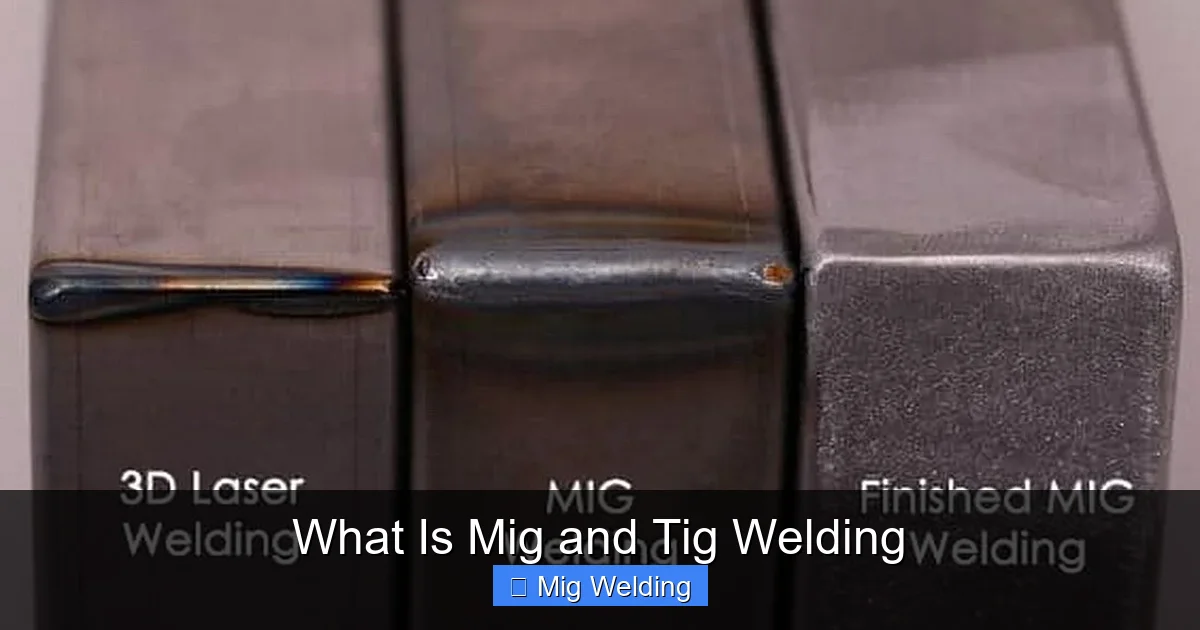
In this guide, you’ll learn what MIG and TIG welding are, how they differ, and when to use each method. Whether you’re a beginner or looking to improve your skills, this overview will give you a clear understanding of these popular welding techniques.
What Is MIG and TIG Welding
If you’re interested in metal fabrication or DIY projects, understanding welding techniques is essential. Among the most popular methods are MIG and TIG welding. These techniques are widely used in industries like automotive repair, construction, and art. In this guide, you’ll learn exactly what MIG and TIG welding are, how they differ, and which method suits your needs best. By the end, you’ll have a clear picture of both techniques and practical tips to get started.
Key Takeaways
- MIG welding: Uses a continuous wire feed and inert gas, making it easier for beginners to learn and suitable for fast, strong welds.
- TIG welding: Uses a tungsten electrode and separate filler material, offering more precision and cleaner welds, ideal for detailed work.
- Differences: MIG is quicker and easier, while TIG provides more control and a higher-quality finish.
- Tools needed: MIG requires a wire feeder and shielding gas, TIG needs a tungsten electrode, filler rod, and shielding gas.
- Applications: MIG is great for automotive and construction work; TIG is preferred for jewelry, aerospace, and artistic projects.
- Safety: Always wear proper protective gear and work in a well-ventilated area when welding.
Introduction to Welding
Welding is a process that joins two or more metal pieces together by melting them at high temperatures. Different welding methods use various tools and techniques to achieve strong, durable bonds. The two most common types are MIG (Metal Inert Gas) and TIG (Tungsten Inert Gas) welding. Each has its advantages, applications, and learning curves.
What Is MIG Welding?
Definition and Overview
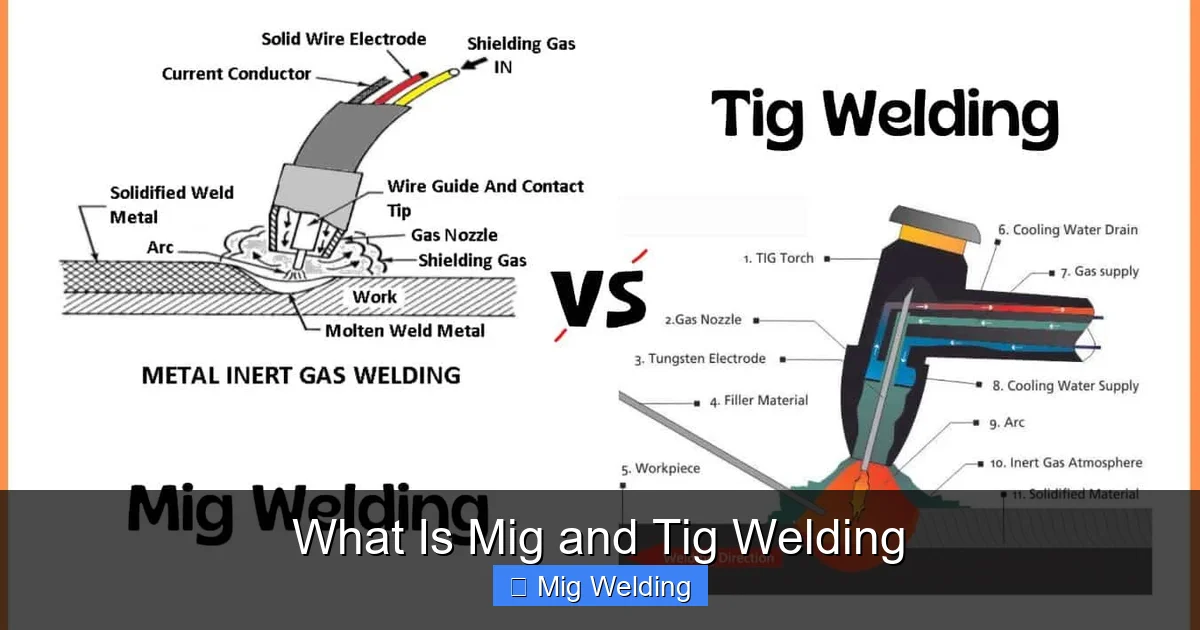
MIG welding, also known as Gas Metal Arc Welding (GMAW), involves feeding a continuous wire electrode through a welding gun. This wire melts and fuses with the base metal, creating a weld. An inert shielding gas, typically argon or a mixture, protects the weld pool from contamination.
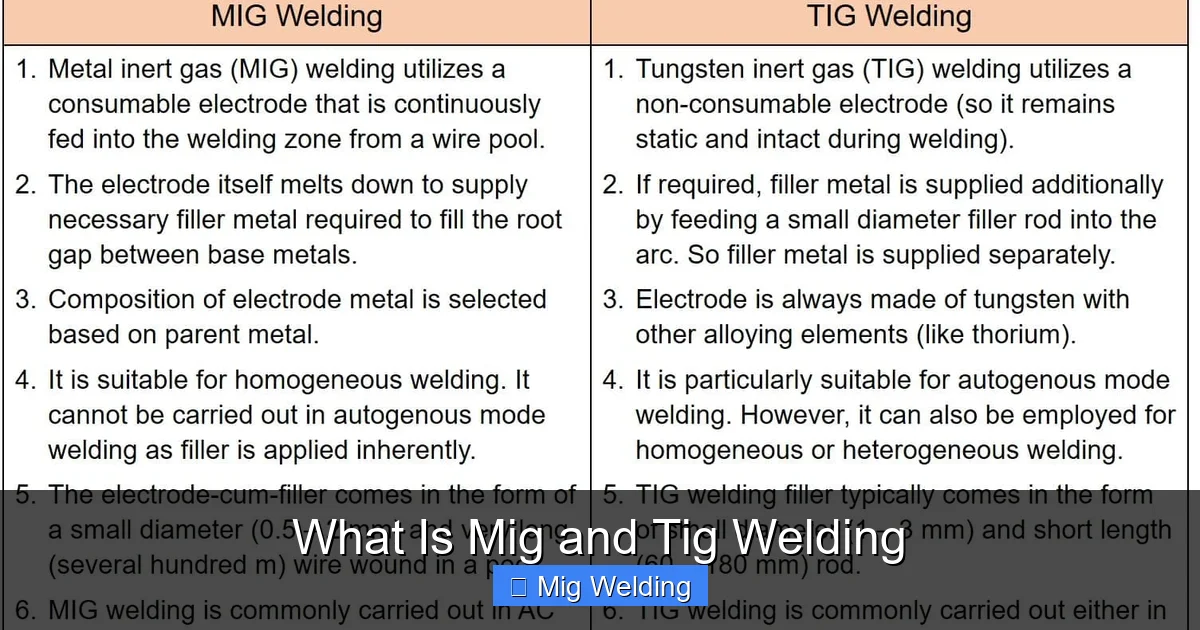
Visual guide about What Is Mig and Tig Welding
Image source: difference.minaprem.com
How MIG Welding Works
- Wire Feed: A spool of wire feeds continuously into the welding gun.
- Electric Arc: An electric arc forms between the wire and the workpiece, melting the wire and base metal.
- Shielding Gas: Gas flows around the wire tip, shielding the weld from oxygen and other contaminants.
Advantages of MIG Welding
- Fast and efficient – perfect for large projects.
- Easy to learn for beginners.
- Versatile — works on various metals like steel, aluminum, and stainless steel.
- Minimal cleanup required after welding.
Tools and Equipment Needed for MIG Welding
- Wire feeder and welding gun
- Power supply (welder)
- Shielding gas (argon, CO2, or a mixture)
- Welding helmet, gloves, and protective gear
What Is TIG Welding?
Definition and Overview
TIG welding, or Gas Tungsten Arc Welding (GTAW), uses a non-consumable tungsten electrode to produce the weld. Filler material can be added manually if needed. Shielding gas, usually argon, protects the weld area, resulting in precise, high-quality welds.
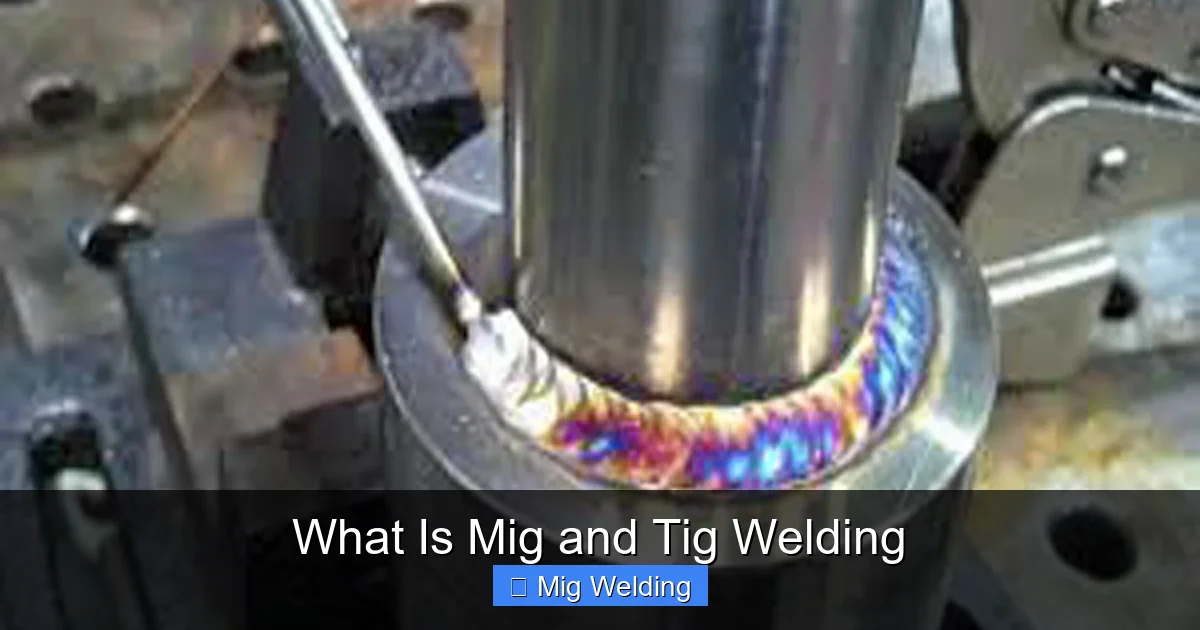
Visual guide about What Is Mig and Tig Welding
Image source: metalwerksinc.com
How TIG Welding Works
- Electrode: A tungsten electrode creates the welding arc.
- Filler Material: Optional filler rod is added manually for thicker materials.
- Shielding Gas: Argon or helium gas shields the weld pool.
Advantages of TIG Welding
- High precision and control.
- Produces clean, professional-looking welds.
- Ideal for thin metals and intricate work.
- Less spatter and post-weld cleanup.
Tools and Equipment Needed for TIG Welding
- Tungsten electrode and TIG torch
- Filler rod (if needed)
- Shielding gas supply
- Welding helmet, gloves, and protective clothing
Differences Between MIG and TIG Welding
Speed and Ease of Use
MIG welding is faster and easier for beginners, making it suitable for large-scale projects. TIG welding requires more skill and patience but offers more precision.
Visual guide about What Is Mig and Tig Welding
Image source: theengineerspost.com
Quality of Welds
TIG welds are cleaner and more detailed, ideal for decorative or high-precision projects. MIG welds are strong but may need finishing touches.
Material Compatibility
MIG works well on thicker metals and a variety of materials. TIG is best for thin metals and detailed work like jewelry or aerospace components.
Cost and Equipment
TIG welders tend to be more expensive and require more specialized equipment. MIG welders are generally more affordable and portable.
Choosing the Right Welding Method for Your Project
Consider your project’s size, precision needs, and your skill level. For quick, heavy-duty work, MIG is often the best choice. For detailed, high-quality results, TIG is preferable.
Practical Tips for Beginners
- Practice safety: Always wear protective gear and work in well-ventilated areas.
- Start with scrap metal: Practice on scrap pieces before working on your main project.
- Adjust settings: Learn to control voltage and wire feed speed for MIG, and amperage for TIG.
- Maintain equipment: Keep your tools clean and in good working order.
- Seek training: Consider taking a welding class or watching tutorials to improve skills.
Common Troubleshooting Tips
- Porosity or holes in weld: Check shielding gas flow and ensure no leaks.
- Inconsistent welds: Adjust your settings and ensure proper technique.
- Spatter: Use correct amperage and clean your workpiece.
- Burn-through: Reduce heat or use thinner material.
Conclusion
Understanding what MIG and TIG welding are and their differences helps you choose the right method for your project. MIG welding is great for speed and ease, making it perfect for beginners. TIG offers high precision and cleaner finishes, ideal for detailed work. With practice, patience, and proper safety, you can master both techniques and create high-quality welds. Happy welding!
Additional Resources
- Welding safety tips and gear
- Recommended welding tutorials and courses
- Best welding machines for beginners and professionals
