

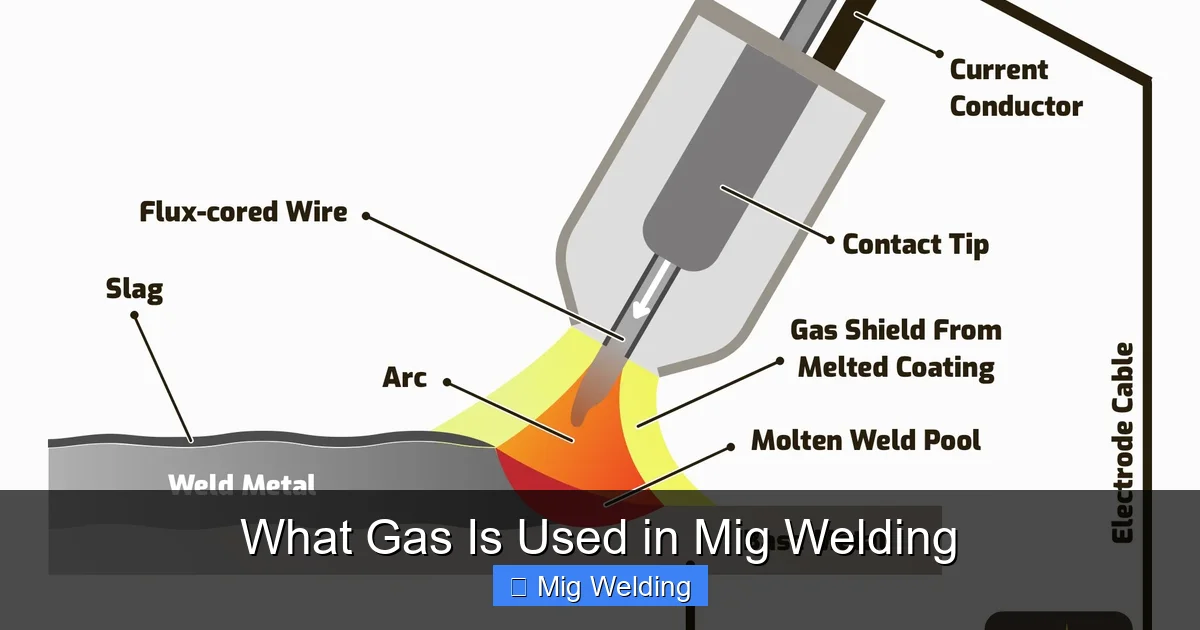
In MIG welding, shielding gas is essential to protect the weld pool from contamination. The most common gases used are argon, carbon dioxide (CO2), and helium. Choosing the right gas can improve weld quality, speed, and cost-efficiency.
Key Takeaways
- Argon is the most popular shielding gas in MIG welding. It provides stable arcs and smooth welds, especially with non-ferrous metals.
- Carbon dioxide (CO2) is a cost-effective option for steel welding. It offers deep penetration but may produce more spatter.
- Helium can be used alone or mixed with argon. It increases heat input and improves weld quality, especially on thicker metals.
- Gas mixtures are common in MIG welding. Combining gases helps balance weld quality, penetration, and spatter control.
- Selecting the right gas depends on the metal type and desired weld characteristics. Proper choice ensures stronger, cleaner welds.
- Always use high-quality shielding gases for best results. Impurities can cause weld defects and weaken joints.
Introduction
Welcome to our complete guide on “what gas is used in MIG welding.” If you’re starting out or looking to improve your welding skills, understanding the shielding gases is crucial. MIG (Metal Inert Gas) welding relies heavily on the right gas to protect the weld pool from contamination. This guide will walk you through the different types of gases used, their benefits, and tips for choosing the best gas for your project. Let’s dive into the world of shielding gases and make your welding projects more successful!
What Is MIG Welding?
MIG welding, also known as Gas Metal Arc Welding (GMAW), is a popular welding process that uses a continuous wire feed as an electrode. An electric arc forms between the wire and the metal, melting the wire and joining the metals together. The process requires a shielding gas to prevent oxidation and contamination of the weld pool. Without this gas, your welds can be weak, porous, or flawed.
Understanding Shielding Gases
Shielding gases are essential in MIG welding because they surround the weld pool, preventing atmospheric gases like oxygen and nitrogen from causing defects. The type of gas you choose affects the arc stability, weld quality, penetration, spatter, and overall efficiency.
Common Gases Used in MIG Welding
1. Argon (Ar)
Argon is a noble gas and the most widely used shielding gas in MIG welding. It provides a stable arc, smooth welds, and good bead appearance. It’s especially suitable for non-ferrous metals like aluminum, copper, and magnesium.
Benefits:
- Excellent arc stability
- Produces smooth, clean welds
- Ideal for welding aluminum and other non-ferrous metals
Tip: Use pure argon for welding thin materials or delicate finishes.
2. Carbon Dioxide (CO2)
CO2 is the most economical shielding gas option for steel welding. It creates deep penetration and fast weld speeds but can generate more spatter and a rougher bead surface.
Benefits:
- Cost-effective and readily available
- Good penetration on thick steel
- Ideal for industrial or heavy-duty work
Note: Using pure CO2 may require more post-weld cleanup due to spatter.
3. Helium (He)
Helium is a noble gas that increases heat input, leading to deeper penetration and faster welding. It’s often used alone or mixed with argon for specific applications.
Benefits:
- Provides higher heat input
- Good for welding thick or high-strength metals
- Produces a lighter, less spattered weld
Tip: Helium is more expensive, so it’s typically used for specialized or industrial applications.
4. Gas Mixtures
Many welders prefer blending gases to balance the advantages of each. Common mixtures include:
- Argon-CO2 mixture (e.g., 75% Ar / 25% CO2): Combines smooth welds with good penetration and reduced spatter.
- Argon-Helium mixtures: Improve weld strength and heat input, especially for non-ferrous metals.
Choosing the right mixture depends on your project’s requirements and the metal being welded.
How to Choose the Right Gas for Your MIG Welding Project
Step 1: Identify the Metal Type
Different metals and thicknesses require different shielding gases. For example:
- Aluminum and non-ferrous metals: Use pure argon or argon-based mixtures.
- Steel and stainless steel: Use CO2, or argon-CO2 mixtures.
Step 2: Consider the Desired Weld Quality
If you want smooth, clean welds with minimal spatter, argon or argon-rich mixtures are best. For faster, deeper penetration, CO2 or helium mixtures work well.
Step 3: Budget and Availability
CO2 is cheaper and widely available. Helium can be more costly but offers specific advantages. Always buy high-purity gases from reputable suppliers for reliable results.
Step 4: Match Gas Composition to Your Equipment
Check your MIG welder’s specifications to ensure compatibility with the chosen gas. Some machines are optimized for specific gases or mixtures.
Practical Tips for Using Shielding Gases
- Use clean, dry cylinders: Moisture or impurities can cause weld defects.
- Set your flow rate correctly: Typically 20-30 cubic feet per hour (CFH), but adjust based on conditions.
- Check for leaks: Regularly inspect your hoses and connections to prevent contamination.
- Store gases properly: Keep cylinders upright and secure, and store in well-ventilated areas.
Troubleshooting Common Welding Issues
Spatter and Porosity
Likely caused by contaminated or incorrect shielding gas. Ensure your gas supply is clean and the flow rate is correct.
Poor Penetration
Adjust your welding parameters or switch to a gas mixture with higher heat input, like helium blends.
Unstable Arc
Check for leaks, ensure proper gas flow, and verify your equipment settings.
Conclusion
Understanding what gas is used in MIG welding is key to achieving high-quality welds. Argon, CO2, helium, and their mixtures each have unique advantages. By selecting the right shielding gas based on your metal type, project needs, and budget, you can improve your welding results significantly. Remember to always use high-quality gases and maintain your equipment for the best outcomes.
Final Tips
- Start with a simple gas mixture like argon-CO2 for most steel projects.
- Experiment with different gases to find what works best for your specific application.
- Stay safe: always handle gases with care, and follow safety guidelines.
