

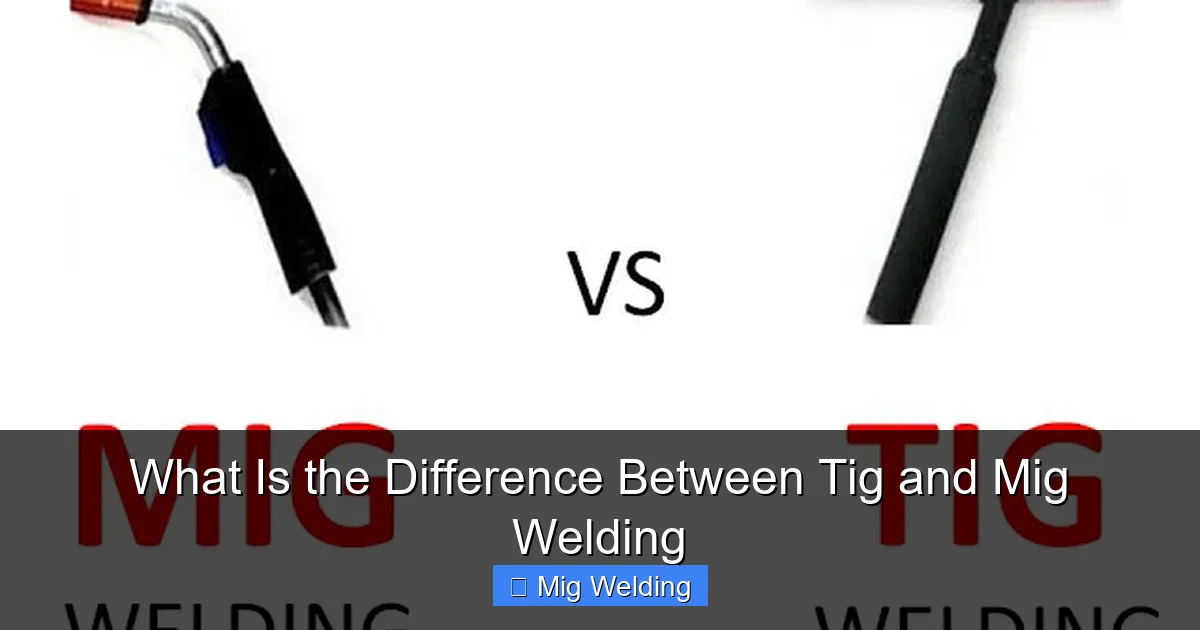
Welding enthusiasts and beginners often wonder about the differences between TIG and MIG welding. In this guide, we explore each method’s features, advantages, and ideal applications. By understanding these distinctions, you can choose the right welding technique for your project with confidence.
Key Takeaways
- Welding Technique: TIG (Tungsten Inert Gas) uses a non-consumable tungsten electrode, while MIG (Metal Inert Gas) uses a consumable wire electrode.
- Ease of Use: MIG welding is generally easier for beginners due to its simplicity and faster setup.
- Precision and Quality: TIG offers superior precision and cleaner welds, making it ideal for detailed work.
- Materials: MIG is versatile and works well on thicker materials; TIG is better suited for thinner metals and detailed work.
- Speed: MIG welding is faster, making it suitable for high-volume projects.
- Cost and Equipment: MIG welding equipment is often less expensive and more portable, whereas TIG equipment can be more complex and costly.
- Applications: Choose TIG for artistic, high-quality welds; choose MIG for quick, heavy-duty tasks.
Introduction
If you’re new to welding or looking to improve your skills, understanding the difference between TIG and MIG welding is essential. Both methods have unique features, advantages, and best-use scenarios. Knowing which technique to use can help you produce better welds, save time, and reduce costs.
In this guide, we will compare TIG and MIG welding step-by-step. You’ll learn how each method works, their pros and cons, and tips to get started. Whether you’re a hobbyist or a professional, this information will help you make an informed choice for your projects.
What Is TIG Welding?
Overview of TIG Welding
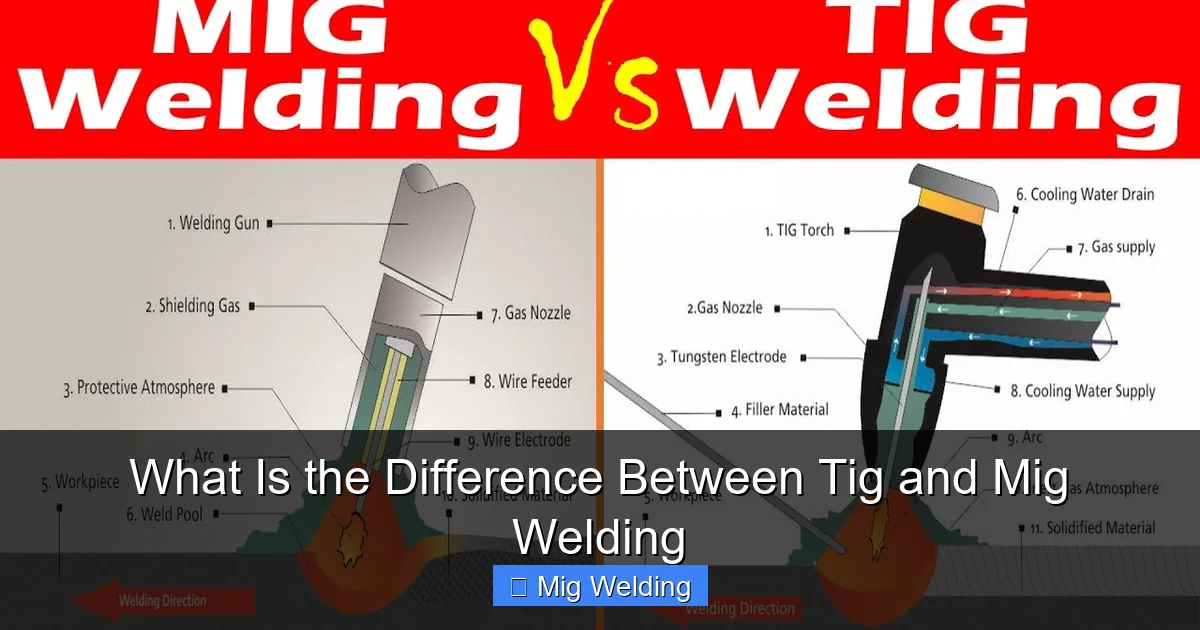
TIG stands for Tungsten Inert Gas welding. It uses a non-consumable tungsten electrode to produce the weld. An inert gas, usually argon, shields the weld area from contamination. TIG welding is known for its precision and high-quality results.
Visual guide about What Is the Difference Between Tig and Mig Welding
Image source: i.ytimg.com
How TIG Welding Works
During TIG welding, the operator manually feeds a filler rod into the weld puddle if needed. The tungsten electrode creates an electric arc, melting the metal and creating a strong bond. The inert gas protects the weld from oxidation and impurities.
Pros of TIG Welding
- Produces clean, precise welds
- Allows for detailed work and control
- Suitable for thin materials
- Creates high-quality, professional-looking welds
Cons of TIG Welding
- Slower process compared to MIG
- Requires more skill and practice
- More expensive equipment initially
What Is MIG Welding?
Overview of MIG Welding
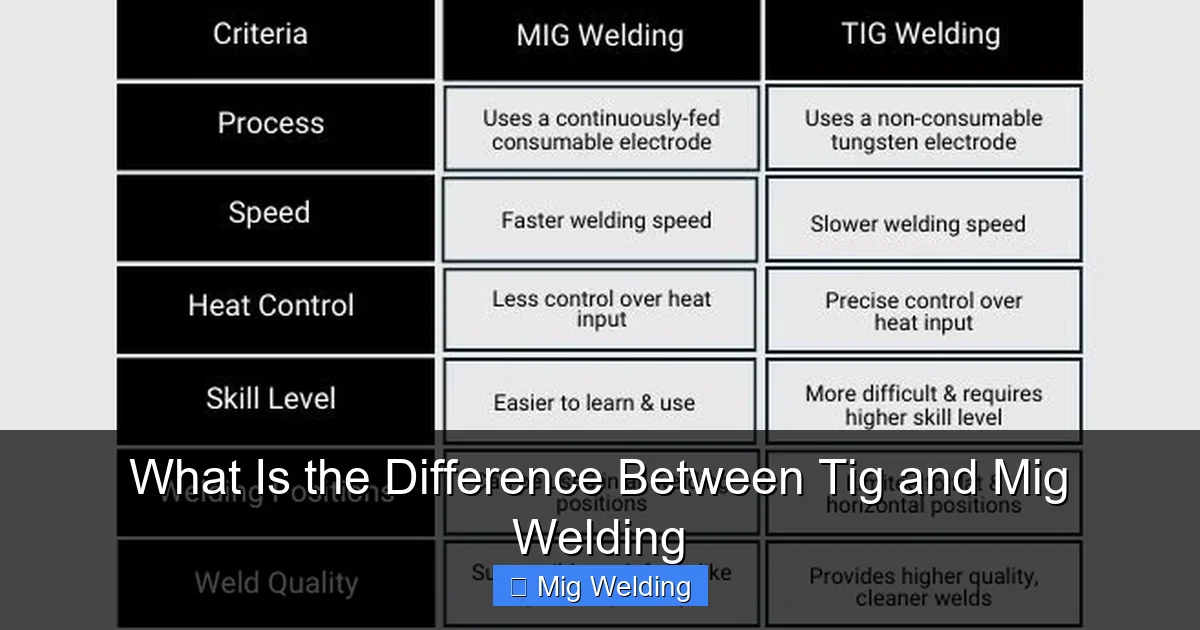
MIG stands for Metal Inert Gas welding. It uses a continuously fed consumable wire electrode to create the weld. An inert gas, often argon or a mix, shields the weld pool from contamination. MIG welding is popular for its speed and ease of use.
Visual guide about What Is the Difference Between Tig and Mig Welding
Image source: onetouchexim.com
How MIG Welding Works
The welder holds a gun that feeds the wire and releases shielding gas. As the wire melts, it forms the weld pool, and the operator guides the gun along the joint. The process is quick, making it suitable for large or thick materials.
Pros of MIG Welding
- Fast and efficient
- Easy for beginners to learn
- Good for thicker metals
- Less skill needed for basic welds
Cons of MIG Welding
- Less precise than TIG
- Produces more spatter and cleanup
- Not ideal for detailed or artistic work
Comparing TIG and MIG Welding
1. Ease of Use
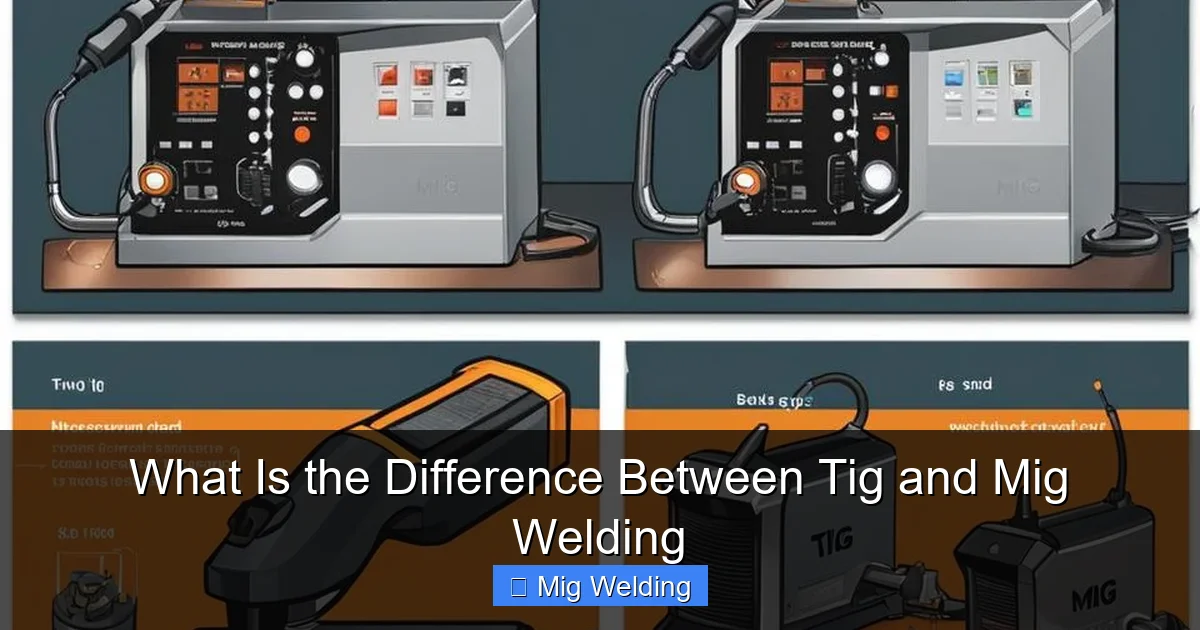
MIG welding is more beginner-friendly due to its straightforward setup and faster learning curve. TIG welding requires more skill, coordination, and patience, but offers greater control.
Visual guide about What Is the Difference Between Tig and Mig Welding
Image source: tagvault.org
2. Quality of Welds
TIG welding produces cleaner, more precise welds, ideal for visible or delicate projects. MIG welds are strong and suitable for structural work but can be less neat.
3. Speed and Efficiency
MIG welding is faster, making it excellent for large projects or production work. TIG is slower but provides higher quality results.
4. Materials and Thickness
MIG works well on thicker materials and a variety of metals. TIG excels on thin metals and when detailed, artistic welds are needed.
5. Equipment and Cost
MIG equipment is generally less expensive and portable. TIG welders are more complex, often costing more and requiring more maintenance.
6. Applications
Use TIG for artistic, high-precision work such as jewelry, aerospace, or thin metal fabrication. Use MIG for construction, automotive, and heavy-duty projects where speed is crucial.
Step-by-Step Guide to Choosing the Right Welding Method
Step 1: Assess Your Project
Determine the type of metal, thickness, and desired quality. For detailed, high-quality work on thin metals, choose TIG. For quick, heavy-duty tasks, go with MIG.
Step 2: Consider Your Skill Level
If you’re a beginner, MIG is easier to learn. TIG requires more practice but offers better control and results.
Step 3: Evaluate Equipment and Budget
Compare costs and portability. MIG machines are typically more affordable and portable, while TIG setups can be more expensive.
Step 4: Think About Time and Volume
For high-volume or fast-turnaround projects, MIG is the preferred choice. TIG is better when quality outweighs speed.
Step 5: Make Your Choice
Select the welding method that best matches your project needs, skill level, and budget. Remember, you can always learn both for different applications.
Practical Tips for Successful Welding
- Safety First: Always wear protective gear, including gloves, mask, and eye protection.
- Practice: Start with scrap metal to get comfortable with the technique.
- Maintain Equipment: Keep your welding tools clean and in good condition.
- Follow Settings: Use the correct voltage, wire feed speed, and shielding gas for each method.
- Take Your Time: Rushing can lead to poor welds and mistakes.
Troubleshooting Common Problems
Porosity or Holes in Welds
This often results from contaminated shielding gas or dirty metal. Ensure your equipment is clean and gas flows properly.
Uneven Weld Beads
Check your technique, speed, and angle. Practice maintaining a steady hand and consistent movement.
Spatter and Excessive Smoke
Adjust your settings and ensure proper shielding gas flow. Use the correct wire and electrode for your project.
Conclusion
Understanding the difference between TIG and MIG welding helps you choose the right method for your needs. While MIG offers speed and ease, TIG provides precision and high-quality results. Both techniques are valuable skills for any welder, hobbyist, or professional.
Start with the method that best fits your project and skill level. Practice regularly, follow safety guidelines, and you’ll become proficient in both techniques over time.
Remember, mastering both TIG and MIG welding opens up a wide range of creative and practical possibilities. Happy welding!
