

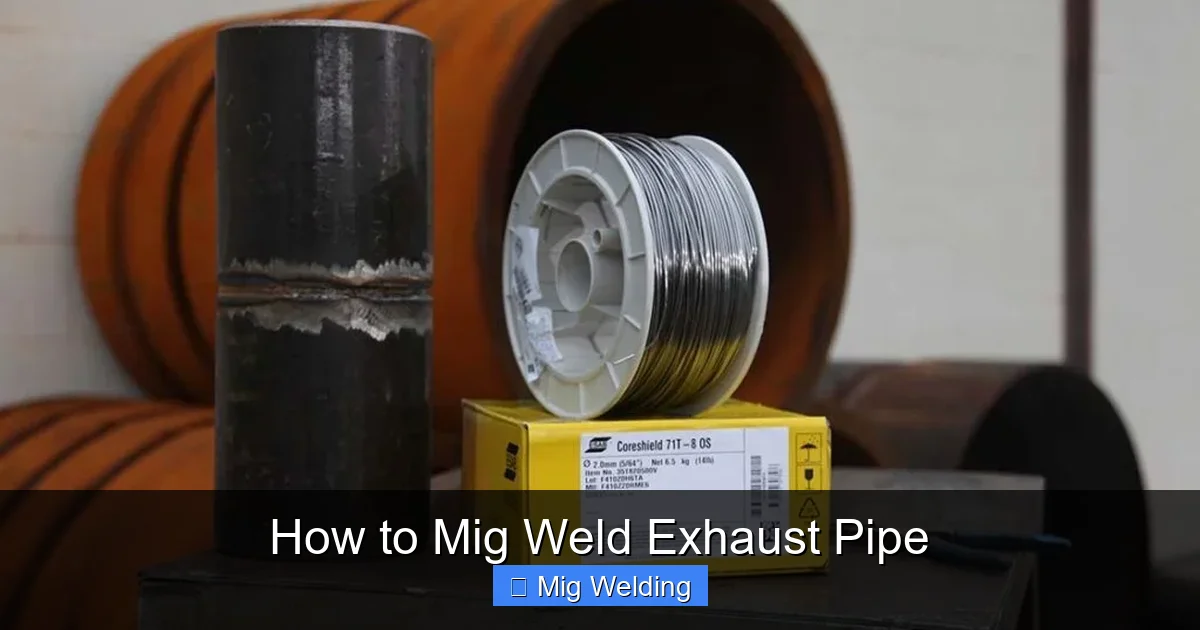
In this guide, you’ll learn how to MIG weld exhaust pipe effectively. From preparing your workspace to finishing touches, discover practical tips to achieve professional results with your MIG welder. Whether you’re a beginner or experienced, this guide will help you weld exhaust pipes confidently and safely.
Key Takeaways
- Proper Preparation: Clean and secure the exhaust pipe to ensure a strong weld and prevent contamination.
- Equipment Setup: Use the right MIG welder settings, including wire type, gas mixture, and voltage for exhaust welding.
- Welding Technique: Maintain a steady hand, proper angle, and consistent speed to achieve clean, strong welds.
- Safety First: Wear protective gear, work in a well-ventilated area, and be cautious with hot equipment and fumes.
- Practice Makes Perfect: Practice on scrap pieces before welding your actual exhaust pipe to perfect your technique.
- Finishing Touches: Grind and clean the weld for a smooth finish and inspect for leaks or weak spots.
How to MIG Weld Exhaust Pipe
If you’re looking to repair or customize your vehicle’s exhaust system, learning how to MIG weld exhaust pipe is a valuable skill. MIG welding is popular because it’s relatively easy, fast, and provides strong, clean welds. In this guide, we’ll walk through each step to help you weld exhaust pipes confidently and safely.
Understanding MIG Welding for Exhaust Pipes
MIG (Metal Inert Gas) welding, also known as GMAW (Gas Metal Arc Welding), uses a continuous wire feed and shielding gas to create a weld. It’s ideal for exhaust pipes because it produces neat welds and is forgiving for beginners. However, welding exhaust pipes requires attention to detail due to the high temperatures and thin metal involved.
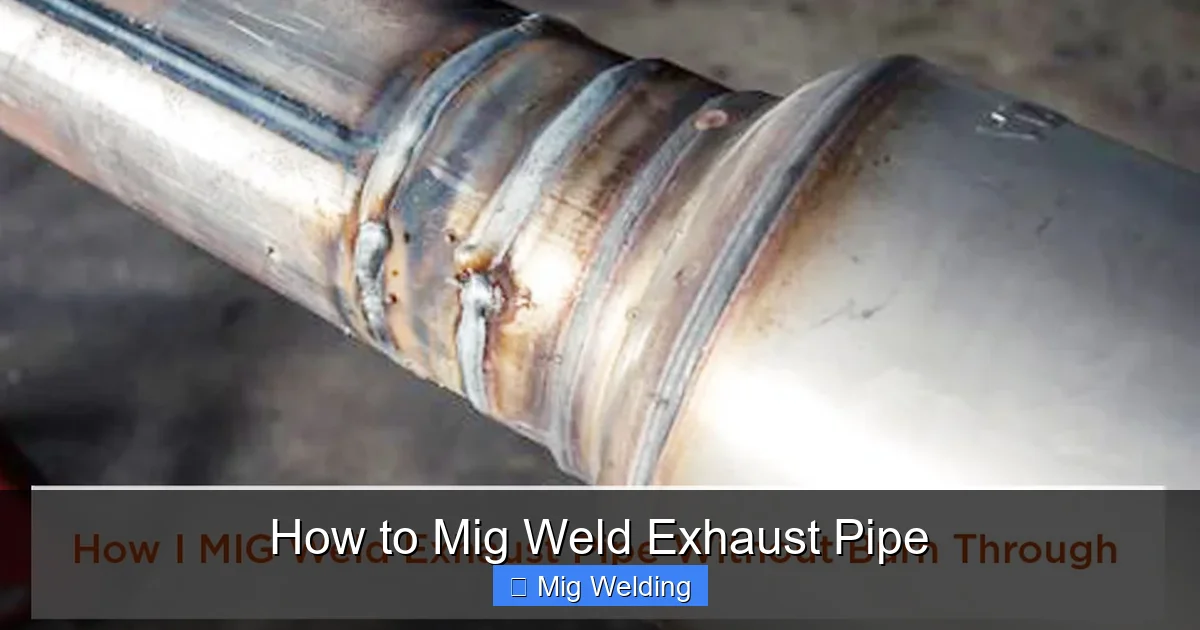
Visual guide about How to Mig Weld Exhaust Pipe
Image source: garagewelding.com
Preparation: Setting Up Your Workspace and Equipment
Gather Your Tools and Materials
- MIG welder: Ensure it has adjustable settings.
- Welding wire: Use ER4043 or ER4047 aluminum wire, or ER70S-6 for steel exhaust pipes.
- Shielding gas: Typically 75% Argon / 25% CO₂ for steel, or pure Argon for aluminum.
- Protective gear: Welding helmet, gloves, long sleeves, and safety glasses.
- Clamps and fixtures: To hold the exhaust pipe steady.
- Cleaning tools: Wire brush or grinder to clean metal surfaces.
- Measuring tools: Tape measure and marker for precise cuts.
Preparing the Work Area
Choose a well-ventilated area to prevent inhaling fumes. Clear the workspace of clutter and flammable materials. Set up your work table or stand, and organize your tools nearby for easy access.
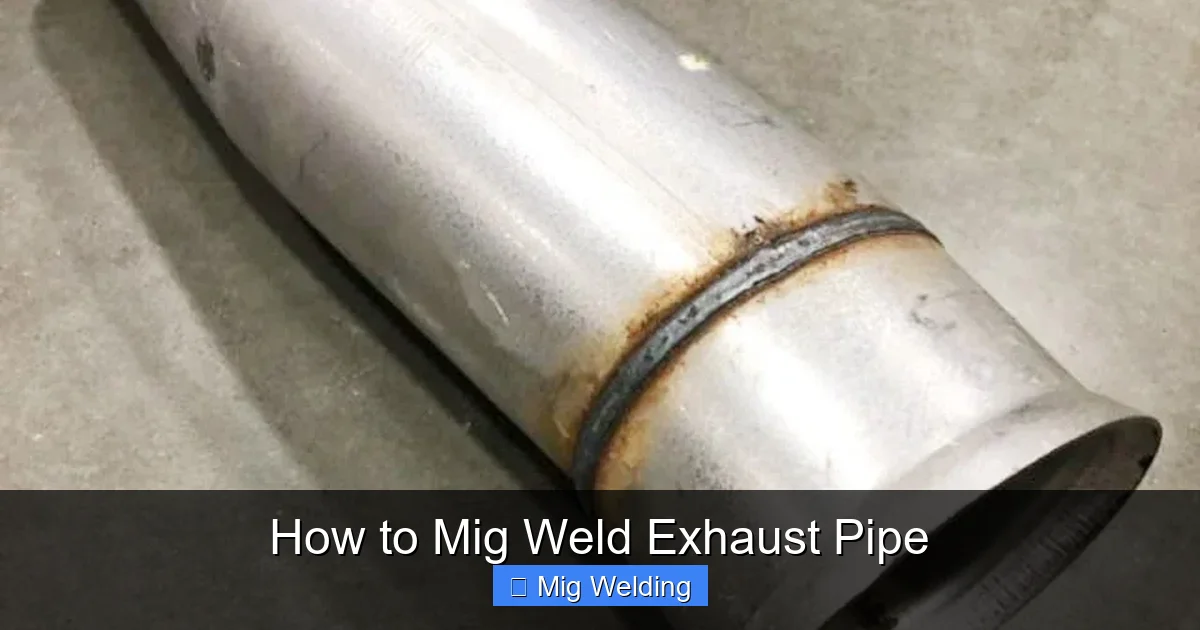
Visual guide about How to Mig Weld Exhaust Pipe
Image source: weldingproperty.com
Preparing the Exhaust Pipe
- Clean the surface: Remove rust, dirt, and paint using a wire brush or grinder. Clean metal ensures good weld penetration.
- Fit and clamp: Position the pipe securely using clamps. Ensure tight fit-ups for better welds.
- Mark the weld area: Use a marker to outline where you’ll weld, especially if doing multiple passes.
Setting Up Your MIG Welder
Adjust the Wire Feed and Voltage
- Set the wire feed speed according to your wire size and material thickness—typically around 3-5 inches per minute for exhaust pipes.
- Adjust voltage to produce a stable arc—usually around 16-20 volts for thin exhaust pipes.
Select the Correct Shielding Gas and Wire
- Use 75% Argon / 25% CO₂ for steel exhaust pipes for cleaner welds.
- Use appropriate wire—ER70S-6 for steel or ER4043 for aluminum.
- Ensure gas flow rate is about 20-30 cubic feet per hour.
Test Your Settings
Before welding your exhaust pipe, practice on scrap metal. Adjust settings until you get a smooth, consistent bead.
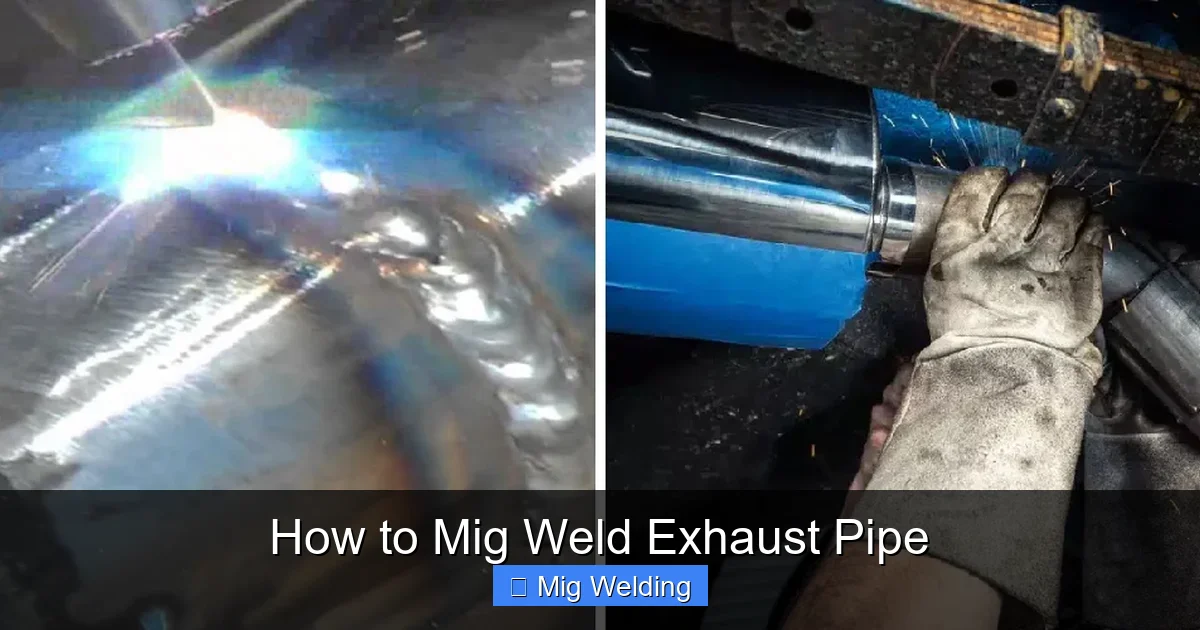
Visual guide about How to Mig Weld Exhaust Pipe
Image source: metalfixes.com
Welding Process: Step-by-Step
1. Strike the Arc
Hold the MIG gun at about a 10-15 degree angle in the direction of travel. Squeeze the trigger to start the arc. Maintain a steady hand and consistent distance (about ¼ inch) from the pipe surface.
2. Maintain Proper Travel Speed
Move the gun smoothly along the joint. Too slow can cause excessive heat and burn-through; too fast can lead to weak welds. Find a steady rhythm that produces a uniform, molten bead.
3. Use Multiple Passes if Needed
For thicker pipes, make multiple passes. Start with a root pass to fuse the edges, then add filler passes to build up the weld. Clean between passes with a wire brush.
4. Keep a Consistent Technique
Maintain a steady hand and consistent angle. Keep the wire slightly ahead of the arc to ensure proper penetration.
5. Finish the Weld
Once the weld is complete, release the trigger and slowly withdraw the gun. Allow the weld to cool naturally.
Finishing and Inspecting the Weld
- Clean the weld: Use a wire brush or grinder to remove slag or spatter. For stainless steel or aluminum, use appropriate tools to avoid contamination.
- Inspect the weld: Check for uniformity, penetration, and any cracks or porosity. The weld should be smooth and consistent.
- Test for leaks: Use soapy water or a pressure test to ensure the weld is sealed properly.
Troubleshooting Common Issues
- Porosity or holes: Usually caused by contaminated metal or inadequate shielding gas. Clean surfaces thoroughly and check gas flow.
- Weak welds or lack of fusion: Increase heat, reduce travel speed, or check your wire feed settings.
- Burn-through: Use lower heat or increase travel speed for thin metal.
- Spatter: Adjust voltage and wire speed; ensure proper shielding gas coverage.
Conclusion
Welding exhaust pipes with a MIG welder is a practical skill that can save you money and improve your vehicle’s performance. Remember to prepare your workspace, set your equipment correctly, and practice good technique. With patience and practice, you’ll produce strong, clean welds that last. Always prioritize safety, and don’t hesitate to seek additional training if needed. Happy welding!
Additional Tips
- Practice on scrap metal to refine your technique.
- Use a welding helmet with auto-darkening for better visibility.
- Keep your welding area well-ventilated to avoid fumes buildup.
- Take your time—rushing can lead to poor welds and accidents.
Safety Reminders
- Always wear protective gear, including gloves, helmet, and long sleeves.
- Work in a well-ventilated area or outdoors.
- Be cautious of hot metal and sparks.
- Disconnect your welder when not in use.
Final Words
Learning how to MIG weld exhaust pipe opens up many DIY possibilities. With the right tools, preparation, and attitude, you can achieve professional-quality welds. Keep practicing, stay safe, and enjoy the satisfaction of a job well done!
