

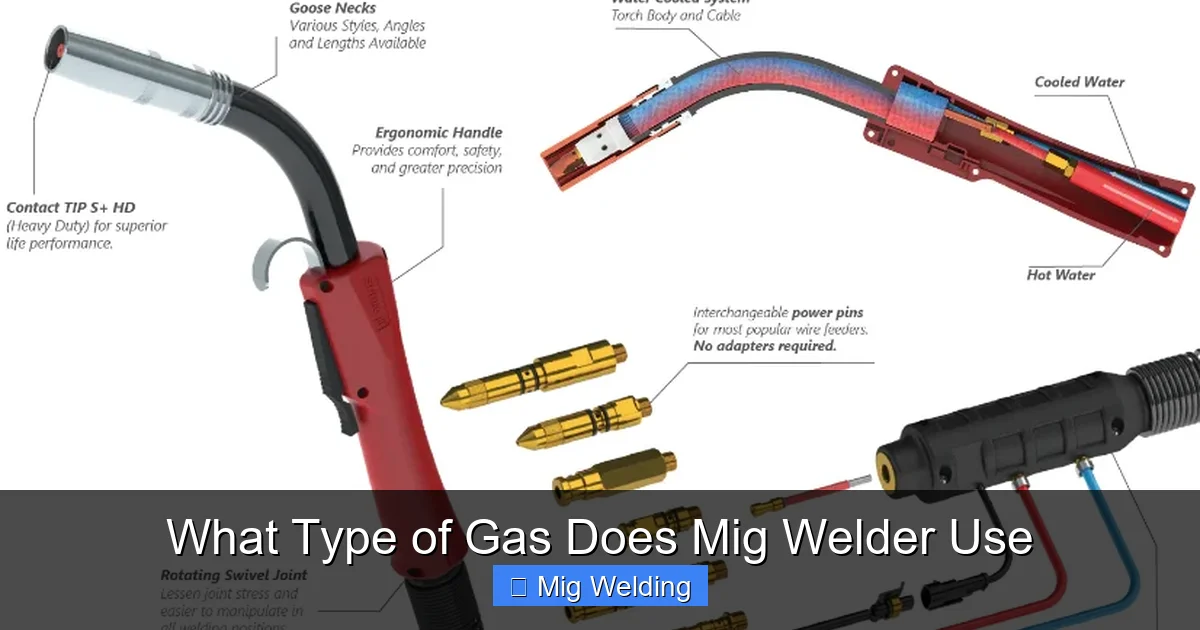
In this guide, you’ll learn about the different types of gases used in MIG welding. Choosing the right shielding gas is essential for strong, clean welds. We’ll cover everything from basic gas types to practical tips for optimal results.
What Type of Gas Does MIG Welder Use?
If you’re new to MIG welding, you might wonder, what type of gas does a MIG welder use? The answer is that most MIG welders use shielding gases to protect the weld pool from atmospheric contamination. Choosing the right gas can significantly impact the quality, strength, and appearance of your welds. In this guide, we’ll explore the common types of gases used in MIG welding, how to select the best one for your project, and practical tips for setup and troubleshooting.
Key Takeaways
- Most MIG welders use shielding gases: They protect the weld pool from contamination by atmospheric gases.
- Common gases include: Argon, CO2, and blends like C25 (75% Argon, 25% CO2).
- Choosing the right gas depends on: Material type, weld quality, and cost considerations.
- Pure Argon is ideal for: welding non-ferrous metals like aluminum and magnesium.
- CO2 provides: deep penetration and affordability, suitable for steel welding.
- Gas blends offer a balance: between weld quality and cost, often used in industrial settings.
- Proper gas setup is vital: for achieving clean, strong, and consistent welds. Always check for leaks and correct flow rates.
Understanding the Role of Shielding Gas in MIG Welding
MIG welding, or Metal Inert Gas welding, involves feeding a consumable wire electrode into a weld pool. As the wire melts, a shielding gas surrounds the weld area, shielding it from oxygen, nitrogen, and other atmospheric gases that could cause defects like porosity or weak welds.
The right shielding gas ensures a clean, strong, and visually appealing weld. It also influences the weld’s appearance, penetration, and spatter levels. Choosing the appropriate gas depends on the material you’re welding, the desired weld quality, and your budget.
Common Types of Gases Used in MIG Welding
There are mainly three types of shielding gases used in MIG welding:
- Inert Gases: These gases do not react with the metal or weld pool. Examples include Argon and Helium.
- Active Gases: These gases react with the weld pool to improve penetration and weld bead appearance. The most common is Carbon Dioxide (CO2).
- Gas Blends: Mixtures of inert and active gases designed to balance weld quality and cost.
1. Argon (Ar)
What is Argon?
Argon is a noble inert gas. It’s the most popular shielding gas for MIG welding, especially for non-ferrous metals like aluminum, magnesium, and copper.
Advantages of Using Argon
- Produces a smooth, stable arc
- Creates clean, high-quality welds
- Minimal spatter and porosity
- Excellent for thin materials
Best For
Welding non-ferrous metals and thin materials where weld appearance matters.
2. Carbon Dioxide (CO2)
What is CO2?
Carbon dioxide is an active, inexpensive gas that provides deep penetration. It’s often used in steel welding.
Advantages of Using CO2
- Cost-effective and widely available
- Creates a more aggressive arc with deeper penetration
- Good for thick steel materials
Disadvantages
- More spatter compared to inert gases
- Less aesthetically pleasing welds, often rougher in appearance
Best For
Heavy-duty steel welding where speed and penetration are priorities over appearance.
3. Gas Blends (e.g., C25, C20, etc.)
What Are Gas Blends?
Blends are mixtures of argon, CO2, and sometimes oxygen, designed to optimize weld quality and cost. The most common blend is C25, which contains 75% Argon and 25% CO2.
Advantages of Gas Blends
- Provides a balance of smooth welds and good penetration
- Reduces spatter compared to pure CO2
- Suitable for a variety of steel thicknesses
Common Mixtures
- C25 (75% Ar / 25% CO2): Most popular for general steel welding
- C20 (80% Ar / 20% CO2): Slightly smoother welds
- Other blends: tailored for specific applications or materials
How to Choose the Right Gas for Your MIG Welding Project
Consider Your Material
For aluminum and other non-ferrous metals, pure Argon is usually best. For steel, CO2 or a blend like C25 works well.
Evaluate Your Priorities
- Weld quality and appearance: Use Argon or a blend.
- Cost: CO2 is more affordable but may produce more spatter.
- Penetration: CO2 provides deeper penetration, ideal for thick steel.
Check Your Equipment Compatibility
Ensure your MIG welder is compatible with the gas type. Most modern welders can handle all common shielding gases.
Setting Up Your MIG Welder with the Correct Gas
Step 1: Install the Gas Cylinder
Securely attach the cylinder to your welder’s gas regulator. Make sure all connections are tight to prevent leaks.
Step 2: Set the Correct Flow Rate
Typically, shielding gas flow rates range from 20 to 40 cubic feet per hour (CFH). Consult your welder’s manual and adjust the regulator accordingly.
Step 3: Check for Leaks
Before welding, open the gas valve slightly and listen for hissing sounds or use a soap solution to detect leaks. Fix any leaks before proceeding.
Step 4: Begin Welding
Start welding with the recommended settings for your material and gas. Monitor the gas flow to ensure consistent coverage.
Practical Tips for Using Shielding Gas Effectively
- Keep the gas cylinder upright: to prevent damage and leaks.
- Use proper hoses and fittings: to avoid gas leaks and ensure safety.
- Avoid drafts: Wind or air currents can disturb the shielding gas, causing weld defects.
- Store gas cylinders safely: in well-ventilated areas away from heat sources.
Troubleshooting Common Gas-Related Issues
Porosity in Welds
This often results from inadequate shielding gas coverage or leaks. Check flow rates, connections, and ensure the cylinder is not empty.
Spatter and Rough Welds
Usually caused by using the wrong gas or incorrect settings. Switching to a proper blend or adjusting wire speed and voltage can help.
Inconsistent Arc
Verify the gas flow and check for leaks. Also, ensure the nozzle is clean and free of debris.
Conclusion
Knowing what type of gas a MIG welder uses is fundamental to achieving high-quality welds. Whether you opt for Argon, CO2, or a blend, understanding their properties helps you select the best option for your project. Proper setup, safety precautions, and troubleshooting are key to success. With the right shielding gas, your MIG welding will be cleaner, stronger, and more professional-looking.
Additional Tips
- Always follow manufacturer recommendations for your specific welder.
- Practice on scrap material to fine-tune your settings.
- Consider renting or buying higher-grade gas cylinders for frequent welding.
