


In this guide, you’ll learn the main differences between TIG and MIG welding, including their applications, advantages, and limitations. Whether you’re a beginner or experienced welder, understanding these methods helps you pick the right technique for your project and achieve professional results.
What’s the Difference Between Tig and Mig Welding
If you’re new to welding or looking to expand your skills, understanding the difference between TIG and MIG welding is essential. Both methods are popular, but they serve different purposes and suit different projects. In this guide, we’ll explore each process, compare their features, and help you decide which method is best for your needs.
Key Takeaways
- Welding Process: TIG uses a tungsten electrode and requires more skill, while MIG employs a wire feed and is easier for beginners.
- Speed: MIG welding is generally faster, making it ideal for large projects.
- Precision: TIG provides higher precision and cleaner welds, suitable for detailed work.
- Materials: Both methods work on different materials; TIG is better for thin metals, MIG for thicker or faster work.
- Equipment Cost: MIG welders are usually less expensive and simpler to operate; TIG setups can be more costly and complex.
- Applications: MIG is popular in manufacturing and construction; TIG is preferred in aerospace, art, and automotive industries.
Introduction
Welding is a fabrication process that joins materials, usually metals or thermoplastics, by causing fusion. Among the many types of welding, TIG (Tungsten Inert Gas) and MIG (Metal Inert Gas) are two of the most common techniques. They share some similarities but have key differences that impact their application, ease of use, and results.
Understanding these differences helps you choose the right method for your project, whether you’re a hobbyist, professional, or student. Let’s dive into each process and compare their features.
What is TIG Welding?
Overview
TIG welding, also called Gas Tungsten Arc Welding (GTAW), uses a non-consumable tungsten electrode to produce the weld. The welder manually feeds a filler rod if needed, and a shielding gas (usually argon or helium) protects the weld from contamination.
Visual guide about What’s the Difference Between Tig and Mig Welding
Image source: weldingtroop.com
How It Works
- The tungsten electrode creates an electric arc when connected to a power supply.
- The welder holds the torch and controls the arc, heat, and filler addition.
- The inert gas shields the weld pool from air, preventing oxidation.
Advantages of TIG Welding
- High precision and clean welds
- Excellent for thin metals and delicate projects
- Great control over heat and weld bead
Limitations of TIG Welding
- Slower process compared to MIG
- Requires more skill and coordination
- More equipment and setup time
What is MIG Welding?
Overview
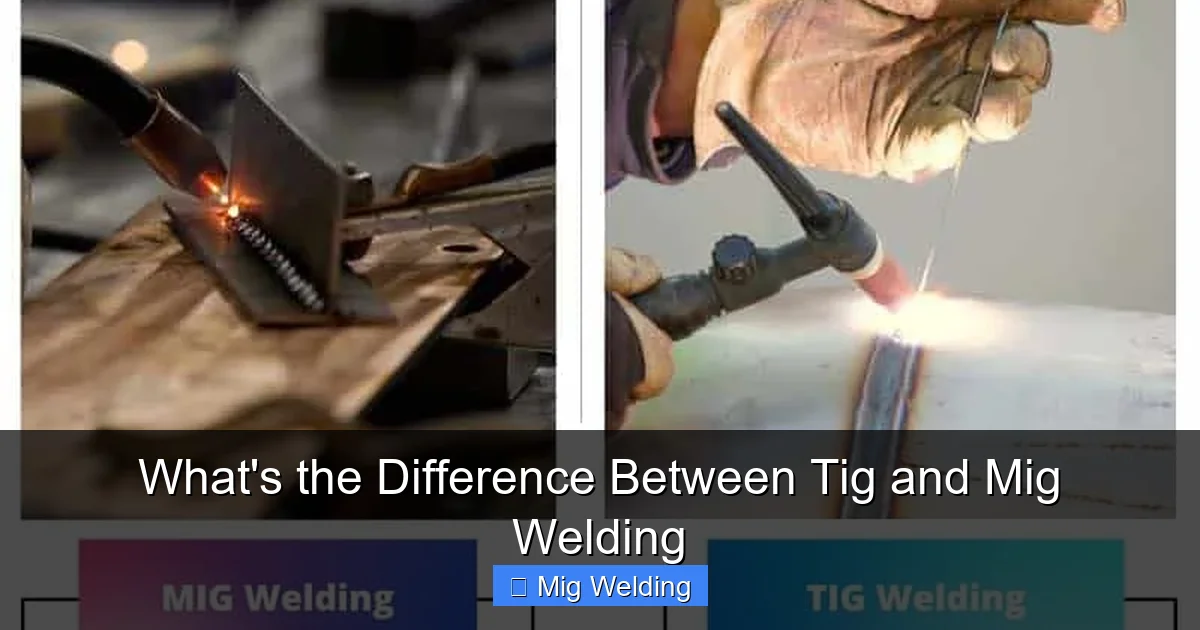
MIG welding, also known as Gas Metal Arc Welding (GMAW), uses a continuously fed consumable wire electrode. The process also employs an inert or semi-inert shielding gas to protect the weld pool.
Visual guide about What’s the Difference Between Tig and Mig Welding
Image source: askanydifference.com
How It Works
- The wire spool feeds wire through a welding gun.
- The wire melts as it contacts the workpiece, forming the weld.
- The shielding gas flows around the wire to prevent contamination.
Advantages of MIG Welding
- Faster welding process, ideal for large projects
- Easy to learn, suitable for beginners
- Less skill required for decent welds
Limitations of MIG Welding
- Less precise than TIG, may produce rougher welds
- Not ideal for thin or delicate materials
- Requires a steady power supply and proper setup
Comparing TIG and MIG Welding
Application Areas
- TIG: Aerospace, art, automotive custom work, thin metal fabrication
- MIG: Manufacturing, construction, automotive repair, large-scale projects
Speed and Productivity
MIG welding is faster, making it suitable for high-volume tasks. TIG is slower but offers excellent precision.

Visual guide about What’s the Difference Between Tig and Mig Welding
Image source: difference.minaprem.com
Ease of Use
MIG welders are easier to learn, perfect for beginners. TIG requires more skill and practice but yields cleaner, more precise welds.
Material Compatibility
- TIG: Best for thin steel, stainless steel, aluminum, and exotic metals
- MIG: Works well with thicker metals and general-purpose welding
Cost and Equipment
- MIG: Usually less expensive and simpler to set up
- TIG: More costly equipment, with additional accessories
Practical Tips for Choosing Between TIG and MIG
- For beginners: MIG welding is more forgiving and easier to learn.
- For detailed or high-quality work: TIG provides better control and cleaner results.
- Material thickness: Use MIG for thicker materials, TIG for thin sheets.
- Project speed: Choose MIG for faster completion, TIG for precision work.
- Budget considerations: MIG equipment tends to be more affordable for beginners.
How to Get Started with TIG and MIG Welding
Step-by-Step for MIG Welding
- Choose the right MIG welder for your needs and budget.
- Set up your work area with proper ventilation and safety gear.
- Select the appropriate wire type and diameter for your material.
- Set the correct voltage and wire feed speed according to the material thickness.
- Practice on scrap metal to get a feel for the machine.
- Start welding, maintaining steady movement and consistent speed.
Step-by-Step for TIG Welding
- Set up a TIG welder with a suitable power source and tungsten electrode.
- Attach the inert shielding gas (argon or helium).
- Select the right filler rod for your material.
- Practice controlling the torch, heat, and filler addition.
- Begin with thin metal pieces to develop your technique.
- Maintain steady hand movements for clean, precise welds.
Common Troubleshooting Tips
- Porosity in welds: Check shielding gas flow and ensure no leaks.
- Inconsistent welds: Maintain steady hand movements and proper machine settings.
- Burn-through on thin metal: Reduce heat input and use appropriate settings.
- Spattering: Adjust voltage and wire feed speed; ensure proper contact tip and gas coverage.
Conclusion
Understanding the differences between TIG and MIG welding helps you choose the right method for your project. MIG welding is great for speed and ease, making it perfect for beginners and large jobs. TIG welding offers superior precision and quality, ideal for detailed or delicate work. By considering your project needs, material type, and skill level, you can select the best welding technique and achieve professional results.
Final Tips
- Always wear proper safety gear—gloves, mask, and protective clothing.
- Practice regularly to improve your welding skills.
- Invest in good quality equipment for better results and safety.
- Follow manufacturer instructions and safety guidelines carefully.
