

MIG welding wire is a critical component in the welding process, and its composition directly affects weld quality and performance. This guide breaks down the materials used in MIG wire, from mild steel to aluminum and specialty alloys, helping you choose the right type for your application.
Key Takeaways
- Material Composition: MIG welding wire is made from metals like mild steel, stainless steel, aluminum, and specialty alloys, each suited for specific applications.
- Core Components: Most wires feature a solid metal core, while some use flux-cored designs for outdoor or heavy-duty welding.
- Coating Matters: Copper coating prevents rust and improves electrical conductivity, ensuring smooth wire feeding and consistent arcs.
- Wire Diameter: Common sizes range from 0.023″ to 0.045″, with thinner wires for precision work and thicker ones for deep penetration.
- Shielding Gas Compatibility: Solid wire requires external shielding gas (like argon or CO2), while flux-cored wire generates its own protection.
- Application Matching: Choosing the right wire depends on the base metal, welding environment, and desired weld strength.
- Storage & Handling: Proper storage in dry, sealed containers prevents moisture and oxidation, extending wire life and performance.
What Is MIG Welding Wire Made Of? A Complete Guide
If you’re new to MIG welding or looking to improve your craft, understanding what MIG welding wire is made of is essential. The wire you choose directly impacts the strength, appearance, and durability of your welds. Whether you’re working on a car repair, building a fence, or fabricating metal furniture, the right wire makes all the difference.
In this guide, we’ll walk you through the materials used in MIG welding wire, explain how different types are made, and help you pick the best one for your project. You’ll learn about solid wire, flux-cored wire, and specialty alloys—plus tips for storage, troubleshooting, and getting the most out of your welding setup.
Understanding the Basics of MIG Welding Wire
Visual guide about What Is Mig Welding Wire Made Of
Image source: makemoneywelding.com
MIG welding, or Metal Inert Gas welding, uses a continuous wire electrode fed through a welding gun. This wire melts and fuses with the base metal, creating a strong joint. The wire isn’t just a filler—it’s engineered to conduct electricity, resist corrosion, and deliver consistent performance under high heat.
The core of most MIG wires is made from metal alloys chosen for their strength, weldability, and compatibility with specific materials. These wires are typically spooled and fed automatically into the weld pool, making MIG welding fast and efficient.
Solid Wire vs. Flux-Cored Wire
There are two main types of MIG welding wire: solid wire and flux-cored wire. Each has a different composition and use case.
Solid wire is made from a single metal or alloy with a uniform composition. It’s clean, easy to use, and ideal for indoor welding. However, it requires an external shielding gas (like argon or CO2) to protect the weld from contamination.
Flux-cored wire, on the other hand, has a hollow center filled with flux. This flux releases shielding gases when heated, eliminating the need for an external gas supply. It’s great for outdoor welding, thick materials, and windy conditions.
Common Materials Used in MIG Welding Wire
Visual guide about What Is Mig Welding Wire Made Of
Image source: d2qc09rl1gfuof.cloudfront.net
The material makeup of MIG wire varies based on the application. Here are the most common types and what they’re made of.
Mild Steel Wire
Mild steel is the most popular choice for general-purpose welding. It’s affordable, widely available, and works well on carbon steel projects like automotive frames, trailers, and structural steel.
Mild steel MIG wire is typically made from low-carbon steel (around 0.05% to 0.25% carbon) with small amounts of manganese and silicon. These elements improve strength and help deoxidize the weld pool.
Popular examples include ER70S-3 and ER70S-6 wires. The “ER” stands for “electrode or rod,” “70” refers to the tensile strength (70,000 psi), and the “S” means it’s a solid wire. The number after the dash indicates the chemical composition and performance characteristics.
Stainless Steel Wire
Stainless steel wire is used when corrosion resistance and high strength are needed. It’s common in food processing equipment, marine applications, and medical devices.
This wire is made from alloys like 304, 308, or 316 stainless steel, which contain chromium (18–20%) and nickel (8–12%). These elements form a protective oxide layer that prevents rust.
Stainless steel wire requires argon-rich shielding gas (often with a small amount of CO2 or oxygen) to maintain arc stability and prevent contamination.
Aluminum Wire
Aluminum wire is softer and more prone to birdnesting (tangling in the feeder), so it requires special handling. It’s used in aerospace, automotive, and lightweight fabrication.
Aluminum MIG wire is made from pure aluminum or alloys like 4043 or 5356. The 4043 alloy contains silicon, which improves fluidity and reduces cracking. The 5356 alloy has magnesium, offering higher strength and better corrosion resistance.
Because aluminum oxidizes quickly, it must be cleaned before welding and used with 100% argon shielding gas.
Flux-Cored Wire (Self-Shielded and Gas-Shielded)
Flux-cored wire has a metal sheath surrounding a core of flux materials. The flux contains deoxidizers, arc stabilizers, and gas-forming compounds.
Self-shielded flux-cored wire doesn’t need external gas. The flux generates its own shielding, making it ideal for outdoor welding or windy conditions. It’s commonly used in construction and pipeline work.
Gas-shielded flux-cored wire still requires external gas (usually CO2 or argon blends) but offers deeper penetration and better weld quality. It’s often used for thick steel plates and heavy fabrication.
Wire Coatings and Their Role
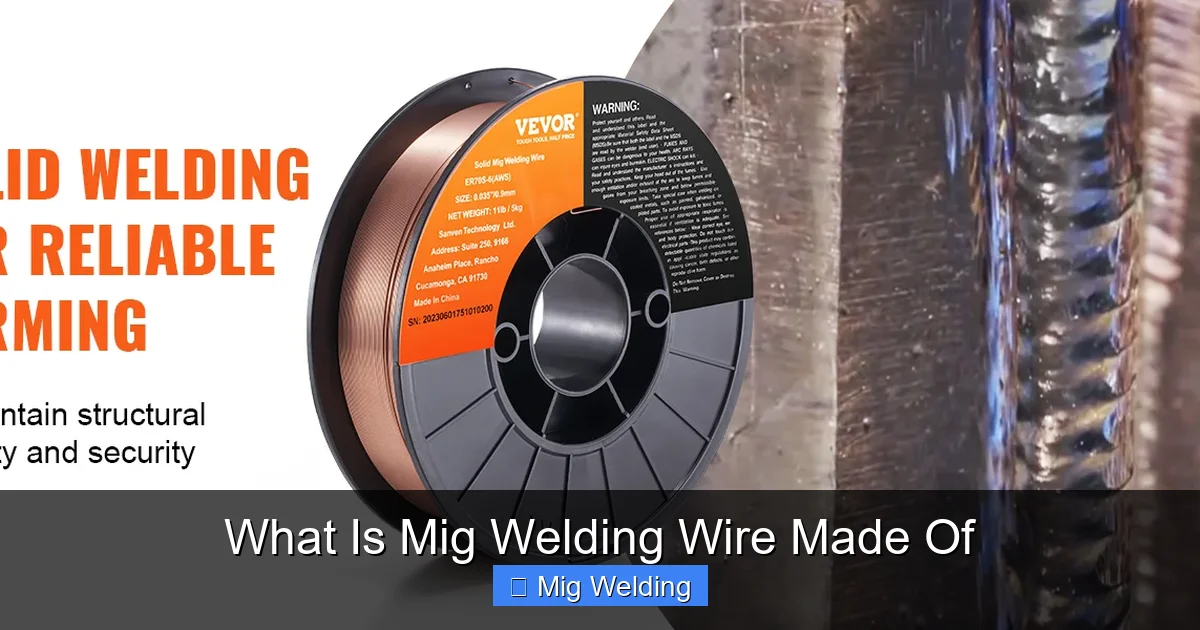
Most solid MIG wires are coated with a thin layer of copper. This isn’t just for looks—it serves important functions.
Why Copper Coating?
Copper coating prevents rust and oxidation during storage. It also improves electrical conductivity at the contact tip, ensuring a stable arc. Without this coating, the wire could corrode, leading to poor feeding and erratic welds.
However, too much copper can flake off and clog the liner or contact tip. That’s why high-quality wires have a thin, even coating.
Other Coatings and Treatments
Some specialty wires use anti-spatter coatings or lubricants to reduce friction during feeding. These help prevent birdnesting and extend the life of your welding gun components.
Wire Diameter and Its Impact
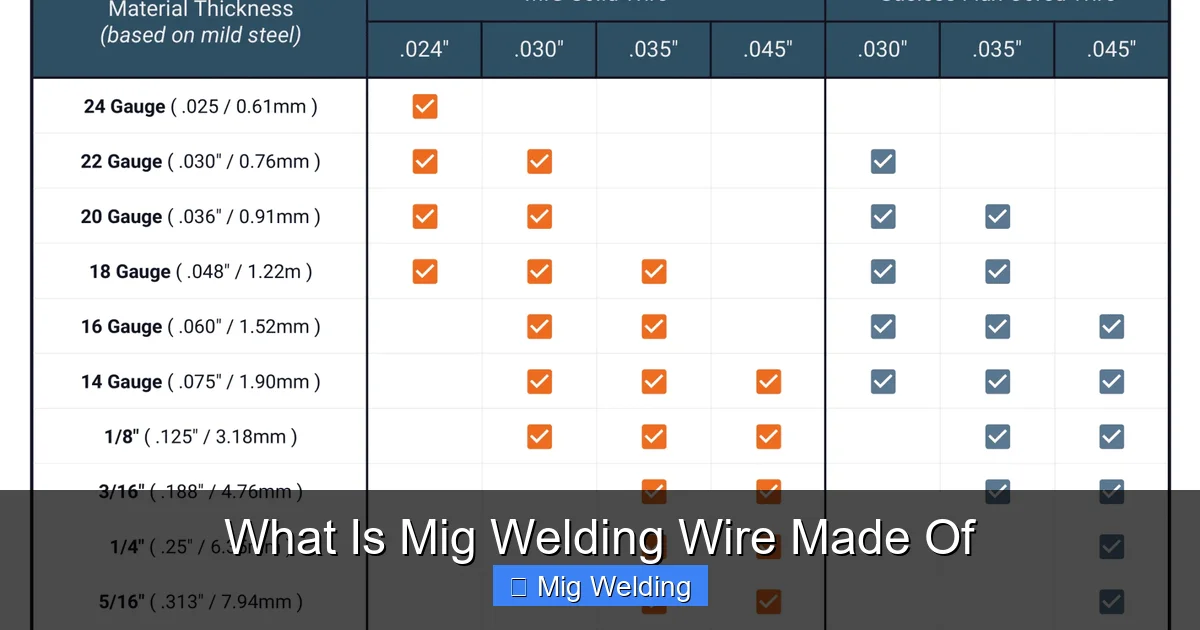
MIG wire comes in various diameters, typically ranging from 0.023 inches to 0.045 inches. The right size depends on your material thickness and welding machine.
Choosing the Right Diameter
- 0.023″ wire: Best for thin materials (18 gauge or thinner). Ideal for automotive bodywork and light fabrication.
- 0.030″ wire: A versatile middle ground. Works well on 16–12 gauge steel and is popular for hobbyists and professionals.
- 0.035″ wire: Great for 14–10 gauge steel. Offers deeper penetration and faster travel speeds.
- 0.045″ wire: Used for thick materials (1/4″ and up). Requires higher amperage and is common in industrial settings.
Using the wrong diameter can lead to poor arc stability, excessive spatter, or lack of fusion.
Shielding Gas and Wire Compatibility
The type of wire you use determines the shielding gas required.
Solid Wire and Gas Selection
Solid wire must be used with shielding gas. Common mixtures include:
- C25 (75% argon / 25% CO2): Best for mild steel. Offers good arc stability and low spatter.
- 100% CO2: Provides deep penetration but more spatter. Often used in industrial applications.
- 90% argon / 10% CO2: A cleaner alternative to C25, with less spatter and better arc control.
- 100% argon: Used for aluminum welding. Prevents oxidation and ensures smooth flow.
Flux-Cored Wire and Gas
Self-shielded flux-cored wire doesn’t need gas, but gas-shielded types do. Typically, 100% CO2 or argon/CO2 blends are used for steel. Aluminum flux-cored wire is rare, as solid wire with argon is preferred.
How to Choose the Right MIG Wire
Picking the right wire involves matching it to your project. Ask yourself:
- What material am I welding? (Steel, stainless, aluminum?)
- How thick is the metal?
- Am I welding indoors or outdoors?
- What kind of finish do I need?
- What’s my machine’s amperage range?
For example, if you’re welding a car bumper (thin steel), use 0.023″ or 0.030″ ER70S-6 wire with C25 gas. For a steel gate (thicker material), go with 0.035″ or 0.045″ wire and 100% CO2.
Storage and Handling Tips
Proper storage keeps your wire in top condition.
Keep It Dry
Moisture causes rust and porosity in welds. Store wire in a dry, sealed container or bag with desiccant packs. Avoid leaving spools exposed to humidity.
Avoid Tangling
Always secure the end of the wire when not in use. Use a spool cover or clip to prevent unwinding. For aluminum wire, use a U-groove drive roll and avoid tight bends.
Check for Damage
Inspect the wire for kinks, rust, or flaking copper before loading. Damaged wire can cause feeding issues and poor welds.
Troubleshooting Common Wire Problems
Even with the right wire, issues can arise. Here’s how to fix them.
Birdnesting (Wire Tangles in the Feeder)
This happens when the wire jams in the liner. Causes include:
- Incorrect drive roll tension
- Wrong liner size
- Bent or dirty liner
- Using aluminum wire with V-groove rolls
Solution: Adjust tension, clean or replace the liner, and use the correct drive rolls.
Poor Arc Stability
If the arc sputters or won’t start, check:
- Wire feed speed and voltage settings
- Contact tip wear
- Shielding gas flow (should be 20–30 CFH)
- Ground connection
Excessive Spatter
Too much spatter can ruin your finish. Reduce it by:
- Using the right gas mixture
- Cleaning base metal
- Adjusting voltage and wire speed
- Switching to a cleaner wire (like ER70S-3)
Conclusion
MIG welding wire may seem like a small part of the process, but it’s one of the most important. From mild steel to aluminum and flux-cored designs, the materials and construction of the wire affect every aspect of your weld—strength, appearance, and ease of use.
By understanding what MIG welding wire is made of, you can make smarter choices for your projects. Match the wire to your material, use the right gas and settings, and store it properly to get consistent, high-quality results every time.
Whether you’re a weekend welder or a professional fabricator, knowing your wire is the first step to mastering MIG welding.
