
Welding without shielding gas during MIG welding leads to poor weld quality, porosity, oxidation, and weak joints. This guide explains the risks, real-world consequences, and how to fix or prevent these issues for strong, clean welds every time.
Key Takeaways
- Shielding gas protects the weld pool: It prevents atmospheric gases like oxygen and nitrogen from contaminating the molten metal.
- Welding without gas causes porosity: Tiny holes form in the weld due to trapped gases, weakening the joint.
- Oxidation leads to discoloration and brittleness: Unprotected metal reacts with air, creating brittle, flaky welds.
- Spatter increases dramatically: Without gas, the arc becomes unstable, causing excessive spatter that’s hard to clean.
- Weld strength drops significantly: Joints may fail under stress due to internal defects and poor fusion.
- Some wires are designed for gasless welding: Flux-cored wires can be used without external gas, but solid MIG wire requires it.
- Always match wire type and gas: Using the right combination ensures clean, strong, and professional-looking welds.
What Happens If You MIG Weld Without Gas?
If you’ve ever tried MIG welding without shielding gas, you’ve probably noticed something’s off—maybe the weld looks splotchy, full of holes, or just plain weak. That’s because shielding gas plays a critical role in MIG welding. Without it, your welds are exposed to the atmosphere, leading to a host of problems that compromise both appearance and structural integrity.
In this guide, we’ll walk you through exactly what happens when you MIG weld without gas, why it matters, and how to avoid these issues. Whether you’re a beginner or an experienced welder, understanding the role of shielding gas will help you produce stronger, cleaner, and more reliable welds.
Why Shielding Gas Is Essential in MIG Welding
MIG welding—short for Metal Inert Gas welding—relies on a continuous wire feed and an electric arc to melt metal and fuse pieces together. But the arc creates a molten pool that’s extremely hot and reactive. If this pool is exposed to air, oxygen and nitrogen from the atmosphere can dissolve into the metal, causing contamination.
Shielding gas forms a protective bubble around the weld pool, blocking out these harmful gases. Common shielding gases include:
- Argon: Often used for aluminum and non-ferrous metals.
- CO2: Common for steel, provides deep penetration but more spatter.
- Argon/CO2 mix: A popular blend (like 75% argon / 25% CO2) for mild steel, offering a balance of stability and penetration.
Without this protective layer, the weld is essentially “cooking” in open air—and that’s where the problems begin.
Step-by-Step: What Happens When You Weld Without Gas
Let’s break down the process and see what goes wrong when you skip the gas.
1. The Arc Strikes—But It’s Unstable
When you pull the trigger on your MIG welder without gas, the arc may still ignite, but it won’t behave the same way. The arc becomes erratic, flickering or sputtering instead of flowing smoothly. This is because the lack of gas disrupts the ionization path needed for a stable electrical arc.
Tip: If your arc feels “jumpy” or inconsistent, check your gas supply first—even if the tank isn’t empty, a clogged regulator or loose hose can cut off flow.
Visual guide about What Happens If You Mig Weld Without Gas
Image source: weldingproperty.com
Visual guide about What Happens If You Mig Weld Without Gas
Image source: weldingproperty.com
2. The Weld Pool Forms—But It’s Exposed
As the wire melts and forms a molten pool, it’s instantly exposed to oxygen and nitrogen in the air. These gases react with the hot metal, forming oxides and nitrides that get trapped in the cooling weld.
This leads to:
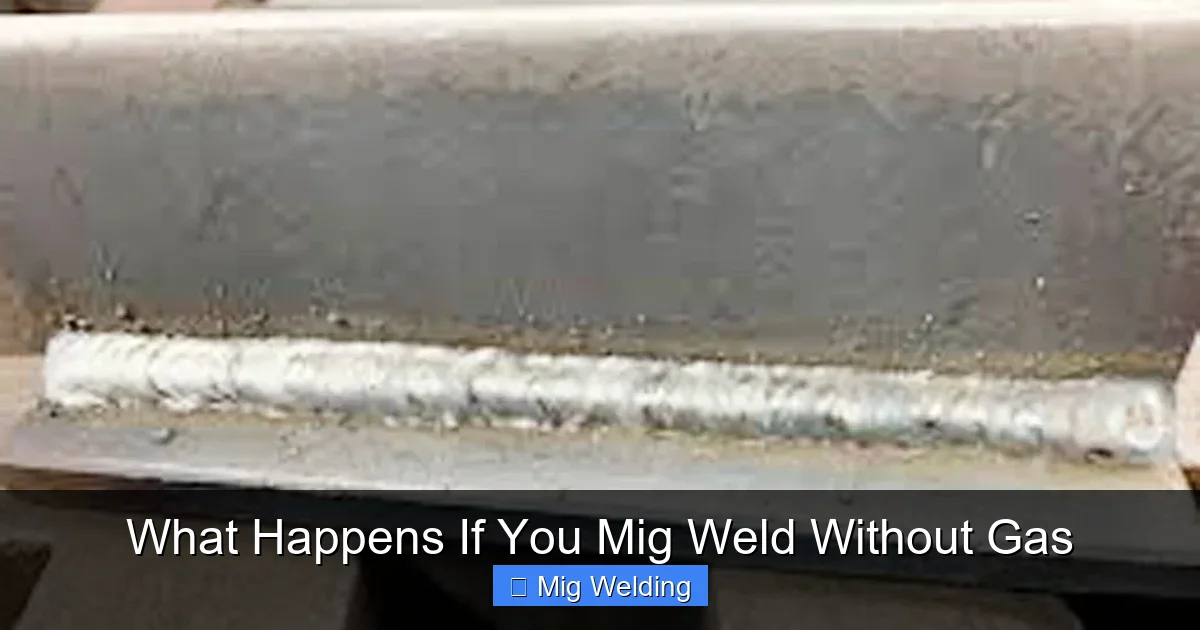
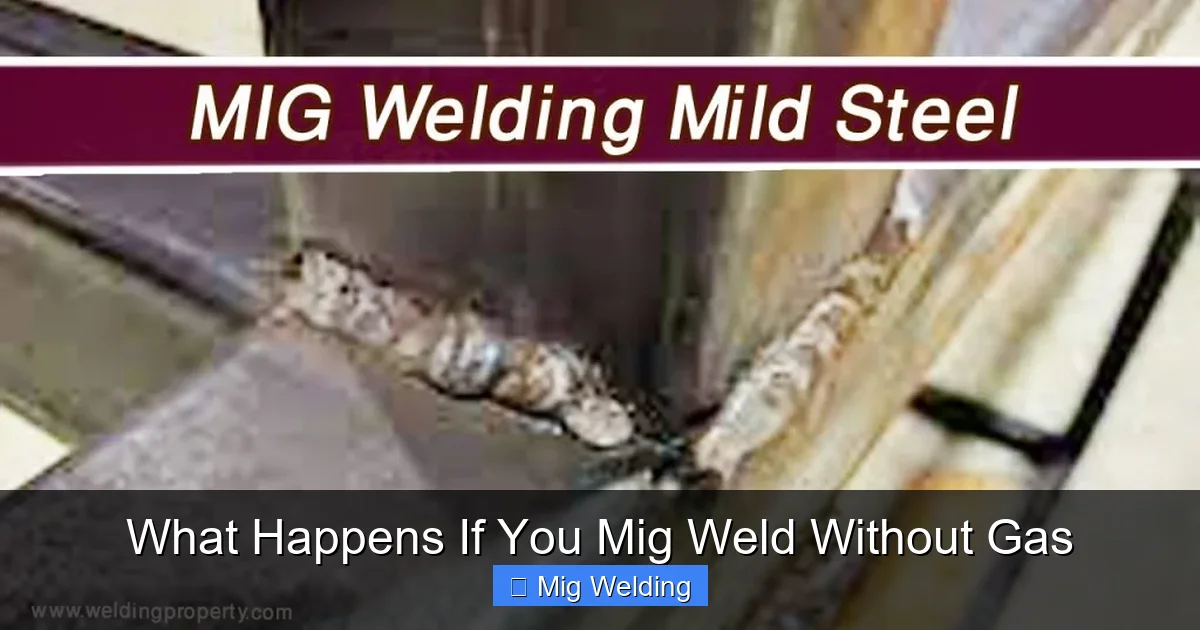
- Porosity: Tiny bubbles or holes in the weld bead.
- Oxidation: A dull, gray, or black surface instead of a shiny, clean finish.
- Brittleness: The weld becomes weak and prone to cracking.
3. Spatter Explodes Everywhere
Without gas to stabilize the arc and control metal transfer, droplets of molten metal are ejected violently from the weld pool. This creates excessive spatter—those little blobs of metal that stick to your workpiece, helmet, and welding table.
Cleaning spatter is time-consuming and can damage surfaces. In industrial settings, this can slow down production and increase labor costs.
4. The Weld Cools—With Hidden Defects
As the weld cools, the trapped gases and oxides remain locked inside. These internal flaws aren’t always visible on the surface, but they drastically reduce the weld’s strength and durability.
In structural applications—like automotive frames or construction—this can lead to catastrophic failure under stress.
Real-World Consequences of Welding Without Gas
Let’s look at what this means in practice.
Poor Weld Appearance
A gasless MIG weld often looks rough, uneven, and discolored. Instead of a smooth, consistent bead, you’ll see a lumpy, porous surface with black or gray scaling. This not only looks unprofessional but also signals underlying quality issues.
Reduced Mechanical Strength
Tests show that welds made without shielding gas can lose up to 50% of their tensile strength. That means a joint designed to hold 1000 pounds might only support 500—putting safety at risk.
Increased Risk of Cracking
Porosity and oxidation create stress concentration points. Over time, especially under vibration or load, these weak spots can develop cracks that spread through the weld.
Difficulty in Inspection and Certification
In industries like aerospace, automotive, or pressure vessel manufacturing, welds must pass strict inspection standards. A gasless weld with porosity or lack of fusion will fail X-ray, ultrasonic, or dye penetrant tests—meaning rework or rejection.
Can You Weld Without Gas at All?
Yes—but only under specific conditions.
Flux-Cored Arc Welding (FCAW)
Some wires, called flux-cored wires, contain a flux compound inside the wire itself. When heated, this flux produces its own shielding gas and slag, protecting the weld pool without needing an external gas supply.
There are two types:
- Self-shielding flux-cored wire: No external gas needed. Ideal for outdoor welding or windy conditions.
- Gas-shielded flux-cored wire: Requires external gas (usually CO2 or argon/CO2 mix) for best results.
So if you’re using a flux-cored wire, you can weld without gas—but only if it’s self-shielding.
Solid MIG Wire Requires Gas
If you’re using standard solid MIG wire (like ER70S-6 for steel), you must use shielding gas. There’s no flux inside to protect the weld, so skipping gas guarantees contamination.
Example: Imagine trying to bake a cake without flour—it just won’t work. Solid wire without gas is like that: the essential ingredient is missing.
How to Fix a Weld Made Without Gas
If you’ve already welded without gas, don’t panic—there are ways to fix it.
1. Grind Out the Defective Weld
Use a grinding wheel or flap disc to remove the entire weld bead, including any porous or oxidized sections. Go deep enough to reach clean, uncontaminated metal.
2. Clean the Joint Thoroughly
Remove all rust, paint, oil, and mill scale. Use a wire brush (dedicated to stainless or carbon steel) and acetone or a degreaser.
3. Re-Weld with Proper Gas
Set up your gas cylinder, check for leaks, and ensure the flow rate is correct (usually 15–25 CFH). Use the right gas for your material and wire type.
4. Inspect the New Weld
After welding, visually inspect for porosity, undercut, or lack of fusion. For critical applications, consider non-destructive testing (NDT).
Troubleshooting Common Gas-Related Issues
Even with gas, problems can occur. Here’s how to fix them.
Gas Flow Too Low
Symptoms: Light porosity, inconsistent arc.
Solution: Increase flow rate to 20–25 CFH. Check for kinked hoses or clogged nozzles.
Gas Flow Too High
Symptoms: Turbulent gas flow, arc instability, increased spatter.
Solution: Reduce flow to 15–20 CFH. High flow can create turbulence, pulling air into the shielding zone.
Leaking Gas Connections
Symptoms: Hissing sound, low pressure, poor weld quality.
Solution: Use soapy water to check connections. Tighten fittings or replace damaged hoses or regulators.
Wind or Drafts
Symptoms: Gas blown away, porosity.
Solution: Use a welding screen or windbreak. Switch to self-shielding flux-cored wire for outdoor work.
Best Practices to Avoid Welding Without Gas
Prevention is always better than repair. Follow these tips:
- Always check your gas setup before welding. Turn on the tank, open the valve, and verify flow with the gauge.
- Use the right wire and gas combination. Match solid wire with shielding gas; use flux-cored wire for gasless options.
- Store gas cylinders properly. Keep them upright, secured, and away from heat or direct sunlight.
- Inspect hoses and connections regularly. Replace worn or cracked parts immediately.
- Keep spare gas on hand. Running out mid-weld ruins your work and wastes time.
Conclusion
Welding without shielding gas in MIG welding is a recipe for disaster. The result? Weak, porous, ugly welds that can fail under pressure. Shielding gas isn’t optional—it’s the invisible shield that protects your weld from contamination, ensures a stable arc, and delivers strong, professional results.
While flux-cored wires offer a gasless alternative, solid MIG wire demands gas to perform. By understanding the role of shielding gas and following best practices, you’ll avoid costly mistakes and produce welds that are not only strong but also safe and reliable.
So next time you fire up your MIG welder, remember: no gas, no gain. Protect your weld—and your work—with the right setup every time.
