
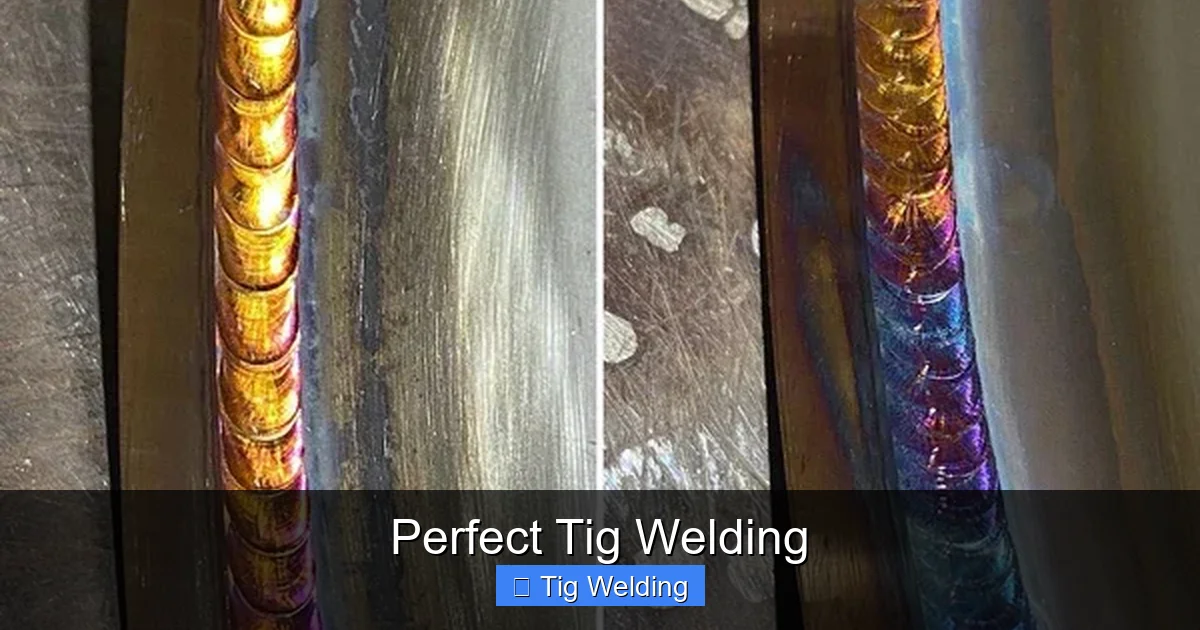
Perfect TIG welding is all about precision, control, and technique. Whether you’re a beginner or a seasoned welder, mastering the fundamentals ensures clean, strong, and professional welds every time. This guide covers essential tips, tools, and practices to elevate your TIG welding skills.
Key Takeaways
- Proper Equipment: Using the right TIG welder and accessories is crucial for quality welds.
- Consistent Technique: Maintaining steady hand movements and correct torch angles ensures smooth, even welds.
- Shielding Gas Control: Correct gas flow and purity prevent contamination and oxidation.
- Preparation: Clean, fit, and prep your materials for optimal welding results.
- Practice and Patience: Developing skill takes time—practice regularly to perfect your technique.
- Safety First: Always wear appropriate safety gear and work in a well-ventilated area.
Quick Answers to Common Questions
Question 1?
What is the key to perfect TIG welding?
The key is maintaining consistent technique, proper equipment setup, and thorough material preparation.
Question 2?
Which gas is commonly used in TIG welding?
Pure argon is most commonly used because it provides excellent shielding and weld quality.
Question 3?
How important is tungsten electrode selection?
Very important—it affects arc stability, weld quality, and the types of metals you can weld effectively.
Question 4?
Can beginners achieve perfect TIG welds quickly?
While it takes practice, beginners can produce good welds by following proper techniques and working patiently.
Question 5?
What safety precautions should I take when TIG welding?
Always wear protective gear, work in ventilated areas, and handle gases and electrical equipment carefully.
📑 Table of Contents
- Introduction: The Art of Perfect TIG Welding
- Understanding the Basics of TIG Welding
- Essential Equipment for Perfect TIG Welding
- Preparing for a Perfect Weld
- Mastering the Technique for Flawless TIG Welds
- Common Mistakes and How to Avoid Them
- Tips for Improving Your TIG Welding Skills
- Conclusion: Achieving Perfection in TIG Welding
Introduction: The Art of Perfect TIG Welding
When it comes to welding, TIG (Tungsten Inert Gas) welding stands out for its precision and clean finish. It’s the preferred method for delicate projects like jewelry, aerospace parts, and high-quality metal art. However, achieving perfect TIG welds requires more than just equipment; it demands skill, technique, and a good understanding of the process.
If you’ve ever struggled with inconsistent welds or messy finishes, don’t worry—you’re not alone. Many welders start with basic techniques and gradually improve through practice. In this guide, we’ll explore everything you need to know to master perfect TIG welding. From choosing the right tools to advanced tips, get ready to take your skills to the next level.
Understanding the Basics of TIG Welding
What is TIG Welding?
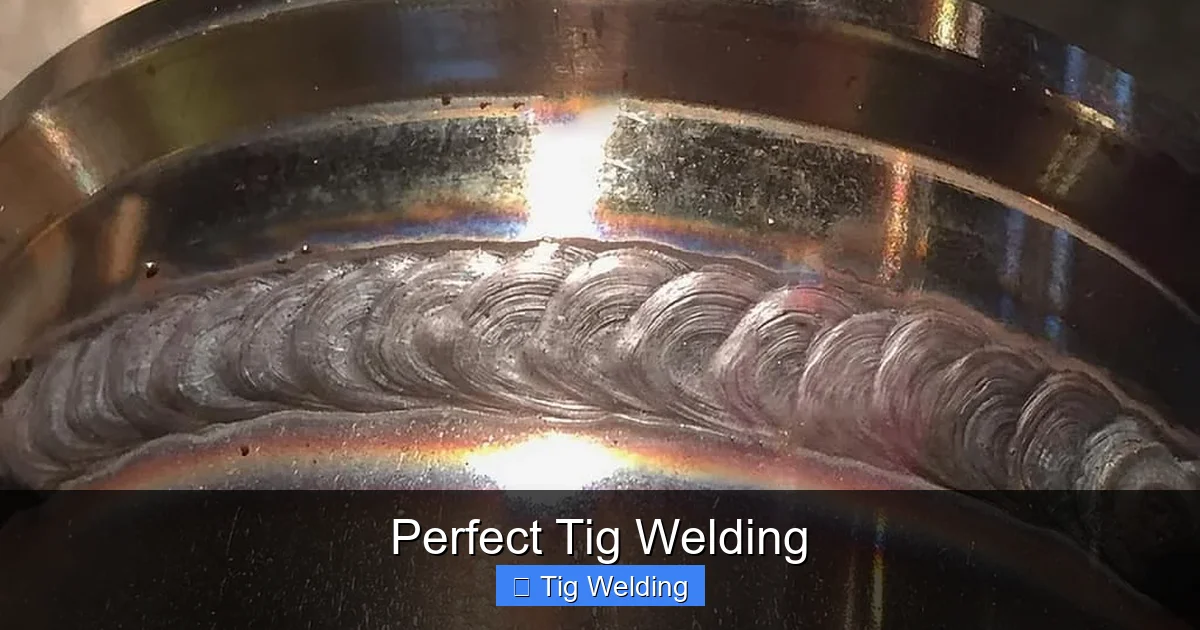
TIG welding uses a tungsten electrode to produce the weld, with a separate filler rod added manually if needed. It’s known for producing clean, precise welds, especially on thin materials. The process involves shielding the weld area with inert gas (usually argon) to prevent contamination.
Visual guide about Perfect Tig Welding
Image source: weldguru.com
Why Choose TIG Welding?
- High-quality, clean welds with minimal spatter
- Excellent control over heat and weld bead
- Versatile for various metals like aluminum, stainless steel, and copper
- Ideal for detailed or delicate work
Essential Equipment for Perfect TIG Welding
Choosing the Right TIG Welder
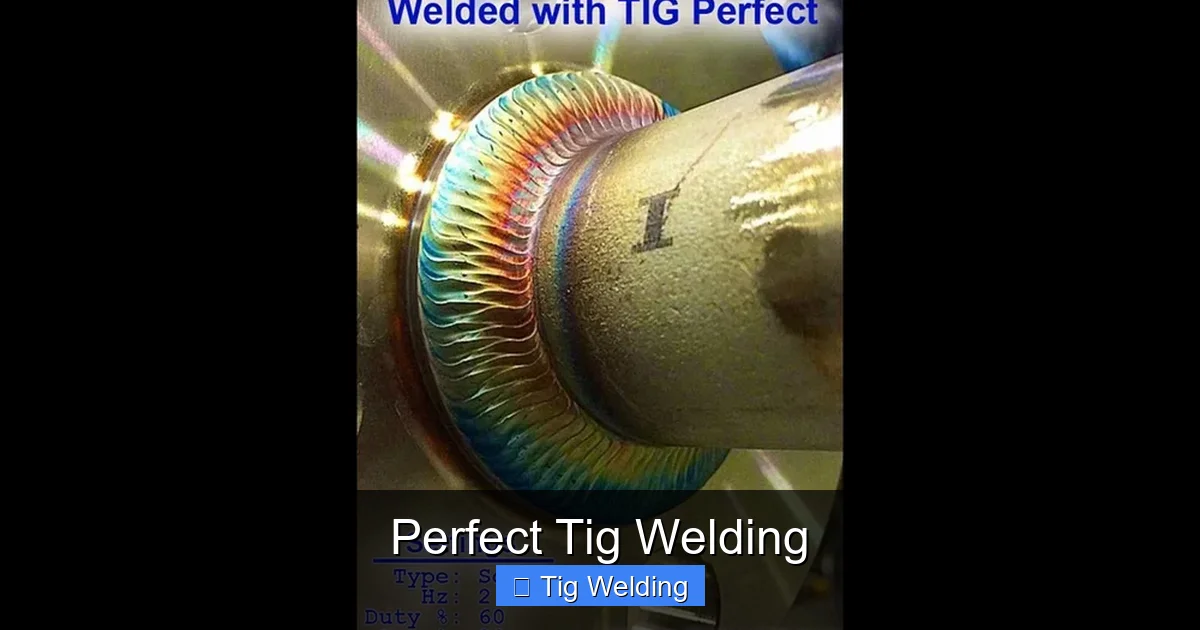
Select a TIG welder with adjustable settings for amperage, pulse, and AC/DC options. For beginners, a machine with easy controls and stable power output makes learning easier. More advanced welders incorporate features like digital displays and waveforms for precision.
Visual guide about Perfect Tig Welding
Image source: images.squarespace-cdn.com
Key Accessories and Tools
- Tungsten Electrodes: Types vary for different metals; 2% thoriated, lanthanated, and ceriated are common.
- Filler Rods: Match the metal and thickness; keep them clean and stored properly.
- Protective Gear: Welding helmet with auto-darkening, gloves, apron, and safety glasses.
- Gas Supply: Pure argon or argon mixes, with regulators and flow meters for control.
Preparing for a Perfect Weld
Material Preparation
Always start with clean, free-of-oxidation metal. Use a wire brush or grinder to remove rust, oil, and dirt. Proper fit-up with tight joints reduces gaps and improves weld quality.

Visual guide about Perfect Tig Welding
Image source: perfectwelders.com
Setting Up Your Equipment
- Choose the correct tungsten type and size for your project.
- Adjust the amperage based on material thickness—too high can burn through, too low can cause weak welds.
- Set the gas flow rate (typically 15-20 CFM) to prevent contamination.
Mastering the Technique for Flawless TIG Welds
Holding the Torch
Hold the torch at a consistent angle—usually between 15° to 20° from vertical. Keep a steady hand, moving smoothly along the joint. Maintain the correct distance between the tungsten tip and the workpiece (about 1/8 inch).
Controlling Heat and Speed
Adjust your travel speed and amperage to prevent warping or burn-through. Slow, controlled movements produce cleaner welds. Practice different speeds to find what works best on your material.
Adding Filler Metal
Feed the filler rod into the leading edge of the weld pool at a steady rate. Keep the filler at a slight angle, matching the torch angle, to produce even beads.
Common Mistakes and How to Avoid Them
Contamination
Ensure your materials are clean and your gas flow is adequate. Contaminants cause porosity and weak welds.
Incorrect Gas Flow
Too low flow results in oxidation; too high causes turbulence. Use a flow meter to maintain consistent flow.
Poor Torch Angle or Distance
Maintain a consistent angle and distance to achieve even heat distribution and smooth welds.
Inconsistent Speed
Practice steady, uniform travel speed for uniform beads. Use guides or fixtures if needed.
Tips for Improving Your TIG Welding Skills
- Practice on scrap metal before working on your project.
- Use a foot pedal for better control of amperage during welding.
- Record your settings and progress to track improvements.
- Watch tutorials and learn from experienced welders.
- Maintain your equipment regularly for optimal performance.
Conclusion: Achieving Perfection in TIG Welding
Perfect TIG welding is an achievable goal with the right knowledge, practice, and patience. Focus on your equipment setup, material prep, and technique to produce flawless welds. Remember, every weld is a learning opportunity—keep practicing, stay safe, and enjoy the process of creating professional-quality work. With dedication, you’ll master the art of TIG welding and impress with your craftsmanship.
Frequently Asked Questions
How do I choose the right tungsten electrode?
Select the tungsten type based on the metal you’re welding. Thoriated electrodes are versatile, but lanthanated or ceriated options are safer and often last longer.
What is the ideal gas flow rate for TIG welding?
Typically, 15-20 CFM (cubic feet per minute) provides sufficient shielding without turbulence. Adjust as needed based on your environment.
How do I prevent porosity in my welds?
Ensure your materials are clean, use proper gas flow, and avoid drafts that can disturb the shielding gas. Proper technique also helps.
Can I weld aluminum with TIG?
Yes, TIG welding is excellent for aluminum, but requires AC settings, a clean surface, and a suitable tungsten electrode.
What are some common mistakes to avoid in TIG welding?
Avoid contamination, incorrect gas flow, inconsistent speed, and improper torch angles. Regular practice and equipment maintenance help prevent these issues.
How long does it take to become proficient in TIG welding?
It varies, but with consistent practice, many welders see significant improvement within a few months. Patience and continuous learning are key.
