
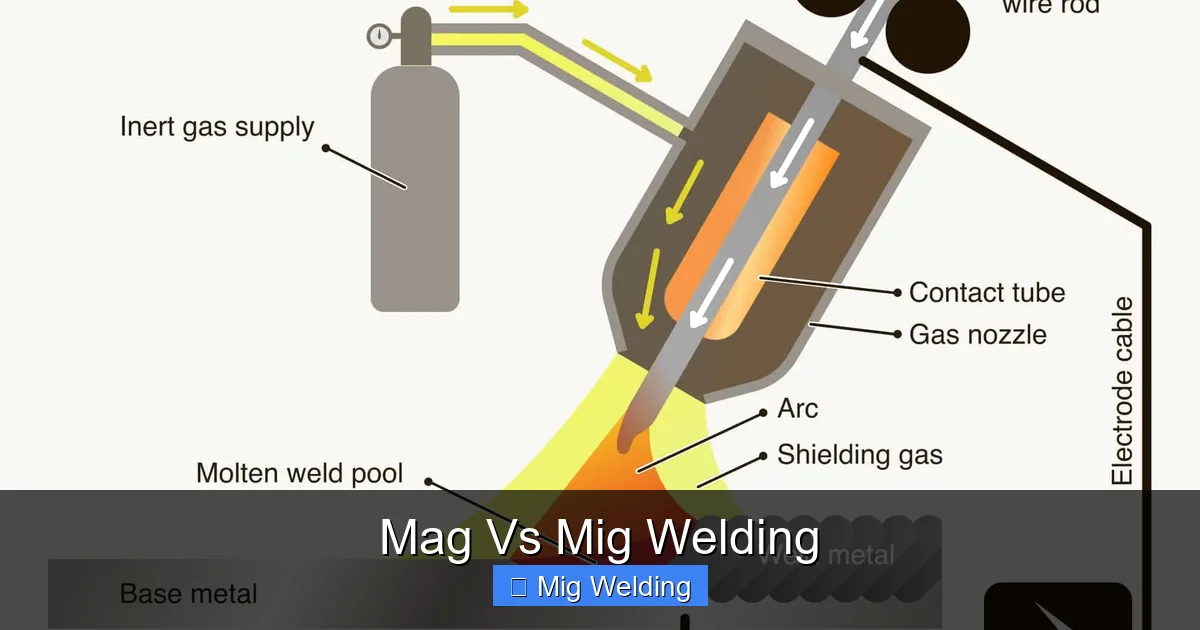
Mag vs Mig welding often confuses beginners, but the difference is simple: MIG uses inert gas, while MAG uses active gas. This guide breaks down both processes, helping you pick the right one for your project.
Key Takeaways
- MIG welding uses inert gases like argon or helium to protect the weld pool, making it ideal for non-ferrous metals like aluminum.
- MAG welding uses active gases like CO₂ or argon-CO₂ mixes, which are better for welding steel and ferrous metals.
- The terms are often used interchangeably, but technically, MIG stands for Metal Inert Gas and MAG for Metal Active Gas.
- MAG is more common in industrial settings due to its cost-effectiveness and strong welds on steel.
- MIG offers cleaner, smoother welds with less spatter, especially on thin or delicate materials.
- Most modern MIG welders can do both MIG and MAG by simply switching the shielding gas.
- Choosing between Mag vs Mig welding depends on material, budget, and desired weld quality.
What You’ll Learn in This Guide
If you’re new to welding or just trying to figure out the difference between Mag vs Mig welding, you’re in the right place. This guide will walk you through everything you need to know—from the basics of each process to step-by-step setup, practical tips, and how to choose the right method for your project. Whether you’re working on a DIY car repair, building a metal shelf, or tackling a professional fabrication job, understanding these two welding techniques will save you time, money, and frustration.
Understanding the Basics: What Is MIG Welding?
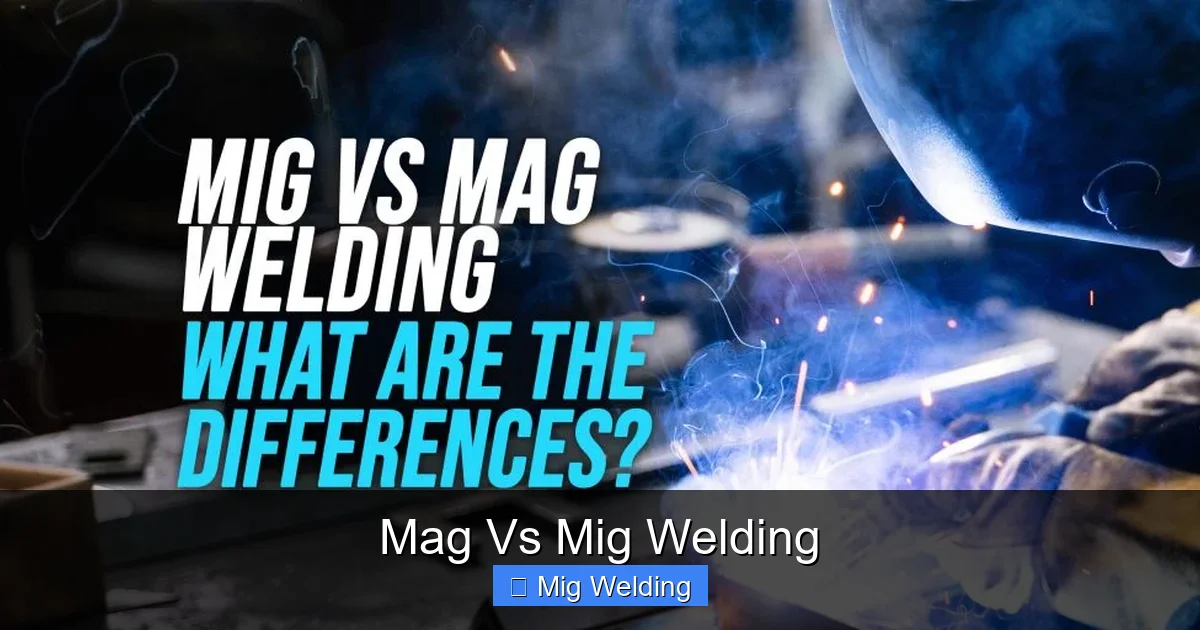
Visual guide about Mag Vs Mig Welding
Image source: weldingwatch.com
MIG stands for Metal Inert Gas welding. It’s a type of gas metal arc welding (GMAW) that uses a continuous wire electrode fed through a welding gun. The key feature of MIG welding is the use of an inert shielding gas—typically argon, helium, or a mix of both—to protect the molten weld pool from contamination by air.
Because inert gases don’t react with the metal, MIG welding produces clean, smooth, and spatter-free welds. This makes it perfect for welding non-ferrous metals like aluminum, copper, and magnesium. It’s also great for thin materials where precision and appearance matter.
Common Uses for MIG Welding
- Automotive bodywork (especially aluminum parts)
- Home DIY projects involving aluminum or stainless steel
- Art and sculpture using non-ferrous metals
- Thin sheet metal fabrication
Understanding the Basics: What Is MAG Welding?
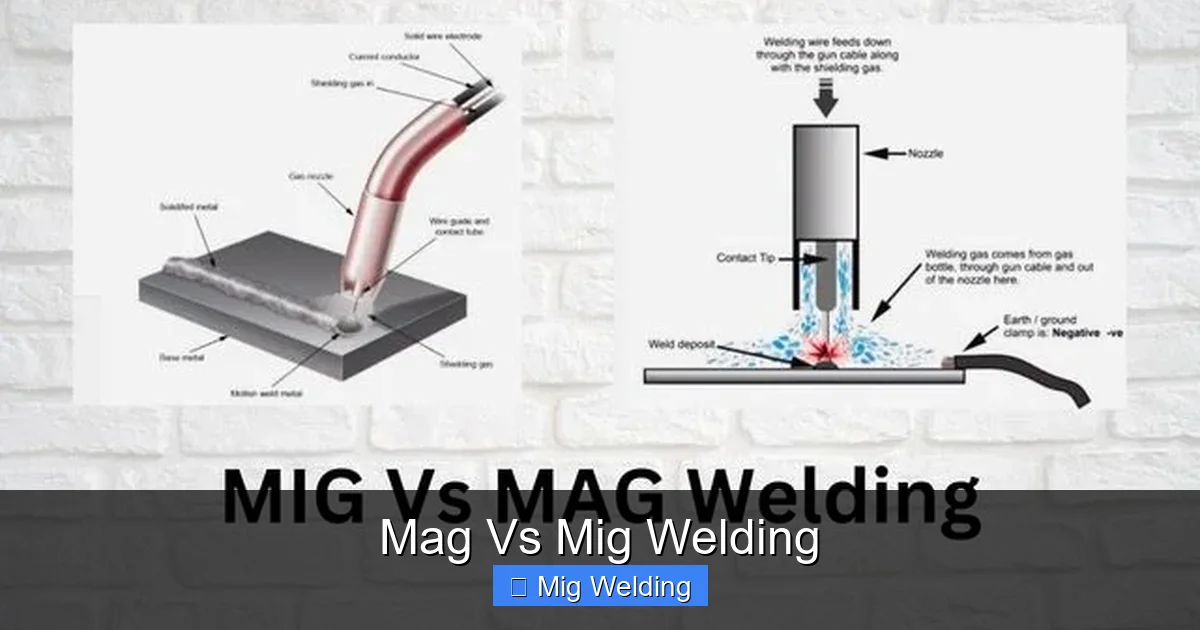
Visual guide about Mag Vs Mig Welding
Image source: sp-ao.shortpixel.ai
MAG stands for Metal Active Gas welding. Like MIG, it’s a form of GMAW that uses a continuous wire feed and a shielding gas. However, the gas used in MAG welding is active—meaning it reacts chemically with the weld pool. Common shielding gases include carbon dioxide (CO₂) or a mixture of argon and CO₂.
These active gases help stabilize the arc and improve penetration, making MAG welding ideal for ferrous metals like mild steel, carbon steel, and stainless steel. It’s widely used in construction, manufacturing, and automotive repair because it’s fast, strong, and cost-effective.
Common Uses for MAG Welding
- Structural steel fabrication
- Heavy machinery repair
- Pipe welding
- Automotive frame and chassis work
Mag vs Mig Welding: Key Differences
While both processes look similar and use the same basic equipment, the choice of shielding gas creates important differences. Here’s a side-by-side comparison:
Shielding Gas
- MIG: Uses inert gases (argon, helium) that don’t react with the metal.
- MAG: Uses active gases (CO₂, argon-CO₂ mix) that do react with the weld pool.
Metals Used
- MIG: Best for non-ferrous metals like aluminum and copper.
- MAG: Best for ferrous metals like steel and iron.
Weld Quality and Appearance
- MIG: Produces cleaner, smoother welds with minimal spatter.
- MAG: Can produce more spatter but offers deeper penetration and stronger welds on thick steel.
Cost and Accessibility
- MIG: Inert gases like argon are more expensive and less readily available.
- MAG: CO₂ is cheap and easy to find, making MAG more economical for large projects.
Step-by-Step: Setting Up for MIG Welding
Ready to try MIG welding? Follow these steps to get started safely and effectively.
Step 1: Choose the Right Equipment
You’ll need a MIG welder capable of handling inert gas, a wire feeder, a welding gun, and a gas cylinder filled with argon or an argon-helium mix. Make sure your welder has the correct polarity settings (usually DCEN—direct current electrode negative).
Step 2: Prepare Your Workpiece
Clean the metal surface thoroughly. Remove paint, rust, oil, or dirt using a wire brush or grinder. For aluminum, use a stainless steel brush dedicated only to aluminum to avoid contamination.
Step 3: Set the Wire and Gas
Load the appropriate wire—typically aluminum or stainless steel wire for MIG. Set the gas flow rate to 20–25 cubic feet per hour (CFH). Always do a test spray to ensure gas is flowing before welding.
Step 4: Adjust Voltage and Wire Speed
Start with the manufacturer’s recommended settings. For thin aluminum, use lower voltage and slower wire feed. Practice on scrap metal to fine-tune your settings.
Step 5: Weld with a Steady Hand
Hold the gun at a 10–15 degree angle and maintain a consistent travel speed. Use a push technique (pushing the gun away from the weld) for better visibility and cleaner results.
Step-by-Step: Setting Up for MAG Welding
MAG welding is similar but requires a few key adjustments.
Step 1: Select the Right Gas and Wire
Use a gas mix like 75% argon / 25% CO₂ (common for steel) or pure CO₂ for deeper penetration. Use ER70S-6 solid steel wire.
Step 2: Set Polarity and Parameters
Most MAG welding uses DCEP (direct current electrode positive). Set your voltage and wire feed speed based on material thickness. Thicker steel needs higher voltage.
Step 3: Clean the Metal
Remove rust, mill scale, and grease. MAG is more forgiving than MIG, but clean metal still gives better results.
Step 4: Weld with a Drag Technique
Use a drag (pull) technique—pulling the gun toward you—for better penetration on steel. Keep a short arc length to reduce spatter.
Practical Tips for Better Results
- Use the right gas for the job: Don’t use CO₂ for aluminum—it will ruin the weld.
- Keep your gun nozzle clean: Spatter buildup can block gas flow and cause porosity.
- Practice on scrap metal: Always test your settings before welding your actual project.
- Wear proper safety gear: Use a welding helmet, gloves, and flame-resistant clothing.
- Ventilate your workspace: Welding fumes can be hazardous—use a fume extractor or work outdoors.
Troubleshooting Common Issues
Even experienced welders run into problems. Here’s how to fix the most common ones:
Porosity (Air Pockets in the Weld)
Cause: Contaminated gas, dirty metal, or wind blowing away shielding gas.
Fix: Check gas flow, clean the metal, and weld in a sheltered area.
Excessive Spatter
Cause: Too high voltage, long arc length, or incorrect gas mix.
Fix: Reduce voltage, shorten arc length, and use the right argon-CO₂ ratio.
Weak or Incomplete Penetration
Cause: Low voltage, slow travel speed, or wrong technique.
Fix: Increase voltage, slow down, and use a drag technique for steel.
Wire Feeding Problems
Cause: Dirty liner, wrong drive roll size, or tangled wire.
Fix: Clean the liner, check drive rolls, and ensure the wire spool spins freely.
How to Choose Between Mag vs Mig Welding
Still not sure which to use? Ask yourself these questions:
- What metal am I welding? Aluminum or copper? Go MIG. Steel or iron? Go MAG.
- How thick is the material? Thin sheets? MIG gives cleaner results. Thick steel? MAG offers better penetration.
- What’s my budget? MAG is cheaper due to lower gas costs.
- Do I need a clean finish? MIG wins for appearance.
- Am I welding indoors or outdoors? MAG handles drafts better than MIG.
Conclusion
The debate between Mag vs Mig welding isn’t about which is better—it’s about which is right for your project. MIG welding shines when working with aluminum or when you need clean, precise welds. MAG welding dominates in industrial and structural applications where strength and cost matter most. The good news? Most modern MIG welders can handle both processes with a simple gas swap. By understanding the differences and following the steps in this guide, you’ll be able to choose the right method, set up your machine correctly, and produce strong, professional-quality welds every time. So grab your gear, pick your gas, and start welding with confidence!
