

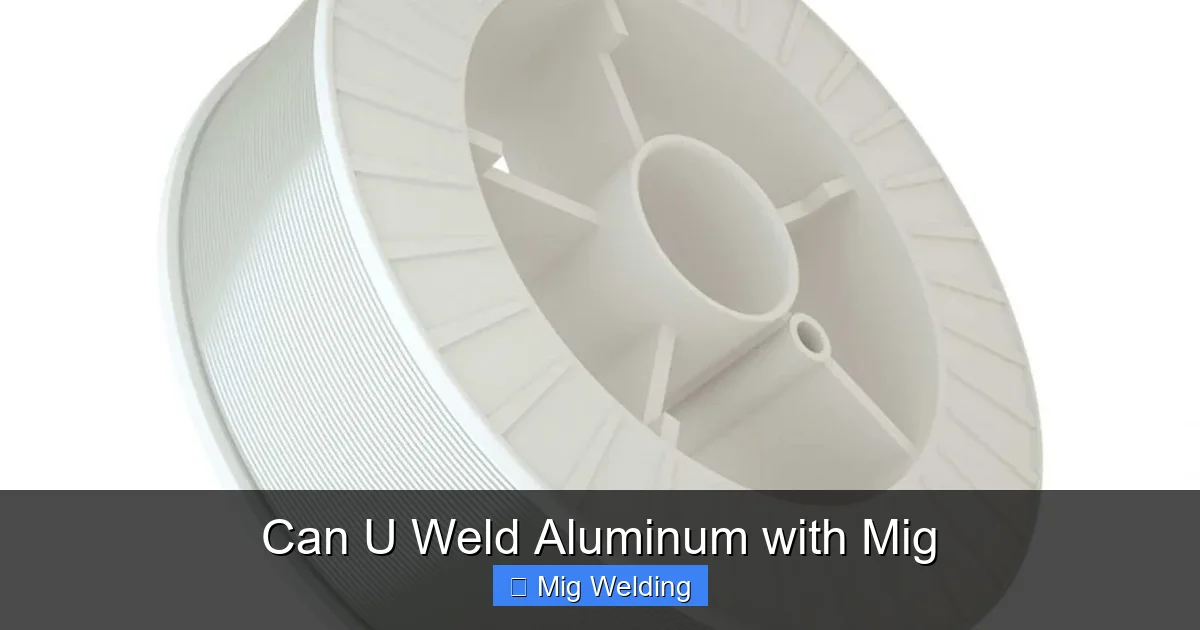
Yes, you can weld aluminum with a MIG welder, but it requires special equipment, techniques, and preparation. This guide walks you through everything you need—from choosing the right wire and gas to mastering travel speed and cleaning—so you can achieve strong, clean aluminum welds every time.
Key Takeaways
- Use a MIG welder with spool gun or push-pull system: Standard MIG setups struggle with soft aluminum wire; a spool gun feeds wire smoothly and prevents birdnesting.
- Choose the correct filler wire: ER4043 and ER5356 are the most common aluminum wires—ER4043 for general use, ER5356 for stronger, crack-resistant welds.
- Shielding gas matters: Use 100% argon gas—never mix with CO2—to prevent porosity and ensure clean, stable arcs.
- Clean the metal thoroughly: Aluminum oxidizes quickly; always scrub with a stainless steel brush and wipe with acetone before welding.
- Adjust voltage and wire speed: Aluminum needs higher voltage and faster wire feed than steel—start with manufacturer settings and fine-tune.
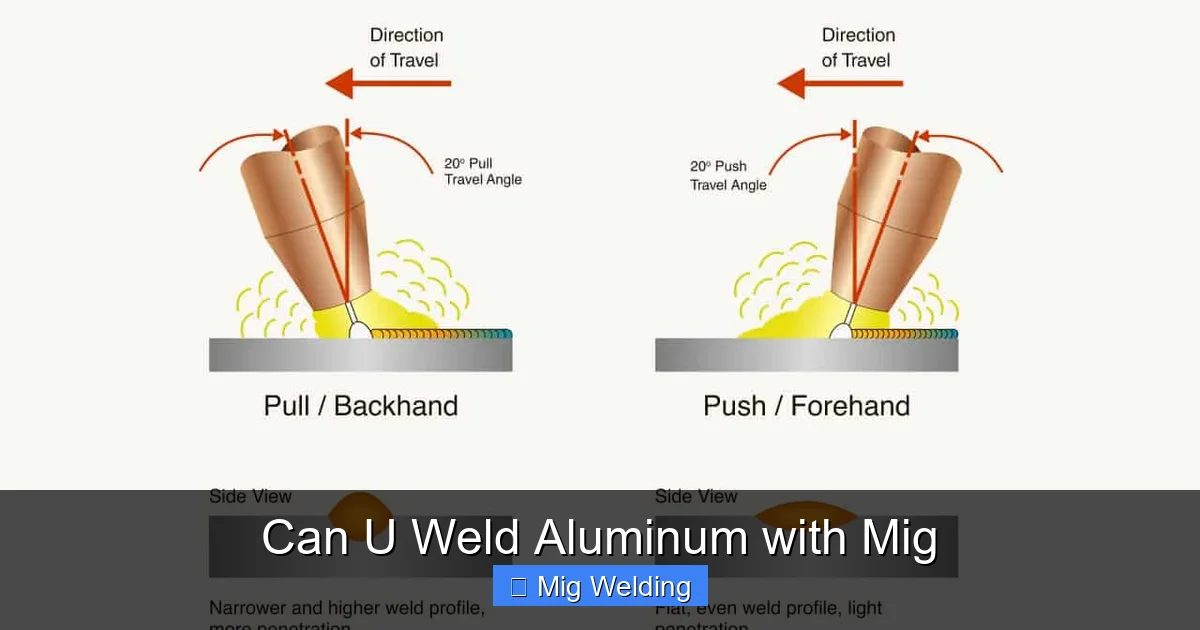
- Weld with a push technique: Push the gun (not drag) at a 10–15 degree angle to improve gas coverage and reduce spatter.
- Practice on scrap first: Aluminum behaves differently than steel—practice travel speed, heat control, and bead appearance before welding real projects.
Can U Weld Aluminum with MIG? A Complete How-To Guide
If you’ve ever looked at a sleek aluminum bike frame, a custom car part, or a lightweight trailer and wondered, “Can u weld aluminum with MIG?”—the answer is a confident yes. But unlike welding steel, MIG welding aluminum comes with unique challenges. The metal is softer, more conductive, and prone to oxidation. That’s why success depends on using the right tools, techniques, and preparation.
In this guide, you’ll learn exactly how to MIG weld aluminum like a pro—whether you’re fixing a boat, building a custom rack, or tackling your first aluminum project. We’ll cover equipment needs, setup tips, step-by-step welding instructions, and troubleshooting common issues. By the end, you’ll have the confidence to weld aluminum safely and effectively.
Why MIG Welding Aluminum Is Tricky (But Doable)
Visual guide about Can U Weld Aluminum with Mig
Image source: weldgears.com
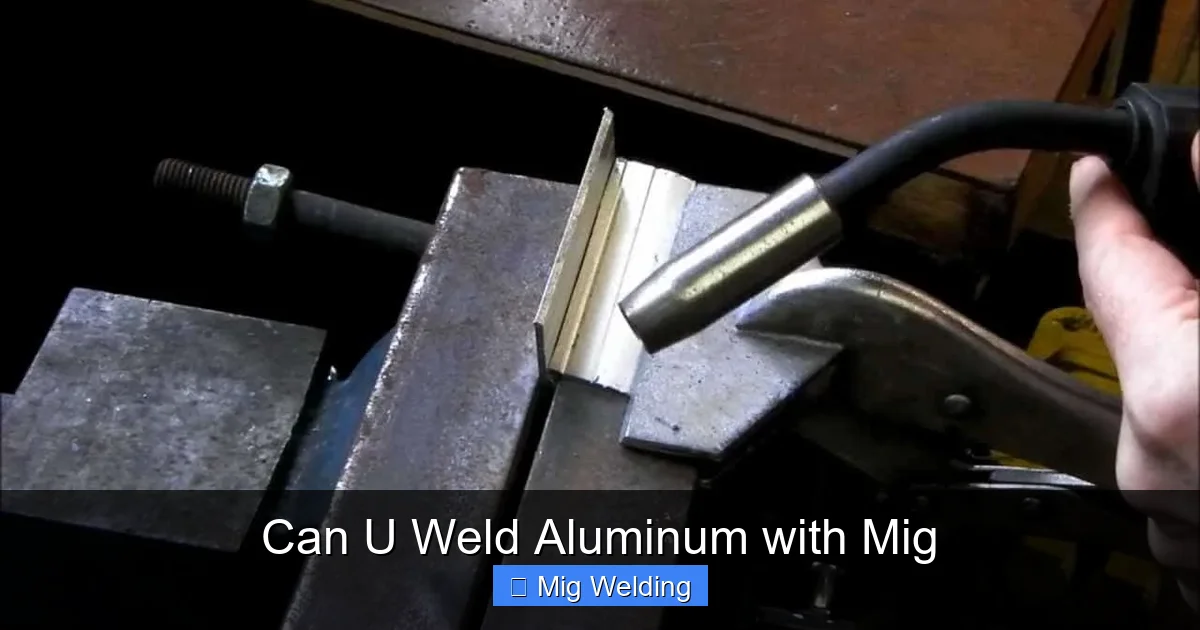
Aluminum has a low melting point and high thermal conductivity, meaning it heats up fast and cools quickly. This can lead to warping, burn-through, or incomplete fusion if you’re not careful. Plus, aluminum wire is soft and tends to tangle or “birdnest” in standard MIG guns.
But with the right setup—especially a spool gun or push-pull system—you can overcome these hurdles. The key is understanding that aluminum welding isn’t just about flipping a switch. It’s about precision, cleanliness, and patience.
What You’ll Need to MIG Weld Aluminum
Visual guide about Can U Weld Aluminum with Mig
Image source: weldguru.com
Before you strike an arc, make sure you have the right gear:
1. A MIG Welder with Aluminum Capability
Not all MIG welders can handle aluminum. Look for one with:
– Variable voltage and wire speed control
– The ability to reverse polarity (DCEN—direct current electrode negative)
– Compatibility with a spool gun or push-pull feeder
Many modern multi-process welders (like the Miller Multimatic or Lincoln Power MIG) support aluminum welding with the right accessories.
2. Spool Gun or Push-Pull System
This is non-negotiable. Standard MIG guns can’t feed soft aluminum wire smoothly over long distances. A spool gun holds a small spool of wire right at the gun, reducing friction and preventing tangles.
3. Aluminum Filler Wire
Choose between:
– ER4043: Good for general-purpose welding, especially on cast aluminum. It has a lower melting point and resists cracking.
– ER5356: Stronger and more ductile, ideal for structural applications. Use this for most sheet metal and fabrication work.
Match the wire diameter to your material thickness—typically 0.035″ or 0.045″ for most projects.
4. 100% Argon Shielding Gas
Never use CO2 or argon-CO2 mixes with aluminum. CO2 causes porosity and unstable arcs. Use pure argon at 20–30 CFH (cubic feet per hour).
5. Clean Tools and Workspace
You’ll need:
– A stainless steel wire brush (dedicated to aluminum only—never use on steel!)
– Acetone or aluminum cleaner
– Clean gloves
– A clean, dry workspace
Step-by-Step: How to MIG Weld Aluminum
Visual guide about Can U Weld Aluminum with Mig
Image source: i.pinimg.com
Step 1: Prepare the Metal
Aluminum forms a thin oxide layer the moment it’s exposed to air. This layer melts at a much higher temperature than the base metal, causing weld defects.
– Use a stainless steel brush to scrub the weld area and 1–2 inches around it.
– Wipe the surface with acetone to remove oil, grease, or dirt.
– Avoid touching the cleaned area with bare hands—oils from your skin can contaminate the weld.
Step 2: Set Up Your Welder
– Switch to DCEN (direct current electrode negative) polarity.
– Install the aluminum wire into the spool gun.
– Set the voltage and wire speed. Start with the manufacturer’s recommended settings for your material thickness. For example:
– 1/8″ aluminum: ~18–20 volts, 300–400 IPM (inches per minute)
– 1/4″ aluminum: ~20–22 volts, 400–500 IPM
– Adjust as needed—aluminum needs more heat than steel.
Step 3: Tack the Pieces Together
Use tacks every 2–3 inches to hold the joint in place. Aluminum expands and contracts more than steel, so clamping is essential. Use C-clamps or welding magnets to secure the work.
Step 4: Start Welding
– Hold the gun at a 10–15 degree push angle (push the weld pool, don’t drag).
– Keep a short arc length—about 1/4 inch from the workpiece.
– Move steadily and smoothly. Aluminum welds fast, so don’t linger in one spot.
– Use a consistent travel speed. Too slow = burn-through; too fast = lack of fusion.
Step 5: Inspect and Clean the Weld
After welding:
– Let the weld cool naturally—don’t quench with water.
– Brush off any oxide residue with your stainless steel brush.
– Check for porosity, cracks, or undercut. If defects appear, adjust your settings or cleaning process.
Pro Tips for Better Aluminum Welds
– Preheat thick aluminum: For material over 1/4″, preheat to 300–400°F to reduce thermal shock and improve fusion.
– Use a U-groove joint: Aluminum doesn’t penetrate as deeply as steel. A U-groove (instead of a V-groove) helps ensure full penetration.
– Keep the gun cool: Aluminum wire can soften and jam in the gun. Use a Teflon or nylon liner and avoid long, continuous welds without breaks.
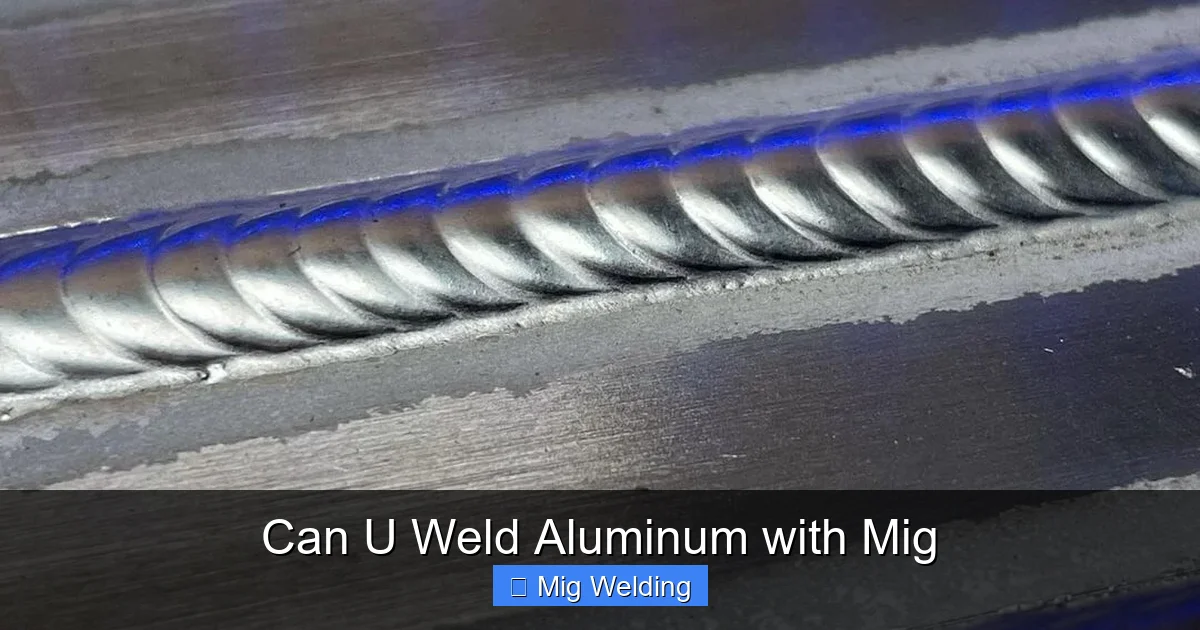
– Practice on scrap: Weld a few test beads on similar-thickness aluminum. Adjust voltage and speed until you get a smooth, shiny bead with minimal spatter.
Troubleshooting Common Problems
Porosity (holes in the weld)
Cause: Contamination, moisture, or poor gas coverage.
Solution: Clean the metal thoroughly, check gas flow, and ensure no drafts are blowing away the shielding gas.
Burn-through
Cause: Too much heat or slow travel speed.
Solution: Reduce voltage, increase travel speed, or use a heat sink (like a copper backing bar).
Lack of Fusion
Cause: Low heat, dirty metal, or wrong technique.
Solution: Increase voltage, clean the joint, and use a push technique with a short arc.
Wire Feeding Problems (birdnesting)
Cause: Incorrect tension, worn liner, or poor spool gun setup.
Solution: Adjust drive roll tension, replace the liner, and ensure the spool spins freely.
Safety Reminders
– Always wear a welding helmet with proper shade (at least shade 10–13).
– Use flame-resistant clothing, gloves, and closed-toe shoes.
– Work in a well-ventilated area—aluminum fumes can be harmful.
– Keep a fire extinguisher nearby—aluminum sparks can travel far.
Conclusion
So, can u weld aluminum with MIG? Absolutely—but it’s not as simple as swapping out the wire and hitting go. Success comes from using the right equipment (like a spool gun and 100% argon), preparing the metal meticulously, and adjusting your technique for aluminum’s unique behavior.
With practice, you’ll be able to produce strong, clean, professional-looking aluminum welds for automotive, marine, or DIY projects. Start slow, stay safe, and don’t skip the prep work. Your welds will thank you.
