

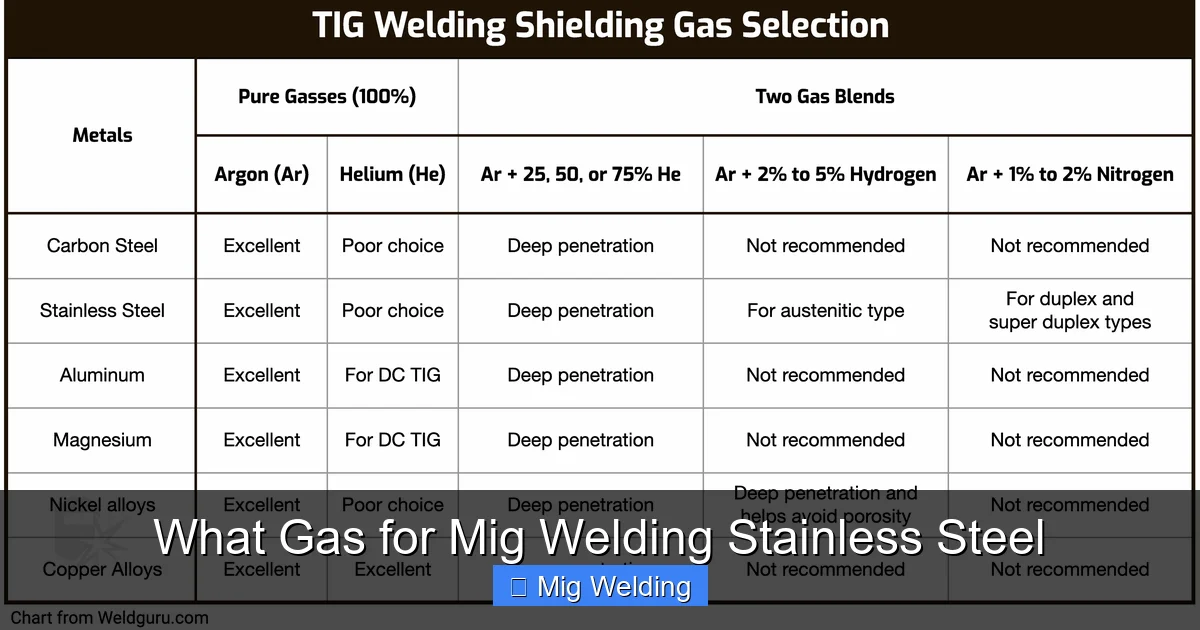
Choosing the right gas for MIG welding stainless steel is crucial for strong, corrosion-resistant welds. This guide covers the best shielding gas mixes, equipment tips, and common mistakes to avoid. Whether you’re a beginner or experienced welder, you’ll learn how to get professional results.
Key Takeaways
- Use tri-mix gases: The most effective shielding gases for MIG welding stainless steel are argon-helium-CO₂ tri-mixes, such as 90% helium, 7.5% argon, and 2.5% CO₂.
- Avoid pure CO₂: While common in mild steel welding, pure CO₂ causes excessive spatter and oxidation in stainless steel, compromising corrosion resistance.
- Maintain gas flow rate: Set your flow rate between 20–30 CFH (cubic feet per hour) to ensure proper coverage and prevent contamination.
- Use a stainless steel liner and contact tips: Carbon steel components can contaminate the weld; always use stainless-specific MIG gun parts.
- Clean the base metal: Remove oil, grease, and oxides before welding to prevent porosity and ensure a clean weld pool.
- Control heat input: Stainless steel conducts heat poorly; use lower voltage and travel speed to avoid warping or carbide precipitation.
- Post-weld care matters: Clean the weld with a stainless steel brush and consider passivation to restore corrosion resistance.
What Gas for MIG Welding Stainless Steel? A Complete How-To Guide
If you’re working with stainless steel, you already know it’s a fantastic material—strong, corrosion-resistant, and great for everything from kitchen appliances to automotive parts. But when it comes to MIG welding stainless steel, one of the most common questions is: What gas should I use?
The right shielding gas isn’t just a detail—it’s a game-changer. Using the wrong gas can lead to poor weld quality, excessive spatter, discoloration, and even reduced corrosion resistance. In this guide, we’ll walk you through everything you need to know about choosing and using the best gas for MIG welding stainless steel, from gas mixtures to equipment setup and troubleshooting.
By the end, you’ll have the confidence to weld stainless steel like a pro, with clean, strong, and visually appealing results.
Why Shielding Gas Matters in Stainless Steel Welding
Visual guide about What Gas for Mig Welding Stainless Steel
Image source: cdn.sheetstainlesssteel.com
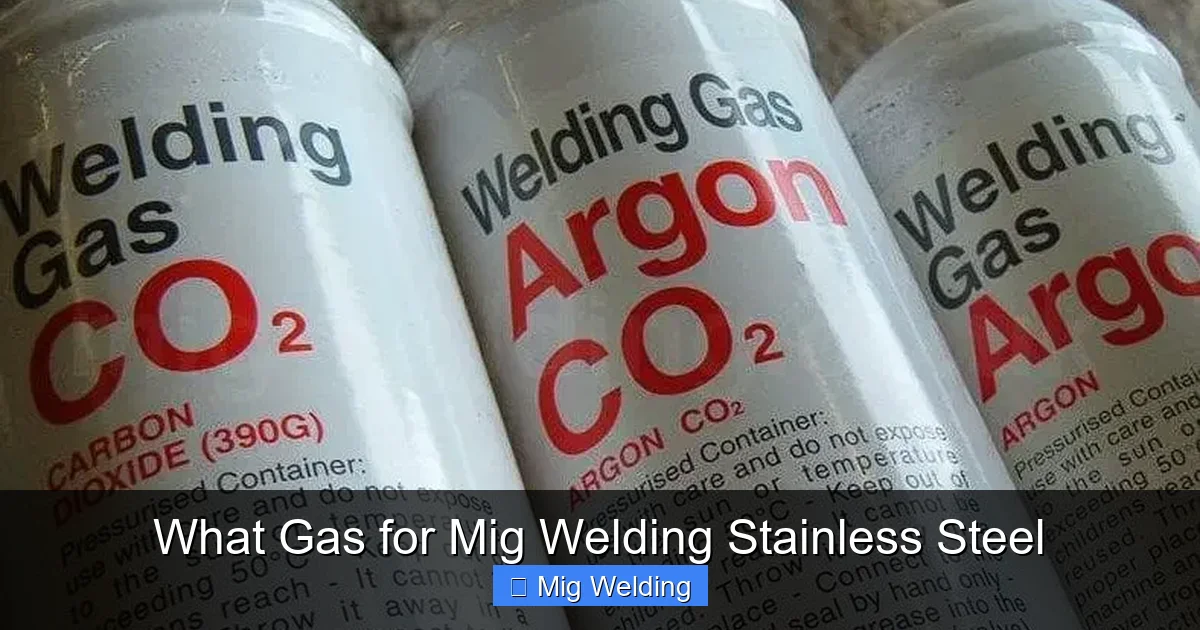
Shielding gas protects the molten weld pool from reacting with oxygen, nitrogen, and other elements in the air. Without proper shielding, stainless steel welds can become porous, brittle, or discolored—especially the dreaded “sugaring” effect (black oxidation on the backside of the weld).
Stainless steel contains chromium, which forms a protective oxide layer. But during welding, that layer can break down. The right gas helps maintain a clean environment so the chromium can re-oxidize properly after cooling, preserving the metal’s corrosion resistance.
Best Shielding Gas Mixes for MIG Welding Stainless Steel
Visual guide about What Gas for Mig Welding Stainless Steel
Image source: i.ytimg.com
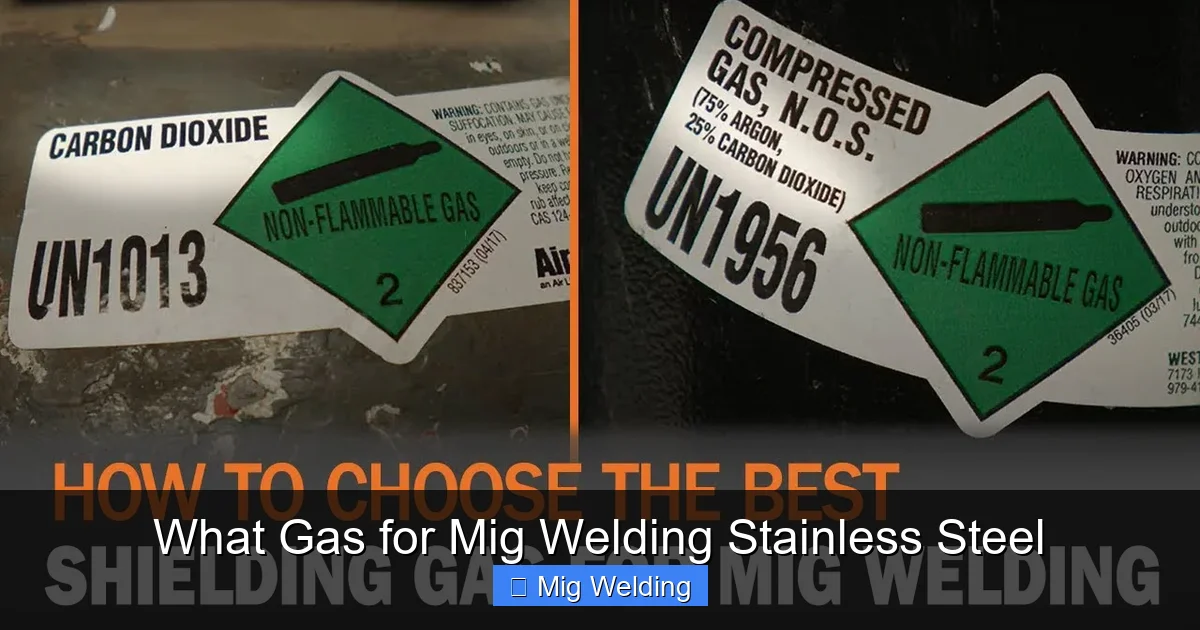
Not all gases are created equal. For MIG welding stainless steel, you’ll want a blend that offers good arc stability, minimal spatter, and excellent penetration—without compromising the metal’s properties.
1. Argon-Helium-CO₂ Tri-Mix (Recommended)
The gold standard for MIG welding stainless steel is a tri-mix gas containing argon, helium, and a small amount of CO₂. A common and highly effective blend is:
– 90% Helium
– 7.5% Argon
– 2.5% CO₂
This mix provides deeper penetration, better arc stability, and reduced spatter. The helium increases heat input, which helps with wetting and fusion, especially on thicker materials. The small amount of CO₂ stabilizes the arc without causing excessive oxidation.
Another popular tri-mix is 66% helium, 27.5% argon, and 2.5% CO₂, which offers a slightly cooler arc and is great for thinner stainless steel sheets.
2. Argon-CO₂ Mix (Limited Use)
Some welders use a 98% argon / 2% CO₂ mix, similar to what’s used for mild steel. While this can work, it’s not ideal for stainless steel. The higher argon content reduces heat, which can lead to poor fusion and a narrower bead profile. It also increases the risk of oxidation and discoloration.
Only consider this mix if you’re welding very thin stainless steel and don’t have access to a tri-mix. Even then, results may be inconsistent.
3. Avoid Pure CO₂
Never use 100% CO₂ when MIG welding stainless steel. It causes excessive spatter, deep penetration that can burn through thin material, and severe oxidation. The high reactivity of CO₂ breaks down the chromium oxide layer, leaving the weld vulnerable to rust and corrosion.
Setting Up Your MIG Welder for Stainless Steel
Once you’ve chosen the right gas, proper setup is key to success.
Step 1: Use the Right MIG Gun Components
Stainless steel is sensitive to contamination. Always use:
– A stainless steel MIG liner (not carbon steel)
– Stainless steel contact tips
– A non-metallic diffuser if possible
Carbon steel parts can transfer iron particles to the weld, causing rust spots over time—even if the weld looks clean initially.
Step 2: Set the Correct Gas Flow Rate
Set your flow meter to 20–30 CFH (cubic feet per hour). Too little gas won’t protect the weld pool; too much can create turbulence, pulling in air and causing porosity.
Use a windscreen or weld in a sheltered area if working outdoors. Even a light breeze can disrupt gas coverage.
Step 3: Adjust Voltage and Wire Feed Speed
Stainless steel has lower thermal conductivity than mild steel, so it heats up faster and retains heat longer. Use:
– Lower voltage settings (start 1–2 volts lower than mild steel)
– Moderate wire feed speed
– Push technique (10–15° angle) for better gas coverage and visibility
For thin materials (18 gauge or less), use short-circuit transfer mode. For thicker sections, spray transfer with a tri-mix gas works best.
Pre-Weld Preparation: Don’t Skip These Steps
Even the best gas won’t save a dirty weld.
Clean the Base Metal
Use a dedicated stainless steel wire brush (never used on carbon steel) to remove oxides, scale, and contaminants. Wipe the surface with acetone or a degreaser to remove oil and grease.
Check Your Wire
Use ER308L, ER309L, or ER316L filler wire, depending on your base metal. Store wire in a dry, sealed container to prevent moisture absorption, which can cause porosity.
Troubleshooting Common Issues
Even with the right gas, problems can happen. Here’s how to fix them.
Porosity (Bubbles in the Weld)
Causes: Contaminated base metal, moisture, low gas flow, or wind.
Fix: Clean the metal thoroughly, check gas flow, and weld in a protected area. Replace damp filler wire.
Discoloration (Yellow, Blue, or Black Tint)
Causes: Excessive heat, poor gas coverage, or oxidation.
Fix: Reduce voltage, increase travel speed, and ensure full gas coverage. Use a trailing shield or backing gas for critical welds.
Excessive Spatter
Causes: Too much CO₂, incorrect voltage, or dirty contact tips.
Fix: Switch to a tri-mix gas, fine-tune your settings, and clean or replace contact tips.
Lack of Fusion
Causes: Low heat input, incorrect technique, or wrong gas mix.
Fix: Increase voltage slightly, use a push angle, and ensure you’re using a helium-rich tri-mix for better penetration.
Post-Weld Care for Stainless Steel
Your job isn’t done when the weld cools.
Clean the Weld
Use a stainless steel brush to remove any discoloration or oxide scale. Avoid carbon steel brushes—they can embed iron particles.
Consider Passivation
For critical applications (like food or medical equipment), passivation removes free iron from the surface and restores the chromium oxide layer. This involves treating the weld with a nitric or citric acid solution.
Inspect and Test
Check for cracks, porosity, or undercutting. For high-stress applications, consider dye penetrant testing or X-ray inspection.
Final Thoughts
Choosing the right gas for MIG welding stainless steel doesn’t have to be complicated. Stick with a helium-argon-CO₂ tri-mix, use clean materials and equipment, and pay attention to your settings. With practice, you’ll consistently produce strong, clean, and corrosion-resistant welds.
Remember: stainless steel rewards patience and precision. Take the time to set up properly, and your welds will look and perform like they were done by a professional.
Whether you’re fixing a sink, building a custom exhaust, or fabricating industrial parts, the right gas mix is your foundation for success.
