


Choosing the correct tungsten electrode is crucial for successful TIG welding of aluminum. This guide explores the various tungsten types suitable for aluminum, emphasizing lanthanated and cerium electrodes for their superior arc stability and performance. We’ll cover electrode preparation, machine settings, and practical techniques to achieve high-quality, crack-free aluminum welds.
Tungsten for TIG Welding Aluminum
Welcome to your comprehensive guide on selecting and using the right tungsten electrode for TIG welding aluminum. Aluminum presents unique challenges for TIG welders, and using the incorrect tungsten can lead to frustration, poor weld quality, and wasted time. This guide will equip you with the knowledge to choose the best tungsten for your aluminum projects, prepare it correctly, and execute beautiful, strong welds. We’ll delve into the science behind tungsten types, the importance of proper preparation, and essential welding techniques.
Key Takeaways
- Pure tungsten (green band) is generally unsuitable for AC aluminum welding due to its tendency to ball up and contaminate the weld.
- Lanthanated (blue band) and cerium (grey band) tungsten electrodes are excellent choices for AC aluminum TIG welding, offering superior arc stability and longevity.
- Properly grinding tungsten to a blunt tip (not a sharp point) is essential for AC aluminum to promote a stable, oscillating arc and prevent arc wander.
- Electrode angle, work angle, and travel speed significantly influence weld puddle control and penetration when TIG welding aluminum.
- Using a clean workpiece and filler metal is paramount to prevent porosity and contamination in aluminum TIG welds.
- Consider using a higher frequency setting on your AC TIG welder to help focus the arc and improve penetration on aluminum.
Understanding Tungsten Electrodes for AC Welding
TIG welding, or Gas Tungsten Arc Welding, relies on a non-consumable tungsten electrode to create an electric arc. This arc melts the base metal and filler rod, forming a weld puddle. When welding aluminum using Alternating Current (AC), the electrode’s behavior and the arc’s characteristics are significantly influenced by the type of tungsten used. Unlike Direct Current (DC) welding, AC welding involves a cleaning action on the workpiece surface, which is beneficial for aluminum’s oxide layer. However, this also puts unique demands on the tungsten electrode.
The Role of Tungsten in AC Aluminum Welding
Aluminum oxide has a much higher melting point than aluminum metal. The AC wave cycle helps break down this oxide layer, allowing for a cleaner weld. The tungsten electrode plays a vital role in initiating and maintaining this arc. For AC welding of aluminum, the ideal tungsten electrode needs to:
- Initiate and sustain a stable arc.
- Resist excessive erosion and contamination of the weld puddle.
- Promote effective cleaning action on the aluminum surface.
Common Tungsten Electrode Types and Their Suitability for Aluminum
Visual guide about Tungsten for Tig Welding Aluminum
Image source: chj.co.id
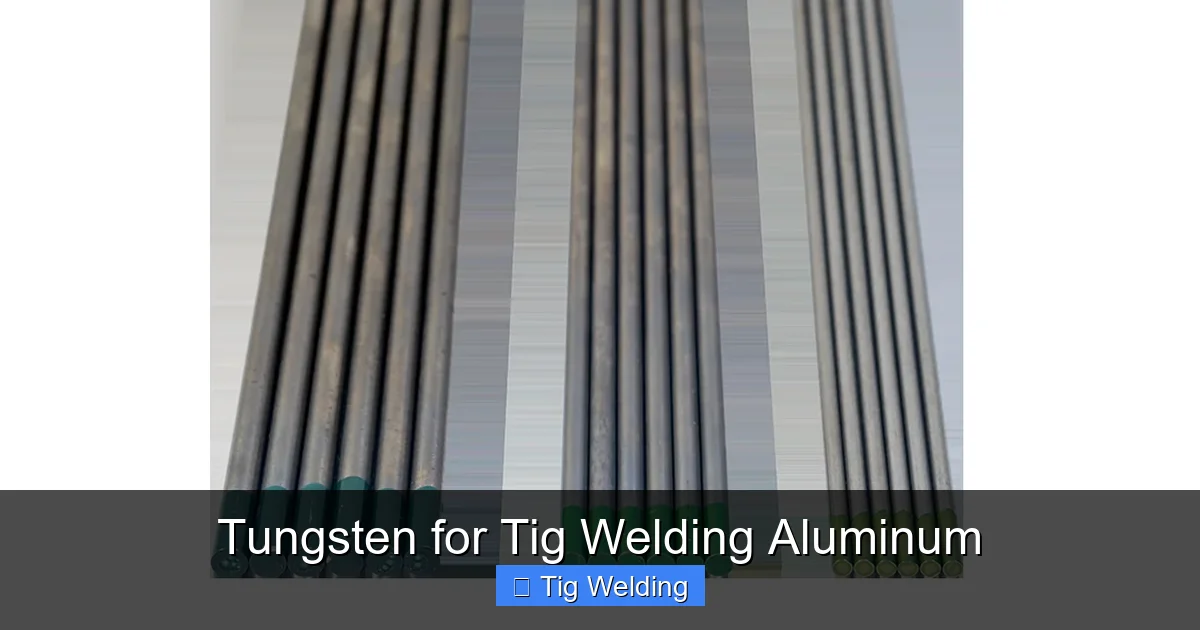
Not all tungsten electrodes are created equal, especially when it comes to welding aluminum. Different alloying elements are added to tungsten to improve its arc characteristics. Let’s explore the most common types and how they perform with AC aluminum TIG welding.
Pure Tungsten (EWP – Green Band)
Pure tungsten electrodes contain 99.5% tungsten and are the oldest type. They are primarily used for AC welding of materials like aluminum and magnesium. However, they have significant drawbacks for modern aluminum TIG welding.
- Pros: Relatively inexpensive, good arc starting for AC.
- Cons: Poor arc stability, tends to ball up at the tip, lower current carrying capacity, prone to contamination of the weld puddle. The balled tip makes it difficult to control the arc and achieve consistent penetration. It also sheds molten material into the weld, leading to inclusions.
While pure tungsten was once the go-to for aluminum, it’s largely been replaced by better-performing alternatives. If you’re looking for consistent, high-quality aluminum welds, it’s best to avoid pure tungsten.
Thoriated Tungsten (EWTh – Red, Yellow, Orange Bands)
Thoriated tungsten contains thorium oxide (thoria), typically 1% or 2%. It offers excellent arc stability and current capacity. For DC welding, it’s a popular choice. However, there’s a significant concern with thoriated tungsten.
- Pros: Excellent arc starting, very stable arc, good current capacity.
- Cons: Thorium is radioactive. While the risk is low during normal welding conditions with proper ventilation, it’s a growing concern for health and safety. Its performance on AC aluminum is not as superior as other specialized electrodes.
Due to the radioactive nature of thorium, its use is increasingly discouraged, and many welding professionals are phasing it out in favor of safer alternatives.
Ceriated Tungsten (EWCe – Grey, Blue Bands)
Ceriated tungsten electrodes contain cerium oxide (ceria). They are a good alternative to thoriated tungsten and offer good performance on AC, especially at lower amperages.
- Pros: Non-radioactive, good arc stability, good arc starting, good for low to medium amperage welding.
- Cons: Performance can degrade at higher amperages compared to lanthanated tungsten.
Ceriated tungsten is a solid choice for general-purpose AC welding of aluminum, especially if you’re working with thinner materials or at lower current settings.
Lanthanated Tungsten (EWLan – Blue, Gold, Black Bands)
Lanthanated tungsten electrodes contain lanthanum oxide (lanthana). These electrodes are a top choice for both AC and DC welding and are particularly well-suited for aluminum TIG welding. They offer a great balance of arc stability, longevity, and resistance to contamination.
- Pros: Excellent arc stability, superior arc starting, good current carrying capacity, resists spitting and contamination, non-radioactive, performs well across a wide range of amperages.
- Cons: Can be slightly more expensive than pure or some other types.
For AC aluminum TIG welding, 1.5% lanthanated (gold band) and 2% lanthanated (blue band) are highly recommended. The blue band is often considered the best all-around performer for AC aluminum.
Zirconiated Tungsten (EWZr – Brown Band)
Zirconiated tungsten electrodes contain zirconium oxide (zirconia). They are known for their stability and resistance to contamination, making them a good choice for AC welding of aluminum.
- Pros: Good arc stability, good resistance to contamination, good for AC welding.
- Cons: May not offer the same ease of arc starting as lanthanated or ceriated tungsten.
Zirconiated tungsten is a solid option, but lanthanated generally offers a slightly better overall experience for AC aluminum.
Recommended Tungsten for Aluminum TIG Welding: The Top Choices
Visual guide about Tungsten for Tig Welding Aluminum
Image source: i.pinimg.com
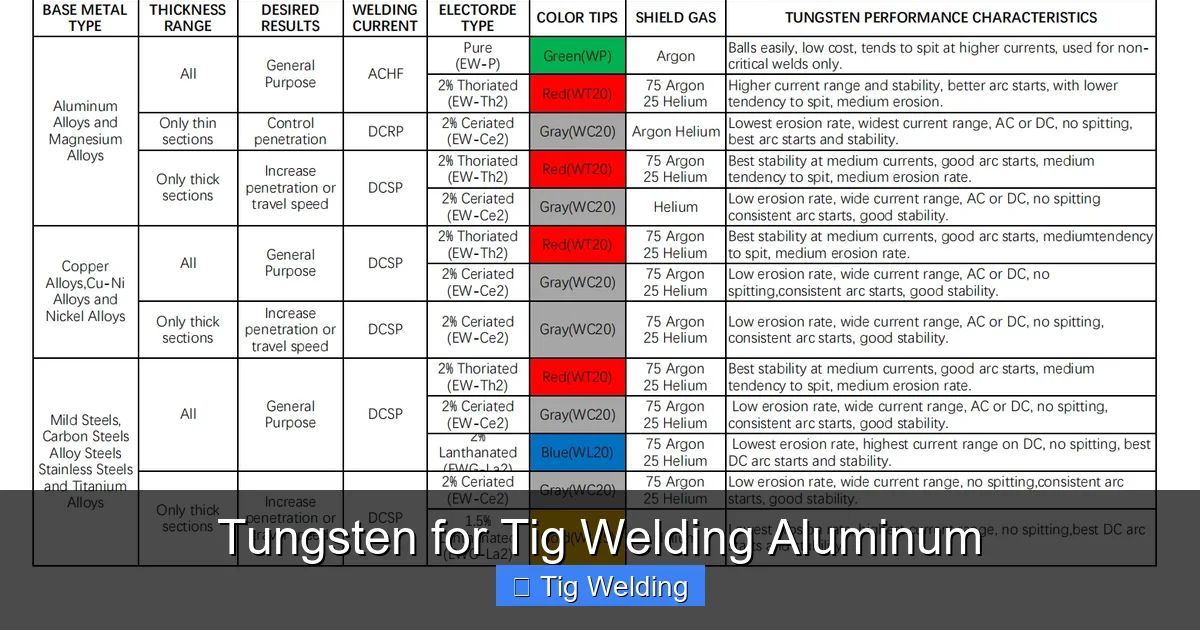
Based on performance, stability, and safety, the best tungsten electrodes for TIG welding aluminum are:
- 2% Lanthanated Tungsten (Blue Band): This is widely considered the best all-around choice for AC aluminum TIG welding. It provides excellent arc stability, easy arc starting, and superior resistance to tungsten spitting and contamination. It handles a good range of amperages effectively.
- 1.5% Lanthanated Tungsten (Gold Band): A very close second to the 2% lanthanated, offering similar benefits. It’s an excellent performer for AC aluminum welding and is readily available.
- Ceriated Tungsten (Grey Band): A good, non-radioactive option, especially for lower to medium amperage applications on aluminum. It offers good arc stability and starting.
Preparing Your Tungsten Electrode for Aluminum Welding
Visual guide about Tungsten for Tig Welding Aluminum
Image source: i.ytimg.com
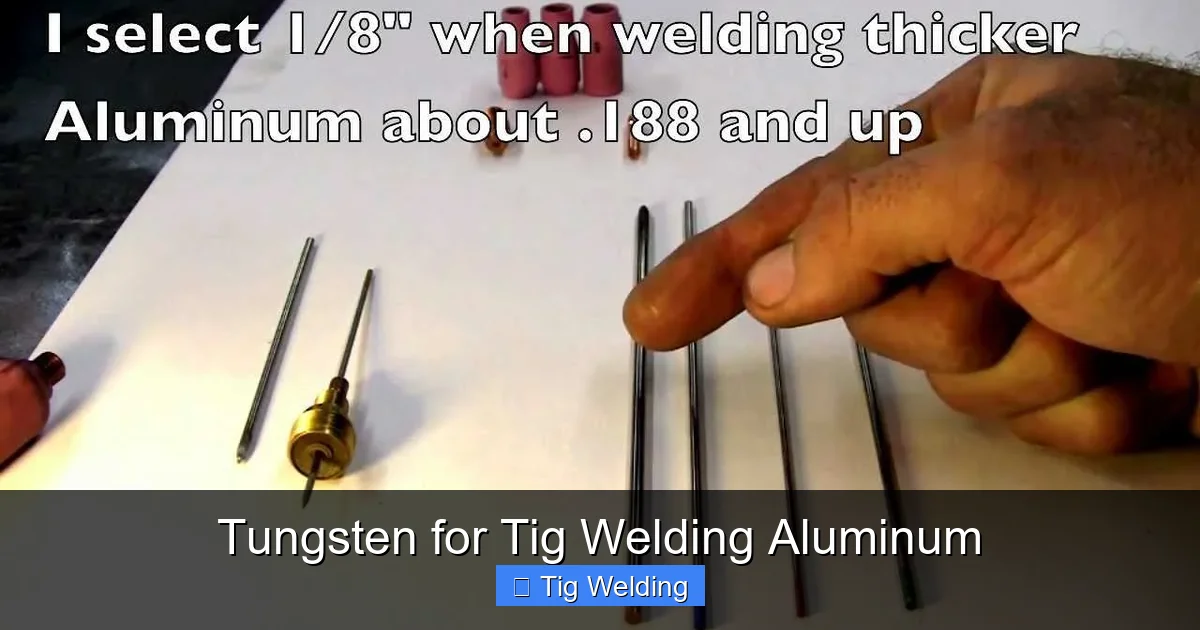
Proper preparation of your tungsten electrode is as critical as selecting the right type. For AC aluminum TIG welding, the preparation differs significantly from DC welding.
Grinding the Tungsten Tip
For DC welding (like steel or stainless steel), you typically grind tungsten to a sharp, pencil-like point. This concentrates the arc. However, for AC aluminum welding, you need a different approach.
The Blunt Tip Method
Instead of a sharp point, you want to grind the tungsten to a blunt or slightly rounded tip. Think of the tip of a dull pencil or even a very small, flat tip.
- Why a blunt tip? The AC wave cycle naturally causes the arc to oscillate and spread out. A blunt tip helps to stabilize this oscillating arc, preventing it from “wandering” or “dancing” erratically. This stable arc provides better control over the weld puddle and more consistent heat input. A sharp point on AC can lead to arc instability and electrode erosion.
- How to grind: Use a dedicated tungsten grinder (never a grinder used for steel, as this will contaminate your tungsten). Grind the tungsten lengthwise, creating a conical shape that ends in a flat or slightly rounded tip. The diameter of the flat tip should be roughly proportional to the electrode diameter, usually around 0.020 to 0.040 inches (0.5 to 1 mm).
Electrode Extension
The amount of tungsten you extend from the collet also matters.
- For AC Aluminum: Extend about 1/2 to 3/4 inch (13 to 19 mm) of tungsten from the collet. This helps to keep the heat away from the torch body and maintain a stable arc. Too much extension can lead to arc instability and tungsten contamination.
Grinding Direction
Always grind the tungsten in the same direction as the electrode’s striations (the grain of the metal). This prevents flaking and ensures a smoother surface for arc initiation.
Machine Settings for TIG Welding Aluminum
While tungsten selection and preparation are key, your TIG welder’s settings also play a significant role in achieving good aluminum welds.
AC Balance
AC balance (sometimes called cleaning action) controls the ratio of electrode negative (EN) to electrode positive (EP) time in each AC cycle.
- For Aluminum: You typically want a higher percentage of EN time for good penetration and puddle fluidity. A common starting point is 30-50% EN. Adjust based on your needs: more EN for deeper penetration, less EN for more cleaning action (which is good for removing oxides but can reduce penetration).
AC Frequency
Frequency affects the arc’s focus and penetration.
- For Aluminum: Higher frequencies (100-200 Hz) tend to create a more focused, tighter arc, which can improve puddle control and penetration. Lower frequencies produce a wider, softer arc. Experiment to find what works best for your specific application.
Amperage
Amperage dictates the heat input. For aluminum, you’ll generally need higher amperages than for steel of the same thickness.
- General Guideline: For 1/8 inch (3 mm) aluminum, you might start around 120-150 amps. Thicker material will require more, thinner material less. Always use a foot pedal or torch with amperage control to manage heat effectively.
Welding Technique for Aluminum
Beyond settings and preparation, your welding technique is paramount for successful aluminum TIG welds.
Work Angle and Electrode Angle
The angle at which you hold your torch and filler rod significantly impacts the weld.
- Work Angle: Hold the torch at a slight angle, typically 10-15 degrees, leaning in the direction of travel. This helps direct the arc onto the puddle.
- Electrode Angle: Keep the tungsten electrode as perpendicular as possible to the workpiece, with a slight lean in the direction of travel (consistent with the torch angle). Avoid excessive torch angle or electrode angle, as this can lead to arc instability and wider, less controlled beads.
Filler Metal Manipulation
When adding filler metal, use a gentle, consistent dipping motion. Avoid dipping the tungsten into the puddle.
- Dip the filler rod into the leading edge of the puddle, then withdraw it slightly to allow the puddle to solidify around it.
- Try to keep the filler rod from touching the tungsten electrode.
Travel Speed
Maintain a consistent travel speed. Too fast, and you won’t get enough fusion; too slow, and you risk overheating and burning through. Watch the puddle; it should flow smoothly, not bubble excessively or look like it’s boiling over.
Cleaning is Crucial
Aluminum oxidizes very quickly.
- Before welding: Always clean the aluminum thoroughly. Use a stainless steel wire brush dedicated *only* to aluminum. Then, wipe with a solvent like acetone to remove any grease or contaminants.
- During welding: The AC balance setting and the tungsten’s cleaning action help, but a clean workpiece is your first line of defense against weld defects.
Troubleshooting Common Aluminum TIG Welding Issues
Even with the right tungsten and settings, you might encounter problems. Here are a few common ones and how to address them:
Tungsten Contamination (Spitting)
If your tungsten tip starts to break off and melt into the weld puddle, it’s a sign of contamination.
- Causes: Too sharp a tip for AC, excessive amperage, poor gas coverage, electrode too far from the workpiece, incorrect electrode angle, filler rod touching the tungsten.
- Solution: Reprepare the tungsten to a blunt tip, ensure correct amperage, check gas flow, maintain proper electrode distance and angle, keep filler rod away from the tungsten.
Porosity (Tiny Holes in the Weld)
Porosity is a common issue in aluminum TIG welding.
- Causes: Dirty workpiece, inadequate cleaning action (incorrect AC balance), insufficient shielding gas, trapped contaminants, filler rod dipped into the puddle too aggressively.
- Solution: Ensure the workpiece and filler rod are meticulously clean. Adjust AC balance for better cleaning action. Verify shielding gas flow and check for drafts. Practice smooth filler rod addition.
Arc Wander
The arc moves uncontrollably across the workpiece.
- Causes: Incorrect tungsten preparation (too sharp for AC), insufficient AC frequency, poor grounding, improper torch angle.
- Solution: Grind the tungsten to a blunt tip. Increase AC frequency. Ensure a clean, solid ground connection. Maintain a consistent, slight torch angle.
Conclusion
Mastering TIG welding aluminum starts with understanding the critical role of the tungsten electrode. By choosing the right type—specifically, 2% lanthanated (blue band) or 1.5% lanthanated (gold band)—and preparing it correctly with a blunt tip for AC welding, you lay the foundation for success. Combine this with proper machine settings, a clean workpiece, and a consistent welding technique, and you’ll be well on your way to producing high-quality, visually appealing, and structurally sound aluminum TIG welds. Happy welding!
