


Choosing the right shielding gas is crucial for successful TIG welding. This guide explores the common gases used, including Argon, Helium, and their mixtures, explaining how each affects weld quality, penetration, and appearance. Learn to select the ideal gas based on the metal you’re welding to achieve strong, clean, and beautiful TIG welds every time.
What Gas Is Used in Tig Welding
Welcome to your comprehensive guide on TIG welding gases! If you’re looking to achieve pristine, high-quality welds, understanding the role of shielding gas is paramount. TIG (Tungsten Inert Gas) welding, also known as GTAW (Gas Tungsten Arc Welding), relies on a shielding gas to protect the molten weld pool from atmospheric contamination. Without it, your welds would be weak, porous, and visually unappealing. This guide will break down the most common gases used in TIG welding, explaining their properties, applications, and how to choose the right one for your specific needs. By the end, you’ll have a solid understanding of TIG welding gas selection and be well on your way to producing professional-grade welds.
Key Takeaways
- Argon is the most common TIG welding gas due to its inert nature and ability to produce clean, aesthetically pleasing welds.
- Helium increases heat input, leading to deeper penetration and faster travel speeds, often used for thicker materials or aluminum.
- Carbon Dioxide (CO2) is generally NOT used for TIG welding as it’s reactive and can introduce impurities, though it’s common in MIG welding.
- Gas mixtures like Argon-Helium offer a balance of benefits, providing improved penetration and arc stability.
- The type of metal being welded dictates the best shielding gas; mild steel, stainless steel, aluminum, and exotic alloys all have preferred gas options.
- Flow rate is critical; too little gas leaves welds vulnerable to contamination, while too much can cause turbulence and erratic arcs.
- Understanding your welding machine’s capabilities and the specific requirements of your project is key to selecting the appropriate TIG gas.
Understanding the Role of Shielding Gas in TIG Welding
Before we dive into the specific gases, let’s quickly recap why shielding gas is so vital in TIG welding. The TIG arc generates intense heat, melting both the base metal and filler material. This molten pool is highly susceptible to oxidation and contamination from oxygen and nitrogen present in the surrounding air. These contaminants can create porosity (small holes), inclusions (trapped particles), and embrittlement, all of which severely weaken the weld.
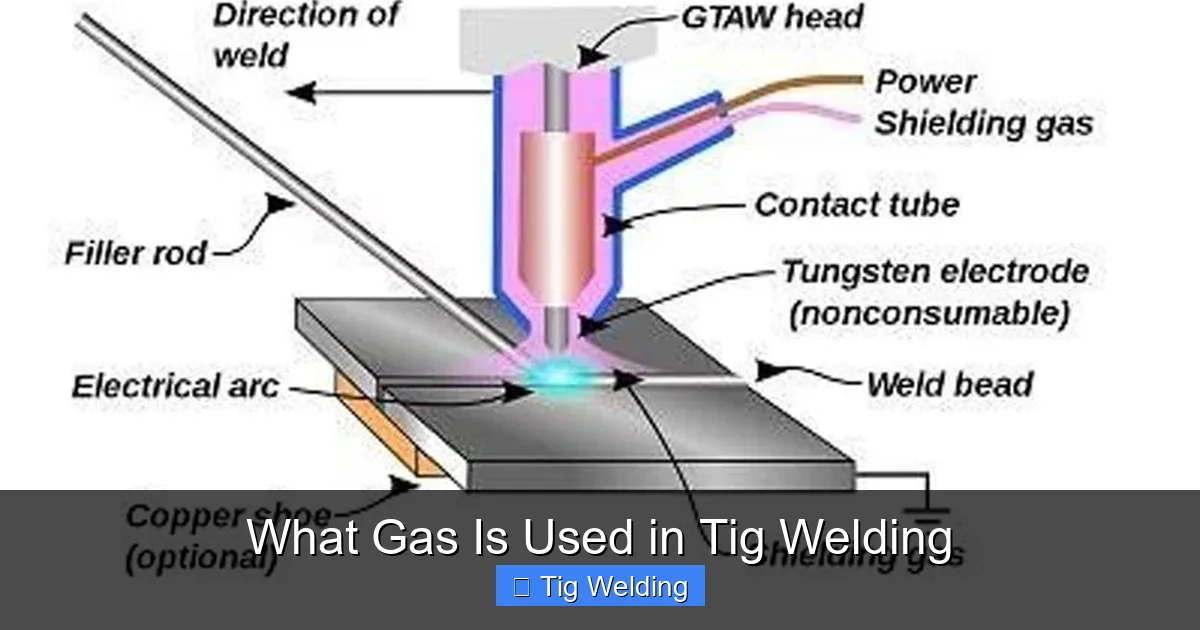
The shielding gas flows from the TIG torch, creating a protective bubble around the tungsten electrode, the arc, and the molten weld pool. This inert atmosphere displaces the air, preventing any harmful reactions. The gas also plays a role in cooling the tungsten and stabilizing the arc. Choosing the correct gas directly influences the arc characteristics, penetration depth, weld bead appearance, and the overall integrity of your weld.
The Primary TIG Welding Gases: Argon and Helium
When it comes to TIG welding, two gases stand out as the most commonly used: Argon and Helium. Let’s explore each of them.
1. Argon (Ar)
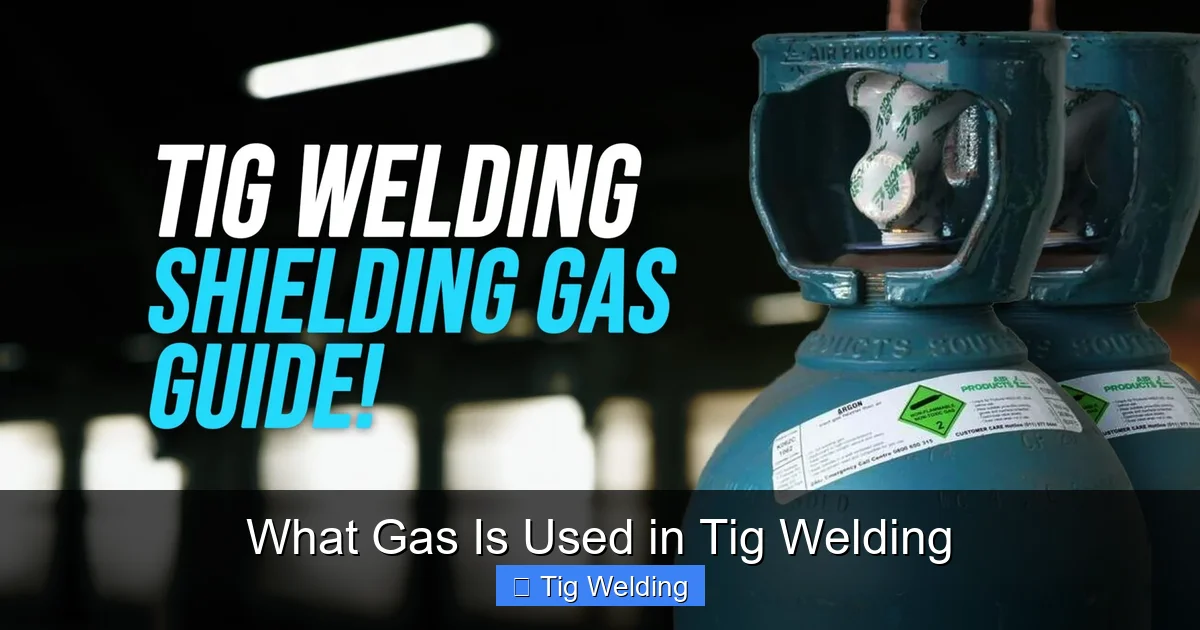
Argon is by far the most popular and versatile shielding gas for TIG welding. It’s an inert gas, meaning it doesn’t react chemically with the metals being welded or with the tungsten electrode. This inert nature is its biggest advantage, as it ensures a clean and stable arc, producing welds with excellent clarity and minimal spatter.
Properties and Benefits of Argon:
Visual guide about What Gas Is Used in Tig Welding
Image source: weldingwatch.com
- Inert: Guarantees a contamination-free weld.
- Stable Arc: Produces a smooth, controllable arc that’s easy to manage, even for beginners.
- Excellent Wetting: Argon helps the molten metal to flow and wet out nicely onto the base material, resulting in a smooth, aesthetically pleasing weld bead.
- Deep, Narrow Penetration: It provides a good balance of penetration without being excessive, making it suitable for a wide range of material thicknesses.
- Cost-Effective: Argon is generally more affordable and readily available than Helium.
Common Applications for Argon:
- Mild Steel: Pure Argon is the standard for welding mild steel.
- Stainless Steel: Excellent for most stainless steel grades.
- Aluminum: Pure Argon is often used for thinner aluminum sections.
- Copper and Nickel Alloys: Suitable for welding these materials.
- Exotic Metals: Can be used for titanium and other reactive metals, though specific purities might be required.
When to Use Pure Argon:
Pure Argon is the go-to choice when you prioritize a clean, bright, and smooth weld with excellent visual appeal. It’s ideal for applications where cosmetic finish is important, such as in automotive, aerospace, and artistic metalwork. It’s also a great starting point for beginners due to its forgiving arc characteristics.
2. Helium (He)
Helium is another inert gas that finds application in TIG welding, often used in conjunction with Argon or on its own for specific situations. Unlike Argon, Helium is a much lighter gas and requires higher flow rates to provide adequate shielding.
Properties and Benefits of Helium:
- Higher Heat Input: Helium is a better conductor of heat than Argon. This results in a hotter arc, leading to deeper penetration and faster travel speeds.
- Broader Weld Pool: The increased heat input can create a wider, flatter weld pool, which can be beneficial for filling gaps or welding certain materials.
- Good for Thicker Materials: Its ability to deliver more heat makes it suitable for welding thicker sections of metal.
- Faster Travel Speeds: The increased efficiency can speed up welding operations.
- Less Arc Starting Issues (sometimes): In certain DC applications, Helium can contribute to easier arc initiation.
Common Applications for Helium:
- Thicker Aluminum: Often used for welding thicker aluminum plates where deeper penetration is needed.
- Magnesium: Helium is preferred for welding magnesium due to its specific metallurgical properties.
- Copper Alloys: Can be beneficial for welding copper and its alloys.
- Projects Requiring High Deposition Rates: When speed and volume are key, Helium can help.
Considerations for Using Helium:
- Cost: Helium is significantly more expensive than Argon.
- Higher Flow Rates Required: You’ll need to increase your gas flow rate, which can lead to higher gas consumption and cost.
- Turbulent Arc: At higher flow rates or with insufficient shielding, Helium can sometimes create a more turbulent arc, potentially leading to contamination if not managed properly.
- Less “Digging” Power: While it provides more overall heat, the arc from Helium might not “dig” into the metal as effectively as a focused Argon arc on certain materials, which is why it’s often blended.
TIG Welding Gas Mixtures: The Best of Both Worlds
Often, the ideal solution lies in combining gases to leverage their unique properties. Argon-Helium mixtures are very common and offer a balance of benefits that pure gases might not.
1. Argon-Helium Mixtures
These mixtures are designed to provide improved heat input and penetration compared to pure Argon, while still offering the excellent arc stability and wetting characteristics of Argon.
Common Argon-Helium Mixes and Their Uses:
Visual guide about What Gas Is Used in Tig Welding
Image source: pipingtechs.com
- 75% Argon / 25% Helium: This is a popular mix for welding aluminum, especially thicker sections. It provides deeper penetration than pure Argon and a hotter arc, allowing for faster welding speeds. It also helps to achieve a good wetting action on aluminum.
- 50% Argon / 50% Helium: Used for even thicker sections of aluminum or for welding copper alloys. The higher Helium content increases heat input significantly.
- 90% Argon / 10% Helium: A mild enhancement for steel welding where slightly more penetration or faster travel is desired without the expense of higher Helium concentrations.
Benefits of Mixtures:
- Enhanced Penetration: The Helium component boosts the heat, allowing the arc to penetrate deeper into the material.
- Faster Welding Speeds: The increased heat input allows you to move the torch more quickly.
- Wider Weld Pool: Can be useful for filling gaps or when a wider bead is desired.
- Reduced Cracking (in some alloys): For certain materials, a balanced heat input from a mixture can help prevent cracking.
2. Other Mixtures (Less Common for Pure TIG)
While Argon and Helium are the primary components, you might encounter other gases in specific scenarios or as part of specialized TIG welding applications, although they are less common for general-purpose TIG.
Argon-CO2 Mixtures: Carbon Dioxide (CO2) is primarily used in MIG welding, not TIG. It’s a reactive gas and will cause significant contamination and oxidation when used as a TIG shielding gas, leading to very poor weld quality. However, very small percentages of CO2 (like 1-2%) are sometimes added to Argon for welding carbon steel in some advanced processes, but this is not standard practice for typical TIG welding and requires precise control.
Argon-Hydrogen Mixtures: Pure Hydrogen is not used, but small additions of Hydrogen (e.g., 1-5%) to Argon can be used for specific applications on stainless steel and nickel alloys. Hydrogen acts as a deoxidizer and can help produce a cleaner, brighter weld bead with improved ductility. It also increases heat input, allowing for faster speeds. However, Hydrogen can cause embrittlement in some steels and is not suitable for all materials or welding positions. This is an advanced technique.
What About Carbon Dioxide (CO2)?
It’s worth reiterating that pure Carbon Dioxide (CO2) is **almost never used as a shielding gas for TIG welding**. CO2 is a reactive gas. When exposed to the high heat of the TIG arc, it breaks down and releases oxygen and carbon monoxide. These gases are highly detrimental to the weld pool, causing severe oxidation, porosity, and a weak, brittle weld. CO2 is, however, a very common and economical shielding gas for **MIG (GMAW) welding** of carbon steels. If you see CO2 in a welding context, it’s almost certainly for MIG.
Selecting the Right TIG Welding Gas for Your Metal
The most critical factor in choosing your TIG welding gas is the type of metal you are welding. Here’s a general guide:
1. Mild Steel and Carbon Steel
Recommended Gas: Pure Argon (100% Ar)

Visual guide about What Gas Is Used in Tig Welding
Image source: blogger.googleusercontent.com
Why: Pure Argon provides a stable arc, excellent wetting, and a clean weld bead, which is ideal for carbon steels. It offers sufficient penetration for most applications. For thicker sections, a small addition of CO2 (less than 5%) is sometimes used in specialized “pulsed TIG” or advanced processes, but for standard TIG, pure Argon is king.
2. Stainless Steel
Recommended Gas: Pure Argon (100% Ar) or Argon with a small percentage of Hydrogen (e.g., 95% Ar / 5% H2 for specific applications).
Why: Pure Argon is excellent for achieving clean, bright welds on stainless steel. It minimizes oxidation and maintains the corrosion resistance of the stainless steel. For thicker stainless steel, adding a small percentage of Hydrogen can increase heat input, speed up welding, and help create a very clean, “stack of dimes” appearance. However, Hydrogen is not suitable for all stainless steel grades or all welding positions, and it requires more careful setup and expertise.
3. Aluminum
Recommended Gas: Pure Argon (100% Ar) for thinner sections, or Argon-Helium mixtures (e.g., 75% Ar / 25% He, 50% Ar / 50% He) for thicker sections.
Why: Aluminum has a high thermal conductivity, meaning heat dissipates quickly. Pure Argon works well for thinner aluminum, providing a stable arc and good cleaning action (especially with AC welding, where the cleaning effect is amplified). For thicker aluminum, Helium is crucial. The added heat from Helium allows for deeper penetration, faster welding, and a wider weld pool, which is essential for bridging gaps and dealing with heat sink. AC welding is standard for aluminum TIG, and the gas selection is key to managing the arc and achieving quality results.
4. Copper and its Alloys
Recommended Gas: Argon-Helium mixtures are often preferred, particularly higher Helium concentrations (e.g., 50% Ar / 50% He).
Why: Copper is an excellent conductor of heat and requires a significant amount of heat input to achieve fusion. Argon-Helium mixtures provide the necessary heat to overcome copper’s thermal conductivity and achieve good penetration. Pure Argon can be used for thinner copper or for brazing-like applications, but for solid welds, Helium is often necessary.
5. Exotic Metals (Titanium, Magnesium, Zirconium)
Recommended Gas: High-purity Argon (99.999% or higher) is typically used.
Why: These metals are highly reactive. They require an extremely pure inert gas shield to prevent contamination. Often, specialized setups are needed, including backup shielding gas on the backside of the weld, to ensure complete protection. Even small amounts of contamination can ruin these materials.
Practical Tips for TIG Welding Gas Usage
Beyond just choosing the right gas, proper usage is key.
1. Determine the Correct Flow Rate
What is it: The flow rate is measured in Cubic Feet per Hour (CFH) or Liters per Minute (LPM) and controls how much gas is dispensed from the torch.
How to set it: A good starting point for Argon is typically between 15-25 CFH (7-12 LPM). Helium and mixtures often require higher flow rates (20-30+ CFH). Always consult your gas supplier or welding equipment manual for specific recommendations.
Troubleshooting:
- Too low: Insufficient shielding will lead to porosity, discoloration, and a weak weld. You might see a “cupped” or discolored weld bead.
- Too high: Excessive gas flow can cause turbulence around the arc, drawing in atmospheric air and leading to contamination. It can also cause arc wander and a “flapping” sound from the gas.
Tip: Use a flowmeter regulator on your cylinder, not just a pressure regulator. The flowmeter measures the actual gas flow rate. On your torch, you should see a steady, consistent gas stream when the valve is open, and the shielding cup should feel “full” of gas without excessive turbulence.
2. Ensure Proper Gas Coverage
What is it: The shielding gas needs to create a bubble that completely surrounds the tungsten electrode, the arc, and the molten puddle. The size of the shielding cup on your torch plays a role here.
How to achieve it:
- Select the right cup size: Larger cups provide a wider gas coverage area, which is especially important for AC welding on aluminum and when welding in windy conditions.
- Maintain torch distance: Keep the nozzle of the torch at an appropriate distance from the workpiece. Too close can restrict gas flow; too far can reduce its effectiveness.
- Avoid wind: Drafts can blow away your shielding gas. If welding outdoors or in a drafty area, use a windbreak or consider higher flow rates and larger cups.
3. Purge Your Lines
What is it: Before welding, it’s good practice to purge your gas lines for a few seconds. This removes any stale air or contaminants that might have entered the system.
How to do it: Briefly open the cylinder valve and let gas flow through the regulator and hose before closing it. Then, open the torch valve for a second or two.
4. Use High-Purity Gases
What is it: The purity of your shielding gas is crucial, especially for reactive metals or when high-quality welds are paramount. Look for gases with high purity ratings (e.g., “Grade 5.0” or “99.999%”).
Why it matters: Impurities in the gas can be introduced into your weld, causing defects.
5. Monitor Your Gas Supply
What it is: Regularly check the pressure gauge on your gas cylinder. This tells you how much gas is left.
Why it matters: Running out of gas mid-weld is a common mistake that leads to contaminated welds. Always ensure you have enough gas for your project. A cylinder that reads 500 PSI or less might be running low, and it’s wise to get it refilled or swapped.
Troubleshooting Common TIG Gas Issues
* Porosity: Small holes in the weld bead.
* *Possible Causes:* Insufficient gas flow, wind, dirty base metal, wrong gas for the application.
* *Solutions:* Increase flow rate (within limits), shield from drafts, clean base metal thoroughly, verify gas selection.
* **Discoloration (Blue/Yellow/Brown Tinge): Indicates oxidation.
* *Possible Causes:* Insufficient gas coverage, wind, low gas purity.
* *Solutions:* Ensure proper flow rate and cup size, shield from wind, use high-purity gas.
* **Erratic Arc:** The arc wanders or is unstable.
* *Possible Causes:* Too high gas flow rate causing turbulence, contaminated gas.
* *Solutions:* Reduce gas flow rate, check gas cylinder for contamination or proper connection.
* **Poor Wetting:** The molten metal doesn’t spread out smoothly.
* *Possible Causes:* Incorrect gas (e.g., using pure Argon on thick aluminum when a mix is needed), insufficient heat.
* *Solutions:* Use a gas mixture with Helium for aluminum or copper, ensure proper amperage settings.
Conclusion
Choosing the right shielding gas for your TIG welding application is as important as selecting the correct tungsten and filler metal. While Argon is the workhorse for most TIG welding jobs, understanding when to introduce Helium, or specific mixtures, can significantly improve weld quality, speed, and appearance, especially when working with challenging materials like thick aluminum or copper. Always consider the type of metal, its thickness, and the desired outcome. Pay close attention to your gas flow rates and ensure adequate shielding to prevent contamination. By mastering TIG welding gas selection and application, you’ll unlock the full potential of this versatile welding process, producing welds that are not only strong but also exceptionally clean and aesthetically pleasing. Happy welding!
