

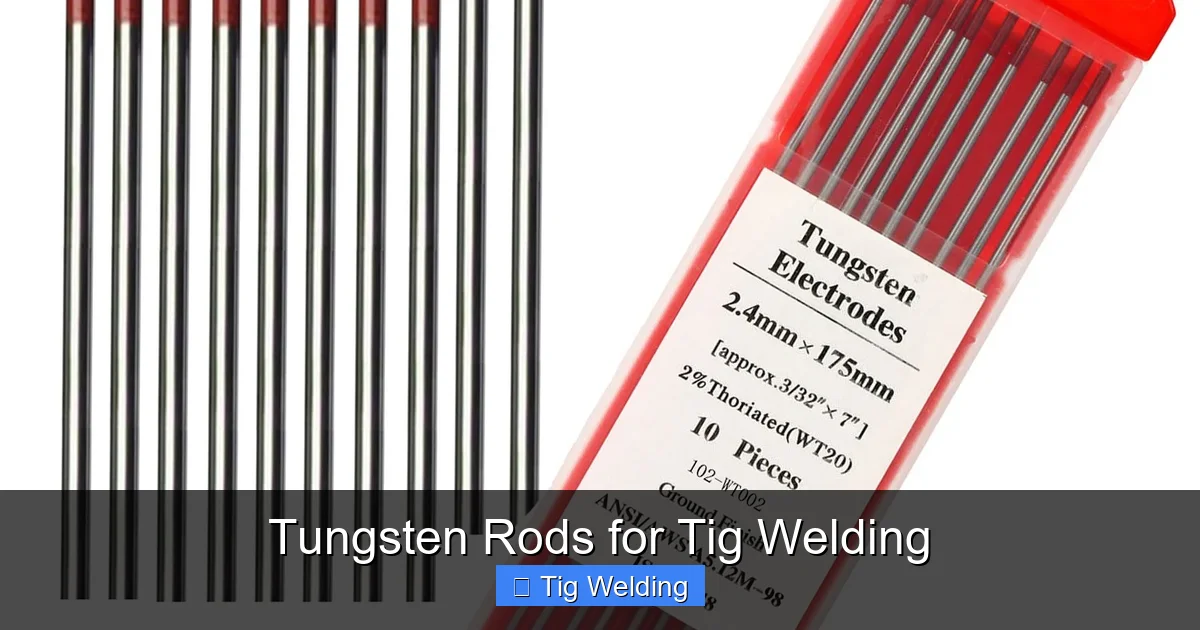
Choosing the right tungsten rod is crucial for successful TIG welding. This guide covers the various types of tungsten electrodes, including their color codes and ideal applications. We’ll walk you through how to select the best tungsten for your specific metal and welding scenario, and provide practical tips on preparing and maintaining your tungsten for optimal arc stability and weld quality.
Tungsten rods, or more accurately, tungsten electrodes, are the unsung heroes of TIG (Gas Tungsten Arc Welding) welding. They are essential components that conduct the electrical current to create the arc, which then melts the base metal and filler rod to form a strong, clean weld. Without the correct tungsten electrode, even the most skilled welder will struggle to achieve quality results. This comprehensive guide will equip you with the knowledge to confidently select, prepare, and use tungsten rods for your TIG welding projects.
Whether you’re a beginner just starting with TIG welding or an experienced professional looking to refine your technique, understanding tungsten electrodes is fundamental. We’ll delve into the different types available, explain how to choose the right one for various metals and welding processes, and provide step-by-step instructions on how to prepare them for optimal performance. Get ready to elevate your TIG welding game!
Key Takeaways
- Understand Tungsten Electrode Types: Different tungsten alloys (e.g., pure, thoriated, ceriated, lanthanated, zirconiated) offer distinct advantages for specific applications and base metals.
- Color Codes are Your Guide: Each tungsten type is identified by a specific color band, making it easy to distinguish them and select the correct electrode.
- Match Tungsten to Base Metal: The choice of tungsten directly impacts arc stability and weld puddle control when welding different metals like steel, aluminum, or stainless steel.
- Proper Electrode Preparation is Key: Grinding tungsten correctly, whether to a point or a balled tip, significantly affects arc starting, stability, and penetration.
- Sharpening Techniques Matter: Using the right grinding wheel (e.g., silicon carbide) and grinding lengthwise minimizes contamination and preserves the tungsten’s integrity.
- Arc Initiation and Stability: Correct tungsten selection and preparation are vital for achieving a stable, focused arc, leading to cleaner, stronger, and more aesthetically pleasing welds.
- Troubleshooting Common Issues: Understanding how tungsten choice and condition affect arc wandering, contamination, and electrode melting helps in diagnosing and fixing welding problems.
What are Tungsten Electrodes?
Tungsten electrodes are non-consumable rods made from a tungsten alloy. This means they don’t melt away into the weld pool like filler metals do. Instead, they are designed to withstand the extreme heat of the welding arc, allowing the electricity to jump from the electrode tip to the workpiece. This arc melts the base metals, and a separate filler rod is often used to add material and build up the weld joint. The inert shielding gas, typically Argon, protects the molten weld pool from atmospheric contamination, which is crucial for achieving high-quality welds, especially on metals like aluminum and stainless steel.
The composition of the tungsten electrode is critical. Pure tungsten, while historically significant, has largely been replaced by alloyed tungsten. Adding specific elements to tungsten enhances its performance characteristics, such as improving arc stability, reducing tip erosion, and increasing current-carrying capacity. These additives are what define the different types of tungsten electrodes you’ll encounter.
Understanding Tungsten Electrode Types and Color Codes
Visual guide about Tungsten Rods for Tig Welding
Image source: weldingpros.net
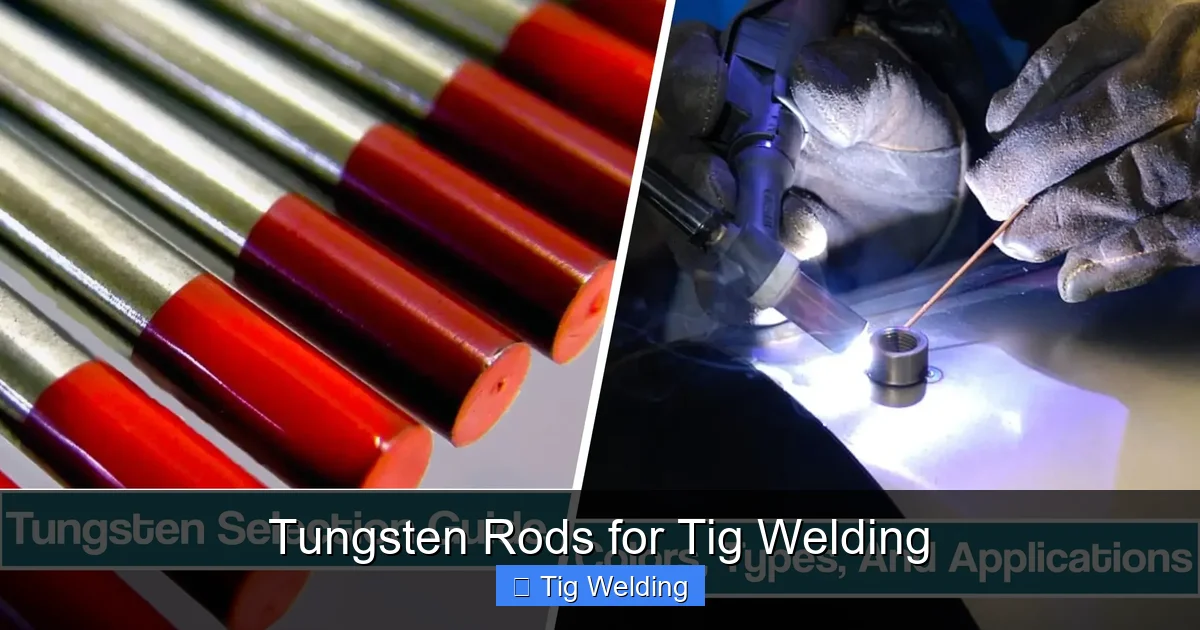
The most common way to identify different tungsten electrode types is through their color band, which is stamped or painted on the end of the electrode. These color codes are standardized, so a red band will always signify the same type of tungsten, regardless of the manufacturer. Knowing these codes is your first step to selecting the right tungsten.
Here’s a breakdown of the most prevalent types of tungsten electrodes:
Pure Tungsten (Green Band)
Pure tungsten electrodes contain 99.5% tungsten and 0.5% other elements. They were among the first types used for TIG welding.
* Characteristics: Pure tungsten is known for its excellent arc stability on AC (alternating current) welding, particularly for aluminum and magnesium. However, it tends to ball up at the tip, which can lead to arc wandering and inconsistent welds. It also has a lower current-carrying capacity compared to alloyed tungsten.
* Applications: Primarily used for AC welding of aluminum and magnesium. Less common now due to the availability of superior alternatives.
Thoriated Tungsten (Red Band)
Thoriated tungsten electrodes contain approximately 2% thorium oxide. This was a popular choice for many years.
* Characteristics: Thoriated tungsten offers excellent arc starting, good arc stability, and a high current-carrying capacity. It can be ground to a sharp point for DC (direct current) welding, providing a focused arc. However, thorium is a radioactive material, and inhaling the dust during grinding can pose health risks. Due to these concerns, its use has declined significantly.
* Applications: Versatile for both AC and DC welding of mild steel, stainless steel, nickel alloys, and titanium. Best suited for DC applications where a pointed tip is desired.
Ceriated Tungsten (Gray/Orange Band)
Ceriated tungsten electrodes contain approximately 2% cerium oxide. These are excellent non-radioactive alternatives to thoriated tungsten.
* Characteristics: Ceriated tungsten provides excellent arc starting, good arc stability, and a focused arc, similar to thoriated tungsten. It performs well at lower amperages and is less prone to spitting. It doesn’t require as fine a point as thoriated tungsten for DC welding and can be used with a slightly blunter tip.
* Applications: Ideal for low-amperage DC welding of carbon steel, stainless steel, nickel alloys, and copper. Also suitable for AC welding of aluminum and magnesium, particularly on thinner materials.
Lanthanated Tungsten (Gold/Blue Band)
Lanthanated tungsten electrodes contain approximately 1.5% or 2% lanthanum oxide. These are considered premium, all-around electrodes and are highly popular.
* Characteristics: Lanthanated tungsten offers superior arc starting, excellent arc stability, and a highly focused arc. It has a high current-carrying capacity and is very resistant to contamination. It performs exceptionally well in both AC and DC welding. A 1.5% lanthanated tungsten (gold band) is a good all-purpose choice, while 2% lanthanated (blue band) offers even better performance, especially at higher amperages.
* Applications: Extremely versatile. Excellent for AC welding of aluminum and magnesium, and for DC welding of steel, stainless steel, nickel alloys, titanium, and copper. Often the go-to choice for many welders.
Zirconiated Tungsten (Brown Band)
Zirconiated tungsten electrodes contain approximately 0.8% zirconium oxide. These are primarily used for AC welding.
* Characteristics: Zirconiated tungsten provides a very stable arc and is highly resistant to contamination. It tends to form a hemispherical or balled tip when used with AC current, which helps to prevent tungsten from entering the weld pool. This makes it an excellent choice for applications where weld cleanliness is paramount.
* Applications: Primarily used for AC welding of aluminum and magnesium. It’s a good option when you need a very clean weld and are experiencing issues with tungsten contamination.
How to Choose the Right Tungsten Electrode
Visual guide about Tungsten Rods for Tig Welding
Image source: filebroker-cdn.lazada.com.ph
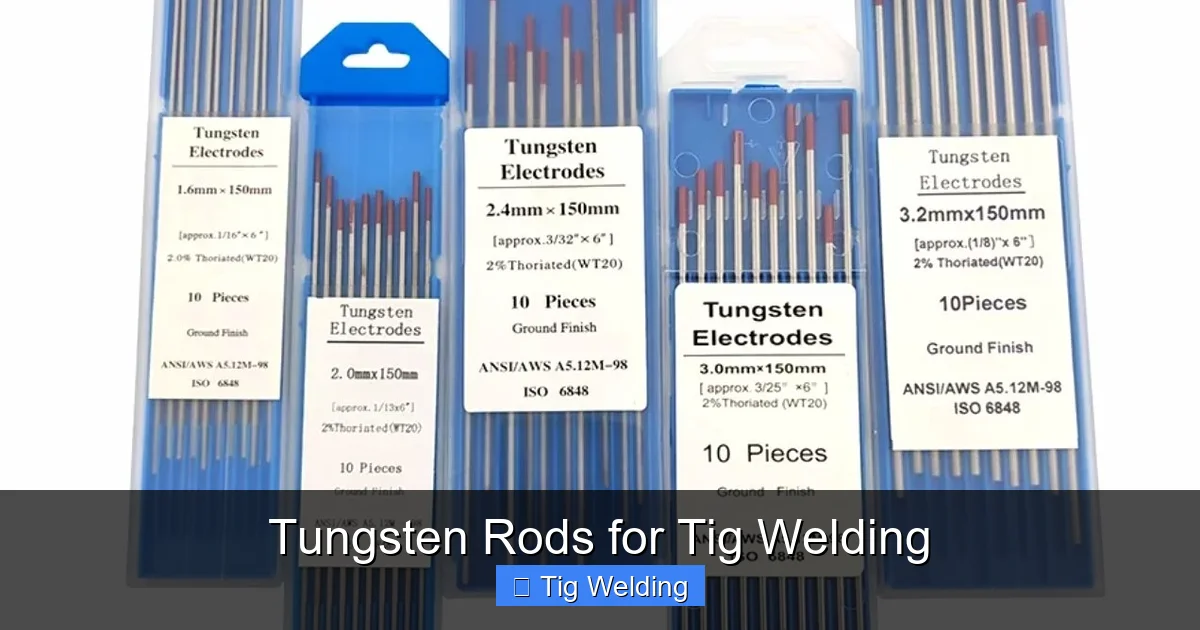
Selecting the correct tungsten electrode is a crucial decision that will significantly impact your welding results. Several factors come into play, including the type of metal you’re welding, the welding current (AC or DC), the amperage range, and your personal preference.
Matching Tungsten to Base Metal
* **Aluminum and Magnesium (AC Welding):** For AC welding of aluminum and magnesium, you have a few excellent options. Pure tungsten (green) was the traditional choice for its AC arc stability, but it balls up easily. Zirconiated tungsten (brown) is excellent for its resistance to contamination and stable, balled tip. Lanthanated tungsten (gold or blue) is also a top performer, offering great arc starting and stability with a more controlled tip.
* **Steel, Stainless Steel, Nickel Alloys, Titanium (DC Welding):** For DC welding of these materials, you’ll want an electrode that provides a stable, focused arc. Lanthanated tungsten (gold or blue) is an excellent all-around choice, offering superb arc starting and stability. Ceriated tungsten (gray/orange) is also a strong contender, especially for lower amperages. Thoriated tungsten (red) was historically popular for its pointed tip capability, but due to health concerns, many have switched to lanthanated or ceriated.
Considering Welding Current and Amperage
* AC Welding: AC welding, especially for aluminum, requires an electrode that can handle the current and maintain a stable arc. Pure tungsten, zirconiated, and lanthanated are good choices. The tip shape will naturally form a balled or hemispherical end.
* **DC Welding:** DC welding generally benefits from a precisely ground, pointed tip for a focused arc and better penetration control. Lanthanated, ceriated, and thoriated tungsten are well-suited for this.
* **Amperage Range:** Lower amperages might be better served by ceriated tungsten, while higher amperages will benefit from the robust performance of lanthanated tungsten. Always refer to the manufacturer’s recommendations for the specific tungsten type and your welding machine.
Personal Preference and Experience
Ultimately, your comfort level and what works best for your specific welding machine and technique are also important. Many experienced TIG welders gravitate towards 2% lanthanated tungsten (blue band) because it offers such a broad range of performance and is incredibly forgiving. It’s often a good idea to experiment with a couple of different types to see which one you prefer.
How to Prepare Tungsten Electrodes
Visual guide about Tungsten Rods for Tig Welding
Image source: weldguru.com
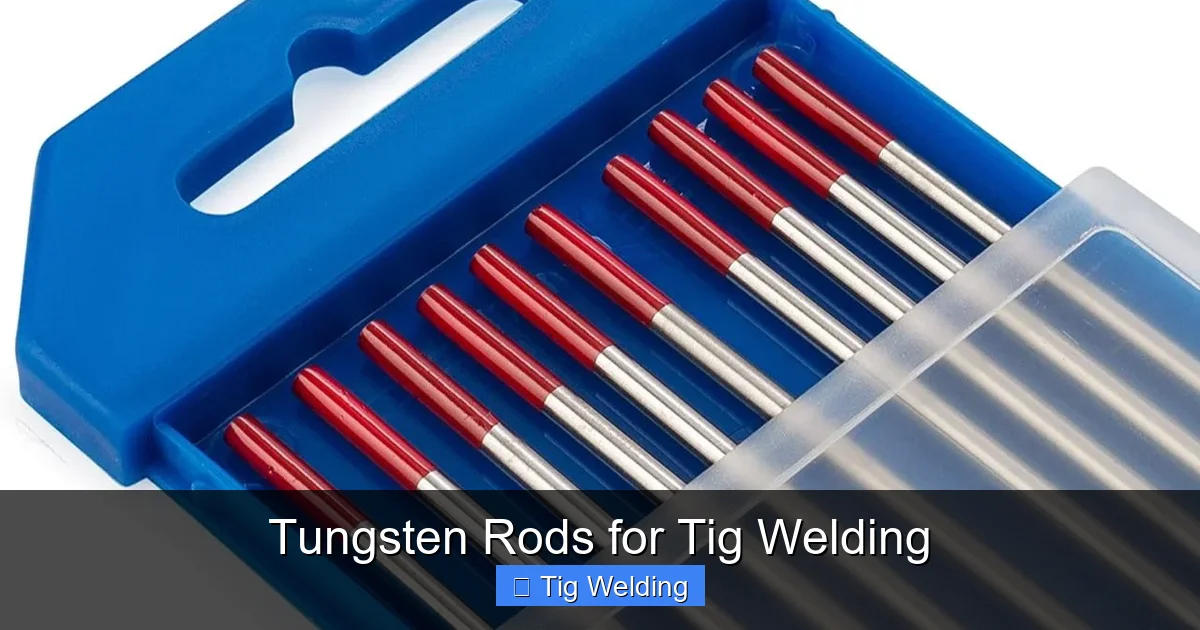
Proper preparation of your tungsten electrode is as critical as selecting the right type. A well-prepared electrode ensures a stable arc, prevents contamination, and leads to higher quality welds. The preparation method depends on the type of tungsten and whether you are welding with AC or DC current.
Grinding Tungsten for DC Welding
For DC welding, you generally want to grind the tungsten to a sharp point. This creates a focused arc that provides good penetration and control.
1. **Select the Right Grinding Wheel:** Use a dedicated silicon carbide grinding wheel. **Never** use a grinding wheel that has been used for other metals, as this will contaminate your tungsten. It’s best to have a grinder specifically for tungsten electrodes.
2. **Grind Lengthwise:** Hold the tungsten electrode against the grinding wheel at a slight angle and grind in a lengthwise motion. Do not spin the electrode against the wheel. Grinding lengthwise creates fine, parallel grooves that help maintain the arc’s stability.
3. **Achieve a Sharp Point:** Aim for a sharp, conical point. The point should be roughly 2-3 times the diameter of the tungsten rod in length. For example, a 1/8″ tungsten rod would have a point about 1/4″ to 3/8″ long.
4. **Avoid Flat Tips:** A flat tip will cause the arc to wander and can lead to tungsten inclusions in the weld.
Grinding Tungsten for AC Welding
For AC welding, particularly of aluminum, the tungsten tip naturally forms a balled or hemispherical end. This shape is generally preferred for AC welding as it is more stable and less likely to shed particles into the weld pool.
1. **Initial Grinding (Optional):** You can start with a slightly blunted point for AC welding, but many welders simply start with a new, unground electrode or a slightly balled tip from previous use.
2. **Allow it to Ball:** During the AC welding process, the electrode will naturally form a rounded or hemispherical tip. This is the desired shape.
3. **Re-sharpening if Necessary:** If the balled tip becomes too large or starts to show signs of contamination, you may need to re-grind it to a blunter point or a fresh taper. Some welders will grind a very short, blunt taper for AC.
Special Considerations for Lanthanated and Ceriated Tungsten
Lanthanated and ceriated tungsten electrodes are more forgiving than pure tungsten. They maintain their pointed shape better during DC welding and are less prone to spitting. You can still achieve a sharp point for DC welding using the lengthwise grinding method. For AC welding, they will naturally ball up, and this shape is acceptable.
Important Tips for Tungsten Preparation:
* **Cleanliness is Paramount:** Always ensure your grinding wheel and the tungsten electrode itself are clean. Any contamination on the tungsten can transfer to the weld.
* **Dedicated Grinder:** Ideally, have a dedicated grinder for tungsten electrodes to prevent cross-contamination from other metals.
* **Observe the Arc:** After preparing your tungsten, strike a short arc to observe its behavior. A stable, consistent arc indicates good preparation.
* **Re-grind as Needed:** Tungsten electrodes will erode over time, especially at higher amperages. You’ll need to re-grind them periodically to maintain optimal performance.
Troubleshooting Common Tungsten Issues
Even with the best preparation, you might encounter issues. Here are some common problems and their likely causes related to tungsten electrodes:
Tungsten Spitting or Arc Wandering
* **Cause:** Contaminated tungsten, improperly ground tip (flat or uneven), wrong type of tungsten for the application, insufficient amperage, or issues with shielding gas.
* **Solution:** Ensure your tungsten is clean and properly ground. Try a different type of tungsten (e.g., lanthanated is very stable). Check your amperage is appropriate for the material and thickness. Verify your shielding gas flow is adequate and there are no drafts.
Tungsten Inclusions in the Weld
* **Cause:** Tungsten particles breaking off and entering the weld pool. This often happens when the tungsten tip is too sharp and fragile for the amperage, or if the arc is too close to the weld pool. It can also occur if the tungsten electrode is too long.
* **Solution:** Use a slightly blunter tip for higher amperages, or try a different tungsten alloy. Ensure the tungsten electrode is not excessively long (recommendations vary, but typically 1/2″ to 1″ protruding from the torch cup). Maintain a safe distance between the tungsten tip and the weld pool.
Electrode Melting or Eroding Too Quickly
* **Cause:** Using pure tungsten for higher amperages, exceeding the recommended current capacity for the tungsten diameter, or poor arc control.
* **Solution:** Use an alloyed tungsten with a higher current capacity (like lanthanated). Ensure you are using the correct diameter tungsten for your amperage. Practice arc length control.
Difficulty Starting the Arc
* **Cause:** Tungsten might be contaminated, dull, or the machine’s arc start setting might be too low.
* **Solution:** Re-grind the tungsten to a sharp point. Ensure the tungsten is clean. Check your TIG welder’s high-frequency start settings. Try a different type of tungsten known for excellent arc starting, like lanthanated or ceriated.
Conclusion
The humble tungsten electrode plays an indispensable role in TIG welding. By understanding the different types, their unique properties, and the importance of proper preparation, you can significantly enhance your welding skills. Selecting the right tungsten based on your base metal, welding current, and amperage is paramount for achieving a stable, focused arc, which translates directly into cleaner, stronger, and more aesthetically pleasing welds.
Remember to always prioritize cleanliness, use dedicated grinding tools, and grind your tungsten lengthwise for DC applications to achieve that critical sharp point. For AC welding, allow the electrode to form its natural balled tip. Don’t be afraid to experiment with different tungsten types, especially the popular lanthanated electrodes, to find what works best for you and your specific welding challenges. Mastering the art of tungsten selection and preparation is a vital step on your journey to becoming a proficient TIG welder.
